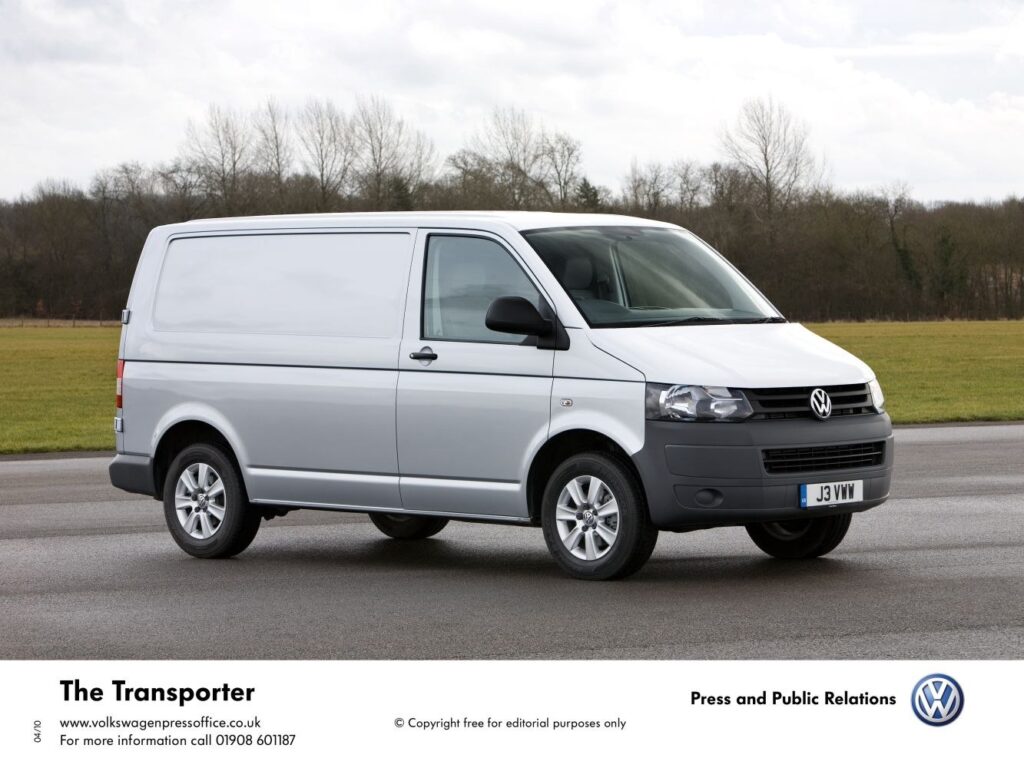
The Volkswagen Transporter (T5, facelift 2009) Panel Van 2.0 TDI BMT (140 Hp) L2H3: A European Workhorse
The Volkswagen Transporter, a name synonymous with versatility and reliability in commercial vehicle markets worldwide, particularly in Europe, represents a significant lineage dating back to the iconic Type 2. The T5 generation, introduced in 2003, received a notable facelift in 2009, bringing updated styling, enhanced powertrains, and improved technology to an already successful platform. This article focuses on a specific, highly capable variant from this refreshed T5 era: the Volkswagen Transporter (T5, facelift 2009) Panel Van 2.0 TDI BMT (140 Hp) L2H3, produced between 2012 and 2015. While the Transporter series is a ubiquitous sight on European roads, serving as a cornerstone for countless businesses, it was not officially sold in the United States market, where Volkswagen’s commercial offerings have traditionally been limited to larger models or specialized passenger vans like the Routan (a rebadged Chrysler minivan).
This particular model, the L2H3, denotes a long wheelbase (L2) and a high roof (H3) configuration, making it one of the most capacious panel van options available within the T5 range. Coupled with the efficient 2.0-liter TDI engine featuring BlueMotion Technology (BMT) and a robust 140 horsepower output, this Transporter variant was engineered to offer an optimal balance of cargo capacity, fuel economy, and performance for demanding commercial applications.
Engine and Performance of the Volkswagen Transporter (T5, facelift 2009) Panel Van
At the heart of the 2012-2015 Volkswagen Transporter (T5, facelift 2009) Panel Van L2H3 lies Volkswagen’s acclaimed EA189 / CAAC 2.0-liter (120.09 cubic inches) inline-four turbocharged diesel engine. This robust powertrain, mounted transversely at the front and driving the front wheels, exemplifies modern diesel engineering with its common rail fuel injection system, turbocharger, and intercooler. The engine is designed for efficiency and durability, critical attributes for a commercial vehicle expected to cover vast distances and carry heavy loads.
The 2.0 TDI unit delivers a respectable 140 horsepower (HP) at 3500 revolutions per minute (rpm), providing ample power for highway cruising and navigating urban environments, even when fully loaded. More critically for a commercial vehicle, torque output is substantial, peaking at 250.77 lb.-ft. (340 Nm) across a broad and accessible rev range of 1750-2500 rpm. This ensures strong pulling power from low engine speeds, minimizing the need for frequent gear changes and enhancing drivability under load.
Power is transmitted through a precise 6-speed manual transmission, offering drivers full control over the engine’s output and contributing to the vehicle’s impressive fuel efficiency. Despite its size and commercial purpose, the Transporter L2H3 can accelerate from 0 to 60 mph in a reasonable 12.1 seconds, with a top speed of 100.04 mph (161 km/h). Fuel economy, a vital factor for fleet operators and independent tradespeople, is a strong suit for this BlueMotion Technology (BMT) variant. The combined NEDC cycle rating shows an impressive 30.9-32.2 US miles per gallon (mpg), with extra-urban figures reaching 35.1-36.8 US mpg. These figures are achieved partly due to the inclusion of a Start & Stop System and a particulate filter, which also help the vehicle meet stringent Euro 5 emission standards, with CO2 emissions ranging from 192-199 g/km.
Design and Features: Practicality Meets Volkswagen Engineering
The Volkswagen Transporter (T5, facelift 2009) Panel Van is a masterclass in functional design, prioritizing cargo capacity, ease of use, and durability. As a panel van, its primary purpose is the efficient transportation of goods, reflected in its cavernous interior and robust construction. The L2H3 configuration, with its extended length of 208.35 inches and imposing height of 97.48 inches, provides an exceptional cargo volume of 328.43 cubic feet (9300 liters), allowing for the transport of bulky items or a significant quantity of smaller packages.
The exterior design, refreshed in 2009, features a contemporary and professional aesthetic, characterized by clean lines and a purposeful stance. The four- or five-door setup (including sliding side doors for easy access) facilitates efficient loading and unloading. The interior, while utilitarian, is designed for driver comfort and practicality, accommodating two to three occupants. Storage compartments are strategically placed, and the cabin ergonomics are typical of Volkswagen, ensuring a straightforward and comfortable driving experience over long hauls.
Underneath, the Transporter features an independent McPherson strut front suspension with coil springs and an anti-roll bar, paired with an independent coil spring rear suspension with a transverse stabilizer and trailing arms. This sophisticated setup, uncommon for many commercial vans, provides a comfortable ride and stable handling, even when the vehicle is heavily loaded. Braking is handled by ventilated discs at both the front (308×29.5 mm) and rear (294×22 mm), complemented by an Anti-lock Braking System (ABS) for enhanced safety and control. Hydraulic rack and pinion steering ensures precise maneuverability, crucial for navigating tight urban streets and loading docks. The standard tire size is 215/65 R16, mounted on 6.5J x 16 steel wheels, chosen for their durability and load-bearing capabilities.
Technical Specifications
| Category | Specification |
|---|---|
| General Information | |
| Brand | Volkswagen |
| Model | Transporter |
| Generation | Transporter (T5, facelift 2009) Panel Van |
| Engine Type | 2.0 TDI BMT (140 Hp) L2H3 |
| Production Start | 2012 |
| Production End | 2015 |
| Powertrain Architecture | Internal Combustion Engine |
| Body Type | Van |
| Seats | 2-3 |
| Doors | 4-5 |
| Performance Specifications | |
| Fuel Consumption (Urban, NEDC) | 9-9.3 l/100 km (25.3 – 26.1 US mpg) |
| Fuel Consumption (Extra Urban, NEDC) | 6.4-6.7 l/100 km (35.1 – 36.8 US mpg) |
| Fuel Consumption (Combined, NEDC) | 7.3-7.6 l/100 km (30.9 – 32.2 US mpg) |
| CO2 Emissions (NEDC) | 192-199 g/km |
| Fuel Type | Diesel |
| Acceleration 0-60 mph | 12.1 sec |
| Maximum Speed | 100.04 mph (161 km/h) |
| Emission Standard | Euro 5 |
| Weight-to-Power Ratio | 12.7 kg/Hp (79 Hp/tonne) |
| Weight-to-Torque Ratio | 5.2 kg/Nm (191.8 Nm/tonne) |
| Engine Specifications | |
| Power | 140 Hp @ 3500 rpm |
| Power per Liter | 71.1 Hp/l |
| Torque | 250.77 lb.-ft. (340 Nm) @ 1750-2500 rpm |
| Engine Layout | Front, Transverse |
| Engine Model/Code | EA189 / CAAC |
| Engine Displacement | 2.0 liters (1968 cm3 / 120.09 cu. in.) |
| Number of Cylinders | 4 |
| Engine Configuration | Inline |
| Cylinder Bore | 3.19 in. (81 mm) |
| Piston Stroke | 3.76 in. (95.5 mm) |
| Compression Ratio | 16.5:1 |
| Valves per Cylinder | 4 |
| Fuel Injection System | Diesel Commonrail |
| Engine Aspiration | Turbocharger, Intercooler |
| Valvetrain | DOHC |
| Engine Oil Capacity | 7.4 US qt (7 liters) |
| Coolant Capacity | 11.62 US qt (11 liters) |
| Engine Systems | Start & Stop System, Particulate Filter |
| Dimensions, Volume, and Weights | |
| Curb Weight | 3908.8 – 4887.65 lbs. (1773-2217 kg) |
| Gross Vehicle Weight Rating (GVWR) | 6172.94 – 7054.79 lbs. (2800-3200 kg) |
| Payload Capacity | 2167.14 – 2264.15 lbs. (983-1027 kg) |
| Cargo Volume (Maximum) | 328.43 cu. ft. (9300 liters) |
| Fuel Tank Capacity | 21.13 US gal (80 liters) |
| Towing Capacity (with brakes) | 5511.56 lbs. (2500 kg) |
| Towing Capacity (without brakes) | 1653.47 lbs. (750 kg) |
| Tongue Weight | 220.46 lbs. (100 kg) |
| Length | 208.35 in. (5292 mm) |
| Width | 74.96 in. (1904 mm) |
| Width (including mirrors) | 89.88 in. (2283 mm) |
| Height | 97.48 in. (2476 mm) |
| Wheelbase | 133.86 in. (3400 mm) |
| Front Overhang | 35.28 in. (896 mm) |
| Rear Overhang | 39.21 in. (996 mm) |
| Ground Clearance | 7.91 in. (201 mm) |
| Minimum Turning Circle | 43.31 ft. (13.2 m) |
| Approach Angle | 21° |
| Departure Angle | 17° |
| Ramp-over (Brakeover) Angle | 12° |
| Drivetrain, Brakes, and Suspension | |
| Drivetrain Architecture | Front-wheel drive (ICE drives front wheels) |
| Drive Wheel | Front-wheel drive |
| Gearbox Type | 6 gears, manual transmission |
| Front Suspension | Independent, McPherson type with coil spring and anti-roll bar |
| Rear Suspension | Independent coil spring, Transverse stabilizer, Trailing arm |
| Front Brakes | Ventilated discs, 308×29.5 mm |
| Rear Brakes | Ventilated discs, 294×22 mm |
| Assisting Systems | ABS (Anti-lock Braking System) |
| Steering Type | Steering rack and pinion |
| Power Steering | Hydraulic Steering |
| Tire Size | 215/65 R16 |
| Wheel Rims Size | 6.5J x 16 |
Legacy and Market Impact
The Volkswagen Transporter series has forged an unparalleled legacy in the light commercial vehicle segment, particularly in Europe and other global markets. The T5 generation, and specifically the facelifted models from 2009-2015 like the Volkswagen Transporter (T5, facelift 2009) Panel Van 2.0 TDI BMT (140 Hp) L2H3, cemented its reputation as a highly capable, reliable, and cost-effective solution for businesses of all sizes. Its robust build quality, efficient powertrains, and versatile configurations made it a preferred choice for tradespeople, logistics companies, and service providers.
In its primary European market, the Transporter T5 faced stiff competition from rivals such as the Mercedes-Benz Vito, Ford Transit Custom, Renault Trafic, and Opel Vivaro. However, the Transporter consistently held its own, often praised for its car-like driving dynamics, superior refinement, and strong residual values. The BlueMotion Technology variants, with their focus on reduced fuel consumption and lower emissions, further enhanced its appeal in an increasingly environmentally conscious and economically driven market.
The L2H3 variant, with its maximum cargo volume, played a crucial role in supporting businesses requiring significant carrying capacity without stepping up to larger, heavier commercial vehicles. Its ability to handle substantial payloads (over 2,000 lbs.) and tow trailers weighing up to 5,511 lbs. underscored its utility and adaptability. The T5 generation, including this specific model, is celebrated for its longevity and durability, often serving fleets for many years and hundreds of thousands of miles.
The Transporter’s historical significance lies in its continuous evolution of the iconic Type 2 “Bus” concept, adapting it for modern commercial demands while retaining the core Volkswagen values of engineering excellence and practicality. While the T5 Transporter never formally entered the competitive US market for commercial vans, its influence and success in other regions demonstrate Volkswagen’s profound expertise in designing and manufacturing vehicles that are integral to global commerce and daily life.