Introduction to the Volkswagen Transporter (T5, facelift 2009) Panel Van
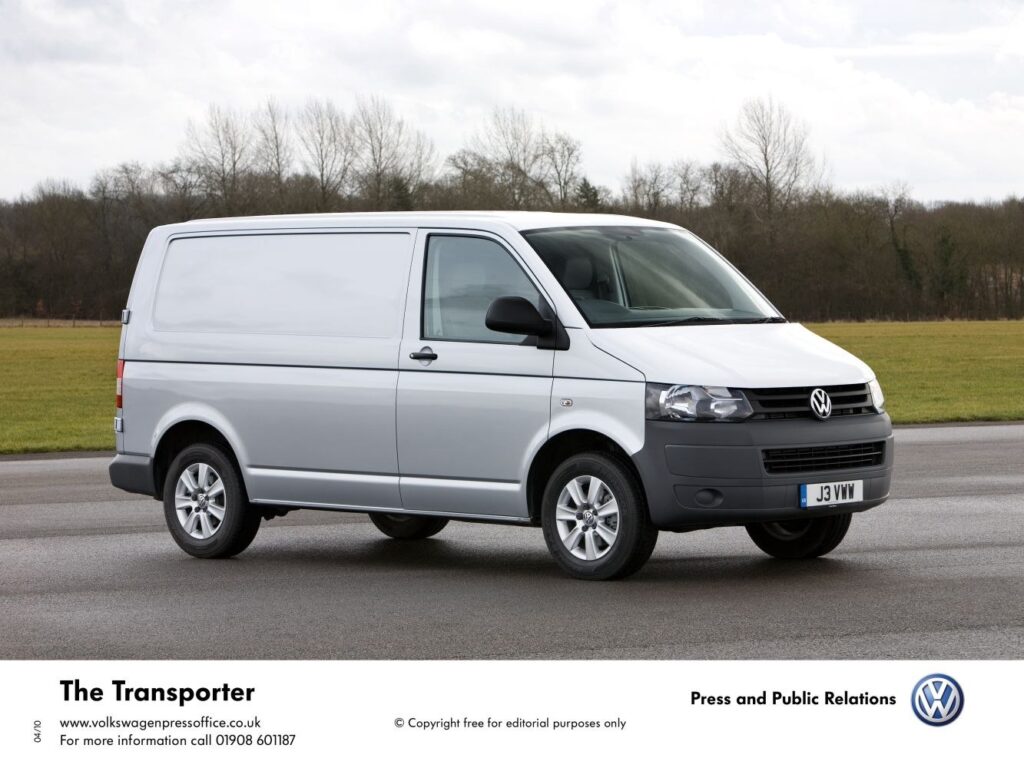
The Volkswagen Transporter, a name synonymous with versatility and robust utility in commercial and passenger vehicle segments globally, has a storied history dating back to the iconic Type 2. The model under scrutiny here is the Volkswagen Transporter (T5, facelift 2009) Panel Van, specifically the 2.0 TDI BMT (180 Hp) 4MOTION DSG L2H2 variant, produced between 2013 and 2015. This particular iteration represents the latter part of the fifth-generation Transporter (T5), which received a significant facelift in 2009, enhancing its aesthetics, technology, and powertrain options. While the Transporter series, often known as the “Bus” or “Microbus” in its passenger forms, has a cult following in the United States, the Panel Van variant, designed primarily for commercial use, was not officially sold in the U.S. market. Instead, it carved out a dominant niche in Europe, Asia, and other international markets, serving as a workhorse for businesses of all sizes, from delivery services to tradespeople.
The T5 generation, launched in 2003, built upon the legacy of its predecessors by offering a more refined driving experience, improved safety features, and a broader range of engine and chassis configurations. The 2009 facelift brought a host of updates, including new front and rear styling, revised interior ergonomics, and critically, a new range of more efficient and powerful common-rail TDI engines, replacing the older pump-injector units. This particular L2H2 Panel Van variant signifies a long wheelbase (L2) and a high roof (H2), maximizing cargo capacity, making it an indispensable tool for commercial operations requiring substantial carrying volume. The integration of 4MOTION all-wheel-drive and a sophisticated DSG automatic transmission further underscored its capability, offering superior traction and ease of driving under diverse conditions, a testament to Volkswagen’s engineering prowess in the light commercial vehicle sector.
Engine and Performance of the Volkswagen Transporter (T5, facelift 2009) Panel Van
Powering this capable commercial vehicle is a highly advanced 2.0-liter (1968 cm³, 120.09 cu. in.) inline four-cylinder TDI (Turbocharged Direct Injection) diesel engine, designated with the model code EA189 / CFCA. This engine is a prime example of Volkswagen’s commitment to efficiency and performance, especially within its commercial lineup. Utilizing a BiTurbo setup, meaning it employs two turbochargers, and an intercooler, the engine delivers a robust 180 horsepower at 4000 rpm. This power output, impressive for a van of its size, translates to a healthy power per liter ratio of 91.5 Hp/l. More crucially for a commercial vehicle, the torque delivery is substantial: 400 Nm (295.02 lb.-ft.) available across a broad and usable rev range of 1500 to 2000 rpm. This flat torque curve ensures excellent pulling power from low engine speeds, ideal for carrying heavy loads or navigating challenging terrain.
The engine’s sophisticated architecture includes a DOHC (Double Overhead Camshaft) valvetrain with four valves per cylinder and a common-rail fuel injection system, allowing for precise fuel delivery and optimal combustion. With a compression ratio of 16.5:1, it balances power with efficiency. Mated to this powerful diesel is a 7-speed DSG (Direct Shift Gearbox) automatic transmission. This dual-clutch gearbox is renowned for its rapid, smooth shifts and contributes significantly to both the vehicle’s performance and its fuel economy. The 4MOTION all-wheel-drive system further enhances the vehicle’s capabilities, providing traction on slippery surfaces or uneven terrain. This system intelligently distributes power between the front and rear axles, with the internal combustion engine driving the front wheels permanently and the rear wheels engaging via an electrically or mechanically operated clutch when needed.
Despite its robust performance, the Volkswagen Transporter (T5, facelift 2009) Panel Van is also designed for efficiency. It features Volkswagen’s BlueMotion Technology (BMT), which includes a Start & Stop system to reduce fuel consumption in urban traffic and a particulate filter to meet Euro 5 emission standards. The combined fuel economy for this variant ranges from 28.3 to 29.4 US mpg, a commendable figure for a vehicle of its size and capability. Performance figures include an acceleration from 0 to 60 mph in a swift 10.2 seconds and a maximum speed of 113.09 mph (182 km/h), demonstrating that this van is far from sluggish, even when fully loaded. The weight-to-power ratio stands at 10.9 kg/Hp, or 92.1 Hp/tonne, further illustrating its dynamic capabilities.
Design and Features
The Volkswagen Transporter T5 Panel Van, particularly in its L2H2 configuration, is a masterclass in functional design. The “Panel Van” body type signifies its primary role as a cargo carrier, with solid panels replacing rear windows for security and maximizing usable interior space. With 4 to 5 doors, including a large rear access and typically a sliding side door, loading and unloading are made convenient. The cabin is configured for 2 to 3 seats, prioritizing utility and driver/passenger comfort for long working hours.
Measuring 208.35 inches (5292 mm) in length, 74.96 inches (1904 mm) in width (89.88 inches or 2283 mm including mirrors), and an imposing 85.67 inches (2176 mm) in height, the L2H2 variant offers an expansive cargo volume of up to 275.45 cubic feet (7800 liters). This generous space is complemented by a substantial maximum payload capacity ranging from 1827.63 to 2306.04 lbs (829-1046 kg), making it suitable for a wide array of commercial applications. The long wheelbase of 133.86 inches (3400 mm) contributes to stable handling, while a ground clearance of 7.91 inches (201 mm) and respectable approach, departure, and ramp-over angles (21°, 17°, and 12° respectively) allow it to tackle varied terrains, especially with the aid of the 4MOTION system.
Beyond its utilitarian design, the T5 facelift brought interior refinements that enhanced the driver’s experience. While a commercial vehicle, Volkswagen ensured a comfortable and ergonomic cockpit, crucial for professionals spending long hours behind the wheel. Standard features included hydraulic power steering, a robust independent McPherson front suspension, and an independent coil spring rear suspension with a transverse stabilizer and trailing arm, all contributing to a car-like driving feel. Safety was also a priority, with ventilated disc brakes (340×32.5 mm front, 294×22 mm rear) and ABS (Anti-lock Braking System) providing confident stopping power. The option of various tire sizes, from 215/60 R17 to 255/45 R18, mounted on 7J x 17 or 8J x 18 wheel rims, allowed for customization based on load requirements and desired ride characteristics.
Technical Specifications
| Category | Specification | Value |
|---|---|---|
General Information |
||
| Brand | Volkswagen | |
| Model | Transporter | |
| Generation | Transporter (T5, facelift 2009) Panel Van | |
| Type (Engine) | 2.0 TDI BMT (180 Hp) 4MOTION DSG L2H2 | |
| Start of Production | 2013 year | |
| End of Production | 2015 year | |
| Powertrain Architecture | Internal Combustion engine | |
| Body type | Van | |
| Seats | 2-3 | |
| Doors | 4-5 | |
Performance Specs |
||
| Fuel consumption (economy) – urban (NEDC) | US mpg | 24.2 – 25 |
| Fuel consumption (economy) – extra urban (NEDC) | US mpg | 31.4 – 32.7 |
| Fuel consumption (economy) – combined (NEDC) | US mpg | 28.3 – 29.4 |
| CO2 emissions (NEDC) | g/km | 211-219 |
| Fuel Type | Diesel | |
| Acceleration 0 – 60 mph | sec | 10.2 |
| Maximum speed | mph | 113.09 |
| Emission standard | Euro 5 | |
| Weight-to-power ratio | Hp/tonne | 92.1 |
| Weight-to-torque ratio | Nm/tonne | 204.7 |
Engine Specs |
||
| Power | Hp @ rpm | 180 @ 4000 |
| Power per liter | Hp/l | 91.5 |
| Torque | lb.-ft. @ rpm | 295.02 @ 1500-2000 |
| Engine layout | Front, Transverse | |
| Engine Model/Code | EA189 / CFCA | |
| Engine displacement | cu. in. | 120.09 |
| Number of cylinders | 4 | |
| Engine configuration | Inline | |
| Cylinder Bore | in. | 3.19 |
| Piston Stroke | in. | 3.76 |
| Compression ratio | 16.5:1 | |
| Number of valves per cylinder | 4 | |
| Fuel injection system | Diesel Commonrail | |
| Engine aspiration | BiTurbo, Intercooler | |
| Valvetrain | DOHC | |
| Engine oil capacity | US qt | 7.4 |
| Coolant | US qt | 11.62 |
| Engine systems | Start & Stop System, Particulate filter | |
Space, Volume and Weights |
||
| Kerb Weight | lbs. | 4307.83 – 5227.16 |
| Max. weight | lbs. | 6613.87 – 7054.79 |
| Max load | lbs. | 1827.63 – 2306.04 |
| Trunk (boot) space – maximum | cu. ft. | 275.45 |
| Fuel tank capacity | US gal | 21.13 |
| Permitted trailer load with brakes (12%) | lbs. | 5511.56 |
| Permitted trailer load without brakes | lbs. | 1653.47 |
| Permitted towbar download | lbs. | 220.46 |
Dimensions |
||
| Length | in. | 208.35 |
| Width | in. | 74.96 |
| Width including mirrors | in. | 89.88 |
| Height | in. | 85.67 |
| Wheelbase | in. | 133.86 |
| Front overhang | in. | 35.28 |
| Rear overhang | in. | 39.21 |
| Ride height (ground clearance) | in. | 7.91 |
| Minimum turning circle (turning diameter) | ft. | 43.31 |
| Approach angle | ° | 21 |
| Departure angle | ° | 17 |
| Ramp-over (brakeover) angle | ° | 12 |
Drivetrain, Brakes and Suspension Specs |
||
| Drivetrain Architecture | The Internal combustion engine (ICE) drives the front wheels permanently, and the rear wheels are driven through an electrically or mechanically operated clutch if necessary. | |
| Drive wheel | All wheel drive (4×4) | |
| Number of gears and type of gearbox | 7 gears, automatic transmission DSG | |
| Front suspension | Independent, type McPherson with coil spring and anti-roll bar | |
| Rear suspension | Independent coil spring, Transverse stabilizer, Trailing arm | |
| Front brakes | Ventilated discs, 340×32.5 mm | |
| Rear brakes | Ventilated discs, 294×22 mm | |
| Assisting systems | ABS (Anti-lock braking system) | |
| Steering type | Steering rack and pinion | |
| Power steering | Hydraulic Steering | |
| Tires size | 215/60 R17; 235/55 R17; 255/45 R18 | |
| Wheel rims size | 7J x 17; 8J x 18 | |
Legacy and Market Impact
The Volkswagen Transporter, and specifically the T5 generation, solidified its position as a segment leader in the European light commercial vehicle market. The Volkswagen Transporter (T5, facelift 2009) Panel Van 2.0 TDI BMT (180 Hp) 4MOTION DSG L2H2 was a prime example of Volkswagen’s commitment to offering a versatile, durable, and technologically advanced solution for businesses. Its robust build quality, efficient powertrains, and comprehensive range of body configurations made it a formidable competitor against rivals such as the Ford Transit, Mercedes-Benz Vito, Renault Trafic, and Opel Vivaro.
The T5’s reputation for reliability and strong residual values contributed to its widespread adoption across various industries. The facelifted models, with their updated engines and improved interiors, further enhanced this appeal. The 2.0 TDI BMT engine, in particular, was lauded for its blend of power and fuel efficiency, a critical factor for commercial operators looking to minimize running costs. The inclusion of the 4MOTION all-wheel-drive system was a significant differentiator, allowing the Transporter to excel in challenging conditions, from construction sites to inclement weather, providing an added layer of utility that many competitors lacked. The DSG transmission also contributed to driver comfort and reduced fatigue, especially in urban environments with frequent stops and starts.
Historically, the Transporter series has been a cornerstone of Volkswagen’s commercial vehicle division, embodying the brand’s engineering principles of practicality, durability, and innovation. The T5 generation, spanning from 2003 to 2015, represented a significant evolution, moving towards more car-like driving dynamics and advanced safety features while retaining its core identity as a workhorse. The L2H2 Panel Van variant, with its maximum cargo capacity and powerful drivetrain, proved particularly popular for logistics, trades, and service industries where space and capability were paramount. Its enduring design and mechanical resilience have ensured that many T5s remain in active service today, a testament to their long-term value and impact on the commercial vehicle landscape in regions where they were sold. The T5’s success paved the way for its successor, the T6, which continued to build upon this strong foundation, further cementing the Transporter’s legacy as a benchmark in its class.