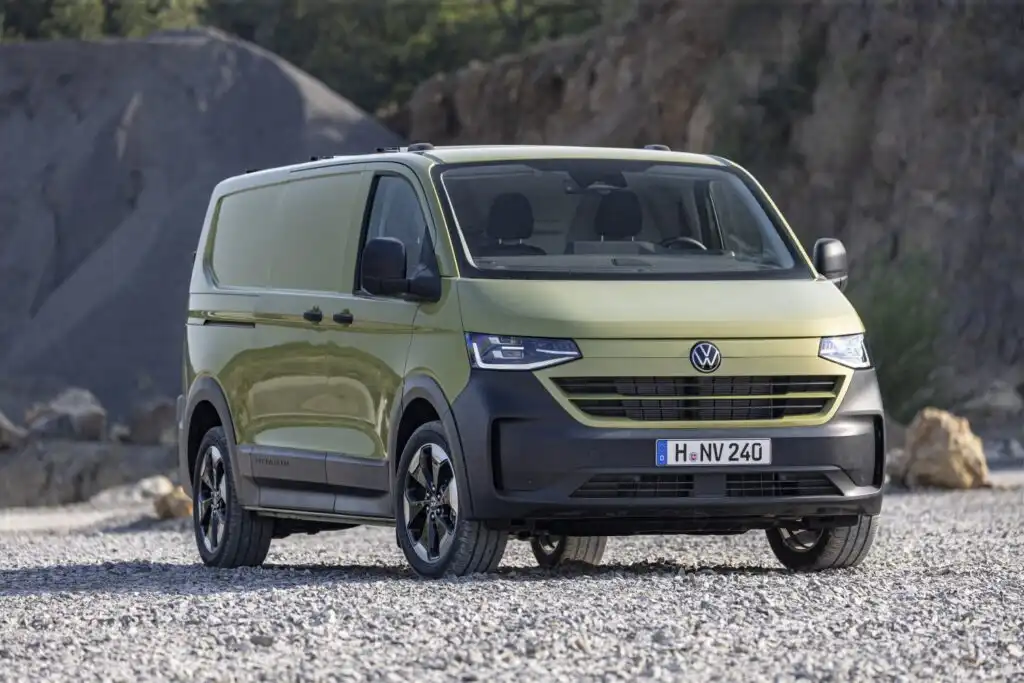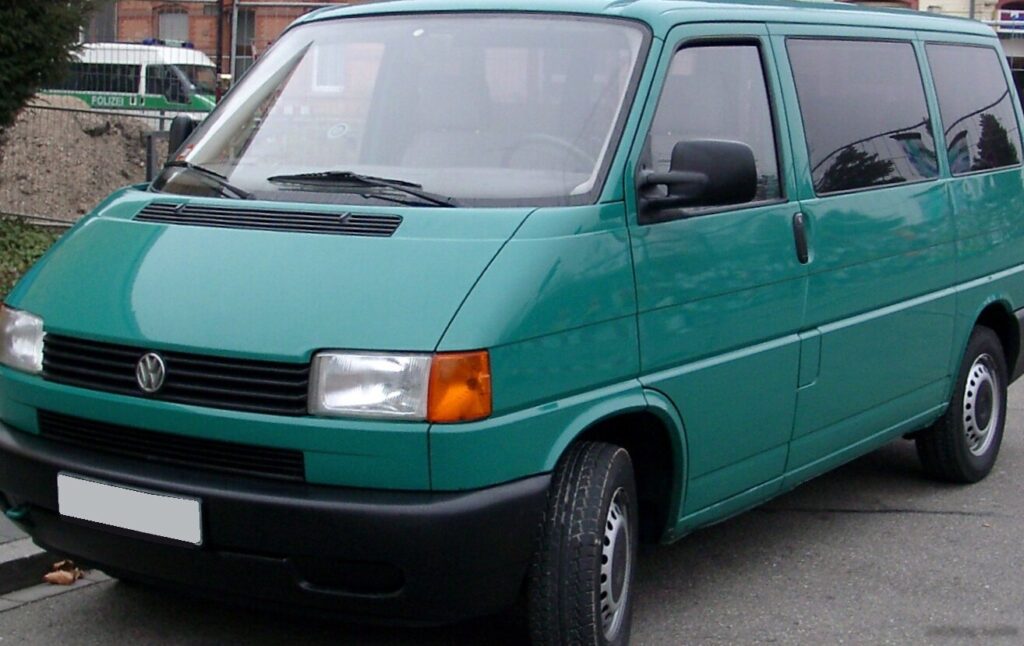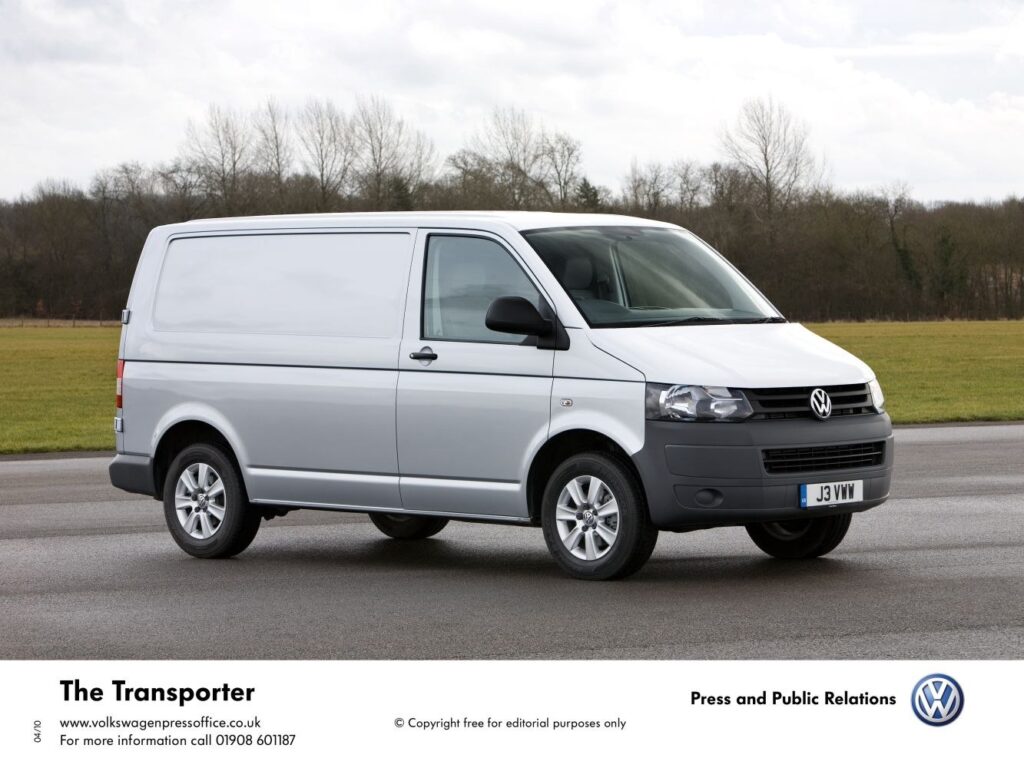
The Volkswagen Transporter (T5, Facelift 2009) Panel Van: A European Workhorse
The Volkswagen Transporter has long stood as an icon in the realm of light commercial vehicles, a testament to German engineering and practicality. The focus of this expert analysis is a specific iteration of the fifth-generation (T5) Transporter, specifically the facelifted model introduced in 2009. This particular variant, the Volkswagen Transporter (T5, facelift 2009) Panel Van 2.0 TDI BMT (180 Hp) 4MOTION L2H3, represents a highly capable and efficient configuration, produced between 2013 and 2015. While not a common sight on American roads, the Transporter series is a ubiquitous and vital component of the commercial and private transport landscape across Europe and many other international markets. It carved out its niche by offering a compelling blend of cargo capacity, robust performance, and everyday usability, upholding a legacy that dates back to the original Type 2 “Bus.”
This L2H3 designation signifies a long wheelbase (L2) and a high roof (H3) configuration, maximizing its utility as a panel van. Coupled with the advanced 2.0 TDI BiTurbo engine featuring BlueMotion Technology (BMT) and the capable 4MOTION all-wheel-drive system, this Transporter variant was designed to tackle demanding tasks, from urban deliveries to challenging terrain, all while maintaining impressive fuel efficiency and a comfortable driving experience. Its role as a backbone for countless businesses, from small enterprises to large fleets, underscores its reputation for reliability and adaptability in diverse operational environments.
Engine and Performance: Power Meets Efficiency in the Volkswagen Transporter (T5, Facelift 2009) Panel Van
At the heart of this formidable commercial vehicle lies Volkswagen’s highly regarded EA189 / CFCA engine, a 2.0-liter (1968 cm³, 120.09 cu. in.) inline-four turbo-diesel unit. This particular variant boasts a BiTurbo setup, which contributes significantly to its impressive output of 180 horsepower at 4000 rpm. More critically for a commercial application, the engine delivers a substantial 295.02 lb.-ft. (400 Nm) of torque, available across a broad and usable range from 1500 to 2000 rpm. This low-end torque is crucial for hauling heavy loads and providing confident acceleration, even when the van is fully laden.
The “BMT” designation, standing for BlueMotion Technology, highlights Volkswagen’s commitment to efficiency. This package typically includes features such as a Start & Stop system to reduce fuel consumption in traffic, a particulate filter for lower emissions, and optimized aerodynamics. Despite its robust power output, the Transporter 2.0 TDI BMT demonstrates commendable fuel economy for its class, with a combined NEDC rating of 28.7 to 29.8 US mpg (7.9-8.2 l/100 km). This efficiency, combined with an 80-liter (21.13 US gal) fuel tank, ensures a substantial operating range, minimizing downtime for refueling.
Performance figures are respectable for a vehicle of its size and purpose. The Transporter can accelerate from 0 to 60 mph in an estimated 10.3 seconds, with a top speed of 108.12 mph (174 km/h). Power is delivered to all four wheels via Volkswagen’s 4MOTION all-wheel-drive system, paired with a smooth-shifting 6-speed manual transmission. The 4MOTION system, which typically drives the front wheels and engages the rear wheels via an electrically or mechanically operated clutch when necessary, provides enhanced traction and stability, making the van adept at handling adverse weather conditions or unpaved job sites. The engine adheres to the Euro 5 emission standard, reflecting its compliance with European environmental regulations of its production era.
Design and Features: Practicality and Robustness
The Volkswagen Transporter (T5, facelift 2009) Panel Van is designed first and foremost for functionality. Its body type is a classic panel van, offering 4-5 doors for access to both the cabin and the expansive cargo area. The cabin typically accommodates 2-3 occupants, with a focus on durability and ergonomics for long working hours. The L2H3 configuration is particularly noteworthy, providing a generous length of 208.35 inches (5292 mm) and a towering height of 97.48 inches (2476 mm). This translates into an impressive maximum trunk (boot) space of 9300 liters (328.43 cu. ft.), making it an ideal choice for businesses requiring significant hauling capacity.
The exterior design of the facelifted T5 introduced subtle but effective updates, aligning it more closely with Volkswagen’s contemporary passenger car lineup. These changes included a revised grille, updated headlights, and new bumper designs, giving it a more modern and cohesive appearance. Inside, improvements were made to materials and infotainment options, enhancing driver comfort and connectivity. Key features for a commercial vehicle include robust construction, a minimum turning circle of 43.31 feet (13.2 meters) for maneuverability in urban environments, and a substantial maximum payload capacity ranging from 1856.29 to 2334.7 lbs. (842-1059 kg).
From a chassis perspective, the Transporter is built for durability and a competent ride. It features independent McPherson strut front suspension with coil springs and an anti-roll bar, complemented by an independent coil spring rear suspension with transverse stabilizer and trailing arms. This setup provides a good balance of ride comfort and load-carrying stability. Braking is handled by ventilated discs both front (340×32.5 mm) and rear (294×22 mm), ensuring strong stopping power, further aided by ABS (Anti-lock Braking System). Hydraulic power steering provides direct feedback and reliability, essential for a working vehicle.
Technical Specifications
| Category | Specification |
|---|---|
| General Information | |
| Brand | Volkswagen |
| Model | Transporter |
| Generation | Transporter (T5, facelift 2009) Panel Van |
| Type (Engine) | 2.0 TDI BMT (180 Hp) 4MOTION L2H3 |
| Start of Production | 2013 year |
| End of Production | 2015 year |
| Powertrain Architecture | Internal Combustion engine |
| Body type | Van |
| Seats | 2-3 |
| Doors | 4-5 |
| Performance Specs | |
| Fuel consumption (economy) – urban (NEDC) | 9.3-9.6 l/100 km (25.3 – 24.5 US mpg) |
| Fuel consumption (economy) – extra urban (NEDC) | 7.1-7.4 l/100 km (33.1 – 31.8 US mpg) |
| Fuel consumption (economy) – combined (NEDC) | 7.9-8.2 l/100 km (29.8 – 28.7 US mpg) |
| CO2 emissions (NEDC) | 208-216 g/km |
| Fuel Type | Diesel |
| Acceleration 0 – 60 mph | 10.3 sec |
| Acceleration 0 – 100 km/h | 10.8 sec |
| Maximum speed | 174 km/h (108.12 mph) |
| Emission standard | Euro 5 |
| Weight-to-power ratio | 10.8 kg/Hp, 92.7 Hp/tonne |
| Weight-to-torque ratio | 4.9 kg/Nm, 206.1 Nm/tonne |
| Engine Specs | |
| Power | 180 Hp @ 4000 rpm |
| Power per liter | 91.5 Hp/l |
| Torque | 400 Nm @ 1500-2000 rpm (295.02 lb.-ft.) |
| Engine layout | Front, Transverse |
| Engine Model/Code | EA189 / CFCA |
| Engine displacement | 1968 cm³ (120.09 cu. in.) |
| Number of cylinders | 4 |
| Engine configuration | Inline |
| Cylinder Bore | 81 mm (3.19 in.) |
| Piston Stroke | 95.5 mm (3.76 in.) |
| Compression ratio | 16.5:1 |
| Number of valves per cylinder | 4 |
| Fuel injection system | Diesel Commonrail |
| Engine aspiration | BiTurbo, Intercooler |
| Valvetrain | DOHC |
| Engine oil capacity | 7 l (7.4 US qt) |
| Coolant | 11 l (11.62 US qt) |
| Engine systems | Start & Stop System, Particulate filter |
| Space, Volume and Weights | |
| Kerb Weight | 1941-2358 kg (4279.17 – 5198.5 lbs.) |
| Max. weight | 3000-3200 kg (6613.87 – 7054.79 lbs.) |
| Max load | 842-1059 kg (1856.29 – 2334.7 lbs.) |
| Trunk (boot) space – maximum | 9300 l (328.43 cu. ft.) |
| Fuel tank capacity | 80 l (21.13 US gal) |
| Permitted trailer load with brakes (12%) | 2500 kg (5511.56 lbs.) |
| Permitted trailer load without brakes | 750 kg (1653.47 lbs.) |
| Permitted towbar download | 100 kg (220.46 lbs.) |
| Dimensions | |
| Length | 5292 mm (208.35 in.) |
| Width | 1904 mm (74.96 in.) |
| Width including mirrors | 2283 mm (89.88 in.) |
| Height | 2476 mm (97.48 in.) |
| Wheelbase | 3400 mm (133.86 in.) |
| Front overhang | 896 mm (35.28 in.) |
| Rear overhang | 996 mm (39.21 in.) |
| Ride height (ground clearance) | 201 mm (7.91 in.) |
| Minimum turning circle (turning diameter) | 13.2 m (43.31 ft.) |
| Approach angle | 21° |
| Departure angle | 17° |
| Ramp-over (brakeover) angle | 12° |
| Drivetrain, Brakes and Suspension Specs | |
| Drivetrain Architecture | ICE drives front wheels permanently, rear wheels driven via electrically or mechanically operated clutch if necessary. |
| Drive wheel | All wheel drive (4×4) |
| Number of gears and type of gearbox | 6 gears, manual transmission |
| Front suspension | Independent, type McPherson with coil spring and anti-roll bar |
| Rear suspension | Independent coil spring, Transverse stabilizer, Trailing arm |
| Front brakes | Ventilated discs, 340×32.5 mm |
| Rear brakes | Ventilated discs, 294×22 mm |
| Assisting systems | ABS (Anti-lock braking system) |
| Steering type | Steering rack and pinion |
| Power steering | Hydraulic Steering |
| Tires size | 215/60 R17; 235/55 R17; 255/45 R18 |
| Wheel rims size | 7J x 17; 8J x 18 |
Legacy and Market Impact of the Volkswagen Transporter (T5, Facelift 2009) Panel Van
The Volkswagen Transporter series holds an almost legendary status, particularly in Europe, where it has been a cornerstone of commercial transport for decades. The T5 generation, and especially its facelifted iteration, continued this proud heritage, solidifying its reputation as a highly versatile, reliable, and durable light commercial vehicle. It built upon the strengths of its predecessors while incorporating modern technology, improved ergonomics, and enhanced safety features, making it a compelling choice in a fiercely competitive market segment.
In its primary markets, the T5 Transporter faced stiff competition from rivals such as the Ford Transit, Mercedes-Benz Vito, Renault Trafic, and the Fiat Ducato. However, the Transporter consistently stood out due to its car-like driving dynamics, premium feel (for a commercial vehicle), and the strength of the Volkswagen brand’s reputation for engineering quality. The availability of advanced powertrains like the 2.0 TDI BMT, coupled with the optional 4MOTION all-wheel-drive system, provided a significant advantage, particularly for businesses operating in regions with challenging climates or requiring off-road capability.
The specific L2H3 panel van configuration, as examined here, was particularly impactful for logistics, construction, and service industries that demanded maximum cargo volume without sacrificing maneuverability. Its robust chassis and impressive towing capacity (up to 5511.56 lbs. with brakes) further enhanced its utility. The T5 Transporter’s longevity in production (from 2003 to 2015 for the T5 generation, with the facelift from 2009) is a testament to its enduring design and engineering soundness. Even after the introduction of the T6, many T5 models remain in active service, a clear indicator of their built-to-last quality and strong residual values.
The Volkswagen Transporter (T5, facelift 2009) Panel Van, particularly in its powerful and efficient 2.0 TDI BMT 4MOTION L2H3 guise, represents a high point for the T5 generation. It successfully balanced the traditional Transporter virtues of practicality and robustness with modern demands for performance, fuel economy, and environmental responsibility. Its legacy is that of a truly global workhorse, a vehicle that may not be widely known in the US, but is indispensable to commerce and daily life across continents, continuing to influence the design and expectations for modern commercial vans.