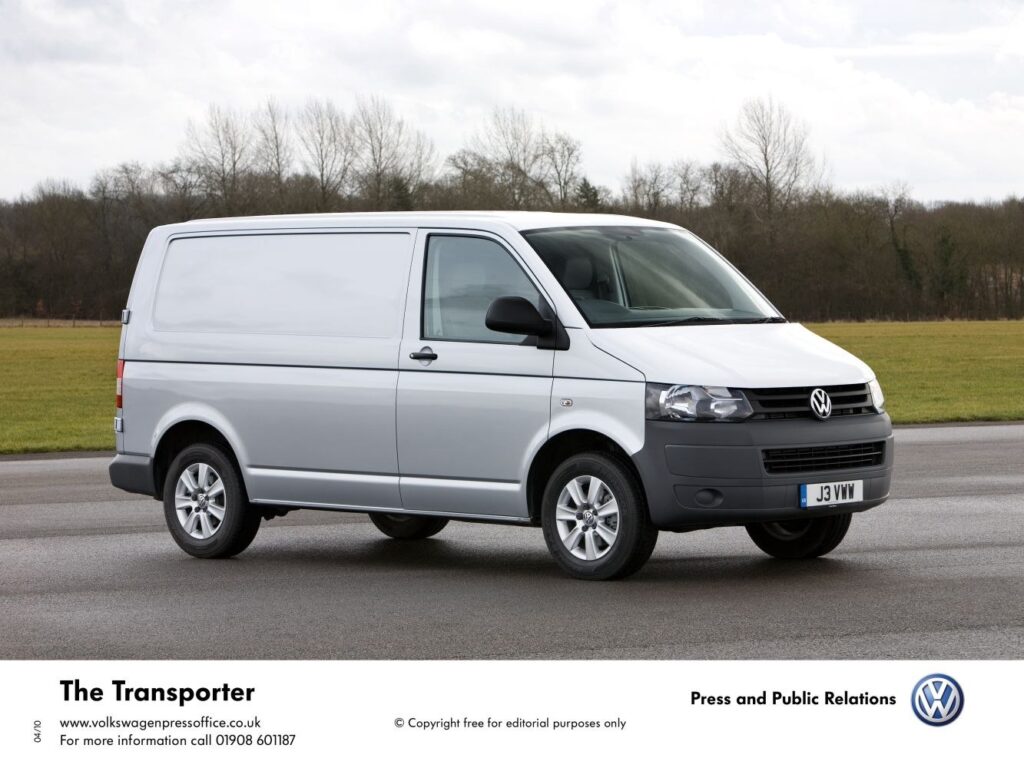
The Volkswagen Transporter (T5, facelift 2009) Panel Van: A European Workhorse
The Volkswagen Transporter, a name synonymous with versatility and reliability in the light commercial vehicle segment, has a storied history spanning multiple generations. The T5 generation, introduced in 2003, received a significant facelift in 2009, bringing updated aesthetics, improved powertrains, and enhanced technology. This detailed article focuses on a specific variant from the latter part of the T5’s production run: the Volkswagen Transporter (T5, facelift 2009) Panel Van 2.0 TDI BMT (180 Hp) DSG L1H1, produced between 2013 and 2015. This particular configuration represents a highly efficient and potent option within the Transporter lineup, designed to meet the rigorous demands of businesses across Europe and other international markets where it was primarily sold.
As a key player in the European van market, the Transporter T5 Panel Van was engineered to offer a compelling blend of cargo capacity, driver comfort, and robust performance. Its front-wheel-drive powertrain architecture, combined with a sophisticated diesel engine and automatic transmission, underscored its commitment to modern commercial transport needs. While not a common sight on American roads, the Transporter’s influence on global commercial vehicle design and its reputation for durability are widely recognized among automotive experts worldwide.
Engine and Performance of the Volkswagen Transporter (T5, facelift 2009) Panel Van
At the heart of this specific Volkswagen Transporter variant lies the highly acclaimed 2.0-liter TDI (Turbocharged Direct Injection) engine, designated with the internal code EA189 / CFCA. This inline four-cylinder powerplant, featuring a DOHC valvetrain and four valves per cylinder, was a marvel of diesel engineering for its time. What truly set this version apart was its BiTurbo setup, which utilized two turbochargers to deliver a broad and responsive power band. Coupled with a common rail fuel injection system and an intercooler, the engine produced a robust 180 horsepower at 4000 rpm, translating to an impressive 91.5 horsepower per liter.
Torque delivery was equally formidable, peaking at 400 Nm (approximately 295.02 lb.-ft.) across a wide range from 1500 to 2000 rpm. This ample torque at low engine speeds was crucial for a commercial vehicle, ensuring excellent pulling power, especially when fully loaded, and minimizing the need for frequent gear changes. Power was channeled to the front wheels through a sophisticated 7-speed DSG (Direct-Shift Gearbox) automatic transmission. This dual-clutch unit offered rapid and smooth shifts, contributing significantly to both performance and fuel efficiency, a critical factor for fleet operators.
Performance figures for the 2.0 TDI BMT (180 Hp) DSG L1H1 were commendable for a panel van. It could accelerate from 0 to 60 mph in a swift 9.5 seconds, with a top speed of 118.68 mph (191 km/h). These figures allowed the Transporter to keep pace with traffic on highways and make quick deliveries. Furthermore, this variant incorporated Volkswagen’s BlueMotion Technology (BMT), which included a Start & Stop system and a particulate filter. These features were instrumental in achieving improved fuel economy and reduced emissions, meeting the stringent Euro 5 emission standard. Combined fuel consumption was rated between 7.3-7.6 liters per 100 km, which translates to an impressive 32.2 – 30.9 US mpg, making it an economical choice for its capability.
Design and Features
The Volkswagen Transporter (T5, facelift 2009) Panel Van, in its L1H1 configuration, represented the standard length and standard height variant, striking a balance between generous cargo capacity and manageable exterior dimensions. Its utilitarian design prioritized functionality, with a robust and understated aesthetic that has become a hallmark of the Transporter lineage. The body type is a classic van, featuring 4-5 doors to facilitate access to both the cabin and the cargo area, and typically configured with 2-3 seats in the front, allowing for a driver and one or two passengers.
The exterior dimensions of 192.6 inches in length (4892 mm), 74.96 inches in width (1904 mm), and 78.35 inches in height (1990 mm) made it a practical size for urban deliveries while still offering substantial interior volume. The cargo area, a paramount feature for any panel van, boasted a maximum volume of 5800 liters (approximately 204.83 cubic feet). This generous space, combined with a maximum payload capacity ranging from 2246.51 to 2270.76 pounds (1019-1030 kg), underscored its capability as a versatile commercial vehicle.
Underneath its functional exterior, the Transporter T5 featured a well-engineered chassis designed for durability and a comfortable ride, even when loaded. The front suspension utilized an independent McPherson strut setup with coil springs and an anti-roll bar, providing precise steering and good road holding. The rear suspension was also independent, featuring coil springs, a transverse stabilizer, and trailing arms, which contributed to a composed ride and excellent load-carrying characteristics. Braking performance was handled by ventilated discs both front (340×32.5 mm) and rear (294×22 mm), complemented by an Anti-lock Braking System (ABS) for enhanced safety and control. The hydraulic power steering system ensured ease of maneuverability, particularly in tight urban environments, with a minimum turning circle of 39.04 feet (11.9 meters).
Technical Specifications
The following table provides a comprehensive overview of the technical specifications for the Volkswagen Transporter (T5, facelift 2009) Panel Van 2.0 TDI BMT (180 Hp) DSG L1H1:
| Category | Specification |
|---|---|
| Brand | Volkswagen |
| Model | Transporter |
| Generation | Transporter (T5, facelift 2009) Panel Van |
| Type (Engine) | 2.0 TDI BMT (180 Hp) DSG L1H1 |
| Start of Production | 2013 year |
| End of Production | 2015 year |
| Powertrain Architecture | Internal Combustion engine |
| Body Type | Van |
| Seats | 2-3 |
| Doors | 4-5 |
| Fuel Type | Diesel |
| Emission Standard | Euro 5 |
| Acceleration 0 – 60 mph | 9.5 sec |
| Acceleration 0 – 100 km/h | 10 sec |
| Maximum Speed | 118.68 mph (191 km/h) |
| Fuel Consumption (Urban NEDC) | 27.7 – 26.7 US mpg (8.5-8.8 l/100 km) |
| Fuel Consumption (Extra Urban NEDC) | 35.6 – 34.1 US mpg (6.6-6.9 l/100 km) |
| Fuel Consumption (Combined NEDC) | 32.2 – 30.9 US mpg (7.3-7.6 l/100 km) |
| CO2 Emissions (NEDC) | 192-199 g/km |
| Power | 180 Hp @ 4000 rpm |
| Power per Liter | 91.5 Hp/l |
| Torque | 295.02 lb.-ft. (400 Nm) @ 1500-2000 rpm |
| Engine Layout | Front, Transverse |
| Engine Model/Code | EA189 / CFCA |
| Engine Displacement | 120.09 cu. in. (1968 cm3) |
| Number of Cylinders | 4 |
| Engine Configuration | Inline |
| Cylinder Bore | 3.19 in. (81 mm) |
| Piston Stroke | 3.76 in. (95.5 mm) |
| Compression Ratio | 16.5:1 |
| Valves per Cylinder | 4 |
| Fuel Injection System | Diesel Commonrail |
| Engine Aspiration | BiTurbo, Intercooler |
| Valvetrain | DOHC |
| Engine Oil Capacity | 7.4 US qt (7 l) |
| Coolant Capacity | 11.62 US qt (11 l) |
| Engine Systems | Start & Stop System, Particulate filter |
| Kerb Weight | 3926.43 – 4784.03 lbs. (1781-2170 kg) |
| Max. Weight (GVWR) | 6172.94 – 7054.79 lbs. (2800-3200 kg) |
| Max Load | 2246.51 – 2270.76 lbs. (1019-1030 kg) |
| Trunk (Boot) Space – maximum | 204.83 cu. ft. (5800 l) |
| Fuel Tank Capacity | 21.13 US gal (80 l) |
| Max. Roof Load | 220.46 lbs. (100 kg) |
| Permitted Trailer Load (with brakes 12%) | 5511.56 lbs. (2500 kg) |
| Permitted Trailer Load (without brakes) | 1653.47 lbs. (750 kg) |
| Permitted Towbar Download | 220.46 lbs. (100 kg) |
| Length | 192.6 in. (4892 mm) |
| Width | 74.96 in. (1904 mm) |
| Width including mirrors | 89.88 in. (2283 mm) |
| Height | 78.35 in. (1990 mm) |
| Wheelbase | 118.11 in. (3000 mm) |
| Front Overhang | 35.28 in. (896 mm) |
| Rear Overhang | 39.21 in. (996 mm) |
| Ride Height (Ground Clearance) | 7.91 in. (201 mm) |
| Minimum Turning Circle | 39.04 ft. (11.9 m) |
| Approach Angle | 21° |
| Departure Angle | 17° |
| Ramp-over (Brakeover) Angle | 14° |
| Wading Depth | 11.81 in. (300 mm) |
| Drivetrain Architecture | Front-wheel drive |
| Number of Gears and Type of Gearbox | 7 gears, automatic transmission DSG |
| Front Suspension | Independent, McPherson with coil spring and anti-roll bar |
| Rear Suspension | Independent coil spring, Transverse stabilizer, Trailing arm |
| Front Brakes | Ventilated discs, 340×32.5 mm |
| Rear Brakes | Ventilated discs, 294×22 mm |
| Assisting Systems | ABS (Anti-lock braking system) |
| Steering Type | Steering rack and pinion |
| Power Steering | Hydraulic Steering |
| Tires Size | 215/60 R17; 235/55 R17; 255/45 R18 |
| Wheel Rims Size | 7J x 17; 8J x 18 |
Legacy and Market Impact
The Volkswagen Transporter series has forged an unparalleled legacy in the global automotive landscape, beginning with the iconic T1 “Bus” and evolving through generations to meet changing demands. The T5 generation, and particularly the facelifted models from 2009 onwards, continued this tradition of excellence, solidifying its reputation as a benchmark in the European light commercial vehicle segment. The Volkswagen Transporter (T5, facelift 2009) Panel Van, in its powerful 2.0 TDI BMT (180 Hp) DSG L1H1 configuration, was a testament to Volkswagen’s commitment to combining robust utility with advanced engineering and efficiency.
In its primary markets, such as Germany, the UK, and other European nations, the Transporter T5 faced stiff competition from rivals like the Mercedes-Benz Vito, Ford Transit Custom, Renault Trafic, and Opel Vivaro. However, the T5 consistently held its own, often lauded for its superior build quality, refined driving dynamics, and strong residual values. The powerful 180 HP diesel engine, paired with the smooth and efficient DSG transmission, made it a highly desirable option for businesses requiring both significant hauling capability and comfortable, car-like driving characteristics for long distances.
The adoption of BlueMotion Technology, including features like the Start & Stop system and particulate filter, further enhanced the T5’s appeal by addressing growing concerns about fuel economy and environmental impact. For fleet managers, the lower running costs associated with better fuel efficiency and reduced emissions were significant advantages. Its versatility meant it was employed across a vast array of sectors, from courier services and tradespeople to emergency services and leisure vehicle conversions, underscoring its adaptable design.
Even after the introduction of its successor, the T6, the T5 facelift models, especially those with the potent 180 HP engine, remained highly sought after in the used vehicle market. Its enduring appeal lies in its proven durability, ergonomic interior, and the robust mechanicals that Volkswagen is known for. The T5 Transporter, particularly this high-specification Panel Van, stands as a significant chapter in the Transporter saga, representing a period where commercial vehicles began to integrate advanced passenger car technologies to deliver unprecedented levels of performance, comfort, and efficiency for the working professional.