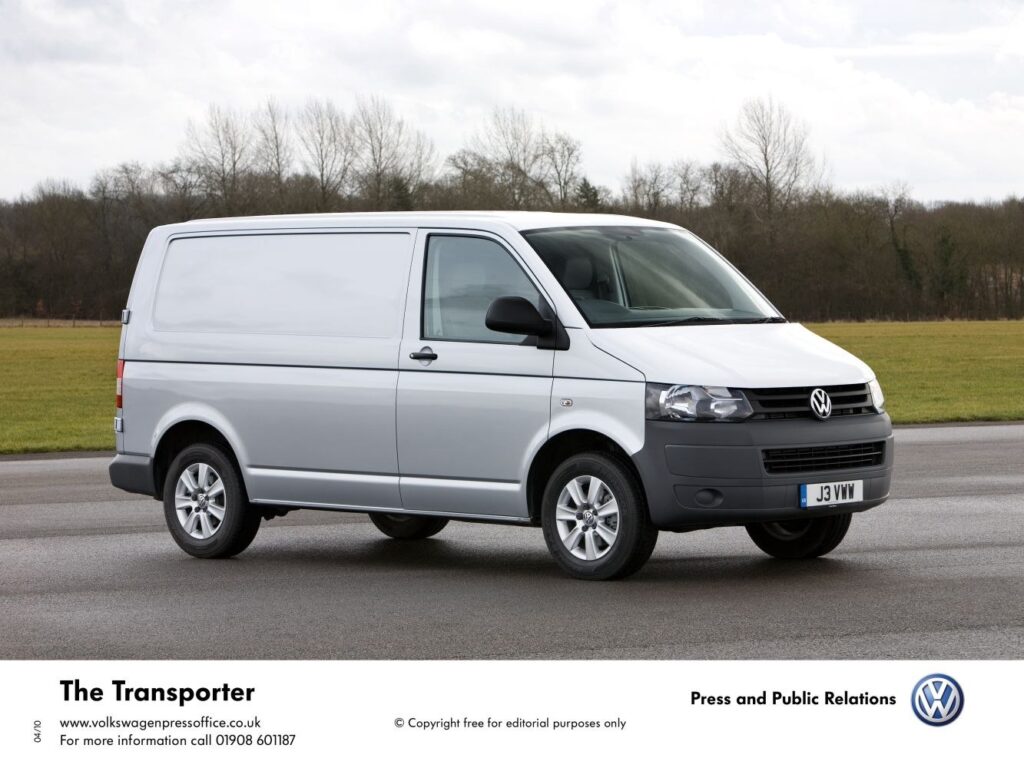
The Volkswagen Transporter, a name synonymous with versatility and reliability in the commercial vehicle sector, has been a cornerstone of Volkswagen Commercial Vehicles’ lineup for decades. The subject of this detailed analysis is the Volkswagen Transporter (T5, facelift 2009) Panel Van, specifically the potent 2.0 TDI BMT (180 Hp) DSG L2H3 variant, produced between 2013 and 2015. Representing the latter half of the fifth generation (T5), this facelifted model brought significant enhancements in powertrain technology, efficiency, and driver comfort, solidifying its position as a class leader in its primary European and international markets. While not a mainstream offering in the United States, the Transporter series, often known globally as the “VW Bus” or “Kombi,” holds an iconic status and is a testament to Volkswagen’s engineering prowess in utility vehicles. This particular L2H3 configuration denotes a long wheelbase and a high roof, optimizing cargo capacity for demanding commercial applications, making it a highly practical and efficient workhorse.
Engine & Performance: The Heart of the Volkswagen Transporter (T5, facelift 2009) Panel Van
At the core of this particular Volkswagen Transporter (T5, facelift 2009) Panel Van lies a sophisticated 2.0-liter TDI (Turbocharged Direct Injection) engine, a powerplant renowned for its blend of robust performance and commendable fuel economy. This specific iteration, designated EA189 / CFCA, features Volkswagen’s advanced BlueMotion Technology (BMT), which incorporates features like a Start & Stop system and a particulate filter to enhance efficiency and reduce emissions. Generating a substantial 180 horsepower at 4000 rpm, this inline four-cylinder diesel engine utilizes a bi-turbocharger setup with an intercooler, allowing it to deliver impressive power output for its displacement. This twin-turbo configuration ensures a broad torque band, crucial for a commercial vehicle that often carries heavy loads.
Torque figures are equally impressive, with a peak of 400 Nm (approximately 295.02 lb.-ft.) available across a wide and accessible range of 1500 to 2000 rpm. This low-end torque is vital for strong pulling power, whether accelerating from a standstill, climbing inclines, or hauling a trailer. The engine’s power per liter stands at a respectable 91.5 Hp/l, showcasing its efficient design. Mated to this powerful diesel is Volkswagen’s acclaimed 7-speed DSG (Direct Shift Gearbox) automatic transmission. This dual-clutch system is celebrated for its rapid, seamless gear changes, contributing to both driving refinement and fuel efficiency, a critical factor for fleet operators and businesses. Despite its substantial size and weight, the Transporter 2.0 TDI BMT (180 Hp) DSG L2H3 can accelerate from 0 to 60 mph in a brisk 9.9 seconds, with a top speed of 109.36 mph (176 km/h), making it a surprisingly agile performer for its class.
Fuel economy, a paramount concern for commercial users, is a strong suit for this BMT variant. The combined NEDC cycle rating indicates 7.6-7.9 liters per 100 kilometers, which translates to an impressive 30.9 – 29.8 US miles per gallon. Urban consumption is rated at 8.5-8.8 l/100 km (27.7 – 26.7 US mpg), while extra-urban driving yields 7-7.3 l/100 km (33.6 – 32.2 US mpg). These figures underscore the effectiveness of the BlueMotion Technology in optimizing fuel consumption. Emissions are kept in check with CO2 output between 199-208 g/km, meeting the Euro 5 emission standard prevalent during its production years.
Design & Features: Purpose-Built Utility
The Volkswagen Transporter (T5, facelift 2009) Panel Van maintains the utilitarian yet understated design language characteristic of the Transporter lineage. As a panel van, its primary purpose is cargo transport, and the L2H3 designation highlights its extended capabilities: “L2” signifies a long wheelbase (3400 mm or 133.86 inches), and “H3” denotes a high roof (2476 mm or 97.48 inches). This combination results in a cavernous cargo volume, reaching a maximum of 9300 liters (328.43 cubic feet), making it exceptionally well-suited for transporting large or numerous items.
The exterior design of the facelifted T5 introduced a refreshed front fascia with updated headlights, grille, and bumper, aligning it with Volkswagen’s contemporary passenger car styling cues while retaining its robust commercial appeal. The body features 4-5 doors, typically including sliding side doors for easy access to the cargo area and rear barn doors or a tailgate. The interior is designed for durability and functionality, offering seating for 2-3 occupants. The cabin prioritizes ergonomics for the driver, with clear instrumentation and controls, reflecting its role as a mobile office for professionals. While specific infotainment and comfort features would vary by trim and options, the facelifted T5 generally offered modern amenities for its time, aiming to enhance driver comfort during long workdays.
Safety features for the 2013-2015 model years included standard ABS (Anti-lock Braking System), and likely electronic stability control (ESC) in most markets, though not explicitly listed in the provided data. The braking system itself is robust, featuring ventilated discs both front (340×32.5 mm) and rear (294×22 mm), ensuring effective stopping power even when fully loaded. The suspension system is designed for both load-carrying capability and driving comfort. It features an independent McPherson type with coil springs and an anti-roll bar at the front, complemented by an independent coil spring, transverse stabilizer, and trailing arm setup at the rear. This sophisticated suspension ensures stable handling and a relatively smooth ride, a significant advantage over many solid-axle commercial vans. The hydraulic rack and pinion steering provides precise control, further enhancing the driving experience.
Technical Specifications
| Category | Specification | US Equivalent / Notes |
|---|---|---|
General Information |
||
| Brand | Volkswagen | |
| Model | Transporter | |
| Generation | Transporter (T5, facelift 2009) Panel Van | |
| Type (Engine) | 2.0 TDI BMT (180 Hp) DSG L2H3 | |
| Start of Production | 2013 year | |
| End of Production | 2015 year | |
| Powertrain Architecture | Internal Combustion engine | |
| Body Type | Van | |
| Seats | 2-3 | |
| Doors | 4-5 | |
Performance Specifications |
||
| Fuel Consumption (Urban, NEDC) | 8.5-8.8 l/100 km | 27.7 – 26.7 US mpg |
| Fuel Consumption (Extra Urban, NEDC) | 7-7.3 l/100 km | 33.6 – 32.2 US mpg |
| Fuel Consumption (Combined, NEDC) | 7.6-7.9 l/100 km | 30.9 – 29.8 US mpg |
| CO2 Emissions (NEDC) | 199-208 g/km | |
| Fuel Type | Diesel | |
| Acceleration 0 – 60 mph | 9.9 sec | |
| Maximum Speed | 176 km/h | 109.36 mph |
| Emission Standard | Euro 5 | |
| Weight-to-Power Ratio | 10.2 kg/Hp | 98.3 Hp/tonne |
| Weight-to-Torque Ratio | 4.6 kg/Nm | 218.3 Nm/tonne |
Engine Specifications |
||
| Power | 180 Hp @ 4000 rpm | |
| Power per Liter | 91.5 Hp/l | |
| Torque | 400 Nm @ 1500-2000 rpm | 295.02 lb.-ft. @ 1500-2000 rpm |
| Engine Layout | Front, Transverse | |
| Engine Model/Code | EA189 / CFCA | |
| Engine Displacement | 1968 cm3 | 120.09 cu. in. (approx. 2.0 Liters) |
| Number of Cylinders | 4 | |
| Engine Configuration | Inline | |
| Cylinder Bore | 81 mm | 3.19 in. |
| Piston Stroke | 95.5 mm | 3.76 in. |
| Compression Ratio | 16.5:1 | |
| Number of Valves per Cylinder | 4 | |
| Fuel Injection System | Diesel Commonrail | |
| Engine Aspiration | BiTurbo, Intercooler | |
| Valvetrain | DOHC | |
| Engine Oil Capacity | 7 l | 7.4 US qt |
| Coolant Capacity | 11 l | 11.62 US qt |
Engine Systems |
||
| Start & Stop System | Yes | Part of BlueMotion Technology |
| Particulate Filter | Yes | |
Space, Volume and Weights |
||
| Kerb Weight | 1832-2249 kg | 4038.87 – 4958.2 lbs. |
| Max. Weight (GVWR) | 2800-3200 kg | 6172.94 – 7054.79 lbs. |
| Max Load | 951-968 kg | 2096.6 – 2134.07 lbs. |
| Trunk (Boot) Space – Maximum | 9300 l | 328.43 cu. ft. |
| Fuel Tank Capacity | 80 l | 21.13 US gal |
| Permitted Trailer Load with Brakes (12%) | 2500 kg | 5511.56 lbs. |
| Permitted Trailer Load without Brakes | 750 kg | 1653.47 lbs. |
| Permitted Towbar Download | 100 kg | 220.46 lbs. |
Dimensions |
||
| Length | 5292 mm | 208.35 in. |
| Width | 1904 mm | 74.96 in. |
| Width including Mirrors | 2283 mm | 89.88 in. |
| Height | 2476 mm | 97.48 in. |
| Wheelbase | 3400 mm | 133.86 in. |
| Front Overhang | 896 mm | 35.28 in. |
| Rear Overhang | 996 mm | 39.21 in. |
| Ride Height (Ground Clearance) | 201 mm | 7.91 in. |
| Minimum Turning Circle (Turning Diameter) | 13.2 m | 43.31 ft. |
| Approach Angle | 21° | |
| Departure Angle | 17° | |
| Ramp-over (Brakeover) Angle | 12° | |
Drivetrain, Brakes and Suspension Specifications |
||
| Drivetrain Architecture | Internal combustion engine (ICE) drives the front wheels. | Front Wheel Drive |
| Drive Wheel | Front wheel drive | |
| Number of Gears and Type of Gearbox | 7 gears, automatic transmission DSG | |
| Front Suspension | Independent, type McPherson with coil spring and anti-roll bar | |
| Rear Suspension | Independent coil spring, Transverse stabilizer, Trailing arm | |
| Front Brakes | Ventilated discs, 340×32.5 mm | |
| Rear Brakes | Ventilated discs, 294×22 mm | |
| Assisting Systems | ABS (Anti-lock braking system) | |
| Steering Type | Steering rack and pinion | |
| Power Steering | Hydraulic Steering | |
| Tires Size | 215/60 R17; 235/55 R17; 255/45 R18 | |
| Wheel Rims Size | 7J x 17; 8J x 18 | |
Legacy & Market Impact
The Volkswagen Transporter series, often identified by its “T” designation (T1, T2, T3, T4, T5, T6, T7), boasts a rich heritage dating back to the 1950s. The T5 generation, and particularly its facelifted version from 2009-2015, continued this legacy as a highly respected and immensely popular commercial vehicle in Europe and other global markets where it was sold. While the Transporter has never been a primary offering in the United States in its panel van configuration, its influence and reputation as a robust, dependable, and versatile workhorse are undeniable internationally.
In its primary markets, the Volkswagen Transporter (T5, facelift 2009) Panel Van competed fiercely with rivals such as the Mercedes-Benz Vito, Ford Transit Custom, Renault Trafic, and Opel Vivaro. What set the Transporter apart, especially in this high-output 2.0 TDI BMT (180 Hp) DSG L2H3 specification, was its combination of car-like driving dynamics, premium build quality, advanced powertrain technology, and impressive carrying capacity. The independent suspension system, a hallmark of the Transporter, provided a more comfortable and stable ride than many of its competitors, which often relied on simpler, leaf-sprung rear axles.
The introduction of BlueMotion Technology and the efficient DSG transmission in the facelifted T5 further enhanced its appeal to businesses looking to reduce running costs and environmental impact. The powerful 180 Hp bi-turbo diesel engine offered performance usually associated with passenger cars, allowing for confident highway cruising even when fully loaded, and making it suitable for long-distance logistics. Its broad range of configurations, from basic panel vans to passenger-carrying Multivans and California campers, demonstrated its inherent flexibility and broad appeal across various user groups.
The T5 Transporter, particularly the later facelift models, is remembered for its significant advancements in refinement, safety, and efficiency over its predecessors. It successfully blended the traditional robustness of a commercial vehicle with modern automotive engineering, setting a high benchmark for the medium-sized van segment. Its strong residual values and enduring popularity on the used market are a testament to its quality and durability. The T5 generation paved the way for its successor, the T6, by continually evolving the Transporter’s core strengths and adapting to the changing demands of the commercial vehicle market, ensuring the Volkswagen Transporter remains an iconic and indispensable part of the global automotive landscape.