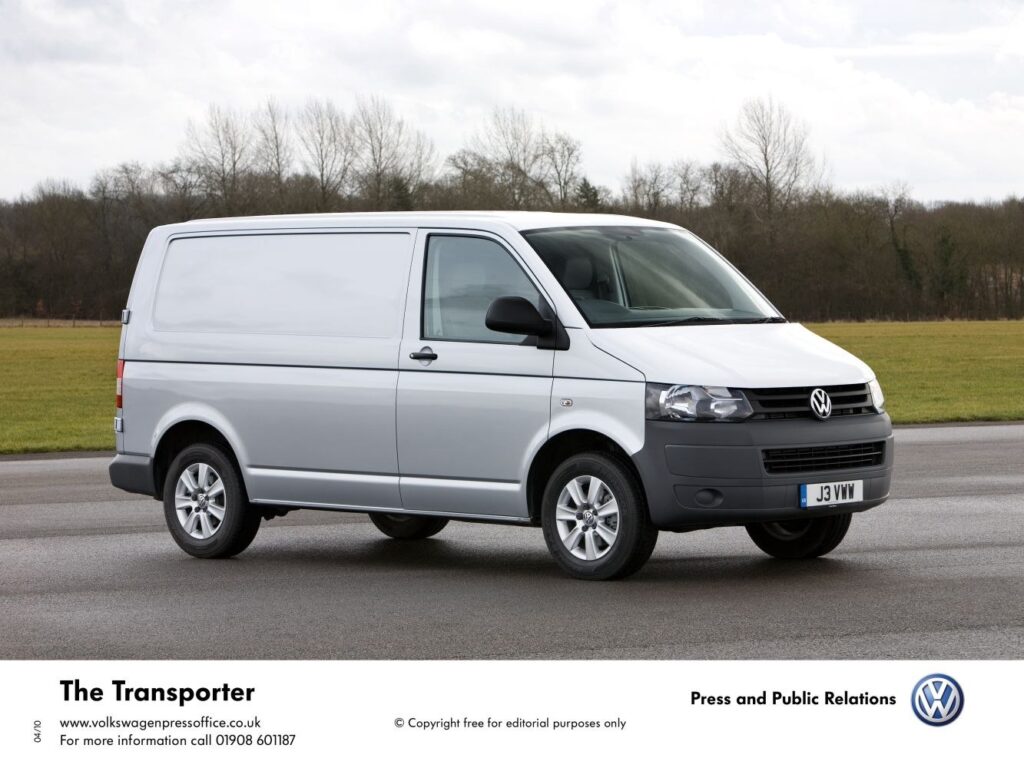
The Volkswagen Transporter (T5, Facelift 2009) Panel Van: A European Workhorse
The Volkswagen Transporter, a name synonymous with versatility and reliability in the commercial vehicle sector, has been a cornerstone of Volkswagen Commercial Vehicles’ lineup for decades. The T5 generation, introduced in 2003, received a significant facelift in 2009, bringing updated styling, enhanced technology, and more efficient powertrains. This article focuses on a particularly potent and efficient variant from the later production run of the facelifted T5: the Volkswagen Transporter (T5, facelift 2009) Panel Van 2.0 TDI BMT (180 Hp) L2H1. Produced between 2013 and 2015, this model represented a high point in performance and fuel economy for its class, primarily serving the demanding European and Asian markets where diesel-powered vans are prevalent. While not a common sight on American roads, the Transporter’s legacy and engineering prowess reflect Volkswagen’s global impact on automotive design and utility.
The T5 generation continued the Transporter’s tradition of offering a wide array of body styles, including panel vans, Kombis, Caravelles, and Multivans, catering to diverse commercial and passenger transport needs. The panel van variant, specifically the L2H1 configuration (referring to a long wheelbase and standard roof height), was engineered as a robust and practical solution for businesses requiring substantial cargo capacity combined with ease of maneuverability. The 2.0 TDI BMT engine, with its 180 horsepower output, positioned this particular Transporter as a leader in its segment for those needing strong pulling power and brisk acceleration without compromising on modern efficiency standards.
Engine & Performance: Powering the Volkswagen Transporter (T5, facelift 2009) Panel Van
At the heart of this formidable workhorse lies Volkswagen’s acclaimed EA189 / CFCA 2.0-liter (1968 cm3 or 120.09 cubic inches) Inline-4 diesel engine. This unit, a testament to modern diesel engineering, features a sophisticated BiTurbo setup and an intercooler, allowing it to generate an impressive 180 horsepower at 4000 rpm. This power output, translating to a robust 91.5 horsepower per liter, ensures the van can handle heavy loads and demanding routes with ease. More crucially for a commercial vehicle, the engine delivers a substantial 400 Nm (295.02 lb.-ft.) of torque, available across a broad and usable range from 1500 to 2000 rpm. This low-end torque is vital for confident acceleration from a standstill, seamless merging onto highways, and maintaining speed even when fully loaded.
The powertrain architecture is a front-transverse engine layout, driving the front wheels through a precise 6-speed manual transmission. This combination contributes to the vehicle’s excellent fuel efficiency and responsive driving dynamics. Despite its size and utility focus, the Volkswagen Transporter (T5, facelift 2009) Panel Van delivers surprising performance figures for its class, accelerating from 0 to 60 mph in a swift 9.4 seconds (0-100 km/h in 9.9 seconds) and reaching a top speed of 118.68 mph (191 km/h).
The “BMT” designation stands for BlueMotion Technology, Volkswagen’s suite of features aimed at optimizing fuel consumption and reducing emissions. This includes a Start & Stop System that automatically shuts off the engine when the vehicle is stationary, and a particulate filter to reduce soot emissions. These technologies, combined with the advanced common rail fuel injection system and DOHC valvetrain with 4 valves per cylinder, allow the 2.0 TDI BMT to achieve remarkable fuel economy for its segment. The combined NEDC (New European Driving Cycle) fuel consumption is rated between 7 and 7.3 liters per 100 km, which translates to an impressive 33.6 to 32.2 US miles per gallon. CO2 emissions are kept within 184-192 g/km, meeting the Euro 5 emission standard prevalent during its production years. The engine oil capacity is 7 liters (7.4 US quarts), with a coolant capacity of 11 liters (11.62 US quarts).
Design & Features: Practicality Meets Volkswagen Engineering
The design of the facelifted T5 Transporter Panel Van retained its iconic, functional aesthetic while incorporating subtle updates for a more modern appearance. The L2H1 designation signifies a long wheelbase (3400 mm or 133.86 inches) and a standard roof height (1990 mm or 78.35 inches), providing an optimal balance between cavernous cargo space and accessibility, particularly in urban environments with height restrictions. Measuring 5292 mm (208.35 inches) in length and 1904 mm (74.96 inches) in width (2283 mm or 89.88 inches including mirrors), the van offers substantial external dimensions for its operational purpose.
As a panel van, its primary purpose is cargo transport, reflected in its generous maximum trunk space of 6700 liters (236.61 cubic feet). The vehicle’s kerb weight ranges from 1820-2237 kg (4012.41 – 4931.74 lbs), with a maximum permissible gross weight of 2800-3200 kg (6172.94 – 7054.79 lbs). This allows for a substantial maximum payload of 963-980 kg (2123.05 – 2160.53 lbs), making it a truly capable commercial vehicle. The fuel tank capacity of 80 liters (21.13 US gallons) ensures a long operating range, minimizing downtime for refueling.
Inside, the Transporter Panel Van typically features 2-3 seats, prioritizing utility and driver comfort. The cabin is designed to be ergonomic and durable, with controls intuitively placed for ease of use during long working hours. Safety features for the era include an Anti-lock Braking System (ABS), a standard for commercial vehicles, ensuring stable braking performance. The hydraulic power steering system, coupled with a rack and pinion setup, provides direct feedback and assists in maneuvering the substantial vehicle, particularly in tight spots, evidenced by its minimum turning circle of 13.2 meters (43.31 feet). The robust independent suspension system – McPherson struts with coil springs and an anti-roll bar at the front, and independent coil springs with a transverse stabilizer and trailing arms at the rear – ensures a comfortable ride even when laden, and competent handling characteristics. Braking is handled by ventilated discs all around (340×32.5 mm front, 294×22 mm rear) for reliable stopping power. The van also offers a respectable ground clearance of 201 mm (7.91 inches) and decent approach, departure, and ramp-over angles, indicating some capability for navigating uneven terrain or construction sites.
Technical Specifications
| Category | Specification |
|---|---|
| General Information | |
| Brand | Volkswagen |
| Model | Transporter |
| Generation | Transporter (T5, facelift 2009) Panel Van |
| Type (Engine) | 2.0 TDI BMT (180 Hp) L2H1 |
| Start of Production | 2013 year |
| End of Production | 2015 year |
| Powertrain Architecture | Internal Combustion engine |
| Body type | Van |
| Seats | 2-3 |
| Doors | 4-5 |
| Performance Specs | |
| Fuel consumption (economy) – urban (NEDC) | 8.6-8.9 l/100 km (27.4 – 26.4 US mpg) |
| Fuel consumption (economy) – extra urban (NEDC) | 6.1-6.4 l/100 km (38.6 – 36.8 US mpg) |
| Fuel consumption (economy) – combined (NEDC) | 7-7.3 l/100 km (33.6 – 32.2 US mpg) |
| CO2 emissions (NEDC) | 184-192 g/km |
| Fuel Type | Diesel |
| Acceleration 0 – 60 mph | 9.4 sec |
| Acceleration 0 – 100 km/h | 9.9 sec |
| Maximum speed | 191 km/h (118.68 mph) |
| Emission standard | Euro 5 |
| Weight-to-power ratio | 10.1 kg/Hp (98.9 Hp/tonne) |
| Weight-to-torque ratio | 4.6 kg/Nm (219.8 Nm/tonne) |
| Engine Specs | |
| Power | 180 Hp @ 4000 rpm |
| Power per liter | 91.5 Hp/l |
| Torque | 400 Nm (295.02 lb.-ft.) @ 1500-2000 rpm |
| Engine layout | Front, Transverse |
| Engine Model/Code | EA189 / CFCA |
| Engine displacement | 1968 cm3 (120.09 cu. in.) |
| Number of cylinders | 4 |
| Engine configuration | Inline |
| Cylinder Bore | 81 mm (3.19 in.) |
| Piston Stroke | 95.5 mm (3.76 in.) |
| Compression ratio | 16.5:1 |
| Number of valves per cylinder | 4 |
| Fuel injection system | Diesel Commonrail |
| Engine aspiration | BiTurbo, Intercooler |
| Valvetrain | DOHC |
| Engine oil capacity | 7 l (7.4 US qt) |
| Coolant | 11 l (11.62 US qt) |
| Engine Systems | |
| Start & Stop System | Yes |
| Particulate filter | Yes |
| Space, Volume and Weights | |
| Kerb Weight | 1820-2237 kg (4012.41 – 4931.74 lbs) |
| Max. weight | 2800-3200 kg (6172.94 – 7054.79 lbs) |
| Max load | 963-980 kg (2123.05 – 2160.53 lbs) |
| Trunk (boot) space – maximum | 6700 l (236.61 cu. ft.) |
| Fuel tank capacity | 80 l (21.13 US gal) |
| Max. roof load | 100 kg (220.46 lbs) |
| Permitted trailer load with brakes (12%) | 2500 kg (5511.56 lbs) |
| Permitted trailer load without brakes | 750 kg (1653.47 lbs) |
| Permitted towbar download | 100 kg (220.46 lbs) |
| Dimensions | |
| Length | 5292 mm (208.35 in.) |
| Width | 1904 mm (74.96 in.) |
| Width including mirrors | 2283 mm (89.88 in.) |
| Height | 1990 mm (78.35 in.) |
| Wheelbase | 3400 mm (133.86 in.) |
| Front overhang | 896 mm (35.28 in.) |
| Rear overhang | 996 mm (39.21 in.) |
| Ride height (ground clearance) | 201 mm (7.91 in.) |
| Minimum turning circle (turning diameter) | 13.2 m (43.31 ft.) |
| Approach angle | 21° |
| Departure angle | 17° |
| Ramp-over (brakeover) angle | 12° |
| Drivetrain, Brakes and Suspension Specs | |
| Drivetrain Architecture | The Internal combustion engine (ICE) drives the front wheels of the vehicle. |
| Drive wheel | Front wheel drive |
| Number of gears and type of gearbox | 6 gears, manual transmission |
| Front suspension | Independent, type McPherson with coil spring and anti-roll bar |
| Rear suspension | Independent coil spring, Transverse stabilizer, Trailing arm |
| Front brakes | Ventilated discs, 340×32.5 mm |
| Rear brakes | Ventilated discs, 294×22 mm |
| Assisting systems | ABS (Anti-lock braking system) |
| Steering type | Steering rack and pinion |
| Power steering | Hydraulic Steering |
| Tires size | 215/60 R17; 235/55 R17; 255/45 R18 |
| Wheel rims size | 7J x 17; 8J x 18 |
Legacy & Market Impact of the Volkswagen Transporter
The Volkswagen Transporter series boasts a rich heritage, dating back to the original Type 2 “Bus” of the 1950s. Each subsequent generation has built upon this legacy, adapting to evolving commercial and consumer demands. The T5, and particularly its facelifted iteration from 2009-2015, upheld the Transporter’s reputation for robust build quality, reliability, and excellent residual values in its primary European markets. The 2.0 TDI BMT (180 Hp) L2H1 variant stood out as a premium offering within the light commercial vehicle segment, appealing to businesses that required not just cargo capacity, but also strong performance, advanced efficiency, and a refined driving experience.
In Europe, the Transporter faced stiff competition from rivals such as the Mercedes-Benz Vito, Ford Transit Custom, Renault Trafic, and Opel/Vauxhall Vivaro. What often set the Transporter apart was its perceived premium quality, car-like driving dynamics, and the strength of the Volkswagen brand’s service network. The T5’s independent suspension on all four wheels, a feature not always standard in this class, contributed significantly to its superior ride comfort and handling, making long journeys less fatiguing for drivers. The availability of powerful, yet efficient, diesel engines like the 180 Hp 2.0 TDI BMT further cemented its position as a top-tier choice for demanding commercial applications, from express deliveries to specialized mobile workshops.
The introduction of BlueMotion Technology in the facelifted T5, including the Start & Stop system and particulate filter, was a crucial step in aligning the Transporter with increasingly stringent European emission standards (Euro 5 in this case) and consumer demand for lower running costs. This focus on efficiency, coupled with its proven durability, ensured that the T5 remained a highly desirable asset for businesses, contributing to its strong resale values. Its long wheelbase (L2) and standard height (H1) configuration offered a practical compromise between load volume and urban maneuverability, making it a versatile tool for a wide range of industries.
While the Volkswagen Transporter (T5, facelift 2009) Panel Van 2.0 TDI BMT (180 Hp) L2H1 never officially graced American showrooms, its impact on global commercial vehicle design and engineering is undeniable. It represents a pinnacle of its generation’s development, combining a powerful and efficient diesel engine with a highly practical and well-engineered chassis, solidifying the Transporter’s status as a benchmark in the light commercial van segment across continents where such vehicles are essential to the economy. Its legacy continues with subsequent generations, each building on the foundation of reliability, versatility, and advanced technology established by models like the T5 facelift.