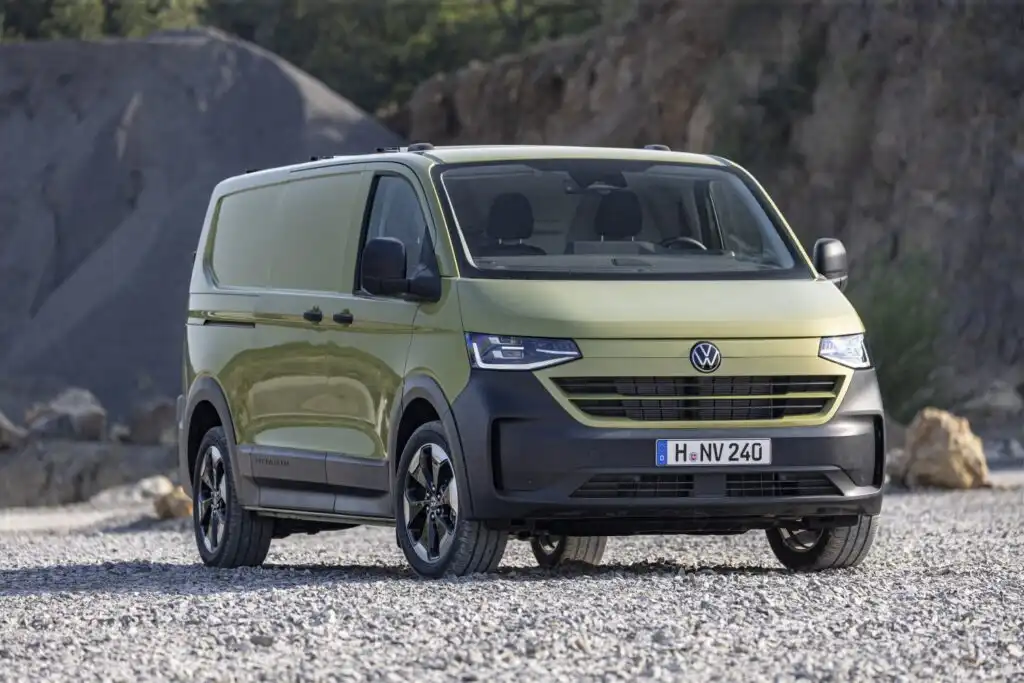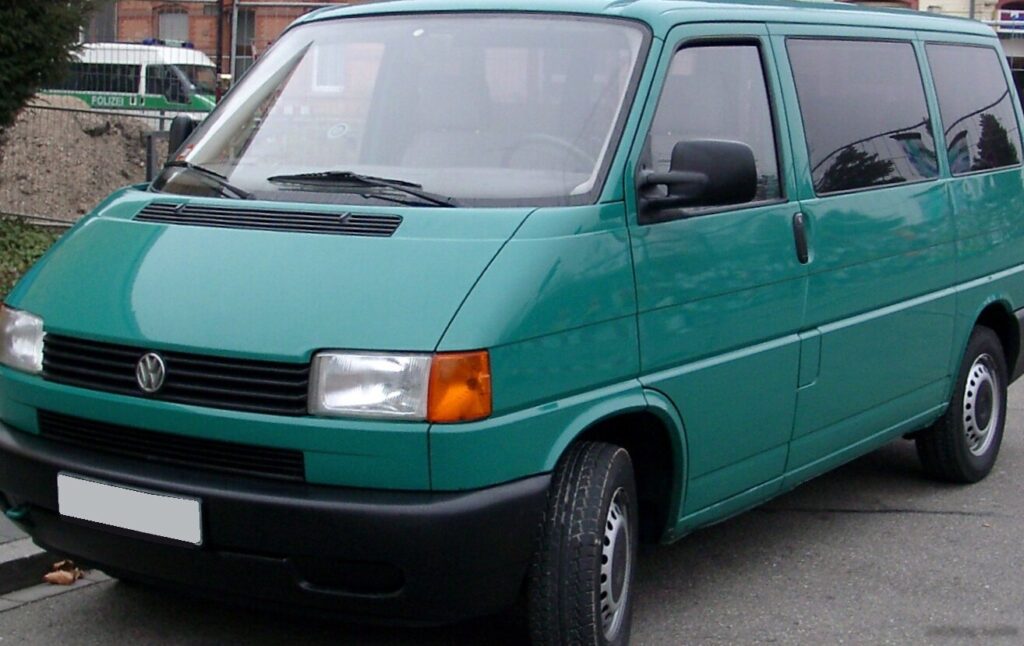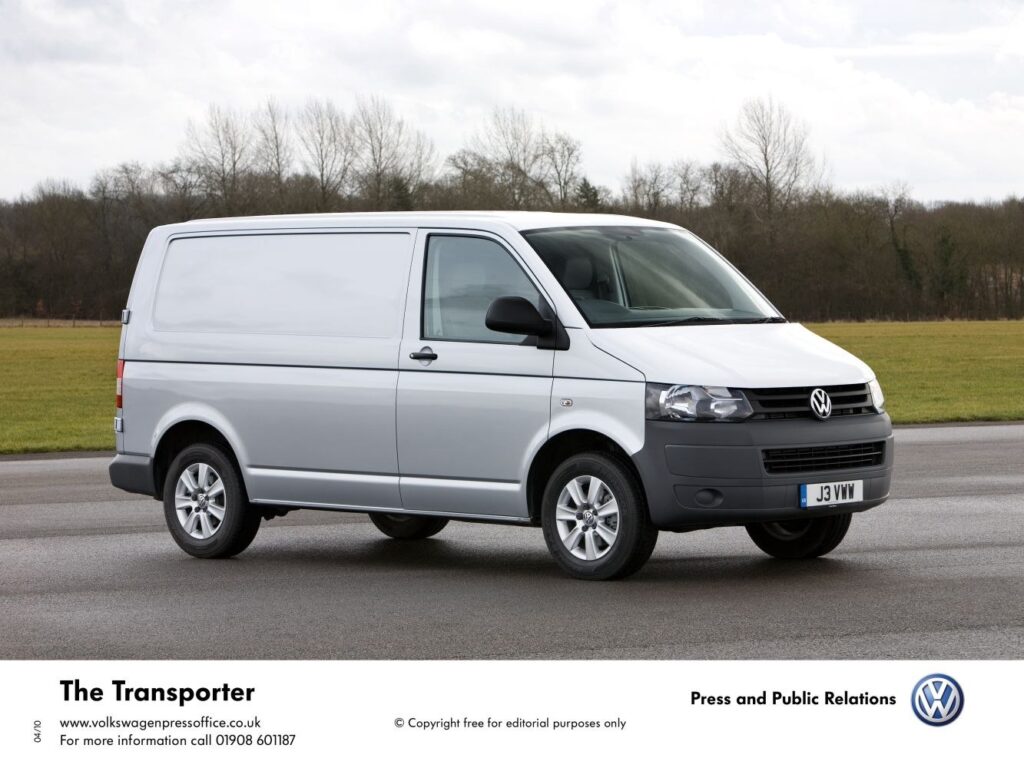
The Volkswagen Transporter (T5, facelift 2009) Panel Van: A European Workhorse
The Volkswagen Transporter, a name synonymous with versatility and utility across Europe and numerous international markets, represents a lineage of commercial vehicles dating back to the iconic Type 2 (Bus). The T5 generation, introduced in 2003, received a significant facelift in 2009, bringing updated styling, improved powertrains, and enhanced technology. This detailed article focuses on a specific variant from the post-facelift era: the Volkswagen Transporter (T5, facelift 2009) Panel Van 2.0 TDI BMT (180 Hp) L2H3. Produced between 2013 and 2015, this model epitomized Volkswagen’s commitment to efficiency and robust performance in the light commercial vehicle (LCV) segment, offering a compelling package for businesses requiring substantial cargo capacity and reliable operation.
While the Transporter nameplate is not directly sold in the United States in its European form, its design philosophy and engineering prowess are evident in other Volkswagen vehicles globally. In its primary markets, particularly Europe, the T5 Transporter Panel Van served as a fundamental tool for myriad trades, from logistics and delivery services to construction and mobile workshops, valued for its durability, fuel economy, and comprehensive range of configurations.
Engine and Performance: The 2.0 TDI BMT Powerhouse
At the heart of the Volkswagen Transporter (T5, facelift 2009) Panel Van 2.0 TDI BMT (180 Hp) L2H3 lies a sophisticated 2.0-liter (1968 cm3 or 120.09 cu. in.) inline four-cylinder diesel engine, designated with the code EA189 / CFCA. This powertrain is a prime example of modern diesel engineering, featuring a DOHC (Double Overhead Camshaft) valvetrain with four valves per cylinder and a common rail fuel injection system. What truly sets this engine apart is its BiTurbo aspiration system combined with an intercooler, allowing it to produce an impressive 180 horsepower at 4000 rpm and a substantial 295.02 lb.-ft. (400 Nm) of torque available across a broad and usable range from 1500 to 2000 rpm.
The “BMT” designation, standing for BlueMotion Technology, signifies Volkswagen’s suite of efficiency-enhancing features. For this Transporter, it included a Start & Stop system, which automatically shuts off the engine when the vehicle is stationary and restarts it when the clutch is engaged, significantly reducing fuel consumption and emissions in urban traffic. A particulate filter was also standard, ensuring the vehicle met the stringent Euro 5 emission standards prevalent during its production years.
Mated to a six-speed manual transmission, this front-wheel-drive van offered a compelling blend of power and economy. Despite its considerable size and potential cargo load, the Transporter L2H3 could accelerate from 0 to 60 mph in a respectable 9.8 seconds, with a top speed of 109.36 mph (176 km/h). Fuel efficiency was a key selling point for commercial operators, with combined NEDC figures ranging from 30.9 to 32.2 US mpg (7.3-7.6 l/100 km), demonstrating its cost-effectiveness over long hauls and daily operations.
Design and Features: Maximizing Utility with the L2H3 Configuration
The Volkswagen Transporter (T5, facelift 2009) Panel Van is a purpose-built commercial vehicle, and its design reflects a strong emphasis on practicality, durability, and ergonomic functionality. The specific L2H3 designation indicates a long wheelbase (L2) and a high roof (H3) configuration, maximizing the internal cargo volume. With a length of 208.35 inches (5292 mm) and a height of 97.48 inches (2476 mm), this variant offered an expansive cargo capacity of up to 9300 liters (328.43 cu. ft.), making it ideal for transporting large or numerous items.
The exterior design, characteristic of the T5 facelift, featured a refreshed front fascia with new headlights, grille, and bumper, giving it a more modern and cohesive look compared to its pre-facelift predecessor. The robust body structure was designed to withstand the rigors of commercial use, while the wide-opening rear and side doors facilitated easy loading and unloading. The interior was designed for a working environment, typically accommodating 2-3 occupants. The cabin focused on driver ergonomics, with a clear instrument cluster, intuitive controls, and durable materials. Features such as hydraulic power steering and an anti-lock braking system (ABS) were standard, enhancing both safety and drivability for the professional user.
The suspension system, with independent McPherson struts at the front and an independent coil spring setup with a transverse stabilizer and trailing arm at the rear, provided a comfortable ride quality even when laden, alongside predictable handling. Braking was managed by ventilated discs both front (340×32.5 mm) and rear (294×22 mm), ensuring strong stopping power for a vehicle of its size and potential weight. The option for various tire sizes (215/60 R17; 235/55 R17; 255/45 R18) and wheel rims allowed for customization based on specific load requirements or aesthetic preferences.
Technical Specifications: Volkswagen Transporter (T5, facelift 2009) Panel Van 2.0 TDI BMT (180 Hp) L2H3
| General Information | |
| Brand | Volkswagen |
| Model | Transporter |
| Generation | Transporter (T5, facelift 2009) Panel Van |
| Type (Engine) | 2.0 TDI BMT (180 Hp) L2H3 |
| Start of Production | 2013 year |
| End of Production | 2015 year |
| Powertrain Architecture | Internal Combustion Engine |
| Body Type | Van |
| Seats | 2-3 |
| Doors | 4-5 |
| Performance Specifications | |
| Fuel Consumption (Urban, NEDC) | 8.6-8.9 l/100 km (27.4-26.4 US mpg) |
| Fuel Consumption (Extra Urban, NEDC) | 6.6-6.9 l/100 km (35.6-34.1 US mpg) |
| Fuel Consumption (Combined, NEDC) | 7.3-7.6 l/100 km (32.2-30.9 US mpg) |
| CO2 Emissions (NEDC) | 192-199 g/km |
| Fuel Type | Diesel |
| Acceleration 0-60 mph (Calculated) | 9.8 sec |
| Acceleration 0-62 mph (0-100 km/h) | 10.3 sec |
| Maximum Speed | 109.36 mph (176 km/h) |
| Emission Standard | Euro 5 |
| Weight-to-Power Ratio | 10.1 kg/Hp (98.9 Hp/tonne) |
| Weight-to-Torque Ratio | 4.6 kg/Nm (219.8 Nm/tonne) |
| Engine Specifications | |
| Power | 180 Hp @ 4000 rpm |
| Power per Liter | 91.5 Hp/l |
| Torque | 295.02 lb.-ft. (400 Nm) @ 1500-2000 rpm |
| Engine Layout | Front, Transverse |
| Engine Model/Code | EA189 / CFCA |
| Engine Displacement | 2.0 liters (1968 cm3, 120.09 cu. in.) |
| Number of Cylinders | 4 |
| Engine Configuration | Inline |
| Cylinder Bore | 3.19 in. (81 mm) |
| Piston Stroke | 3.76 in. (95.5 mm) |
| Compression Ratio | 16.5:1 |
| Number of Valves per Cylinder | 4 |
| Fuel Injection System | Diesel Commonrail |
| Engine Aspiration | BiTurbo, Intercooler |
| Valvetrain | DOHC |
| Engine Oil Capacity | 7.4 US qt (7 l) |
| Coolant Capacity | 11.62 US qt (11 l) |
| Engine Systems | Start & Stop System, Particulate Filter |
| Space, Volume and Weights | |
| Kerb Weight | 4012.41 – 4931.74 lbs. (1820-2237 kg) |
| Max. Weight (GVWR) | 6172.94 – 7054.79 lbs. (2800-3200 kg) |
| Max Load | 2123.05 – 2160.53 lbs. (963-980 kg) |
| Trunk (Boot) Space – Maximum | 328.43 cu. ft. (9300 l) |
| Fuel Tank Capacity | 21.13 US gal (80 l) |
| Permitted Trailer Load with Brakes (12%) | 5511.56 lbs. (2500 kg) |
| Permitted Trailer Load without Brakes | 1653.47 lbs. (750 kg) |
| Permitted Towbar Download | 220.46 lbs. (100 kg) |
| Dimensions | |
| Length | 208.35 in. (5292 mm) |
| Width | 74.96 in. (1904 mm) |
| Width Including Mirrors | 89.88 in. (2283 mm) |
| Height | 97.48 in. (2476 mm) |
| Wheelbase | 133.86 in. (3400 mm) |
| Front Overhang | 35.28 in. (896 mm) |
| Rear Overhang | 39.21 in. (996 mm) |
| Ride Height (Ground Clearance) | 7.91 in. (201 mm) |
| Minimum Turning Circle (Diameter) | 43.31 ft. (13.2 m) |
| Approach Angle | 21° |
| Departure Angle | 17° |
| Ramp-over (Brakeover) Angle | 12° |
| Drivetrain, Brakes and Suspension Specifications | |
| Drivetrain Architecture | Front-wheel drive (ICE drives front wheels) |
| Drive Wheel | Front-wheel drive |
| Number of Gears and Type of Gearbox | 6 gears, manual transmission |
| Front Suspension | Independent, McPherson type with coil spring and anti-roll bar |
| Rear Suspension | Independent coil spring, Transverse stabilizer, Trailing arm |
| Front Brakes | Ventilated discs, 340×32.5 mm |
| Rear Brakes | Ventilated discs, 294×22 mm |
| Assisting Systems | ABS (Anti-lock Braking System) |
| Steering Type | Steering rack and pinion |
| Power Steering | Hydraulic Steering |
| Tire Sizes | 215/60 R17; 235/55 R17; 255/45 R18 |
| Wheel Rims Sizes | 7J x 17; 8J x 18 |
Legacy and Market Impact of the Volkswagen Transporter (T5, facelift 2009) Panel Van
The Volkswagen Transporter series has an undeniable legacy, recognized globally for its role in shaping light commercial transport. The T5 generation, particularly after its 2009 facelift, continued this tradition, solidifying its position as a premium offering in the competitive European LCV market. The Volkswagen Transporter (T5, facelift 2009) Panel Van 2.0 TDI BMT (180 Hp) L2H3, with its powerful yet efficient BiTurbo diesel engine and expansive cargo capacity, was a testament to Volkswagen’s engineering prowess and understanding of commercial vehicle demands.
In its segment, the T5 Transporter faced stiff competition from rivals such as the Ford Transit, Mercedes-Benz Vito, Renault Trafic, and Opel Vivaro. However, the Transporter consistently stood out for its build quality, refined driving dynamics (often feeling more car-like than many competitors), and strong residual values. The BlueMotion Technology, coupled with the robust 2.0 TDI engine, offered a compelling proposition for businesses looking to minimize running costs without sacrificing performance or reliability.
The L2H3 variant, specifically, addressed the need for maximum volumetric capacity, appealing to industries requiring the transportation of bulky goods or the fitment of extensive internal racking and equipment. Its ability to tow significant loads (up to 5511.56 lbs. with brakes) further enhanced its utility, making it a truly versatile workhorse. The Transporter’s reputation for longevity and adaptability meant that these vehicles often remained in service for many years, proving their worth as a sound investment for commercial fleets and independent tradespeople alike.
Ultimately, the T5 Transporter, in its facelifted form and particularly in high-specification variants like the 2.0 TDI BMT L2H3, represents a pinnacle of its generation. It seamlessly blended Volkswagen’s passenger car refinement with the ruggedness and practicality demanded of a commercial van, ensuring its place as a revered and impactful model in the global automotive landscape, especially within its core European market.