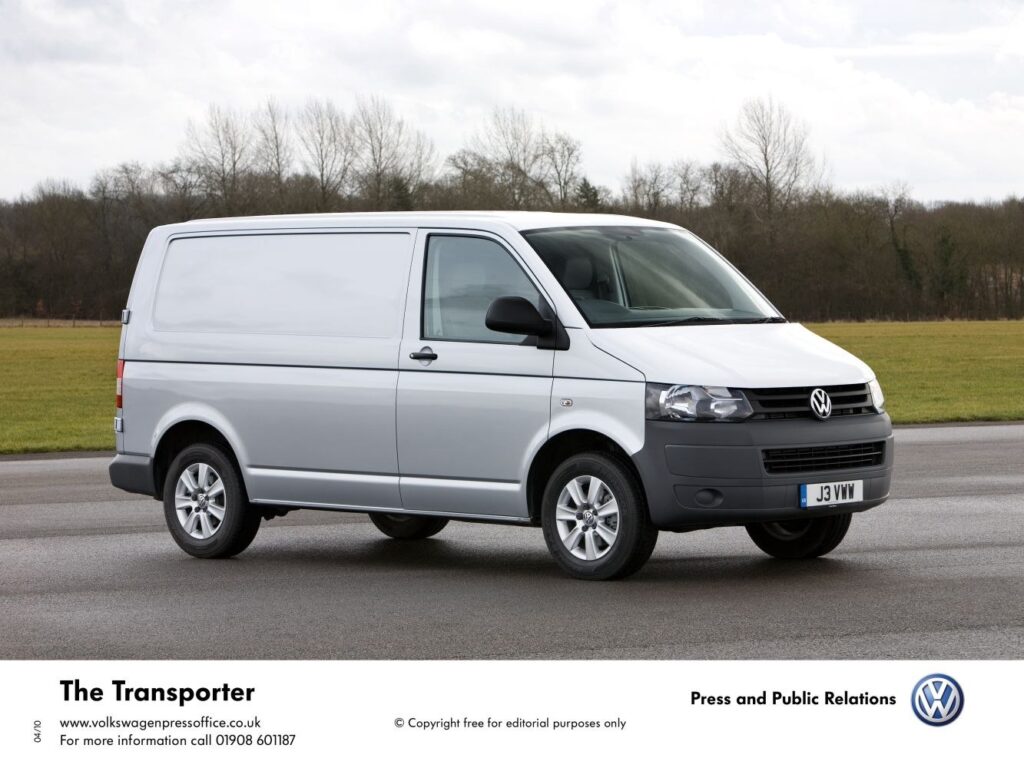
Volkswagen Transporter (T5, facelift 2009) Panel Van 2.0 TDI BMT (84 Hp) L2H2: A European Workhorse
The Volkswagen Transporter, an iconic nameplate in the light commercial vehicle segment, represents a lineage of vans that has served businesses and individuals worldwide for decades. The T5 generation, introduced in 2003, received a significant facelift in 2009, bringing updated styling, improved powertrains, and enhanced technology. This article focuses on a specific variant from this refreshed generation, the Volkswagen Transporter (T5, facelift 2009) Panel Van 2.0 TDI BMT (84 Hp) L2H2, produced between 2011 and 2015. This particular model, with its 2.0-liter TDI engine featuring BlueMotion Technology (BMT) and a long-wheelbase, high-roof (L2H2) configuration, was engineered as a highly efficient and practical workhorse primarily for the European market, where it established itself as a benchmark for utility and reliability.
Engine and Performance of the Volkswagen Transporter (T5, facelift 2009) Panel Van
At the heart of this particular Transporter T5 variant lies Volkswagen’s renowned EA189 / CAAA 2.0-liter TDI (Turbocharged Direct Injection) engine. This inline-four cylinder diesel powerplant, equipped with a DOHC (Double Overhead Camshaft) valvetrain and a common rail fuel injection system, was designed for robust performance, excellent fuel economy, and strong torque delivery crucial for a commercial vehicle. The engine benefits from a turbocharger and intercooler, ensuring efficient air intake and combustion across a wide range of operating conditions.
In this specific configuration, the engine produces 84 horsepower (Hp) at 3500 rpm and a substantial 220 Newton-meters (Nm), or 162.26 lb-ft, of torque available from a remarkably low 1250 rpm, peaking at 2500 rpm. While 84 Hp might seem modest by passenger car standards, it is perfectly suited for the Transporter’s intended purpose: hauling significant loads efficiently. The broad torque band ensures effortless pulling power from low engine speeds, minimizing the need for frequent gear changes and reducing driver fatigue in urban delivery cycles.
A key feature of this model is its BlueMotion Technology (BMT), Volkswagen’s suite of modifications aimed at maximizing fuel efficiency and reducing emissions. This includes a Start & Stop system, which automatically shuts off the engine when the vehicle is stationary (e.g., at a traffic light) and restarts it seamlessly when the clutch is engaged. Additionally, a particulate filter is standard, helping the vehicle meet the stringent Euro 5 emission standards prevalent in Europe during its production years. These technologies contribute to impressive fuel economy figures for a vehicle of its size and capacity: a combined (NEDC) rating of 6.7-7 liters per 100 kilometers, translating to approximately 35.1 – 33.6 US miles per gallon.
Power is delivered to the front wheels via a durable 5-speed manual transmission, a common and reliable choice for commercial vehicles of this era. While acceleration from 0 to 60 mph takes around 18.8 seconds and the top speed is limited to 88.23 mph, these metrics are secondary to the vehicle’s primary role as a reliable and economical transporter of goods. The focus is on low running costs, dependable operation, and the ability to handle a full payload without strain.
Design and Features: The Volkswagen Transporter (T5, facelift 2009) Panel Van L2H2
The Volkswagen Transporter (T5, facelift 2009) Panel Van is a quintessential example of functional design tailored for commercial utility. The L2H2 designation signifies a long wheelbase (L2) and a high roof (H2) configuration, maximizing cargo volume and versatility. With an overall length of 208.35 inches and a height of 85.67 inches, this van offers an impressive maximum trunk (boot) space of 7800 liters, or 275.45 cubic feet, making it ideal for a wide range of businesses from logistics to trades. The body features 4-5 doors, typically including a sliding side door for easy access in confined spaces and rear barn doors for efficient loading and unloading of larger items.
The interior of the Panel Van is designed with durability and practicality in mind. Seating for 2-3 occupants (driver plus one or two passengers) is standard, with robust upholstery and an ergonomic dashboard layout that prioritizes ease of use for the driver. Storage compartments are strategically placed to accommodate documents, tools, and personal items. While luxury features are not its primary focus, the T5 facelift brought subtle refinements to the cabin, improving comfort for long working hours.
From a safety standpoint, the Transporter T5 includes essential features like ABS (Anti-lock Braking System) as standard, ensuring stable braking performance even under heavy loads. The vehicle’s robust construction and independent suspension system (McPherson struts with coil springs and an anti-roll bar at the front, and independent coil springs with a transverse stabilizer and trailing arms at the rear) provide a stable and comfortable ride, even when fully laden. The hydraulic power steering system offers precise control, while the ventilated disc brakes on both front and rear axles provide reliable stopping power for a vehicle of its size and weight.
The exterior design is characterized by its utilitarian yet modern aesthetic, a hallmark of Volkswagen’s commercial vehicle styling. The facelift introduced updated headlights, grille, and bumper designs, aligning it with Volkswagen’s contemporary passenger car lineup while maintaining its rugged appeal. The large side panels offer ample space for corporate branding, a critical consideration for businesses utilizing the van for advertising.
Technical Specifications
| Category | Specification |
|---|---|
| General Information | |
| Brand | Volkswagen |
| Model | Transporter |
| Generation | Transporter (T5, facelift 2009) Panel Van |
| Type (Engine) | 2.0 TDI BMT (84 Hp) L2H2 |
| Production Start | 2011 |
| Production End | 2015 |
| Powertrain Architecture | Internal Combustion Engine |
| Body Type | Van |
| Seats | 2-3 |
| Doors | 4-5 |
| Performance Specifications | |
| Fuel Consumption (Urban, NEDC) | 8.3-8.6 l/100 km (28.3 – 27.4 US mpg) |
| Fuel Consumption (Extra Urban, NEDC) | 5.8-6.1 l/100 km (40.6 – 38.6 US mpg) |
| Fuel Consumption (Combined, NEDC) | 6.7-7 l/100 km (35.1 – 33.6 US mpg) |
| CO2 Emissions (NEDC) | 176-184 g/km |
| Fuel Type | Diesel |
| Acceleration 0-60 mph | 18.8 sec |
| Maximum Speed | 142 km/h (88.23 mph) |
| Emission Standard | Euro 5 |
| Weight-to-Power Ratio | 20.7 kg/Hp (45.6 lbs/Hp) |
| Weight-to-Torque Ratio | 7.9 kg/Nm (17.4 lbs/Nm) |
| Engine Specifications | |
| Power | 84 Hp @ 3500 rpm |
| Power per Liter | 42.7 Hp/l |
| Torque | 220 Nm (162.26 lb-ft) @ 1250-2500 rpm |
| Engine Layout | Front, Transverse |
| Engine Model/Code | EA189 / CAAA |
| Engine Displacement | 1968 cm³ (120.09 cu. in.) |
| Number of Cylinders | 4 |
| Engine Configuration | Inline |
| Cylinder Bore | 81 mm (3.19 in.) |
| Piston Stroke | 95.5 mm (3.76 in.) |
| Compression Ratio | 16.5:1 |
| Valves per Cylinder | 4 |
| Fuel Injection System | Diesel Commonrail |
| Engine Aspiration | Turbocharger, Intercooler |
| Valvetrain | DOHC |
| Engine Oil Capacity | 7 l (7.4 US qt) |
| Coolant Capacity | 11 l (11.62 US qt) |
| Engine Systems | Start & Stop System, Particulate Filter |
| Space, Volume, and Weights | |
| Kerb Weight | 1738-2182 kg (3831.63 – 4810.49 lbs) |
| Max. Weight (GVWR) | 2800-3000 kg (6172.94 – 6613.87 lbs) |
| Max Load Capacity | 818-1062 kg (1803.38 – 2341.31 lbs) |
| Trunk (Boot) Space – Maximum | 7800 l (275.45 cu. ft.) |
| Fuel Tank Capacity | 80 l (21.13 US gal) |
| Permitted Trailer Load (with brakes) | 2200 kg (4850.17 lbs) |
| Permitted Trailer Load (without brakes) | 750 kg (1653.47 lbs) |
| Permitted Towbar Download | 100 kg (220.46 lbs) |
| Dimensions | |
| Length | 5292 mm (208.35 in.) |
| Width | 1904 mm (74.96 in.) |
| Width (including mirrors) | 2283 mm (89.88 in.) |
| Height | 2176 mm (85.67 in.) |
| Wheelbase | 3400 mm (133.86 in.) |
| Front Overhang | 896 mm (35.28 in.) |
| Rear Overhang | 996 mm (39.21 in.) |
| Ride Height (Ground Clearance) | 201 mm (7.91 in.) |
| Minimum Turning Circle | 13.2 m (43.31 ft) |
| Approach Angle | 21° |
| Departure Angle | 17° |
| Ramp-over (Brakeover) Angle | 12° |
| Drivetrain, Brakes, and Suspension | |
| Drivetrain Architecture | Internal Combustion Engine drives the front wheels |
| Drive Wheel | Front-wheel drive |
| Number of Gears & Gearbox Type | 5 gears, Manual Transmission |
| Front Suspension | Independent, McPherson type with coil spring and anti-roll bar |
| Rear Suspension | Independent coil spring, Transverse stabilizer, Trailing arm |
| Front Brakes | Ventilated discs, 308×29.5 mm |
| Rear Brakes | Ventilated discs, 294×22 mm |
| Assisting Systems | ABS (Anti-lock Braking System) |
| Steering Type | Steering rack and pinion |
| Power Steering | Hydraulic Steering |
| Tire Size | 215/65 R16 |
| Wheel Rims Size | 6.5J x 16 |
Legacy and Market Impact
The Volkswagen Transporter series holds a revered position in automotive history, particularly in Europe, where its lineage traces back to the iconic Type 2 “Bus” or “Microbus.” The T5 generation, and its facelifted iteration from 2009, continued this legacy, solidifying its reputation as a versatile and dependable light commercial vehicle. While the specific Volkswagen Transporter (T5, facelift 2009) Panel Van 2.0 TDI BMT (84 Hp) L2H2 was not directly marketed in the United States, it was a cornerstone of Volkswagen’s commercial vehicle offerings across Europe, the UK, Australia, and other global markets where compact yet capable vans are essential.
In its primary markets, the T5 Transporter competed fiercely with rivals such as the Mercedes-Benz Vito, Ford Transit Custom, Renault Trafic, and Opel Vivaro. What set the Transporter apart, even in its lower-powered 84 Hp variant, was its unparalleled reputation for build quality, long-term reliability, and strong residual values. Businesses appreciated its robust construction, low running costs facilitated by the BlueMotion Technology, and its adaptability to various applications, from last-mile delivery to tradesmen’s transport.
The L2H2 configuration, with its generous cargo volume, was particularly popular among those needing substantial load-carrying capacity without moving up to a larger, less maneuverable van class. Its relatively compact footprint for its internal volume, combined with front-wheel drive, made it agile in urban environments and efficient on highways. The efficient 2.0 TDI engine, even in its lowest power output, provided ample torque for pulling heavy loads, making it a favorite among plumbers, electricians, couriers, and small businesses.
Beyond its direct commercial applications, the Transporter T5 platform, including the panel van, also served as a popular base for various conversions, notably camper vans and specialized passenger shuttles. This adaptability further underscored its fundamental soundness and versatile design. The T5 facelift models, produced until 2015, maintained Volkswagen’s strong market presence in the van segment, bridging the gap to the subsequent T6 generation. Its impact is still felt today, with many T5s continuing to serve faithfully, a testament to their enduring quality and the thoughtful engineering behind this European workhorse.