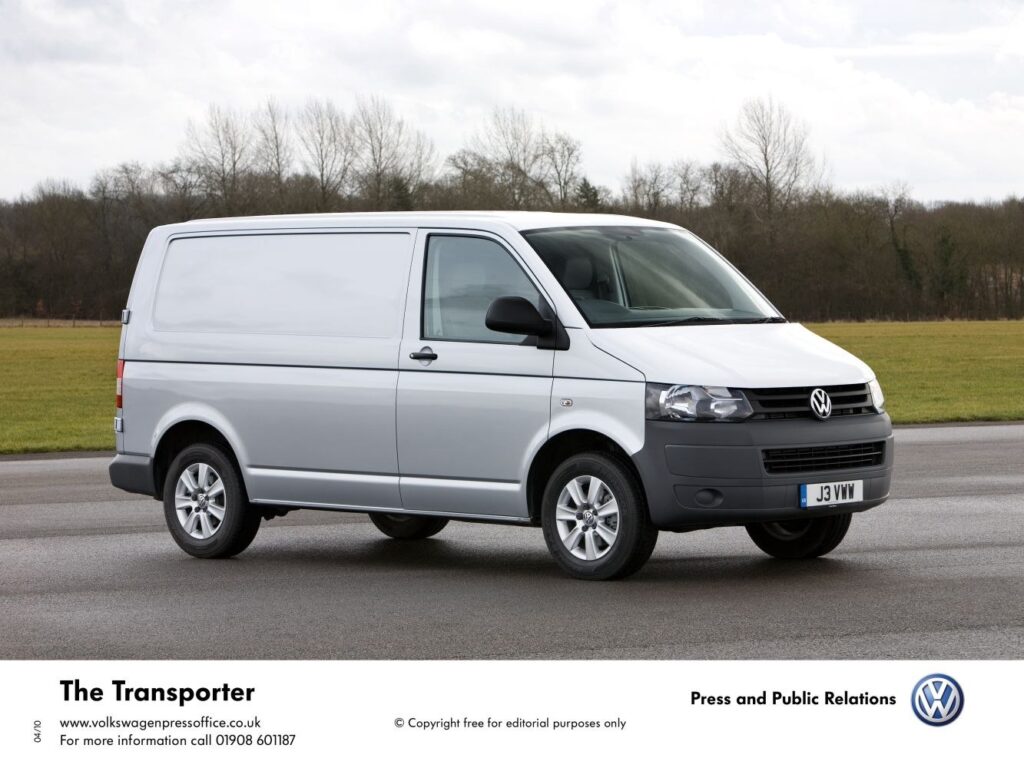
Volkswagen Transporter (T5, facelift 2009) Panel Van 2.0 TSI (150 Hp) L2H2: A European Workhorse
The Volkswagen Transporter (T5, facelift 2009) Panel Van represents a significant iteration in Volkswagen’s long-standing lineage of commercial vehicles. Launched in 2012 as part of the comprehensively updated T5 generation, this particular variant, the 2.0 TSI (150 Hp) L2H2, was produced until 2015. While the Transporter series, often affectionately known as the “Bus” or “Microbus” in its passenger forms, has a global presence, this specific panel van configuration with its gasoline (petrol) engine was primarily a staple in European and other international markets, serving as a versatile and reliable tool for businesses and tradespeople. It embodied Volkswagen’s commitment to efficiency, practicality, and driver comfort in the light commercial vehicle segment.
The T5 generation, introduced in 2003, received a substantial facelift in late 2009, bringing updated styling, improved interiors, and, crucially, a new range of more efficient engines, including the advanced TSI gasoline units. This 2.0 TSI L2H2 model offered a compelling blend of robust cargo capacity and car-like driving dynamics, setting it apart in a segment often dominated by diesel powertrains. Its L2H2 designation signifies a Long wheelbase (L2) and a High roof (H2), providing substantial cargo volume for various professional applications.
Engine and Performance: The 2.0 TSI Advantage in the Volkswagen Transporter (T5, facelift 2009) Panel Van
Under the hood of the Volkswagen Transporter (T5, facelift 2009) Panel Van 2.0 TSI L2H2 lies a sophisticated 2.0-liter (1984 cm³ or 121.07 cu. in.) inline-four gasoline engine, part of Volkswagen’s renowned EA888 family, specifically code CJKB. This engine utilizes direct injection and is boosted by a turbocharger and intercooler, a setup that was quite advanced for a commercial vehicle of its time. It produces a healthy 150 horsepower at a broad range from 3750 to 6000 rpm, delivering a power-per-liter figure of 75.6 Hp/l. More importantly for a commercial vehicle, it generates a robust 206.52 lb.-ft. (280 Nm) of torque, available from a low 1500 rpm and sustained up to 3750 rpm. This wide torque band ensures excellent pulling power and flexibility, crucial for hauling heavy loads or navigating urban traffic.
Power is sent to the front wheels via a precise 6-speed manual transmission, offering the driver full control over the engine’s output. Despite its size and utility focus, the Transporter 2.0 TSI L2H2 demonstrates respectable performance, accelerating from 0 to 60 mph in an estimated 10.5 seconds and reaching a maximum speed of 108.12 mph (174 km/h).
Fuel economy for this gasoline panel van, measured under the NEDC cycle, reflects a balance between power and efficiency. Urban consumption ranged from 18.1 to 18.5 US mpg (12.7-13 l/100 km), while extra-urban driving yielded 29.4 to 30.5 US mpg (7.7-8 l/100 km). The combined cycle figures were between 24 and 24.8 US mpg (9.5-9.8 l/100 km), with CO2 emissions of 222-228 g/km, meeting the Euro 5 emission standard. These figures highlight the engine’s ability to provide adequate power without excessive fuel penalty, especially considering the vehicle’s substantial size and payload capabilities. The engine’s DOHC valvetrain and 9.8:1 compression ratio further contribute to its efficiency and responsiveness.
Design and Features: Utility and Ergonomics
The design of the Volkswagen Transporter (T5, facelift 2009) Panel Van is defined by its functional purpose. As an L2H2 variant, it features a long wheelbase of 133.86 inches (3400 mm) and a high roof, contributing to its impressive maximum cargo volume of 275.45 cu. ft. (7800 liters). The overall length measures 208.35 inches (5292 mm), with a width of 74.96 inches (1904 mm), expanding to 89.88 inches (2283 mm) including mirrors. The generous height of 85.67 inches (2176 mm) allows for comfortable standing room or the transport of taller items within the cargo area.
The panel van configuration typically offers 2 to 3 seats in the front cabin, emphasizing its role as a dedicated commercial vehicle. Access to the cargo area is facilitated by 4-5 doors, usually including a sliding side door and rear barn doors or a tailgate, optimized for loading and unloading in various scenarios. The exterior design of the facelifted T5 incorporated updated headlights, grille, and bumper designs, aligning it with Volkswagen’s contemporary passenger car aesthetic while maintaining its robust and purposeful stance.
Inside, the cabin is designed for durability and ergonomics, crucial for drivers who spend long hours on the road. While not luxurious, the materials are hard-wearing, and the controls are logically placed. Safety features for the era included standard ABS (Anti-lock Braking System), enhancing braking stability, especially under load. The vehicle features an independent McPherson strut front suspension with coil springs and an anti-roll bar, paired with an independent coil spring rear suspension with a transverse stabilizer and trailing arm, providing a comfortable yet stable ride for a van. Hydraulic power steering ensures ease of maneuverability, while ventilated disc brakes (308×29.5 mm front, 294×22 mm rear) provide confident stopping power. The 215/65 R16 tires on 6.5J x 16 wheel rims offer a good balance of load-carrying capacity and ride comfort.
Technical Specifications: Volkswagen Transporter (T5, facelift 2009) Panel Van 2.0 TSI (150 Hp) L2H2
| Category | Specification |
|---|---|
| Brand | Volkswagen |
| Model | Transporter |
| Generation | Transporter (T5, facelift 2009) Panel Van |
| Type (Engine) | 2.0 TSI (150 Hp) L2H2 |
| Start of Production | 2012 year |
| End of Production | 2015 year |
| Powertrain Architecture | Internal Combustion engine |
| Body type | Van |
| Seats | 2-3 |
| Doors | 4-5 |
| Performance Specs | |
| Fuel consumption (urban NEDC) | 12.7-13 l/100 km (18.1 – 18.5 US mpg) |
| Fuel consumption (extra urban NEDC) | 7.7-8 l/100 km (29.4 – 30.5 US mpg) |
| Fuel consumption (combined NEDC) | 9.5-9.8 l/100 km (24 – 24.8 US mpg) |
| CO2 emissions (NEDC) | 222-228 g/km |
| Fuel Type | Petrol (Gasoline) |
| Acceleration 0 – 60 mph | 10.5 sec |
| Acceleration 0 – 62 mph (0-100 km/h) | 11.1 sec |
| Maximum speed | 108.12 mph (174 km/h) |
| Emission standard | Euro 5 |
| Weight-to-power ratio | 12 kg/Hp, 83.3 Hp/tonne |
| Weight-to-torque ratio | 6.4 kg/Nm, 155.6 Nm/tonne |
| Engine Specs | |
| Power | 150 Hp @ 3750-6000 rpm |
| Power per liter | 75.6 Hp/l |
| Torque | 280 Nm (206.52 lb.-ft.) @ 1500-3750 rpm |
| Engine layout | Front, Transverse |
| Engine Model/Code | EA888 / CJKB |
| Engine displacement | 1984 cm³ (121.07 cu. in.) |
| Number of cylinders | 4 |
| Engine configuration | Inline |
| Cylinder Bore | 82.5 mm (3.25 in.) |
| Piston Stroke | 92.8 mm (3.65 in.) |
| Compression ratio | 9.8:1 |
| Number of valves per cylinder | 4 |
| Fuel injection system | Direct injection |
| Engine aspiration | Turbocharger, Intercooler |
| Valvetrain | DOHC |
| Engine oil capacity | 5.7 l (6.02 US qt) |
| Coolant | 11 l (11.62 US qt) |
| Space, Volume and Weights | |
| Kerb Weight | 1800-2217 kg (3968.32 – 4887.65 lbs.) |
| Max. weight (GVWR) | 2800-3200 kg (6172.94 – 7054.79 lbs.) |
| Max load | 983-1000 kg (2167.14 – 2204.62 lbs.) |
| Trunk (boot) space – maximum | 7800 l (275.45 cu. ft.) |
| Fuel tank capacity | 80 l (21.13 US gal) |
| Permitted trailer load with brakes (12%) | 2500 kg (5511.56 lbs.) |
| Permitted trailer load without brakes | 750 kg (1653.47 lbs.) |
| Permitted towbar download | 100 kg (220.46 lbs.) |
| Dimensions | |
| Length | 5292 mm (208.35 in.) |
| Width | 1904 mm (74.96 in.) |
| Width including mirrors | 2283 mm (89.88 in.) |
| Height | 2176 mm (85.67 in.) |
| Wheelbase | 3400 mm (133.86 in.) |
| Front overhang | 896 mm (35.28 in.) |
| Rear overhang | 996 mm (39.21 in.) |
| Ride height (ground clearance) | 201 mm (7.91 in.) |
| Minimum turning circle (turning diameter) | 13.2 m (43.31 ft.) |
| Approach angle | 21° |
| Departure angle | 17° |
| Ramp-over (brakeover) angle | 12° |
| Drivetrain, Brakes and Suspension Specs | |
| Drivetrain Architecture | Front wheel drive, Internal Combustion engine |
| Drive wheel | Front wheel drive |
| Number of gears and type of gearbox | 6 gears, manual transmission |
| Front suspension | Independent, type McPherson with coil spring and anti-roll bar |
| Rear suspension | Independent coil spring, Transverse stabilizer, Trailing arm |
| Front brakes | Ventilated discs, 308×29.5 mm |
| Rear brakes | Ventilated discs, 294×22 mm |
| Assisting systems | ABS (Anti-lock braking system) |
| Steering type | Steering rack and pinion |
| Power steering | Hydraulic Steering |
| Tires size | 215/65 R16 |
| Wheel rims size | 6.5J x 16 |
Legacy and Market Impact of the Volkswagen Transporter (T5, facelift 2009) Panel Van
The Volkswagen Transporter series has an enduring legacy that stretches back to the iconic Type 2 “Bus” of the 1950s. The T5 generation, and particularly its facelifted version from 2009 to 2015, continued this tradition of robust, versatile, and dependable commercial transport. While the 2.0 TSI gasoline variant was less common in some markets compared to its TDI diesel counterparts, it carved out a niche for operators who prioritized smoother, quieter operation, lower emissions in certain urban zones, or simply preferred gasoline engines. Its modern TSI engine technology provided car-like refinement and responsiveness, a significant advantage for drivers spending long hours behind the wheel.
In its primary European market, the Volkswagen Transporter (T5, facelift 2009) Panel Van faced stiff competition from rivals such as the Ford Transit Custom, Mercedes-Benz Vito, Renault Trafic, and Opel/Vauxhall Vivaro. However, the Transporter consistently held its own, thanks to its reputation for build quality, strong residual values, and a wide array of configurations. The L2H2 panel van specifically appealed to tradespeople, delivery services, and small businesses requiring substantial cargo capacity combined with ease of maneuverability in often-congested European cities. Its maximum payload of up to 2204.62 lbs (1000 kg) and impressive maximum trunk space of 275.45 cu. ft. (7800 liters) made it a highly practical choice.
The T5 facelift was praised for improving on an already solid platform. Volkswagen’s continuous refinement of the Transporter ensured that it remained competitive in a demanding segment. The introduction of the advanced TSI gasoline engine, paired with a reliable 6-speed manual transmission, offered a distinct alternative to the prevalent diesel options, providing a compelling package for those seeking a more refined driving experience without compromising on utility. The Transporter’s success in this period solidified its status as a benchmark in the light commercial vehicle sector, paving the way for its successor, the T6, and reinforcing Volkswagen’s heritage in functional, well-engineered vehicles. Its impact is still seen today, with many T5s continuing to serve faithfully as work vehicles across the continent, a testament to their durability and timeless design.