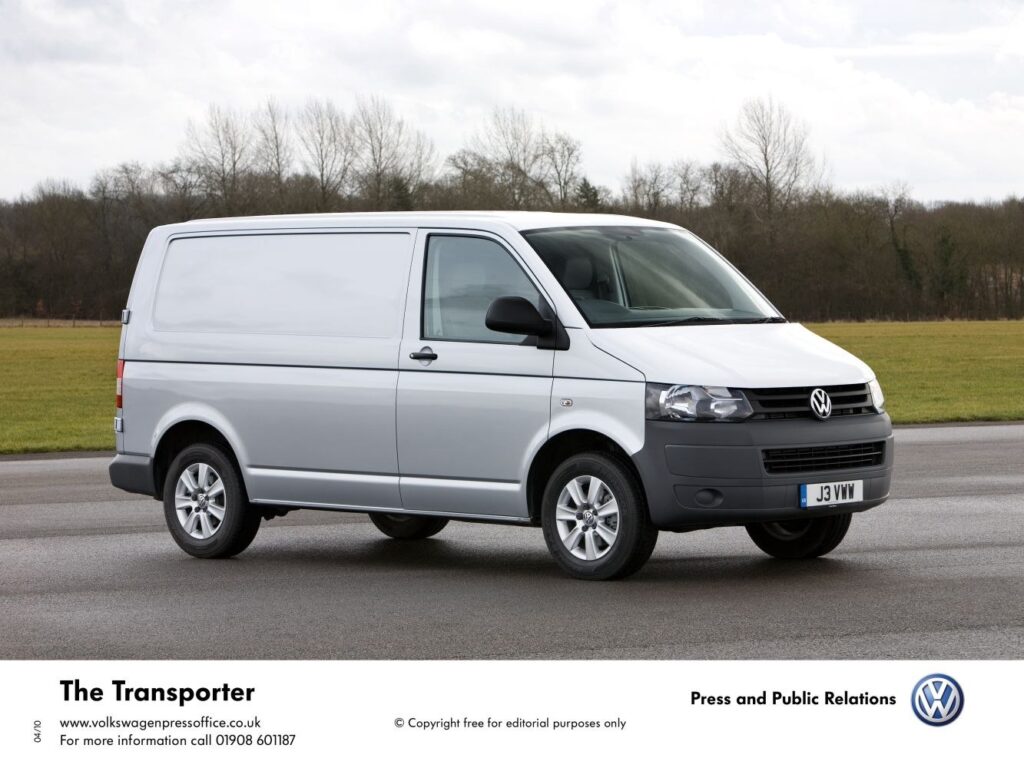
The Volkswagen Transporter (T5, facelift 2009) Panel Van: A Commercial Workhorse
The Volkswagen Transporter (T5, facelift 2009) Panel Van represents a significant iteration in the storied history of Volkswagen’s iconic commercial vehicle line. While the Transporter series holds legendary status globally, particularly in Europe and other international markets, it is important to note that this specific generation and configuration were not widely offered in the United States. Instead, it served as a cornerstone of Volkswagen Commercial Vehicles’ offerings abroad, celebrated for its durability, versatility, and advanced engineering for its class. The T5 generation, introduced in 2003, received a substantial facelift in 2009, bringing updated styling, improved powertrains, and enhanced technology. The model under scrutiny, the 2.0 TSI (204 Hp) DSG L2H1, stands out as a high-performance variant within the panel van lineup, combining a potent gasoline engine with a sophisticated automatic transmission, aimed at businesses requiring both capability and efficiency for their daily operations.
Positioned in the highly competitive mid-size commercial van segment, the T5 facelift continued the Transporter’s legacy of setting benchmarks for practicality and driver comfort. The “L2H1” designation signifies a long wheelbase (L2) and standard roof height (H1), offering a generous cargo volume while maintaining a manageable exterior footprint for urban environments. This particular configuration, with its powerful 2.0-liter turbocharged gasoline engine and advanced DSG transmission, provided a compelling option for those seeking a more car-like driving experience, quicker acceleration, and refined performance, distinguishing it from the more common diesel variants prevalent in the European commercial vehicle market.
Engine and Performance: Power Meets Precision in the Volkswagen Transporter (T5, facelift 2009) Panel Van
Under the hood of the Volkswagen Transporter (T5, facelift 2009) Panel Van 2.0 TSI (204 Hp) DSG L2H1 lies a sophisticated 2.0-liter (1984 cm3 or 121.07 cu. in.) turbocharged, direct-injection gasoline engine, identified by the EA888 / CJKA code. This inline four-cylinder powerplant, featuring a DOHC valvetrain with 4 valves per cylinder, was a testament to Volkswagen’s commitment to modern engine technology. It produced a robust 204 horsepower (Hp) at a broad range of 4200-6000 rpm, delivering ample power for a commercial vehicle. More impressively, it generated 258.15 lb.-ft. of torque from a low 1500 rpm, sustaining it up to 4000 rpm. This wide torque band was crucial for a panel van, ensuring strong pulling power for heavy loads and responsive acceleration in varied driving conditions.
The engine’s direct injection system and turbocharger with an intercooler contributed significantly to its efficiency and performance, achieving a power output of 102.8 Hp per liter. Paired with a 7-speed automatic DSG (Direct Shift Gearbox) transmission, the powertrain offered seamless and rapid gear changes, enhancing both driving comfort and fuel economy. The front-wheel-drive architecture ensured predictable handling, while the hydraulic power steering provided precise control. This combination propelled the Transporter Panel Van from 0 to 60 mph in a swift 8 seconds, with a top speed of 124.27 mph (200 km/h), figures more commonly associated with passenger cars than commercial vans.
Despite its performance capabilities, Volkswagen engineered this Transporter for reasonable efficiency for its class. Fuel consumption figures (NEDC) ranged from 24-23.3 US mpg combined, with urban figures around 17.8-17.4 US mpg and extra-urban consumption at 30.2-29 US mpg. CO2 emissions were rated at 228-236 g/km, adhering to the Euro 5 emission standard, showcasing a balance between power and environmental considerations for its time. The engine required 5.7 liters (6.02 US qt) of oil, and the cooling system held 11 liters (11.62 US qt) of coolant, indicating a well-engineered thermal management system for sustained operation.
Design and Features: Functional Aesthetics and Practicality
The design of the Volkswagen Transporter (T5, facelift 2009) Panel Van, particularly the L2H1 configuration, prioritized functionality and robustness, hallmarks of the Transporter lineage. The facelift brought a more contemporary front fascia, with updated headlights, grille, and bumper designs that aligned it with Volkswagen’s passenger car aesthetic of the era, while maintaining its utilitarian purpose. As a panel van, its primary design feature was its expansive and highly customizable cargo area, offering a maximum trunk (boot) space of 6700 liters (236.61 cu. ft.). This immense volume, combined with a maximum payload capacity of 2140.69 – 2178.17 lbs. (971-988 kg), made it an ideal platform for a wide array of commercial applications, from courier services to tradespeople.
The L2H1 designation points to its specific dimensions: a length of 208.35 inches (5292 mm), a width of 74.96 inches (1904 mm) (89.88 inches or 2283 mm including mirrors), and a height of 78.35 inches (1990 mm). The long wheelbase of 133.86 inches (3400 mm) contributed to stable road manners, even when fully loaded. The cabin, typically configured for 2-3 seats, was designed for driver comfort and practicality, featuring durable materials suited for commercial use. While not adorned with luxury, the ergonomics were well thought out, with easily accessible controls and good visibility.
Safety features for the T5 facelift included standard ABS (Anti-lock Braking System), a crucial system for maintaining control during emergency braking, especially with varying loads. The vehicle featured ventilated disc brakes both front (340×32.5 mm) and rear (294×22 mm), providing strong and consistent stopping power. The suspension system, with an independent McPherson setup at the front and an independent coil spring with trailing arm and transverse stabilizer at the rear, provided a surprisingly comfortable ride for a commercial vehicle, along with capable handling. Tire sizes ranged from 215/60 R17 to 255/45 R18, mounted on 7J x 17 or 8J x 18 wheel rims, offering options for different load requirements and aesthetic preferences. The generous 7.91 inches (201 mm) ground clearance, coupled with respectable approach (21°), departure (17°), and ramp-over (12°) angles, allowed for navigating various terrains, including unpaved job sites.
Technical Specifications
| Category | Specification | Value |
|---|---|---|
| General Information | ||
| Brand | Volkswagen | |
| Model | Transporter | |
| Generation | Transporter (T5, facelift 2009) Panel Van | |
| Type (Engine) | 2.0 TSI (204 Hp) DSG L2H1 | |
| Start of Production | 2011 year | |
| End of Production | 2015 year | |
| Powertrain Architecture | Internal Combustion engine | |
| Body Type | Van | |
| Seats | 2-3 | |
| Doors | 4-5 | |
| Performance Specs | ||
| Fuel Consumption (Urban, NEDC) | 17.8 – 17.4 US mpg (13.2-13.5 l/100 km) | |
| Fuel Consumption (Extra Urban, NEDC) | 30.2 – 29 US mpg (7.8-8.1 l/100 km) | |
| Fuel Consumption (Combined, NEDC) | 24 – 23.3 US mpg (9.8-10.1 l/100 km) | |
| CO2 Emissions (NEDC) | 228-236 g/km | |
| Fuel Type | Petrol (Gasoline) | |
| Acceleration 0 – 62 mph | 8.4 sec | |
| Acceleration 0 – 60 mph (Calculated) | 8 sec | |
| Maximum Speed | 124.27 mph (200 km/h) | |
| Emission Standard | Euro 5 | |
| Weight-to-Power Ratio | 8.9 kg/Hp, 112.6 Hp/tonne | |
| Weight-to-Torque Ratio | 5.2 kg/Nm, 193.2 Nm/tonne | |
| Engine Specs | ||
| Power | 204 Hp @ 4200-6000 rpm | |
| Power per Liter | 102.8 Hp/l | |
| Torque | 258.15 lb.-ft. @ 1500-4000 rpm (350 Nm) | |
| Engine Layout | Front, Transverse | |
| Engine Model/Code | EA888 / CJKA | |
| Engine Displacement | 121.07 cu. in. (1984 cm3) | |
| Number of Cylinders | 4 | |
| Engine Configuration | Inline | |
| Cylinder Bore | 3.25 in. (82.5 mm) | |
| Piston Stroke | 3.65 in. (92.8 mm) | |
| Compression Ratio | 9.8:1 | |
| Valves per Cylinder | 4 | |
| Fuel Injection System | Direct injection | |
| Engine Aspiration | Turbocharger, Intercooler | |
| Valvetrain | DOHC | |
| Engine Oil Capacity | 6.02 US qt (5.7 l) | |
| Coolant Capacity | 11.62 US qt (11 l) | |
| Space, Volume and Weights | ||
| Curb Weight | 3994.78 – 4914.1 lbs. (1812-2229 kg) | |
| Max. Weight (GVWR) | 6172.94 – 7054.79 lbs. (2800-3200 kg) | |
| Max. Load | 2140.69 – 2178.17 lbs. (971-988 kg) | |
| Trunk (Boot) Space – Maximum | 236.61 cu. ft. (6700 l) | |
| Fuel Tank Capacity | 21.13 US gal (80 l) | |
| Max. Roof Load | 220.46 lbs. (100 kg) | |
| Permitted Trailer Load with Brakes (12%) | 5511.56 lbs. (2500 kg) | |
| Permitted Trailer Load without Brakes | 1653.47 lbs. (750 kg) | |
| Permitted Towbar Download | 220.46 lbs. (100 kg) | |
| Dimensions | ||
| Length | 208.35 in. (5292 mm) | |
| Width | 74.96 in. (1904 mm) | |
| Width Including Mirrors | 89.88 in. (2283 mm) | |
| Height | 78.35 in. (1990 mm) | |
| Wheelbase | 133.86 in. (3400 mm) | |
| Front Overhang | 35.28 in. (896 mm) | |
| Rear Overhang | 39.21 in. (996 mm) | |
| Ride Height (Ground Clearance) | 7.91 in. (201 mm) | |
| Minimum Turning Circle (Diameter) | 43.31 ft. (13.2 m) | |
| Approach Angle | 21° | |
| Departure Angle | 17° | |
| Ramp-over (Brakeover) Angle | 12° | |
| Drivetrain, Brakes and Suspension Specs | ||
| Drivetrain Architecture | The Internal combustion engine (ICE) drives the front wheels of the vehicle. | |
| Drive Wheel | Front wheel drive | |
| Number of Gears and Type of Gearbox | 7 gears, automatic transmission DSG | |
| Front Suspension | Independent, type McPherson with coil spring and anti-roll bar | |
| Rear Suspension | Independent coil spring, Transverse stabilizer, Trailing arm | |
| Front Brakes | Ventilated discs, 340×32.5 mm | |
| Rear Brakes | Ventilated discs, 294×22 mm | |
| Assisting Systems | ABS (Anti-lock braking system) | |
| Steering Type | Steering rack and pinion | |
| Power Steering | Hydraulic Steering | |
| Tires Size | 215/60 R17; 235/55 R17; 255/45 R18 | |
| Wheel Rims Size | 7J x 17; 8J x 18 | |
Legacy and Market Impact
The Volkswagen Transporter, in its T5 facelift guise and particularly the 2.0 TSI (204 Hp) DSG L2H1 variant, cemented its reputation as a highly capable and desirable commercial vehicle in markets outside the United States. Its legacy is built upon decades of reliability, robust engineering, and a strong brand image. In Europe, the Transporter is often seen as a premium offering in the commercial van segment, competing with rivals such as the Mercedes-Benz Vito, Ford Transit Custom, and the Renault Trafic. What set the T5 apart, especially this particular high-output gasoline model, was its unique blend of passenger-car levels of refinement and performance, combined with the practicality of a commercial van.
The availability of a powerful gasoline engine like the 2.0 TSI, coupled with the advanced DSG transmission, provided businesses with an alternative to the ubiquitous diesel vans. This variant appealed to operators who valued quicker response, smoother acceleration, and perhaps a quieter cabin experience, particularly for long-distance driving or for roles where the van might also serve as a mobile office or require frequent highway cruising. Its ability to accelerate from 0 to 60 mph in 8 seconds was a standout feature, offering dynamic performance rarely found in a panel van. This made it suitable for express delivery services or for professionals who needed to cover ground quickly without sacrificing cargo capacity.
The T5’s robust construction and well-sorted chassis, featuring independent suspension all around, contributed to its reputation for durability and comfortable handling, even under heavy loads. Its impressive maximum trailer load capacity of 5511.56 lbs. (2500 kg) with brakes further underscored its utility for a wide range of tasks. The Transporter series, including the T5 facelift, has consistently been a strong seller for Volkswagen Commercial Vehicles, contributing significantly to its global market share in light commercial vehicles. Its enduring appeal lies in its versatility, offering numerous body configurations, engine choices, and trim levels to suit diverse business needs. The 2.0 TSI DSG L2H1 variant, while a niche offering, highlighted Volkswagen’s engineering prowess and commitment to providing high-performance, efficient options even within its commercial lineup, ensuring the Transporter’s continued relevance and strong market presence from its production start in 2011 until its conclusion in 2015.