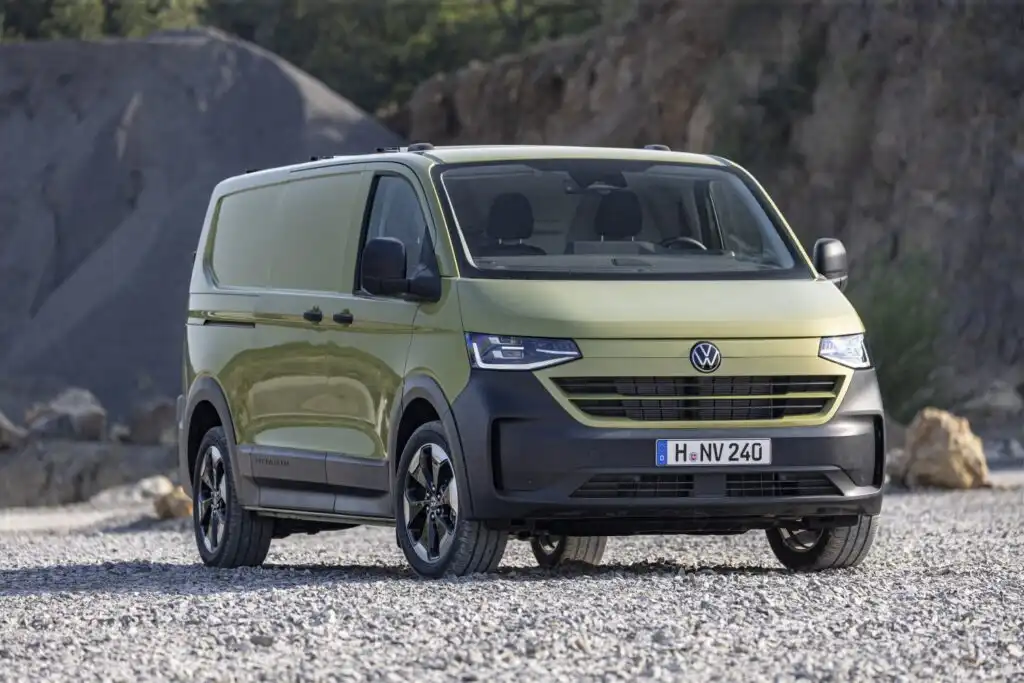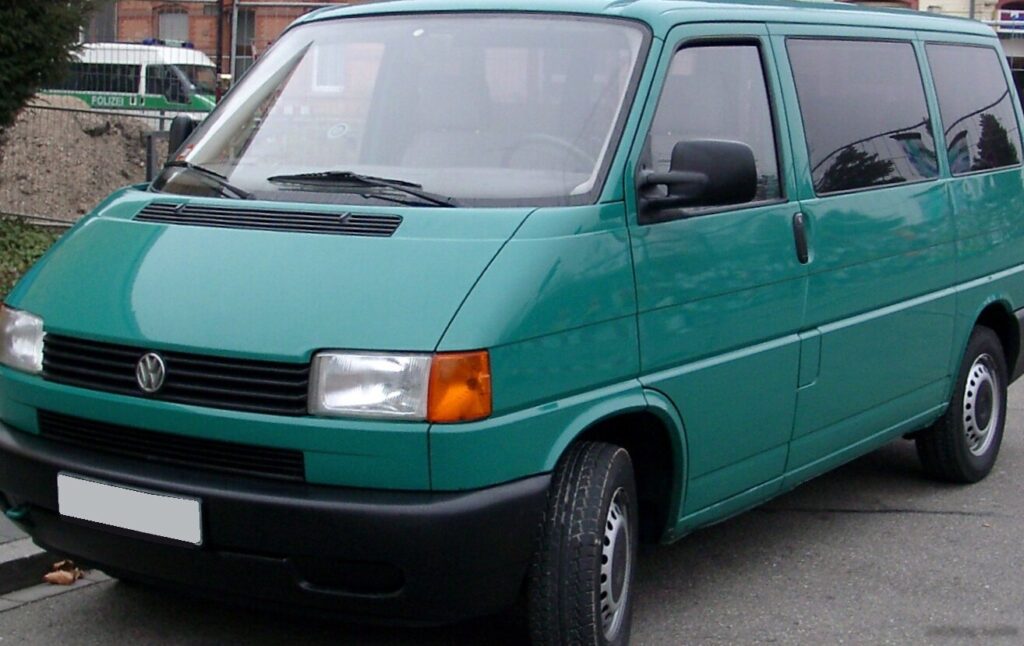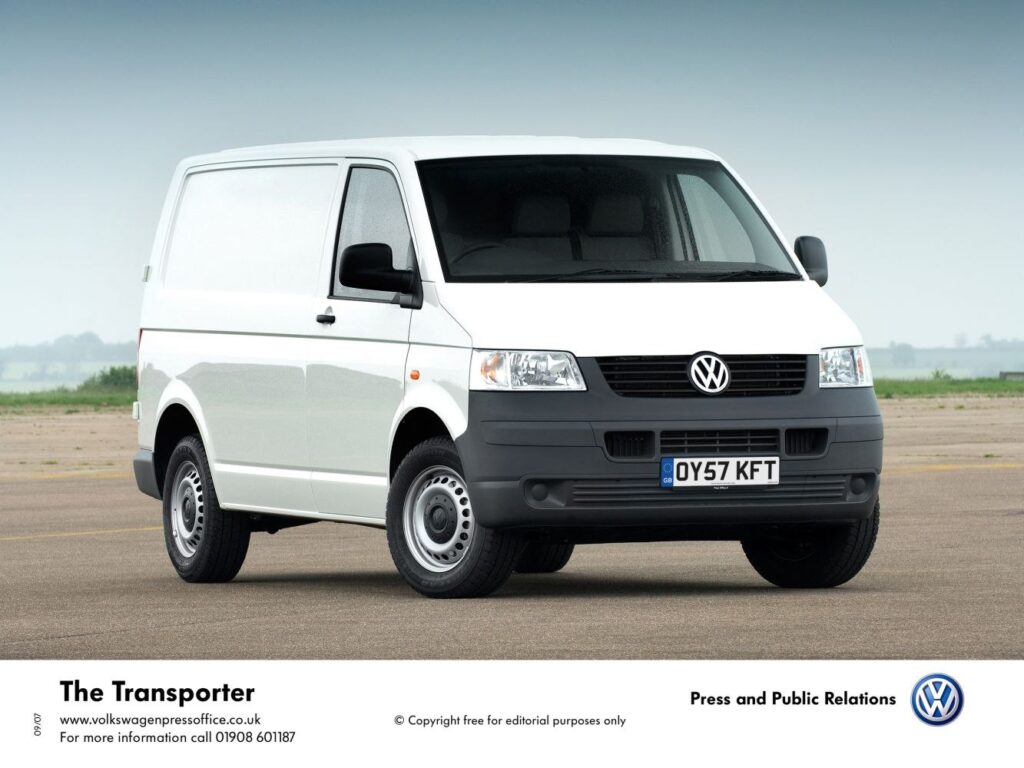
The Volkswagen Transporter (T5) Panel Van: A European Workhorse
The Volkswagen Transporter (T5) Panel Van represents the fifth generation of Volkswagen’s highly successful Transporter series, a lineage of light commercial vehicles that has been a cornerstone of European commerce and utility for decades. Launched in 2003 and produced until 2009, the T5 generation continued the tradition of its predecessors by offering a robust, versatile, and efficient platform tailored for a wide array of commercial applications. This particular variant, the 1.9 TDI (105 Hp) L1H1, was a popular choice, embodying the balance of practical performance, fuel economy, and compact dimensions that made it an ideal partner for businesses across the continent. While not officially sold in the United States, the Transporter series holds an iconic status globally, known for its reliability and adaptability, often serving as the backbone for countless small businesses, delivery services, and tradespeople in its primary European and Asian markets. The L1H1 designation refers to the standard wheelbase and standard roof height, providing an optimal blend of maneuverability and cargo capacity for urban and regional operations.
Engine and Performance: The 1.9 TDI Powerplant in the Volkswagen Transporter (T5) Panel Van
At the heart of this specific Volkswagen Transporter (T5) Panel Van variant lies Volkswagen’s venerable 1.9-liter TDI (Turbocharged Direct Injection) diesel engine. Coded EA188 / AXB, this inline four-cylinder powerplant was renowned for its durability and impressive torque delivery, especially for its displacement. With an engine displacement of 1896 cm³ (115.7 cu. in.), it generates a respectable 105 horsepower at 3500 rpm, translating to a power-per-liter output of 55.4 horsepower per liter. More critically for a commercial vehicle, the engine produces a substantial 184.39 lb.-ft. (250 Nm) of torque, available at a low 2000 rpm. This characteristic low-end torque is crucial for a panel van, enabling it to effortlessly move heavy loads and tackle inclines without excessive strain on the powertrain.
The engine’s architecture features a front, transverse layout and a SOHC (Single Overhead Camshaft) valvetrain with two valves per cylinder, optimized for efficiency and reliability. Fuel delivery is handled by a pump-nozzle (unit injector) system, a technology that Volkswagen championed for its precise fuel metering and atomization, contributing to both power and fuel economy. A turbocharger with an intercooler ensures that the engine breathes efficiently, providing consistent power across the rev range while also managing thermal loads. Mated to a 5-speed manual transmission, the front-wheel-drive drivetrain architecture is straightforward and robust, perfectly suited for the demands of commercial use.
In terms of performance, the 1.9 TDI (105 Hp) Transporter was engineered for utility rather than outright speed. It can accelerate from 0 to 60 mph in a calculated 17.5 seconds (0-100 km/h in 18.4 seconds), reaching a maximum speed of 98.8 mph (159 km/h). These figures are more than adequate for its intended purpose, allowing it to keep pace with traffic on highways and navigate urban environments efficiently. Fuel efficiency was a strong suit, with extra-urban consumption figures ranging from 36.8 to 38.6 US mpg (6.1-6.4 l/100 km), which was competitive for its class at the time and a significant factor for businesses managing operational costs. The vehicle met the Euro 3 emission standard, reflecting its compliance with European environmental regulations of its production era.
Design and Features: Practicality and Versatility
The design of the Volkswagen Transporter (T5) Panel Van is a testament to functional aesthetics and ergonomic practicality. As a van body type, it prioritizes cargo capacity and ease of loading. The L1H1 configuration denotes the shortest wheelbase and standard roof height available for the T5 panel van, resulting in a compact yet spacious vehicle. With an overall length of 192.52 inches (4890 mm), a width of 74.96 inches (1904 mm) (88.27 inches or 2242 mm including mirrors), and a height of 77.13 inches (1959 mm), it offers a substantial cargo volume of up to 204.83 cu. ft. (5800 liters). This generous space, combined with a maximum payload capacity ranging from 2204.62 to 2625.71 lbs (1000-1191 kg), made it an invaluable asset for transporting goods, tools, and equipment.
The vehicle typically features 4-5 doors, including side sliding doors and rear barn doors or a tailgate, facilitating easy access to the cargo area from multiple angles. The interior is designed for durability and functionality, offering 2-3 seats in the front cabin, configured to provide a comfortable workspace for drivers and their crew. The cabin layout is straightforward, with robust materials chosen to withstand the rigors of daily commercial use.
Underneath, the T5 Transporter is built on a sophisticated chassis for its class. It features an independent front suspension with McPherson struts, coil springs, and an anti-roll bar, providing responsive handling and ride comfort even when laden. The rear also employs an independent coil spring suspension with a transverse stabilizer and trailing arms, a setup that enhances stability and load-carrying capability. Braking performance is handled by ventilated discs at both the front (308×29.5 mm) and rear (294×22 mm), complemented by an Anti-lock Braking System (ABS) for enhanced safety during emergency stops. The hydraulic power-assisted rack and pinion steering system ensures precise control and reduces driver fatigue during long working hours or in tight urban environments. Standard tires were 205/65 R16 or 215/65 R16 on 6.5J x 16 wheel rims, providing a good balance of load capacity and ride quality.
Technical Specifications
| Category | Specification | Value |
|---|---|---|
General Information |
||
| Brand | Volkswagen | |
| Model | Transporter | |
| Generation | Transporter (T5) Panel Van | |
| Type (Engine) | 1.9 TDI (105 Hp) L1H1 | |
| Start of Production | 2003 year | |
| End of Production | 2009 year | |
| Powertrain Architecture | Internal Combustion engine | |
| Body type | Van | |
| Seats | 2-3 | |
| Doors | 4-5 | |
Performance Specifications |
||
| Fuel consumption (extra urban) | 36.8 – 38.6 US mpg (6.1-6.4 l/100 km) | |
| Fuel Type | Diesel | |
| Acceleration 0 – 60 mph | 17.5 sec | |
| Acceleration 0 – 62 mph (0-100 km/h) | 18.4 sec | |
| Maximum speed | 98.8 mph (159 km/h) | |
| Emission standard | Euro 3 | |
| Weight-to-power ratio | 17.1 kg/Hp, 58.3 Hp/tonne | |
| Weight-to-torque ratio | 7.2 kg/Nm, 138.9 Nm/tonne | |
Engine Specifications |
||
| Power | 105 Hp @ 3500 rpm | |
| Power per liter | 55.4 Hp/l | |
| Torque | 184.39 lb.-ft. (250 Nm) @ 2000 rpm | |
| Engine layout | Front, Transverse | |
| Engine Model/Code | EA188 / AXB | |
| Engine displacement | 1.9 liters (1896 cm³, 115.7 cu. in.) | |
| Number of cylinders | 4 | |
| Engine configuration | Inline | |
| Cylinder Bore | 3.13 in. (79.5 mm) | |
| Piston Stroke | 3.76 in. (95.5 mm) | |
| Compression ratio | 18:1 | |
| Number of valves per cylinder | 2 | |
| Fuel injection system | Pump-nozzle (Unit Injector) | |
| Engine aspiration | Turbocharger, Intercooler | |
| Valvetrain | SOHC | |
| Engine oil capacity | 6.13 US qt (5.8 l) | |
| Engine oil specification | Manufacturer-specific (information not provided) | |
| Coolant capacity | 7.5 US qt (7.1 l) | |
Space, Volume and Weights |
||
| Kerb Weight | 3968.32 – 4429.09 lbs (1800-2009 kg) | |
| Max. weight (GVWR) | 6172.94 – 7054.79 lbs (2800-3200 kg) | |
| Max load (Payload) | 2204.62 – 2625.71 lbs (1000-1191 kg) | |
| Trunk (boot) space – maximum | 204.83 cu. ft. (5800 l) | |
| Fuel tank capacity | 21.13 US gal (80 l) | |
| Max. roof load | 220.46 lbs (100 kg) | |
| Permitted trailer load with brakes (8%) | 5511.56 lbs (2500 kg) | |
| Permitted trailer load with brakes (12%) | 4850.17 lbs (2200 kg) | |
| Permitted trailer load without brakes | 1653.47 lbs (750 kg) | |
| Permitted towbar download | 220.46 lbs (100 kg) | |
Dimensions |
||
| Length | 192.52 in. (4890 mm) | |
| Width | 74.96 in. (1904 mm) | |
| Width including mirrors | 88.27 in. (2242 mm) | |
| Height | 77.13 in. (1959 mm) | |
| Wheelbase | 118.11 in. (3000 mm) | |
| Front track | 64.09 in. (1628 mm) | |
| Rear (Back) track | 64.09 in. (1628 mm) | |
| Front overhang | 35.2 in. (894 mm) | |
| Rear overhang | 39.21 in. (996 mm) | |
| Ride height (ground clearance) | 6.5 in. (165 mm) | |
| Minimum turning circle (turning diameter) | 39.04 ft. (11.9 m) | |
| Approach angle | 22° | |
| Departure angle | 16° | |
| Ramp-over (brakeover) angle | 14° | |
| Wading depth | 11.81 in. (300 mm) | |
Drivetrain, Brakes and Suspension Specifications |
||
| Drivetrain Architecture | The Internal combustion engine (ICE) drives the front wheels of the vehicle. | |
| Drive wheel | Front wheel drive | |
| Number of gears and type of gearbox | 5 gears, manual transmission | |
| Front suspension | Independent, type McPherson with coil spring and anti-roll bar | |
| Rear suspension | Independent coil spring, Transverse stabilizer, Trailing arm | |
| Front brakes | Ventilated discs, 308×29.5 mm | |
| Rear brakes | Ventilated discs, 294×22 mm | |
| Assisting systems | ABS (Anti-lock braking system) | |
| Steering type | Steering rack and pinion | |
| Power steering | Hydraulic Steering | |
| Tires size | 205/65 R16; 215/65 R16 | |
| Wheel rims size | 6.5J x 16 | |
Legacy and Market Impact of the Volkswagen Transporter (T5) Panel Van
The Volkswagen Transporter T5 generation, and particularly the 1.9 TDI (105 Hp) L1H1 panel van, built upon a rich heritage established by its predecessors, including the iconic T1 “Bus” and subsequent T2, T3, and T4 models. In Europe, the Transporter is not just a vehicle; it’s an institution, deeply integrated into the fabric of commerce and daily life. The T5 continued this legacy, offering a modern, efficient, and highly adaptable platform that solidified its position as a segment leader.
During its production run from 2003 to 2009, the T5 faced stiff competition in the European light commercial vehicle market. Key rivals included the Ford Transit, Mercedes-Benz Vito, Renault Trafic, Opel Vivaro (Vauxhall Vivaro in the UK), and Fiat Ducato. What set the Transporter apart was its robust build quality, strong resale value, and the perception of superior engineering and reliability, hallmarks of the Volkswagen brand. The 1.9 TDI engine, in particular, was praised for its longevity and fuel efficiency, making it an economically sound choice for businesses where running costs are paramount.
The T5’s impact was widespread, becoming the go-to vehicle for countless tradespeople—electricians, plumbers, carpenters—as well as delivery services, small businesses, and utility companies. Its practical design, combined with a comfortable driving experience for a commercial vehicle, contributed significantly to its popularity. The ability to customize the cargo area, couple with various optional features, allowed businesses to tailor the van precisely to their needs, further cementing its versatility.
Beyond its commercial role, the T5 platform also served as the basis for the highly popular Multivan and California camper van models, showcasing its inherent adaptability and broad appeal. This cross-segment success further enhanced the Transporter’s reputation and market presence. Even after the introduction of the T6 generation, many T5 models remain on the road today, a testament to their enduring quality and the strong demand for reliable, efficient work vehicles. The Volkswagen Transporter (T5) Panel Van 1.9 TDI (105 Hp) L1H1, therefore, stands as a significant chapter in the Transporter saga, a true workhorse that embodied the practical, no-nonsense approach to commercial transport for which Volkswagen is celebrated in global markets.