Introduction: The Volkswagen Transporter (T5) Panel Van
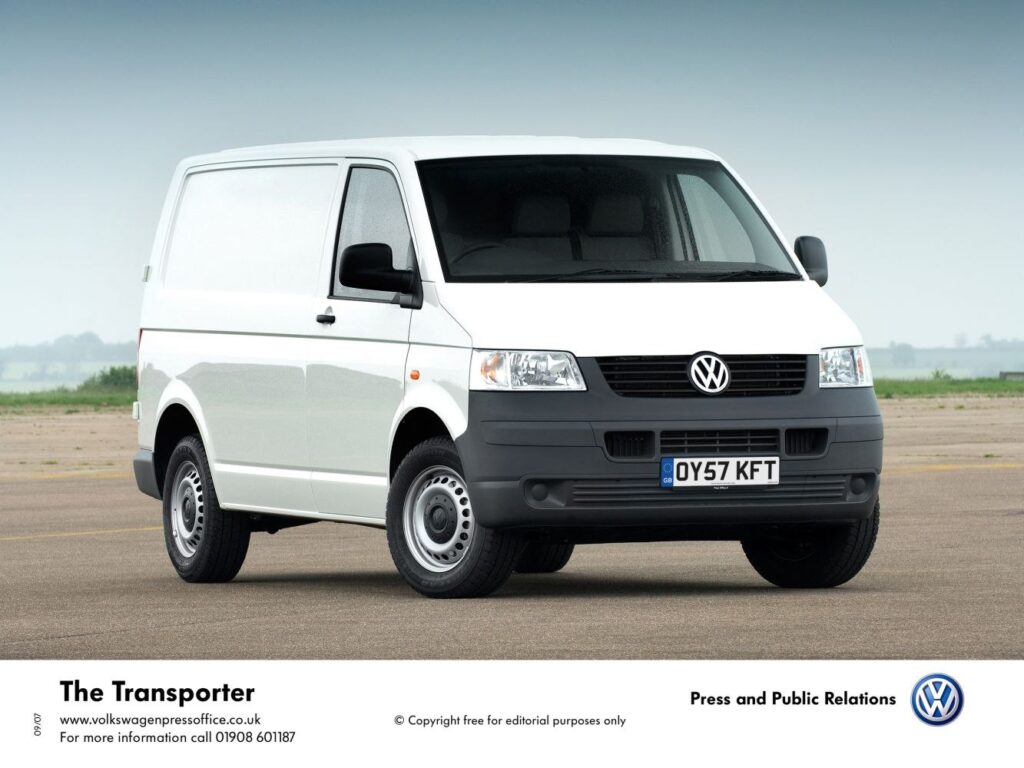
The Volkswagen Transporter (T5) Panel Van represents the fifth generation of Volkswagen’s highly successful and globally recognized light commercial vehicle series, produced from 2003 to 2009. Building upon a storied heritage that dates back to the iconic Type 2 “Bus” of the 1950s, the T5 continued to be a cornerstone of Volkswagen Commercial Vehicles’ lineup, particularly in the European market where it served as an indispensable workhorse for countless businesses, tradespeople, and logistics operations. While the Transporter series has seen limited direct panel van sales in the United States, its passenger variants, such as the Eurovan (the T4 generation), had a notable presence, making the lineage familiar to discerning American enthusiasts and professionals.
This detailed analysis focuses on a particularly common and well-regarded variant: the 1.9 TDI (105 Hp) L2H3. The “L2H3” designation signifies a long wheelbase (L2) and a high roof (H3) configuration, optimizing the van for maximum cargo capacity and versatility. This specific model, known for its robust diesel powertrain and practical design, offered an excellent balance of fuel efficiency, payload capability, and Volkswagen’s renowned build quality, solidifying its reputation as a reliable and cost-effective solution for commercial transport needs across the continent.
Powertrain and Performance of the Volkswagen Transporter (T5) Panel Van
Engine Architecture and Power Delivery
At the heart of the Volkswagen Transporter (T5) Panel Van 1.9 TDI L2H3 lies Volkswagen’s venerable 1.9-liter (1896 cm3 or 115.7 cubic inches) inline four-cylinder diesel engine, internally designated as EA188 / AXB. This powerplant was a staple across many Volkswagen Group vehicles during its era, celebrated for its durability and strong low-end torque. Equipped with a turbocharger and intercooler, it produced a respectable 105 horsepower at 3500 rpm. More critically for a commercial vehicle, it delivered a robust 250 Newton-meters (184.39 lb.-ft.) of torque at a low 2000 rpm, providing ample pulling power for heavy loads and challenging driving conditions.
The engine’s design featured a Single Overhead Camshaft (SOHC) valvetrain with two valves per cylinder, a configuration known for its simplicity and reliability. Fuel delivery was managed by a pump-nozzle (Unit Injector) system, a technology prevalent in Volkswagen’s TDI engines of this period, known for its precise fuel metering and contribution to both power and efficiency. With a compression ratio of 18:1, the diesel combustion process was optimized for maximum energy extraction from the fuel.
Performance and Efficiency
While outright speed was never the primary objective for a panel van, the 1.9 TDI provided competent performance for its class. The Volkswagen Transporter (T5) Panel Van could accelerate from 0 to 60 mph in approximately 18.3 seconds, with a top speed of 91.34 mph (147 km/h). These figures underscore its design as a utilitarian vehicle, prioritizing hauling capability and steady cruising over rapid acceleration.
Fuel economy was a strong suit, particularly for businesses keen on minimizing operational costs. The extra-urban consumption was rated at an impressive 7 liters per 100 km, which translates to approximately 33.6 US miles per gallon. This efficiency, combined with an 80-liter (21.13 US gallons) fuel tank, offered a substantial driving range between fill-ups, a crucial factor for long-distance deliveries or extensive daily routes. The engine met the Euro 3 emission standard, reflecting the environmental regulations of its production period. The vehicle’s weight-to-power ratio stood at 17.9 kg/Hp (55.9 Hp/tonne), indicating its focus on practical utility rather than raw performance.
Drivetrain and Chassis
Power was transmitted to the front wheels via a durable 5-speed manual transmission, offering a direct and engaging driving experience while minimizing mechanical losses. The front-wheel-drive architecture contributed to excellent traction, especially when laden, and allowed for a lower loading floor, enhancing practicality.
The chassis was engineered for a balance of load-carrying ability and ride comfort. The front suspension featured an independent McPherson strut design with coil springs and an anti-roll bar, providing precise steering and stability. The rear employed an independent coil spring setup with a transverse stabilizer and trailing arm, crucial for managing varying loads while maintaining composure. Braking duties were handled by ventilated disc brakes on both the front (308×29.5 mm) and rear (294×22 mm) axles, complemented by an Anti-lock Braking System (ABS) for enhanced safety and control during emergency stops. Steering was a hydraulic rack and pinion system, offering tactile feedback to the driver.
Design and Utility
Exterior and Dimensions
The design of the Volkswagen Transporter (T5) Panel Van was inherently functional and robust, characterized by clean lines and a purposeful stance. As an L2H3 variant, it boasted significant dimensions: a length of 5290 mm (208.27 inches), a width of 1904 mm (74.96 inches, or 2242 mm / 88.27 inches including mirrors), and a towering height of 2460 mm (96.85 inches). The substantial 3400 mm (133.86 inches) wheelbase contributed to stable handling and a massive cargo area. With a minimum turning circle of 13.2 meters (43.31 feet), maneuvering this large van in urban environments required some skill but was manageable for its class. Ground clearance of 165 mm (6.5 inches) and a wading depth of 300 mm (11.81 inches) provided decent capability for traversing varied terrain, though it was primarily designed for paved roads.
Interior and Cargo Versatility
The interior of the Transporter T5 Panel Van was built for durability and practicality. Typically configured with 2 to 3 seats, the cabin prioritized functionality for the working professional. While amenities were focused on essentials, the ergonomic layout and robust materials ensured a comfortable and hard-wearing environment for daily use.
The true strength of the L2H3 variant lay in its cargo capacity. With a maximum trunk (boot) space of an enormous 9300 liters (328.43 cubic feet), it could accommodate substantial volumes of goods, tools, or equipment. The kerb weight ranged from 1880-2092 kg (4144.69 – 4612.07 lbs), and it could carry a maximum load (payload) of 920-1108 kg (2028.25 – 2442.72 lbs), depending on the specific configuration. This impressive payload, combined with towing capabilities of up to 2500 kg (5511.56 lbs) with braked trailers, underscored its versatility as a commercial transport solution.
Technical Specifications: Volkswagen Transporter (T5) Panel Van 1.9 TDI (105 Hp) L2H3
| General Information | |
|---|---|
| Brand | Volkswagen |
| Model | Transporter |
| Generation | Transporter (T5) Panel Van |
| Type (Engine) | 1.9 TDI (105 Hp) L2H3 |
| Start of Production | 2003 year |
| End of Production | 2009 year |
| Powertrain Architecture | Internal Combustion engine |
| Body type | Van |
| Seats | 2-3 |
| Doors | 4-5 |
| Performance Specifications | |
| Fuel Consumption (Extra Urban) | 7 l/100 km (33.6 US mpg) |
| Fuel Type | Diesel |
| Acceleration 0-60 mph | 18.3 sec |
| Maximum Speed | 147 km/h (91.34 mph) |
| Emission Standard | Euro 3 |
| Weight-to-Power Ratio | 17.9 kg/Hp (55.9 Hp/tonne) |
| Weight-to-Torque Ratio | 7.5 kg/Nm (133 Nm/tonne) |
| Engine Specifications | |
| Power | 105 Hp @ 3500 rpm |
| Power per liter | 55.4 Hp/l |
| Torque | 250 Nm @ 2000 rpm (184.39 lb.-ft. @ 2000 rpm) |
| Engine Layout | Front, Transverse |
| Engine Model/Code | EA188 / AXB |
| Engine Displacement | 1896 cm3 (115.7 cu. in.) |
| Number of Cylinders | 4 |
| Engine Configuration | Inline |
| Cylinder Bore | 79.5 mm (3.13 in.) |
| Piston Stroke | 95.5 mm (3.76 in.) |
| Compression Ratio | 18:1 |
| Number of Valves per Cylinder | 2 |
| Fuel Injection System | Pump-nozzle (Unit Injector) |
| Engine Aspiration | Turbocharger, Intercooler |
| Valvetrain | SOHC |
| Engine Oil Capacity | 5.8 l (6.13 US qt) |
| Coolant Capacity | 7.1 l (7.5 US qt) |
| Space, Volume and Weights | |
| Kerb Weight | 1880-2092 kg (4144.69 – 4612.07 lbs) |
| Max. Weight (GVWR) | 2800-3200 kg (6172.94 – 7054.79 lbs) |
| Max Load (Payload) | 920-1108 kg (2028.25 – 2442.72 lbs) |
| Trunk (Boot) Space – Maximum | 9300 l (328.43 cu. ft.) |
| Fuel Tank Capacity | 80 l (21.13 US gal) |
| Permitted Trailer Load with Brakes (8%) | 2500 kg (5511.56 lbs) |
| Permitted Trailer Load with Brakes (12%) | 2200 kg (4850.17 lbs) |
| Permitted Trailer Load without Brakes | 750 kg (1653.47 lbs) |
| Permitted Towbar Download | 100 kg (220.46 lbs) |
| Dimensions | |
| Length | 5290 mm (208.27 in.) |
| Width | 1904 mm (74.96 in.) |
| Width Including Mirrors | 2242 mm (88.27 in.) |
| Height | 2460 mm (96.85 in.) |
| Wheelbase | 3400 mm (133.86 in.) |
| Front Track | 1628 mm (64.09 in.) |
| Rear (Back) Track | 1628 mm (64.09 in.) |
| Front Overhang | 894 mm (35.2 in.) |
| Rear Overhang | 996 mm (39.21 in.) |
| Ride Height (Ground Clearance) | 165 mm (6.5 in.) |
| Minimum Turning Circle | 13.2 m (43.31 ft) |
| Approach Angle | 22° |
| Departure Angle | 16° |
| Wading Depth | 300 mm (11.81 in.) |
| Drivetrain, Brakes and Suspension | |
| Drivetrain Architecture | Front-wheel drive (ICE drives front wheels) |
| Drive Wheel | Front wheel drive |
| Number of Gears and Type of Gearbox | 5 gears, manual transmission |
| Front Suspension | Independent, McPherson with coil spring and anti-roll bar |
| Rear Suspension | Independent coil spring, Transverse stabilizer, Trailing arm |
| Front Brakes | Ventilated discs, 308×29.5 mm |
| Rear Brakes | Ventilated discs, 294×22 mm |
| Assisting Systems | ABS (Anti-lock braking system) |
| Steering Type | Steering rack and pinion |
| Power Steering | Hydraulic Steering |
| Tires Size | 205/65 R16; 215/65 R16 |
| Wheel Rims Size | 6.5J x 16 |
Legacy and Market Impact
The Volkswagen Transporter (T5) Panel Van, and particularly the 1.9 TDI L2H3 variant, carved out a significant legacy in the European light commercial vehicle market. It continued the Transporter’s tradition of being a versatile, robust, and dependable work vehicle. Its primary competitors in this fiercely contested segment included established rivals such as the Ford Transit, Mercedes-Benz Vito, Renault Trafic, and Fiat Ducato. Against these formidable contenders, the T5 distinguished itself with its refined driving dynamics, car-like comfort (for a van), and superior build quality, which often translated into strong residual values.
The T5 generation was pivotal in modernizing the Transporter lineup, introducing more sophisticated suspension systems, improved ergonomics, and a broader range of engines and body configurations. The 1.9 TDI engine, in particular, became synonymous with reliability and cost-effectiveness. Its combination of adequate power for hauling, excellent fuel efficiency, and a relatively straightforward maintenance regime made it a favorite among small businesses and large fleets alike.
Beyond its role as a panel van, the T5 platform spawned a highly successful family of vehicles, including the Caravelle (passenger shuttle), Multivan (luxury MPV), and the iconic California (camper van). This versatility underscored the fundamental strength of the T5’s engineering, allowing it to adapt to a wide array of consumer and commercial needs.
In terms of historical significance, the T5 represented a critical evolutionary step for the Transporter series, seamlessly blending its utilitarian roots with modern automotive technology and safety features. It maintained Volkswagen’s reputation for engineering excellence in the commercial vehicle sector and set high benchmarks for design, functionality, and economic operation. Even years after its production ceased, the T5 remains a highly sought-after used vehicle in Europe, a testament to its enduring quality and the lasting impact it had on the commercial vehicle landscape. Its robust construction and efficient powertrains ensured that many T5s continue to serve faithfully on roads across the globe, cementing its status as a true automotive icon for the working professional.