Volkswagen Transporter (T5) Panel Van 1.9 TDI (86 Hp) L1H2: A European Workhorse
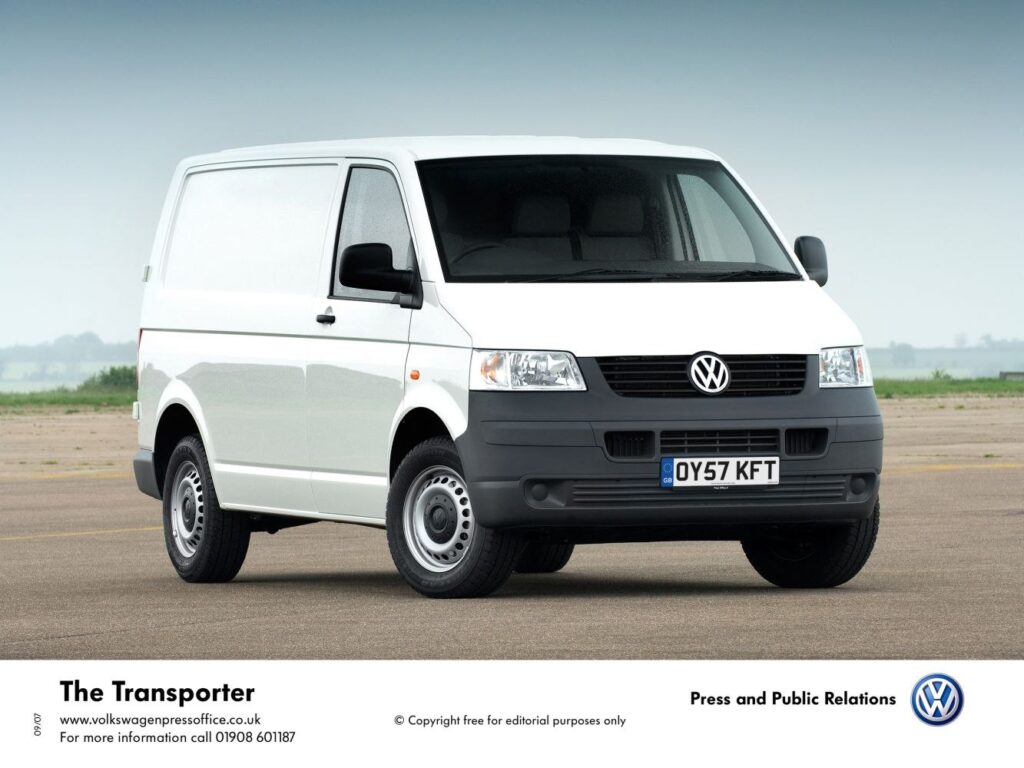
The Volkswagen Transporter (T5) Panel Van 1.9 TDI (86 Hp) L1H2 represents a pivotal generation in the storied lineage of Volkswagen’s light commercial vehicles. Introduced in 2003 and produced until 2009, the T5 generation continued the legacy of its predecessors as a highly adaptable and robust solution for businesses and individuals across Europe and other international markets. Unlike its passenger-focused sibling, the Multivan or California, the Panel Van variant was engineered purely for utility, offering significant cargo capacity and a durable, no-nonsense design. This specific configuration, the L1H2, denotes a standard wheelbase (L1) combined with a medium-height roof (H2), striking an optimal balance between maneuverability and cargo volume for urban and intercity operations.
While the Volkswagen Transporter has an iconic presence globally, particularly in Europe where it serves as a ubiquitous sight on roads, construction sites, and delivery routes, its direct commercial variants like the T5 Panel Van were not officially sold in the United States. This absence was largely due to market dynamics, import tariffs (the “chicken tax”), and Volkswagen’s strategic decision to focus on passenger cars and SUVs in the North American market. Nevertheless, the T5, particularly in its efficient 1.9 TDI guise, played a crucial role in setting standards for efficiency, practicality, and driver comfort in the European light commercial vehicle segment during its production run.
Engine and Performance: The Heart of the Volkswagen Transporter (T5) Panel Van 1.9 TDI (86 Hp) L1H2
At the core of the Volkswagen Transporter (T5) Panel Van 1.9 TDI (86 Hp) L1H2 lies its highly regarded 1.9-liter (1896 cm3) TDI engine. This four-cylinder, inline diesel powerplant, identified by the EA188 / AXC code, was a testament to Volkswagen’s expertise in diesel technology. Equipped with a turbocharger and intercooler, it delivered a modest but highly practical 86 horsepower at 3500 revolutions per minute. More importantly for a commercial vehicle, it produced a substantial 147.51 lb.-ft. (200 Nm) of torque, available across a broad and usable range from 1600 to 2400 rpm. This low-end torque was crucial for hauling heavy loads and navigating demanding urban environments without constant gear changes.
The engine utilized a pump-nozzle (unit injector) fuel injection system, a sophisticated technology for its time, which contributed to its efficiency and precise fuel delivery. With a compression ratio of 18:1 and a SOHC valvetrain featuring two valves per cylinder, the engine was designed for durability and cost-effective maintenance, essential attributes for a commercial fleet vehicle. Power was channeled to the front wheels via a robust 5-speed manual transmission, a common and reliable setup for vans of this era.
While outright speed was never the primary objective for the Transporter Panel Van, its performance figures underscore its utility-first design. The 0-60 mph acceleration time was approximately 22.9 seconds, with a top speed of 88.23 mph (142 km/h). These figures are perfectly adequate for a vehicle designed to transport goods efficiently. Fuel economy was a significant strong suit, with an impressive extra-urban consumption rate of 37.3 US mpg (6.3 liters per 100 km), allowing for extended operational ranges and reduced running costs. Adhering to Euro 3 emission standards, it was compliant with the environmental regulations of its time.
Design and Features: Practicality Meets Volkswagen Engineering
The design philosophy behind the Volkswagen Transporter (T5) Panel Van 1.9 TDI (86 Hp) L1H2 was centered squarely on functionality and durability. As a panel van, its primary purpose was cargo transport, reflected in its unadorned exterior and highly configurable interior. The L1H2 designation indicates a standard length of 192.52 inches (4890 mm) and a height of 85.04 inches (2160 mm), providing a generous internal volume without making the vehicle unwieldy in city traffic. Its width, including mirrors, was 88.27 inches (2242 mm), offering a stable footprint.
Access to the cargo area was facilitated by 4-5 doors, typically including a large rear hatch or barn doors and a sliding side door, making loading and unloading straightforward from various angles. The cabin was configured for 2-3 occupants, offering a comfortable yet utilitarian space for the driver and potential crew members. The sheer volume of the cargo bay was a key selling point, boasting a maximum trunk space of 236.61 cubic feet (6700 liters), capable of accommodating substantial loads.
Underneath its practical exterior, the T5 featured a sophisticated chassis for a commercial vehicle. It utilized an independent McPherson strut front suspension with coil springs and an anti-roll bar, paired with an independent coil spring rear suspension featuring a transverse stabilizer and trailing arms. This setup provided a surprisingly comfortable ride and stable handling, crucial for driver comfort during long working days and for safely transporting goods. Braking was handled by ventilated disc brakes on both the front (308×29.5 mm) and rear (294×22 mm) axles, complemented by an Anti-lock Braking System (ABS) for enhanced safety and control, especially when laden. Hydraulic rack and pinion steering provided direct feedback and ease of maneuverability, with a turning circle of just 39.04 feet (11.9 m), making it agile for a vehicle of its size.
Technical Specifications
| General Information | |
| Brand | Volkswagen |
| Model | Transporter |
| Generation | Transporter (T5) Panel Van |
| Type (Engine) | 1.9 TDI (86 Hp) L1H2 |
| Start of Production | 2003 year |
| End of Production | 2009 year |
| Powertrain Architecture | Internal Combustion engine |
| Body type | Van |
| Seats | 2-3 |
| Doors | 4-5 |
| Performance Specifications | |
| Fuel Consumption (economy) – extra urban | 37.3 US mpg (6.3 l/100 km) |
| Fuel Type | Diesel |
| Acceleration 0 – 60 mph | 22.9 sec |
| Acceleration 0 – 62 mph (0 – 100 km/h) | 24.1 sec |
| Maximum speed | 88.23 mph (142 km/h) |
| Emission standard | Euro 3 |
| Weight-to-power ratio | 47 Hp/tonne (21.3 kg/Hp) |
| Weight-to-torque ratio | 109.3 Nm/tonne (9.2 kg/Nm) |
| Engine Specifications | |
| Power | 86 Hp @ 3500 rpm |
| Power per liter | 45.4 Hp/l |
| Torque | 147.51 lb.-ft. @ 1600-2400 rpm (200 Nm) |
| Engine layout | Front, Transverse |
| Engine Model/Code | EA188 / AXC |
| Engine displacement | 115.7 cu. in. (1896 cm3) |
| Number of cylinders | 4 |
| Engine configuration | Inline |
| Cylinder Bore | 3.13 in. (79.5 mm) |
| Piston Stroke | 3.76 in. (95.5 mm) |
| Compression ratio | 18:1 |
| Number of valves per cylinder | 2 |
| Fuel injection system | Pump-nozzle (Unit Injector) |
| Engine aspiration | Turbocharger, Intercooler |
| Valvetrain | SOHC |
| Engine oil capacity | 6.13 US qt (5.8 l) |
| Coolant | 7.5 US qt (7.1 l) |
| Space, Volume and Weights | |
| Kerb Weight | 4034.46 – 4475.38 lbs. (1830-2030 kg) |
| Max. weight (GVWR) | 6172.94 – 6613.87 lbs. (2800-3000 kg) |
| Max load | 2138.48 lbs. (970 kg) |
| Trunk (boot) space – maximum | 236.61 cu. ft. (6700 l) |
| Fuel tank capacity | 21.13 US gal (80 l) |
| Permitted trailer load with brakes (8%) | 5511.56 lbs. (2500 kg) |
| Permitted trailer load with brakes (12%) | 4850.17 lbs. (2200 kg) |
| Permitted trailer load without brakes | 1653.47 lbs. (750 kg) |
| Permitted towbar download | 220.46 lbs. (100 kg) |
| Dimensions | |
| Length | 192.52 in. (4890 mm) |
| Width | 74.96 in. (1904 mm) |
| Width including mirrors | 88.27 in. (2242 mm) |
| Height | 85.04 in. (2160 mm) |
| Wheelbase | 118.11 in. (3000 mm) |
| Front track | 64.09 in. (1628 mm) |
| Rear (Back) track | 64.09 in. (1628 mm) |
| Front overhang | 35.2 in. (894 mm) |
| Rear overhang | 39.21 in. (996 mm) |
| Ride height (ground clearance) | 6.5 in. (165 mm) |
| Minimum turning circle (turning diameter) | 39.04 ft. (11.9 m) |
| Approach angle | 22° |
| Departure angle | 16° |
| Ramp-over (brakeover) angle | 14° |
| Wading depth | 11.81 in. (300 mm) |
| Drivetrain, Brakes and Suspension Specifications | |
| Drivetrain Architecture | The Internal combustion engine (ICE) drives the front wheels of the vehicle. |
| Drive wheel | Front wheel drive |
| Number of gears and type of gearbox | 5 gears, manual transmission |
| Front suspension | Independent, type McPherson with coil spring and anti-roll bar |
| Rear suspension | Independent coil spring, Transverse stabilizer, Trailing arm |
| Front brakes | Ventilated discs, 308×29.5 mm |
| Rear brakes | Ventilated discs, 294×22 mm |
| Assisting systems | ABS (Anti-lock braking system) |
| Steering type | Steering rack and pinion |
| Power steering | Hydraulic Steering |
| Tires size | 205/65 R16; 215/65 R16 |
| Wheel rims size | 6.5J x 16 |
Legacy and Market Impact in Europe
The Volkswagen Transporter (T5) Panel Van 1.9 TDI (86 Hp) L1H2, like the entire T5 range, built upon a rich heritage established by its predecessors, dating back to the iconic Type 2 “Bus.” In Europe, the Transporter series is more than just a commercial vehicle; it’s a cultural icon and a benchmark for versatility and reliability. The T5 generation marked a significant evolution, bringing improved driving dynamics, enhanced safety features, and more refined powertrains compared to the T4.
The T5 Panel Van, particularly with the 1.9 TDI engine, carved out a formidable reputation as an indestructible workhorse. Its robust construction, dependable engine, and practical design made it a favorite among small businesses, tradespeople, and large fleet operators across the continent. Its ability to handle heavy loads, combined with its relatively compact footprint and decent maneuverability, ensured its dominance in various sectors, from urban deliveries to construction site support.
Competitors in the European market were numerous and strong, including the Ford Transit, Mercedes-Benz Vito, Renault Trafic, Opel Vivaro (Vauxhall Vivaro in the UK), and Fiat Scudo. However, the Transporter consistently held its own, often leading in sales and maintaining strong residual values, a testament to its perceived quality and durability. Its adaptability was also a key factor; the T5 platform was extensively used for various conversions, including refrigerated vans, mobile workshops, and even specialized emergency service vehicles, further solidifying its market presence.
The 1.9 TDI engine, despite its modest power output in this specific variant, was lauded for its longevity and fuel efficiency, making it an economically sound choice for businesses mindful of operational costs. Its Euro 3 compliance, while now superseded by stricter standards, was appropriate for its production era and contributed to its widespread acceptance. The T5 generation ultimately paved the way for the even more refined T6, but its legacy as a reliable, efficient, and highly capable light commercial vehicle remains firmly established in automotive history, particularly in the markets it served so diligently.