Volkswagen Transporter (T5) Panel Van 2.0 (116 Hp) L1H2: A European Workhorse
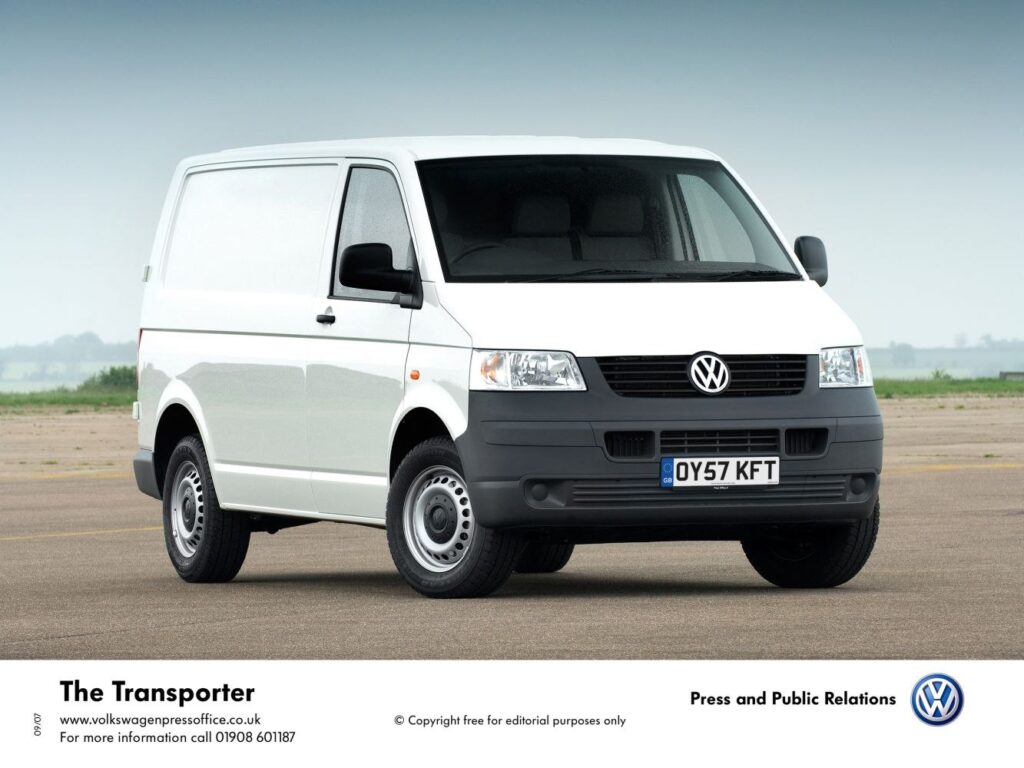
The Volkswagen Transporter, a name synonymous with utility, reliability, and versatility across Europe and beyond, entered its fifth generation, the T5, in 2003. This iteration continued the illustrious lineage of Volkswagen’s iconic light commercial vehicles, building upon a heritage stretching back to the original Type 2. The specific model under review, the Volkswagen Transporter (T5) Panel Van 2.0 (116 Hp) L1H2, represents a core offering within the T5 range, designed to meet the rigorous demands of businesses and tradespeople. Produced from 2003 to 2009, this front-wheel-drive panel van, equipped with a 2.0-liter gasoline engine delivering 116 horsepower, was a common sight on European roads, prized for its robust construction, practical design, and efficient cargo capabilities. The “L1H2” designation signifies its standard wheelbase (L1) combined with a high roof (H2), optimizing internal volume for a wide array of commercial applications.
Engine and Performance of the Volkswagen Transporter (T5) Panel Van
At the heart of this particular Volkswagen Transporter (T5) Panel Van variant is a naturally aspirated 2.0-liter (1984 cm³ or 121.07 cu. in.) inline four-cylinder gasoline engine, identified by the EA113 / AXA engine code. This powerplant, featuring a Single Overhead Camshaft (SOHC) valvetrain with two valves per cylinder and multi-port manifold injection, was engineered for dependable performance and longevity rather than outright speed. It produced a respectable 116 horsepower at 5200 rpm and a peak torque of 125.39 lb.-ft. (170 Nm) delivered across a broad and usable range from 2700 to 4700 rpm. This torque band was crucial for a commercial vehicle, ensuring adequate pulling power even when fully loaded.
Power was sent to the front wheels via a robust 5-speed manual transmission, a common and reliable choice for commercial vehicles of this era. While the Volkswagen Transporter (T5) Panel Van was not designed for high-speed thrills, its performance figures were entirely adequate for its intended purpose. It could accelerate from 0 to 60 mph in approximately 17 seconds, reaching a maximum speed of 98.18 mph (158 km/h). Fuel economy, an important consideration for commercial operators, was rated at 28 US mpg (8.4 l/100 km) for extra-urban driving, reflecting a balance between power and operational cost. Adhering to the Euro 4 emission standard, it met the environmental regulations of its time, showcasing Volkswagen’s commitment to cleaner commercial transport. The engine’s layout, being front and transverse, contributed to efficient packaging and maximized interior cargo space.
Design and Practicality of the T5 Panel Van L1H2
The design philosophy behind the Volkswagen Transporter (T5) Panel Van was centered squarely on functionality and durability. As a panel van, its primary role was cargo transport, and the L1H2 configuration was particularly effective in this regard. The “L1” denotes the standard length wheelbase of 118.11 inches (3000 mm), while “H2” signifies the high roof, which allowed for a total height of 85.04 inches (2160 mm). This combination translated into an impressive maximum cargo volume of 236.61 cu. ft. (6700 liters), making it capable of hauling substantial goods or accommodating specialized equipment.
The exterior dimensions of the van were 192.52 inches (4890 mm) in length and 74.96 inches (1904 mm) in width (88.27 inches or 2242 mm including mirrors). These dimensions, coupled with a minimum turning circle of 39.04 feet (11.9 m), ensured good maneuverability in urban environments and tight loading docks. The van typically featured 4 to 5 doors, including two front doors, at least one sliding side door for easy access to the cargo area, and rear barn doors for efficient loading and unloading.
Inside, the cabin was designed for utility, offering seating for 2 to 3 occupants. The focus was on ergonomics for the driver, with clear instrumentation and accessible controls. For safety, the T5 Panel Van came equipped with ventilated disc brakes on both the front (308×29.5 mm) and rear (294×22 mm) axles, complemented by an Anti-lock Braking System (ABS) for enhanced stopping power and control. The suspension system, featuring an independent McPherson setup with coil springs and an anti-roll bar at the front and an independent coil spring with a trailing arm and transverse stabilizer at the rear, provided a comfortable ride quality and stable handling, even with heavy loads. The hydraulic rack and pinion steering system offered precise control, a valuable asset for a vehicle often operated in demanding commercial settings.
The robust chassis allowed for a substantial payload capacity ranging from 1840.86 to 2281.78 lbs (835-1035 kg), with a maximum gross vehicle weight of 6283.17 lbs (2850 kg). Furthermore, the T5 Panel Van was a capable hauler, with a permitted trailer load of up to 5070.63 lbs (2300 kg) with brakes, underscoring its versatility as a true workhorse.
Technical Specifications
| Category | Specification | US Equivalent |
|---|---|---|
| General Information | ||
| Brand | Volkswagen | Volkswagen |
| Model | Transporter | Transporter |
| Generation | Transporter (T5) Panel Van | Transporter (T5) Panel Van |
| Type (Engine) | 2.0 (116 Hp) L1H2 | 2.0 (116 Hp) L1H2 |
| Start of Production | 2003 year | 2003 |
| End of Production | 2009 year | 2009 |
| Powertrain Architecture | Internal Combustion engine | Internal Combustion engine |
| Body Type | Van | Van |
| Seats | 2-3 | 2-3 |
| Doors | 4-5 | 4-5 |
| Performance Specs | ||
| Fuel Consumption (extra urban) | 8.4 l/100 km | 28 US mpg |
| Fuel Type | Petrol (Gasoline) | Gasoline |
| Acceleration 0 – 60 mph | 17 sec | 17 sec |
| Maximum Speed | 158 km/h | 98.18 mph |
| Emission Standard | Euro 4 | Euro 4 |
| Weight-to-Power Ratio | 15.6 kg/Hp | 34.39 lbs/Hp |
| Weight-to-Torque Ratio | 10.7 kg/Nm | 7.75 lbs/lb.-ft. |
| Engine Specs | ||
| Power | 116 Hp @ 5200 rpm | 116 Hp @ 5200 rpm |
| Power per Liter | 58.5 Hp/l | 58.5 Hp/l |
| Torque | 170 Nm @ 2700-4700 rpm | 125.39 lb.-ft. @ 2700-4700 rpm |
| Engine Layout | Front, Transverse | Front, Transverse |
| Engine Model/Code | EA113 / AXA | EA113 / AXA |
| Engine Displacement | 1984 cm³ | 121.07 cu. in. |
| Number of Cylinders | 4 | 4 |
| Engine Configuration | Inline | Inline |
| Cylinder Bore | 82.5 mm | 3.25 in. |
| Piston Stroke | 92.8 mm | 3.65 in. |
| Compression Ratio | 10.5:1 | 10.5:1 |
| Number of Valves per Cylinder | 2 | 2 |
| Fuel Injection System | Multi-port manifold injection | Multi-port manifold injection |
| Engine Aspiration | Naturally aspirated engine | Naturally aspirated engine |
| Valvetrain | SOHC | SOHC |
| Engine Oil Capacity | 5 l | 5.28 US qt |
| Engine Oil Specification | (Not specified) | (Not specified) |
| Coolant Capacity | 7.1 l | 7.5 US qt |
| Space, Volume and Weights | ||
| Kerb Weight | 1815-2015 kg | 4001.39 – 4442.31 lbs. |
| Max. Weight (GVWR) | 2850 kg | 6283.17 lbs. |
| Max Load (Payload) | 835-1035 kg | 1840.86 – 2281.78 lbs. |
| Trunk (boot) Space – Maximum | 6700 l | 236.61 cu. ft. |
| Fuel Tank Capacity | 80 l | 21.13 US gal |
| Permitted Trailer Load with Brakes (8%) | 2300 kg | 5070.63 lbs. |
| Permitted Trailer Load with Brakes (12%) | 2000 kg | 4409.25 lbs. |
| Permitted Trailer Load without Brakes | 750 kg | 1653.47 lbs. |
| Permitted Towbar Download | 100 kg | 220.46 lbs. |
| Dimensions | ||
| Length | 4890 mm | 192.52 in. |
| Width | 1904 mm | 74.96 in. |
| Width Including Mirrors | 2242 mm | 88.27 in. |
| Height | 2160 mm | 85.04 in. |
| Wheelbase | 3000 mm | 118.11 in. |
| Front Track | 1628 mm | 64.09 in. |
| Rear (Back) Track | 1628 mm | 64.09 in. |
| Front Overhang | 894 mm | 35.2 in. |
| Rear Overhang | 996 mm | 39.21 in. |
| Ride Height (Ground Clearance) | 165 mm | 6.5 in. |
| Minimum Turning Circle | 11.9 m | 39.04 ft. |
| Approach Angle | 22° | 22° |
| Departure Angle | 16° | 16° |
| Ramp-over (Brakeover) Angle | 14° | 14° |
| Wading Depth | 300 mm | 11.81 in. |
| Drivetrain, Brakes and Suspension Specs | ||
| Drivetrain Architecture | The Internal combustion engine (ICE) drives the front wheels of the vehicle. | |
| Drive Wheel | Front wheel drive | Front wheel drive |
| Number of Gears and Type of Gearbox | 5 gears, manual transmission | 5 gears, manual transmission |
| Front Suspension | Independent, type McPherson with coil spring and anti-roll bar | |
| Rear Suspension | Independent coil spring, Transverse stabilizer, Trailing arm | |
| Front Brakes | Ventilated discs, 308×29.5 mm | Ventilated discs, 308×29.5 mm |
| Rear Brakes | Ventilated discs, 294×22 mm | Ventilated discs, 294×22 mm |
| Assisting Systems | ABS (Anti-lock braking system) | ABS (Anti-lock braking system) |
| Steering Type | Steering rack and pinion | Steering rack and pinion |
| Power Steering | Hydraulic Steering | Hydraulic Steering |
| Tires Size | 205/65 R16; 215/65 R16 | 205/65 R16; 215/65 R16 |
| Wheel Rims Size | 6.5J x 16 | 6.5J x 16 |
Legacy and Market Impact
The Volkswagen Transporter T5, and specifically the Volkswagen Transporter (T5) Panel Van, solidified its reputation as a benchmark in the European light commercial vehicle segment. It was a direct successor to a long line of successful Transporter models, each building on the last to offer improved comfort, safety, efficiency, and load-carrying capabilities. The T5 was celebrated for its robust German engineering, which translated into exceptional durability and a long service life, crucial for commercial operators who rely on their vehicles daily.
In its primary markets, particularly across Europe, the T5 Panel Van faced stiff competition from rivals such as the Ford Transit, Mercedes-Benz Vito, Renault Trafic, and Fiat Ducato. However, the Transporter consistently held its own, often leading in sales and customer satisfaction due to its blend of practicality, a comfortable driving experience more akin to a passenger car, and a strong residual value. Its versatility extended beyond basic cargo transport; the T5 chassis was a popular choice for conversions into camper vans, mobile workshops, and various specialized vehicles, showcasing its adaptable platform.
While the Volkswagen Transporter series has had a cult following in the United States, particularly the older Type 2 (Bus) and Vanagon models, the T5 generation was not officially sold in the North American market in its commercial panel van guise. Instead, Volkswagen focused on other segments in the US, leaving the light commercial van market to domestic and other European brands. This absence in the US only underscores its deep integration and significance within the European automotive landscape, where it continued to be an indispensable tool for countless businesses and a symbol of practical, reliable transportation. The