Volkswagen Transporter (T5) Panel Van 2.0 (116 Hp) L2H1: A European Workhorse
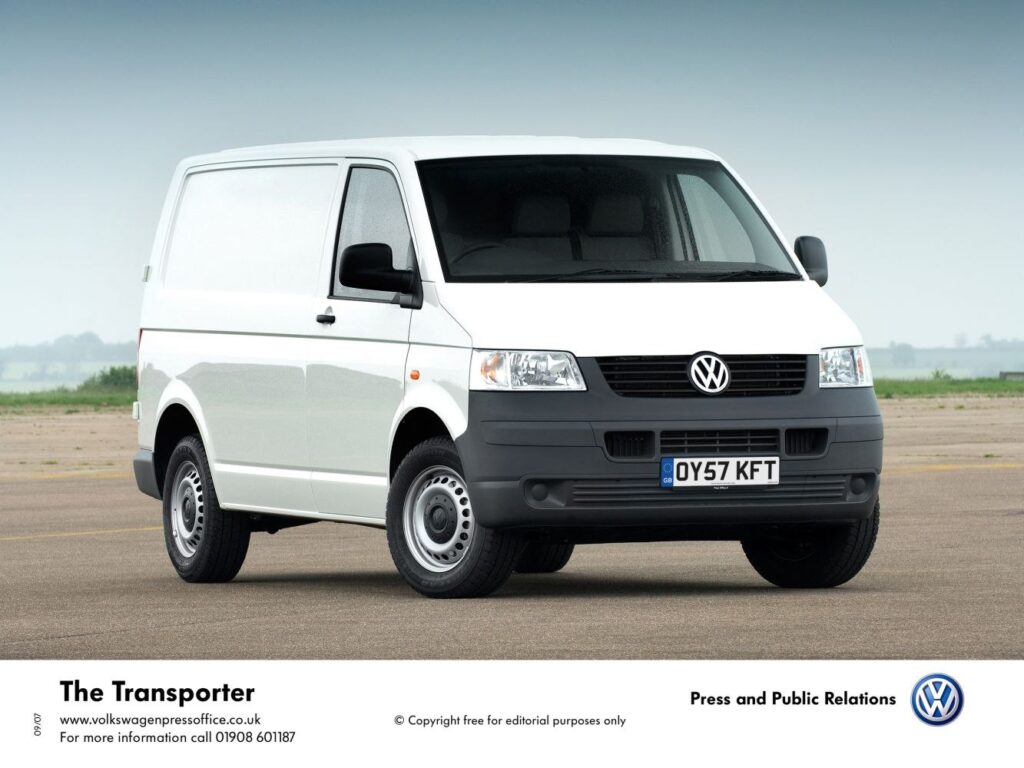
The Volkswagen Transporter (T5) Panel Van 2.0 (116 Hp) L2H1 represents a significant chapter in the storied history of Volkswagen’s iconic commercial vehicle line. Produced between 2003 and 2009, this iteration of the T5 generation continued the Transporter’s legacy as a robust, versatile, and highly capable light commercial vehicle (LCV) primarily for the European market. While not officially sold in the United States, the Transporter series, often affectionately known as the “Bus” or “Microbus” in earlier generations, holds a legendary status globally. The T5 generation, specifically the Panel Van variant, was engineered to meet the demanding requirements of businesses and tradespeople, offering a blend of practicality, reliability, and surprisingly car-like driving dynamics. The L2H1 designation refers to its long wheelbase (L2) and standard roof height (H1), providing a substantial cargo volume without compromising maneuverability in urban environments.
Succeeding the T4, the T5 brought a host of refinements in design, engineering, and comfort, solidifying its position as a segment leader. The 2.0-liter gasoline engine variant, with its 116 horsepower output, was an accessible and dependable option for operators prioritizing proven gasoline powertrain technology and moderate performance for everyday tasks. This detailed overview delves into the specifics of this particular model, exploring its technical prowess, design philosophy, and lasting impact on the European commercial vehicle landscape.
Engineering and Performance of the Volkswagen Transporter (T5) Panel Van
Powertrain and Drivetrain
At the heart of the Volkswagen Transporter (T5) Panel Van 2.0 (116 Hp) L2H1 lies a naturally aspirated 2.0-liter inline-four gasoline (petrol) engine, internally designated as EA113 / AXA. This robust powerplant, with a displacement of 1984 cm³ (121.07 cu. in.), was engineered for durability and consistent performance. It features a Single Overhead Camshaft (SOHC) valvetrain with two valves per cylinder, a configuration known for its reliability and ease of maintenance. Fuel delivery is managed by a multi-port manifold injection system, ensuring efficient combustion and adherence to Euro 4 emission standards during its production years.
The engine produces a respectable 116 horsepower at 5200 rpm, providing ample power for hauling goods and navigating various road conditions. Torque output stands at 125.39 lb.-ft. (170 Nm), available across a broad range from 2700 to 4700 rpm. This wide torque band is crucial for a commercial vehicle, allowing for flexible driving and reducing the need for frequent gear changes, especially when laden. With a compression ratio of 10.5:1, the engine balances efficiency with responsiveness.
Power is channeled to the front wheels via a 5-speed manual transmission, a common and reliable setup for light commercial vehicles of this era. This front-wheel-drive architecture contributes to better traction in varied conditions and allows for a lower cargo floor, maximizing usable space. The performance figures reflect its utility-focused design: the Transporter (T5) Panel Van 2.0 (116 Hp) L2H1 accelerates from 0 to 60 mph in a calculated 16.9 seconds and can reach a maximum speed of 101.28 mph (163 km/h). While not designed for speed, these figures underscore its capability to keep pace with traffic on highways and provide sufficient momentum for urban deliveries. Fuel economy, particularly in extra-urban cycles, was rated at 28.7 US mpg (8.2 l/100 km), which was competitive for a gasoline-powered van of its size and capacity.
Design and Features
Body and Dimensions
The Volkswagen Transporter (T5) Panel Van is characterized by its functional and purposeful design, prioritizing cargo capacity and ease of use. This specific variant, the L2H1, signifies a long wheelbase of 133.86 inches (3400 mm) and a standard roof height of 77.13 inches (1959 mm). The overall length of the vehicle measures 208.27 inches (5290 mm), with a width of 74.96 inches (1904 mm, or 88.27 inches including mirrors), providing a substantial footprint for stability and interior volume. The design is clean and utilitarian, with large side panels suitable for corporate branding, a hallmark of panel vans. It typically features 4 to 5 doors, including the rear cargo doors and often a sliding side door, facilitating easy loading and unloading. The cabin is configured for 2 to 3 occupants, depending on the seating arrangement, offering a practical workspace for drivers and their crew.
Chassis and Safety
The T5’s chassis was engineered for a comfortable ride and stable handling, crucial for a vehicle that spends much of its life carrying heavy loads. It features an independent McPherson strut front suspension with coil springs and an anti-roll bar, providing precise steering and good road manners. The rear suspension is also independent, utilizing coil springs, a transverse stabilizer, and trailing arms, which helps maintain vehicle composure even when fully loaded.
Braking performance is handled by ventilated discs on both the front (308×29.5 mm) and rear (294×22 mm) axles, ensuring effective stopping power. An Anti-lock Braking System (ABS) was standard, a vital safety feature for preventing wheel lock-up during emergency braking, especially with varying cargo weights. The hydraulic rack and pinion steering system offers a good balance of feedback and assist, making the large van surprisingly maneuverable, with a minimum turning circle of 43.31 feet (13.2 m).
Cargo Capacity and Practicality
The L2H1 configuration yields an impressive maximum trunk (cargo) space of 236.61 cu. ft. (6700 liters), making it highly suitable for a wide array of commercial applications, from parcel delivery to trades services. The robust construction allows for a maximum payload capacity ranging from 1834.25 to 2281.78 lbs (832-1035 kg), depending on the specific configuration and kerb weight (which varies between 4001.39 and 4448.93 lbs). The Gross Vehicle Weight Rating (GVWR) stands at 6283.17 lbs (2850 kg). Furthermore, the Transporter T5 is a capable hauler, with a permitted trailer load of up to 5070.63 lbs (2300 kg) with brakes (at an 8% gradient), and 1653.47 lbs (750 kg) without brakes. These specifications underscore its design as a true workhorse, built to handle demanding tasks day in and day out.
Technical Specifications: Volkswagen Transporter (T5) Panel Van 2.0 (116 Hp) L2H1
| Category | Specification |
|---|---|
| General Information | |
| Brand | Volkswagen |
| Model | Transporter |
| Generation | Transporter (T5) Panel Van |
| Type (Engine) | 2.0 (116 Hp) L2H1 |
| Production Start | 2003 year |
| Production End | 2009 year |
| Powertrain Architecture | Internal Combustion engine |
| Body type | Van |
| Seats | 2-3 |
| Doors | 4-5 |
| Performance Specs | |
| Fuel consumption (extra urban) | 28.7 US mpg (8.2 l/100 km) |
| Fuel Type | Petrol (Gasoline) |
| Acceleration 0-60 mph | 16.9 sec |
| Maximum speed | 101.28 mph (163 km/h) |
| Emission standard | Euro 4 |
| Weight-to-power ratio | 15.6 kg/Hp, 63.9 Hp/tonne |
| Weight-to-torque ratio | 10.7 kg/Nm, 93.7 Nm/tonne |
| Engine Specs | |
| Power | 116 Hp @ 5200 rpm |
| Power per liter | 58.5 Hp/l |
| Torque | 125.39 lb.-ft. (170 Nm) @ 2700-4700 rpm |
| Engine layout | Front, Transverse |
| Engine Model/Code | EA113 / AXA |
| Engine displacement | 121.07 cu. in. (1984 cm³) |
| Number of cylinders | 4 |
| Engine configuration | Inline |
| Cylinder Bore | 3.25 in. (82.5 mm) |
| Piston Stroke | 3.65 in. (92.8 mm) |
| Compression ratio | 10.5:1 |
| Number of valves per cylinder | 2 |
| Fuel injection system | Multi-port manifold injection |
| Engine aspiration | Naturally aspirated engine |
| Valvetrain | SOHC |
| Engine oil capacity | 5.28 US qt (5 l) |
| Coolant capacity | 7.5 US qt (7.1 l) |
| Space, Volume and Weights | |
| Kerb Weight | 4001.39 – 4448.93 lbs (1815-2018 kg) |
| Max. weight (GVWR) | 6283.17 lbs (2850 kg) |
| Max load (Payload) | 1834.25 – 2281.78 lbs (832-1035 kg) |
| Trunk (boot) space – maximum | 236.61 cu. ft. (6700 l) |
| Fuel tank capacity | 21.13 US gal (80 l) |
| Max. roof load | 220.46 lbs (100 kg) |
| Permitted trailer load with brakes (8%) | 5070.63 lbs (2300 kg) |
| Permitted trailer load with brakes (12%) | 4409.25 lbs (2000 kg) |
| Permitted trailer load without brakes | 1653.47 lbs (750 kg) |
| Permitted towbar download | 220.46 lbs (100 kg) |
| Dimensions | |
| Length | 208.27 in. (5290 mm) |
| Width | 74.96 in. (1904 mm) |
| Width including mirrors | 88.27 in. (2242 mm) |
| Height | 77.13 in. (1959 mm) |
| Wheelbase | 133.86 in. (3400 mm) |
| Front track | 64.09 in. (1628 mm) |
| Rear (Back) track | 64.09 in. (1628 mm) |
| Front overhang | 35.2 in. (894 mm) |
| Rear overhang | 39.21 in. (996 mm) |
| Ride height (ground clearance) | 6.5 in. (165 mm) |
| Minimum turning circle | 43.31 ft. (13.2 m) |
| Approach angle | 22° |
| Departure angle | 16° |
| Wading depth | 11.81 in. (300 mm) |
| Drivetrain, Brakes and Suspension Specs | |
| Drivetrain Architecture | Front-wheel drive, Internal Combustion engine |
| Drive wheel | Front wheel drive |
| Number of gears and type of gearbox | 5 gears, manual transmission |
| Front suspension | Independent, type McPherson with coil spring and anti-roll bar |
| Rear suspension | Independent coil spring, Transverse stabilizer, Trailing arm |
| Front brakes | Ventilated discs, 308×29.5 mm |
| Rear brakes | Ventilated discs, 294×22 mm |
| Assisting systems | ABS (Anti-lock braking system) |
| Steering type | Steering rack and pinion |
| Power steering | Hydraulic Steering |
| Tires size | 205/65 R16; 215/65 R16 |
| Wheel rims size | 6.5J x 16 |
Legacy and Market Impact of the Volkswagen Transporter (T5) Panel Van
The Volkswagen Transporter series has always been more than just a vehicle; it’s a cultural icon and a cornerstone of commercial transport across Europe and beyond. The T5 generation, and particularly the Volkswagen Transporter (T5) Panel Van 2.0 (116 Hp) L2H1, continued this legacy with an emphasis on modern utility and refined driving characteristics. During its production run from 2003 to 2009, the T5 Transporter solidified its reputation as a reliable, durable, and exceptionally versatile workhorse.
In the highly competitive European light commercial vehicle market, the T5 faced formidable rivals such as the Ford Transit, Mercedes-Benz Vito, Renault Trafic, and Fiat Ducato. What set the Transporter apart was its unique blend of passenger-car-like comfort and handling, robust build quality, and a wide array of configurations. The 2.0-liter gasoline engine, while not the most powerful option available in the T5 lineup, was a popular choice for businesses that valued lower initial costs, simpler maintenance compared to more complex diesel engines, and adequate performance for local and regional deliveries. Its Euro 4 emission standard compliance was also a significant factor for fleet operators navigating increasingly stringent environmental regulations in European cities.
The T5’s robust independent suspension system, combined with available safety features like ABS, contributed to its reputation for secure handling and driver confidence, even when fully loaded. Its thoughtful design, including a spacious cargo area and practical seating options, made it adaptable to numerous applications, from plumbers and electricians to delivery services and mobile workshops. The long wheelbase (L2) and standard roof (H1) variant, as detailed, provided an excellent balance between cargo volume and external dimensions, making it suitable for both urban navigation and highway cruising.
Beyond its commercial duties, the T5 Transporter also served as the basis for the highly popular Caravelle and Multivan passenger variants, as well as the California camper van, showcasing its inherent versatility. This broad appeal further cemented its position as a highly engineered and adaptable platform.
Upon its cessation of production in 2009, the T5 was succeeded by the T6 generation, which built upon its predecessor’s strengths with further refinements in technology, efficiency, and comfort. However, the T5 continues to be a highly sought-after vehicle in the used commercial market, a testament to its enduring reliability and the strong brand loyalty it commands. Its robust mechanicals, practical design, and the extensive network of parts and service support ensure that the Volkswagen Transporter (T5) Panel Van 2.0 (116 Hp) L2H1 remains a valuable asset for businesses and individuals seeking a dependable and capable light commercial vehicle. Its legacy is not just about moving goods, but about moving people’s businesses forward, generation after generation.