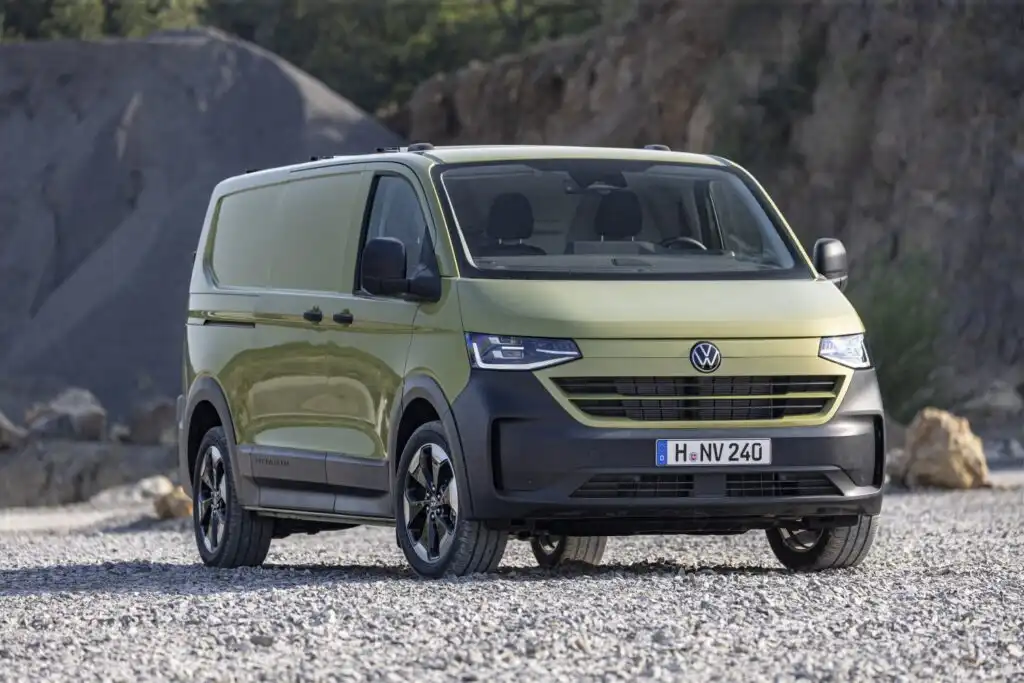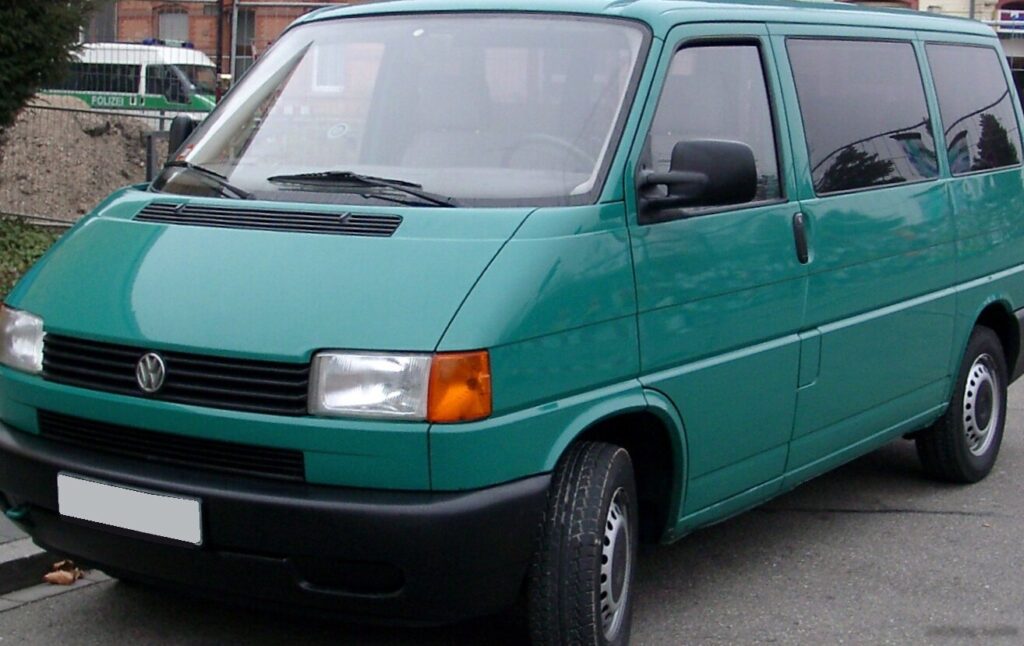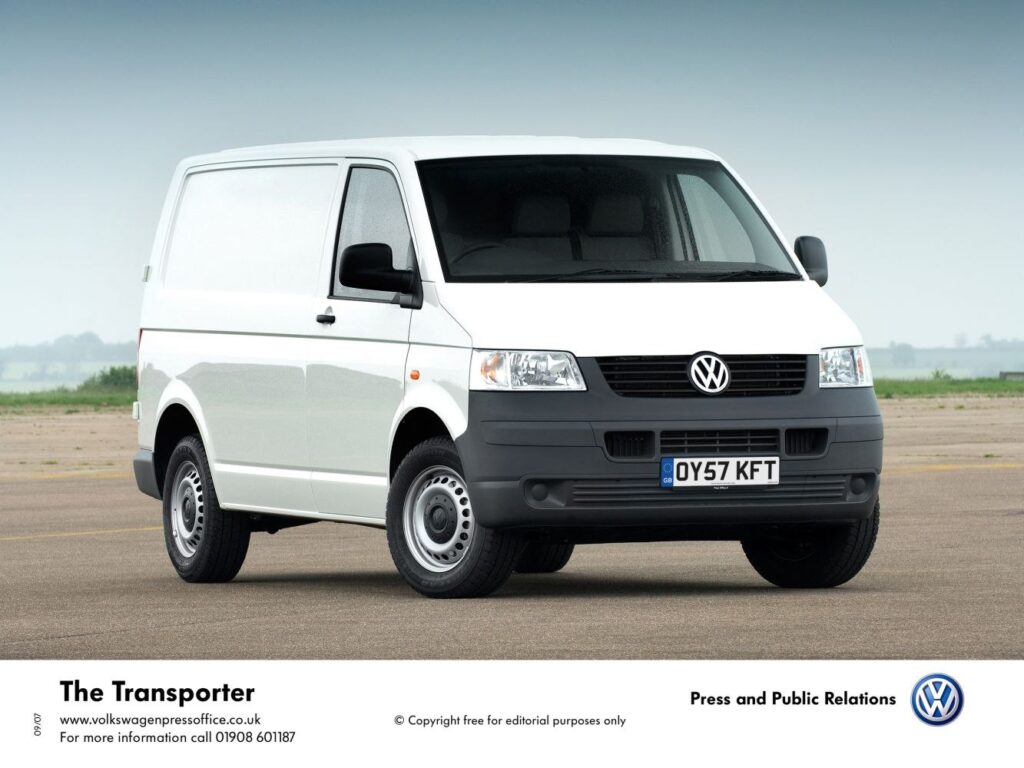
The Volkswagen Transporter (T5) Panel Van: A European Workhorse
The Volkswagen Transporter, specifically the T5 generation produced from 2003 to 2009, represents a significant chapter in the storied history of Volkswagen’s light commercial vehicles. Known globally for its versatility, durability, and robust engineering, the T5 continued the legacy of the iconic Transporter line, which traces its roots back to the legendary Type 2. The variant under review, the Volkswagen Transporter (T5) Panel Van 2.0 (116 Hp) L2H3, exemplifies the utilitarian core of the T5 range, designed primarily for commercial applications requiring substantial cargo capacity and reliable performance. While not a mainstream offering in the United States market, where Volkswagen’s van strategy shifted after the T4-based EuroVan, the T5 was a ubiquitous sight across Europe, Asia, and other international markets, serving a vast array of businesses and public services.
This particular configuration, denoted by “L2H3,” signifies a long wheelbase (L2) and a high roof (H3), maximizing the interior volume available for cargo. It positioned the T5 Panel Van as a formidable competitor in the fiercely contested European light commercial vehicle segment, battling against rivals like the Ford Transit, Mercedes-Benz Vito, and Renault Trafic. Its design ethos was a blend of practicality, understated styling, and a focus on operational efficiency, catering to the demanding needs of daily commercial use.
Engine and Performance of the Volkswagen Transporter (T5) Panel Van
Powering this specific variant of the Volkswagen Transporter (T5) Panel Van is a naturally aspirated 2.0-liter inline-four gasoline engine, internally designated as the EA113 / AXA. This robust powerplant was engineered for reliability and adequate performance under load, rather than outright speed. With an engine displacement of 1984 cubic centimeters (121.07 cubic inches), it delivers a respectable 116 horsepower at 5200 rpm. The torque output is equally crucial for a commercial vehicle, providing 125.39 lb.-ft. of torque across a broad range from 2700 to 4700 rpm. This wide torque band is essential for maintaining momentum, especially when the van is fully laden or navigating urban environments.
The engine features a Multi-port manifold injection system and a Single Overhead Camshaft (SOHC) valvetrain with two valves per cylinder, a configuration known for its simplicity and robustness. With a compression ratio of 10.5:1, it operates efficiently on regular gasoline. Power is transmitted to the front wheels via a five-speed manual transmission, a common and reliable setup for commercial vehicles of this era, offering direct driver engagement and proven durability.
Performance figures reflect its utilitarian purpose. The Transporter (T5) Panel Van 2.0 (116 Hp) accelerates from 0 to 60 mph in a measured 17.5 seconds, with a top speed of 94.45 mph. While these numbers might seem modest compared to passenger cars, they are entirely appropriate for a vehicle designed to transport goods safely and efficiently. Fuel economy, particularly in extra-urban driving, is rated at 26.1 US mpg, which was a competitive figure for a gasoline-powered van of its size and capacity during its production years. It also met the Euro 4 emission standard, indicating a reasonable level of environmental compliance for the period.
Design and Features of the Volkswagen Transporter (T5) Panel Van
The design of the Volkswagen Transporter (T5) Panel Van is characterized by its functional and straightforward aesthetic, prioritizing utility and practicality. As a panel van, its primary purpose is cargo transport, and the L2H3 designation underscores this focus. The “L2” indicates a long wheelbase of 133.86 inches, contributing to enhanced stability and significantly increasing the overall length to 208.27 inches. The “H3” denotes a high roof, elevating the total height to 96.85 inches, which dramatically expands the internal cargo volume.
With a width of 74.96 inches (88.27 inches including mirrors), the T5 Panel Van offers a commanding presence on the road. The body features 4-5 doors, typically comprising front cabin doors and sliding side doors or rear barn doors, facilitating easy access for loading and unloading. The cabin is configured for 2-3 seats, providing space for the driver and one or two passengers, depending on the specific interior layout.
One of the most impressive features of the L2H3 variant is its cavernous cargo capacity, boasting a maximum trunk space of 9300 liters (328.43 cubic feet). This immense volume, combined with a maximum payload capacity ranging from 1724.01 to 2171.55 lbs., made it an ideal choice for businesses requiring significant hauling capabilities, such as delivery services, tradesmen, or mobile workshops. The vehicle’s gross weight is rated at 6283.17 lbs., highlighting its robust construction designed to handle heavy loads.
Underneath its practical exterior, the T5 featured an advanced chassis for a commercial vehicle of its time. It employed an independent McPherson strut front suspension with coil springs and an anti-roll bar, paired with an independent coil spring rear suspension featuring a transverse stabilizer and trailing arms. This sophisticated setup contributed to a surprisingly comfortable ride and stable handling for a van, reducing driver fatigue on long journeys and enhancing control when fully loaded. Braking performance was handled by ventilated disc brakes on both the front (308×29.5 mm) and rear (294×22 mm) axles, complemented by an Anti-lock Braking System (ABS) as a standard safety feature. Steering was hydraulic rack and pinion, providing direct feedback and ease of maneuverability, despite the vehicle’s considerable size.
Technical Specifications: Volkswagen Transporter (T5) Panel Van 2.0 (116 Hp) L2H3
| Category | Specification |
|---|---|
| Brand | Volkswagen |
| Model | Transporter (T5) Panel Van |
| Type (Engine) | 2.0 (116 Hp) L2H3 |
| Production Years | 2003 – 2009 |
| Body Type | Van |
| Seats | 2-3 |
| Doors | 4-5 |
| Powertrain Architecture | Internal Combustion engine, Front-wheel drive |
| Fuel Type | Gasoline |
| Fuel Consumption (Extra Urban) | 26.1 US mpg |
| Acceleration 0-60 mph | 17.5 sec |
| Maximum Speed | 94.45 mph |
| Emission Standard | Euro 4 |
| Power | 116 Hp @ 5200 rpm |
| Power per liter | 58.5 Hp/l |
| Torque | 125.39 lb.-ft. @ 2700-4700 rpm |
| Engine Layout | Front, Transverse |
| Engine Model/Code | EA113 / AXA |
| Engine Displacement | 1984 cm3 (121.07 cu. in.) |
| Number of Cylinders | 4, Inline |
| Cylinder Bore | 3.25 in. |
| Piston Stroke | 3.65 in. |
| Compression Ratio | 10.5:1 |
| Valves per Cylinder | 2 |
| Fuel Injection System | Multi-port manifold injection |
| Engine Aspiration | Naturally aspirated |
| Valvetrain | SOHC |
| Engine Oil Capacity | 5.28 US qt |
| Coolant Capacity | 7.5 US qt |
| Curb Weight | 4111.62 – 4559.16 lbs. |
| Maximum Weight (GVWR) | 6283.17 lbs. |
| Maximum Load | 1724.01 – 2171.55 lbs. |
| Cargo Volume (Maximum) | 328.43 cu. ft. |
| Fuel Tank Capacity | 21.13 US gal |
| Permitted Trailer Load with Brakes (8%) | 5070.63 lbs. |
| Permitted Trailer Load with Brakes (12%) | 4409.25 lbs. |
| Permitted Trailer Load without Brakes | 1653.47 lbs. |
| Permitted Towbar Download | 220.46 lbs. |
| Length | 208.27 in. |
| Width | 74.96 in. |
| Width Including Mirrors | 88.27 in. |
| Height | 96.85 in. |
| Wheelbase | 133.86 in. |
| Front Track | 64.09 in. |
| Rear Track | 64.09 in. |
| Front Overhang | 35.2 in. |
| Rear Overhang | 39.21 in. |
| Ride Height (Ground Clearance) | 6.5 in. |
| Minimum Turning Circle | 43.31 ft. |
| Approach Angle | 22° |
| Departure Angle | 16° |
| Wading Depth | 11.81 in. |
| Drive Wheel | Front-wheel drive |
| Gearbox | 5 gears, manual transmission |
| Front Suspension | Independent, McPherson with coil spring and anti-roll bar |
| Rear Suspension | Independent coil spring, Transverse stabilizer, Trailing arm |
| Front Brakes | Ventilated discs, 308×29.5 mm |
| Rear Brakes | Ventilated discs, 294×22 mm |
| Assisting Systems | ABS (Anti-lock braking system) |
| Steering Type | Steering rack and pinion |
| Power Steering | Hydraulic Steering |
| Tire Size | 205/65 R16; 215/65 R16 |
| Wheel Rim Size | 6.5J x 16 |
Legacy and Market Impact of the Volkswagen Transporter (T5) Panel Van
The Volkswagen Transporter (T5) Panel Van, and indeed the entire T5 generation, built upon a formidable legacy established by its predecessors, cementing its reputation as one of the most respected and successful commercial vehicles worldwide. While its presence in the United States was limited—Volkswagen having largely withdrawn from the full-size van segment after the T4-based EuroVan—the T5 dominated markets across Europe, Australia, and parts of Asia, becoming an indispensable tool for countless businesses, from small independent tradesmen to large logistics operations and emergency services.
Its market impact stemmed from a potent combination of factors: Volkswagen’s renowned build quality, exceptional reliability, and a highly adaptable platform. The T5 offered a wide array of configurations, from passenger-carrying Caravelle and Multivan versions to various panel van and chassis cab options, allowing it to meet diverse commercial needs. The 2.0-liter gasoline engine, while not the most powerful in the range, was celebrated for its dependability and lower running costs compared to larger displacement options, making it a pragmatic choice for fleet operators and small businesses.
In its primary markets, the T5 faced stiff competition from established rivals. Key competitors included the ubiquitous Ford Transit, known for its robust construction and wide range of configurations; the Mercedes-Benz Vito, which offered a more premium feel and advanced technology; and other European contenders like the Renault Trafic, Opel Vivaro, Fiat Ducato, and Peugeot Expert. Despite this intense competition, the Transporter maintained its strong market position, largely due to its reputation for longevity, high resale value, and a comfortable, car-like driving experience that set it apart from some of its more truck-like adversaries.
The T5 also played a crucial role in continuing the Transporter’s cultural significance. Beyond its commercial duties, it became a popular base for camper conversions, demonstrating its versatility and broad appeal. Its robust independent suspension, which provided a more refined ride than many rivals, was a particular selling point for those seeking a comfortable yet capable platform. The T5’s design, though utilitarian, was modern and clean, contributing to its enduring appeal.
Ultimately, the Volkswagen Transporter (T5) Panel Van 2.0 (116 Hp) L2H3 stands as a testament to Volkswagen’s engineering prowess in the commercial vehicle sector. It successfully evolved the Transporter concept for the 21st century, combining practical design with reliable mechanics and a focus on operational efficiency. Its legacy is not just one of sales figures but of enabling countless businesses and individuals, solidifying its place as a true icon of the light commercial vehicle segment.