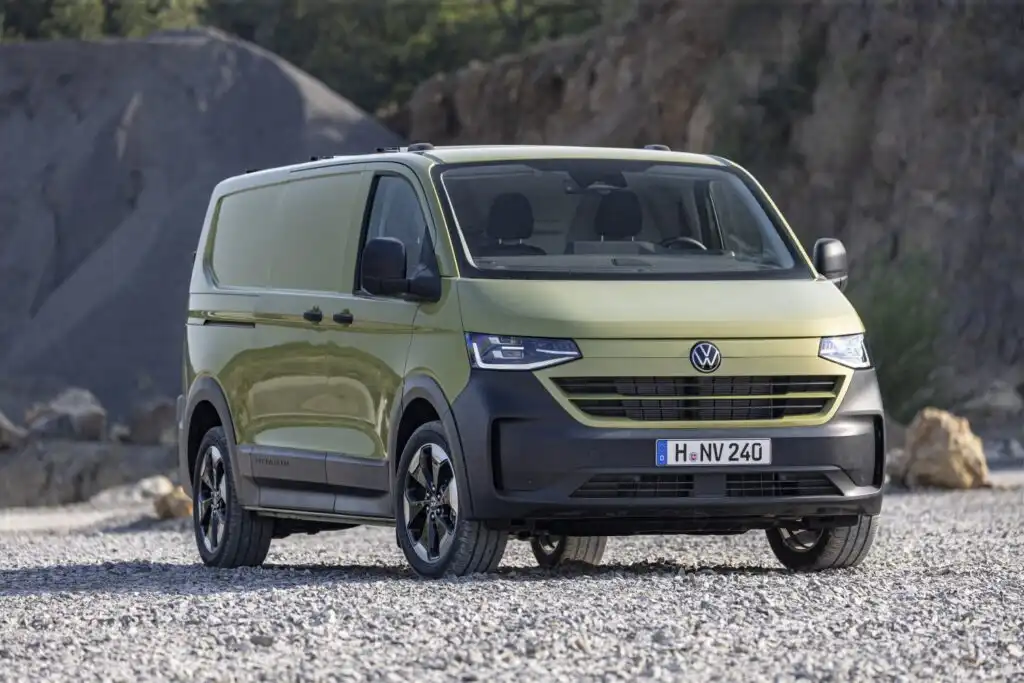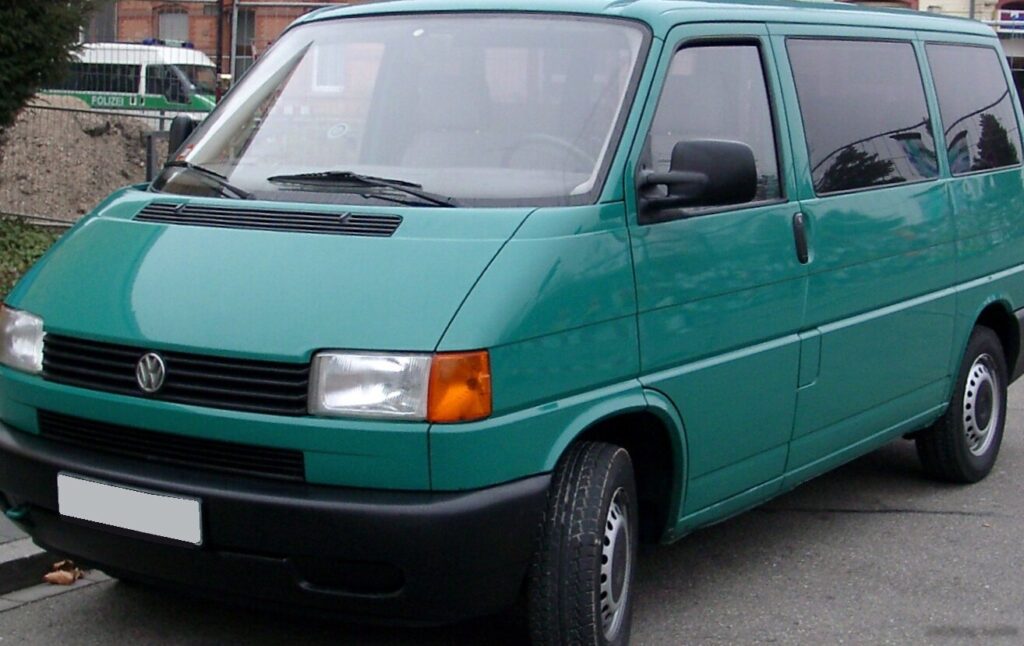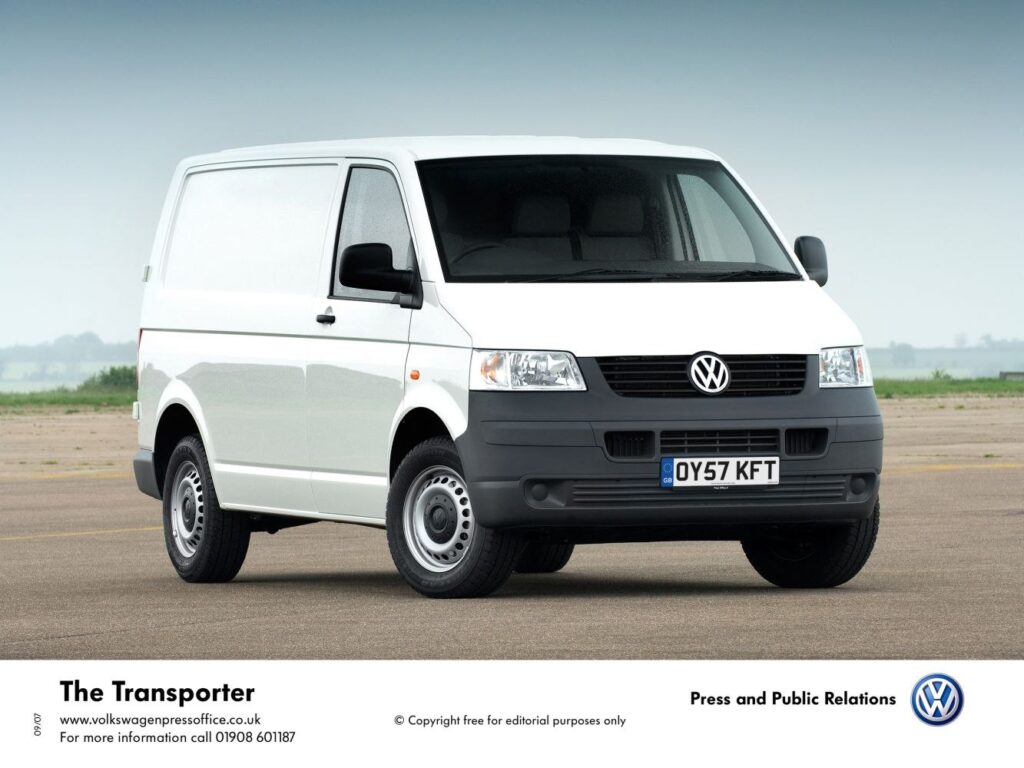
In the pantheon of utility vehicles, few names resonate with the same enduring legacy and versatility as the Volkswagen Transporter. For generations, this venerable workhorse, known affectionately in North America as the Microbus or Vanagon in its passenger forms, has been a cornerstone of commerce, adventure, and everyday life across the globe. The fifth generation, the T5, launched in 2003, represented a significant evolution, blending Volkswagen’s renowned engineering with modern demands for efficiency, comfort, and capacity. Among its numerous configurations, the Volkswagen Transporter (T5) Panel Van 2.5 TDI (130 Hp) Tiptronic L2H3 stood out as a particularly capable and sophisticated option for businesses and tradespeople needing a robust, long-wheelbase, high-roof solution.
The T5 generation marked a pivotal moment, moving away from the rear-engined layouts of its distant ancestors to a front-engine, front-wheel-drive architecture (though AWD was available on some variants). This shift allowed for a more car-like driving experience, improved interior space, and enhanced safety features, solidifying the Transporter’s position as a premium choice in the highly competitive commercial vehicle segment. While the passenger Multivan and California camper versions often garnered the most attention in enthusiast circles, the Panel Van models were the backbone of countless businesses, proving that practicality and German engineering could indeed go hand-in-hand.
Volkswagen Transporter (T5) Panel Van: A New Era of Utility
The T5 Transporter, produced from 2003 to 2015, succeeded the T4, which had already established a strong reputation for reliability and efficiency. The T5, however, was a ground-up redesign, featuring a more contemporary aesthetic and a host of technological advancements. The Panel Van variant, specifically the L2H3 configuration, was engineered for maximum cargo volume and payload, making it an ideal choice for a diverse range of applications, from delivery services to mobile workshops.
The design language of the T5 Transporter was a subtle evolution rather than a revolution. It maintained the functional, rectilinear silhouette that defined its predecessors but incorporated smoother lines, a more integrated front fascia, and larger headlights, giving it a more modern and less utilitarian appearance than previous generations. The L2H3 designation indicated a long wheelbase (L2) and a high roof (H3), providing an impressive 9300 liters (328.43 cubic feet) of cargo space, accessible through wide-opening rear doors and a sliding side door. This thoughtful design maximized internal volume while keeping the exterior dimensions manageable for urban environments.
Engineering for the Long Haul: The 2.5 TDI Powerplant
At the heart of the 2003-2006 Volkswagen Transporter (T5) Panel Van 2.5 TDI (130 Hp) Tiptronic L2H3 was Volkswagen’s venerable 2.5-liter inline five-cylinder diesel engine, designated EA153 / AXD. This turbocharged and intercooled direct-injection unit was a testament to robust German engineering, designed for longevity and efficiency under demanding commercial use. It delivered a respectable 130 horsepower at 3500 rpm, providing ample power for hauling heavy loads without feeling strained.
More crucial for a commercial vehicle, however, was its torque output. The 2.5 TDI generated a substantial 250.77 lb-ft of torque, available across a broad rev range from 2000-2300 rpm. This low-end grunt was vital for smooth acceleration from a standstill, confident merging onto highways, and effortless climbing of inclines, even when fully laden. The engine’s pump-nozzle (unit injector) fuel injection system, advanced for its time, contributed to its efficiency and responsiveness, meeting Euro 3 emission standards.
Power was routed to the front wheels via a sophisticated 6-speed Tiptronic automatic transmission. This gearbox offered the convenience of an automatic with the option of manual gear selection, providing drivers with greater control in specific driving conditions or when towing. While outright speed was not its primary objective, the T5 Panel Van could accelerate from 0 to 60 mph in a respectable 15.1 seconds, reaching a top speed of 95.69 mph. More importantly for its mission, its extra-urban fuel consumption was an impressive 7.2 l/100 km (approximately 32.7 US mpg), a significant advantage for businesses looking to minimize operating costs.
Designed for Work: Innovation and Practicality
The T5 Transporter Panel Van was a masterclass in functional design and engineering for its era. Beyond its efficient powertrain, it incorporated several innovations aimed at improving driver comfort, vehicle dynamics, and overall utility. The independent suspension system, featuring McPherson struts with coil springs and an anti-roll bar at the front, and an independent trailing arm setup with coil springs and a transverse stabilizer at the rear, provided a surprisingly compliant ride for a commercial vehicle. This setup not only enhanced comfort but also improved handling and stability, crucial for a van that might carry varying loads.
Safety was also a priority, with standard Anti-lock Braking System (ABS) and large ventilated disc brakes (308×29.5 mm front, 294×22 mm rear) ensuring confident stopping power. Hydraulic power steering provided precise control, while the turning circle of 13.2 meters (43.31 feet) made it surprisingly maneuverable in tight urban spaces for a vehicle of its size. The L2H3 variant’s generous dimensions – 5290 mm (208.27 inches) long, 1904 mm (74.96 inches) wide (2242 mm / 88.27 inches including mirrors), and 2460 mm (96.85 inches) tall – provided a spacious interior for up to three occupants and an expansive cargo area. With a maximum payload capacity ranging from 845 kg to 1033 kg (1862.91 – 2277.38 lbs) and a substantial towing capacity of 2500 kg (5511.56 lbs) with brakes, it was clear this van was built to tackle serious work.
Market Legacy in North America
While the Volkswagen Transporter has an iconic history in North America, particularly its earlier generations like the Type 2 “Bus” and Vanagon, the T5 Panel Van in its diesel configuration occupied a more specialized niche during its production run (2003-2006 for this specific variant). The North American commercial van market was historically dominated by large, body-on-frame, rear-wheel-drive offerings from American manufacturers such as the Ford E-Series (Econoline), Chevrolet Express/GMC Savana, and Dodge Ram Van.
The T5 Transporter offered a distinctly European alternative. Its unibody construction, front-wheel-drive architecture (in this variant), and advanced diesel powertrain presented a different proposition. It was generally regarded as a more refined, car-like driving experience compared to its American counterparts, with superior fuel efficiency thanks to its TDI engine. However, its higher acquisition cost, combined with the preference for larger, more powerful gasoline engines in the U.S. and Canada at the time, meant it did not achieve the same mainstream penetration as its domestic rivals.
Nevertheless, the T5 Panel Van cultivated a loyal following among specific businesses and trades. Its compact exterior dimensions relative to its impressive cargo volume, combined with Volkswagen’s reputation for build quality and the diesel engine’s longevity, made it an attractive choice for those who valued efficiency, maneuverability, and durability. It was often favored by small businesses, caterers, florists, and artisans who appreciated its blend of practicality and European sophistication. While precise North American MSRP figures for this exact L2H3 2.5 TDI Tiptronic variant are challenging to pinpoint due to market variations and limited widespread availability compared to Europe, it would have been positioned as a premium offering, likely starting in the high $20,000s to low $30,000s USD, depending on options and market conditions. Its legacy in North America is one of a capable, albeit niche, workhorse that brought European utility and diesel efficiency to those who sought an alternative to traditional domestic commercial vans.
Technical Specifications
| Category | Specification |
|---|---|
General Information |
|
| Brand | Volkswagen |
| Model | Transporter |
| Generation | Transporter (T5) Panel Van |
| Type (Engine) | 2.5 TDI (130 Hp) Tiptronic L2H3 |
| Start of Production | 2003 year |
| End of Production | 2006 year |
| Powertrain Architecture | Internal Combustion engine |
| Body Type | Van |
| Seats | 2-3 |
| Doors | 4-5 |
Engine Specifications |
|
| Power | 130 Hp @ 3500 rpm |
| Torque | 340 Nm (250.77 lb-ft) @ 2000-2300 rpm |
| Engine Layout | Front, Transverse |
| Engine Model/Code | EA153 / AXD |
| Engine Displacement | 2460 cm³ (150.12 cu. in.) |
| Number of Cylinders | 5 |
| Engine Configuration | Inline |
| Cylinder Bore | 81 mm (3.19 in.) |
| Piston Stroke | 95.5 mm (3.76 in.) |
| Compression Ratio | 18.5:1 |
| Valves per Cylinder | 2 |
| Fuel Injection System | Pump-nozzle (Unit Injector) |
| Engine Aspiration | Turbocharger, Intercooler |
| Valvetrain | SOHC |
| Engine Oil Capacity | 7.4 l (7.82 US qt) |
| Coolant Capacity | 7.1 l (7.5 US qt) |
Performance & Fuel Economy |
|
| Fuel Type | Diesel |
| Fuel Consumption (Extra Urban) | 7.2 l/100 km (32.7 US mpg) |
| Acceleration 0-60 mph | 15.1 sec |
| Maximum Speed | 154 km/h (95.69 mph) |
| Emission Standard | Euro 3 |
Space, Volume, and Weights |
|
| Kerb Weight | 1955-2167 kg (4310.04 – 4777.42 lbs) |
| Max. Weight (GVWR) | 2800-3200 kg (6172.94 – 7054.79 lbs) |
| Max Load (Payload) | 845-1033 kg (1862.91 – 2277.38 lbs) |
| Trunk (Boot) Space – Maximum | 9300 l (328.43 cu. ft.) |
| Fuel Tank Capacity | 80 l (21.13 US gal) |
Permitted Trailer

| |