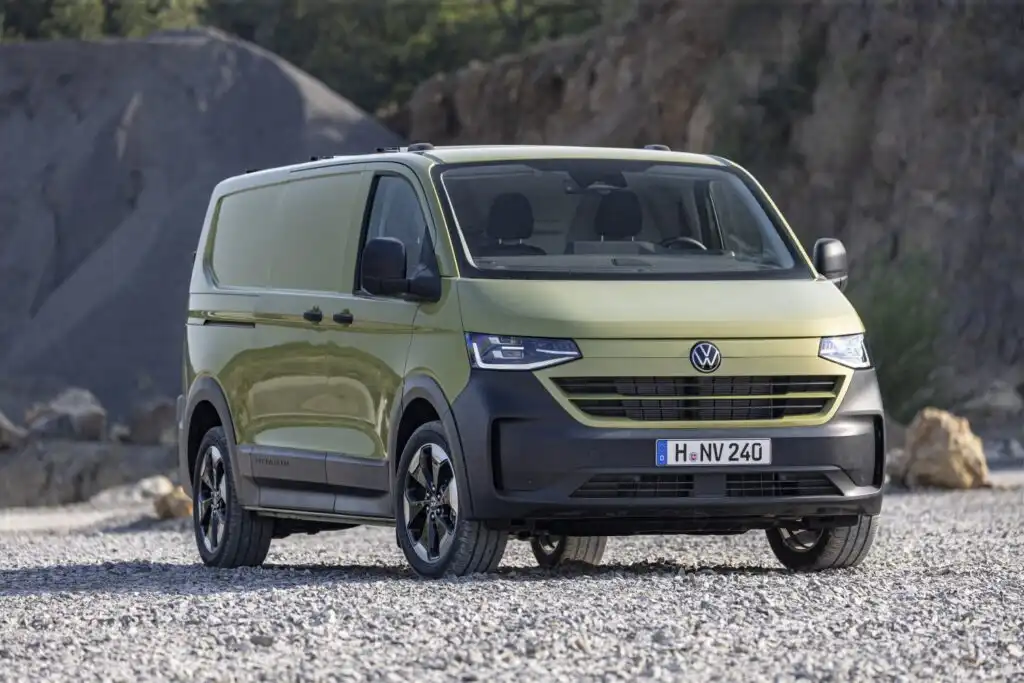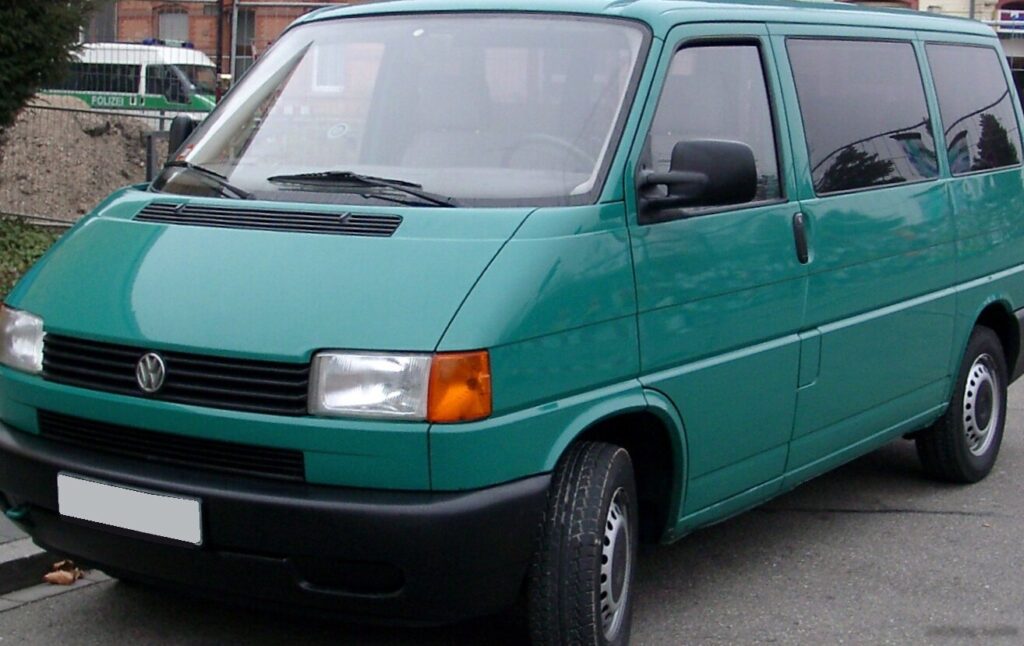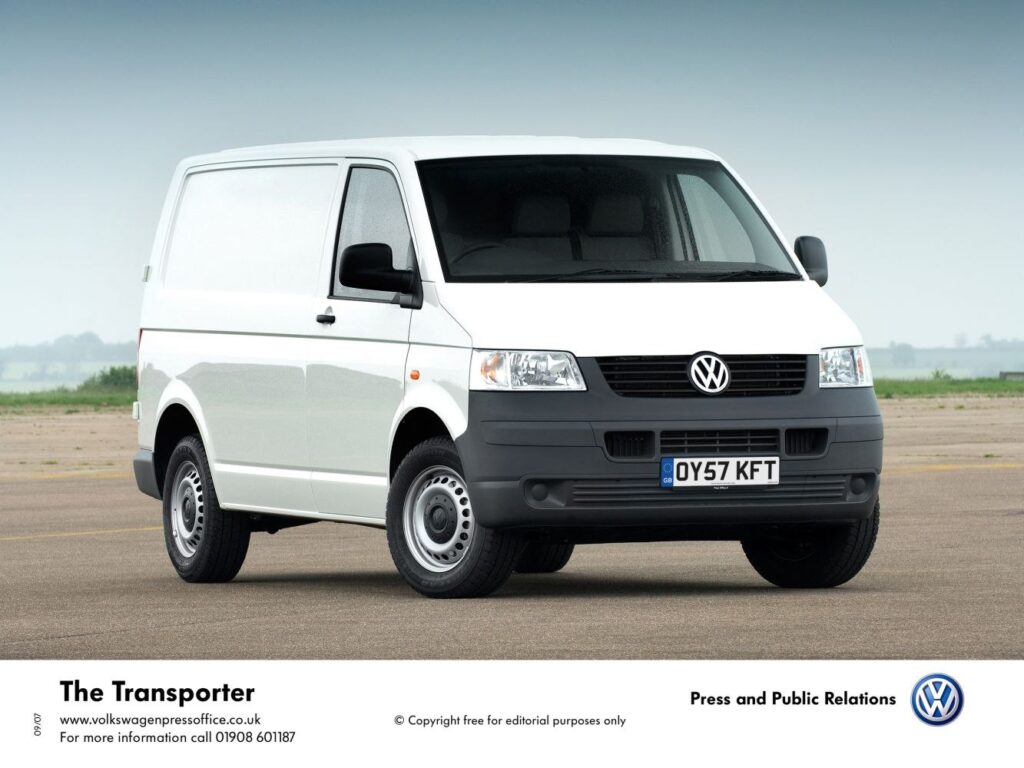
The Volkswagen Transporter (T5) Panel Van: A European Workhorse
The Volkswagen Transporter (T5) Panel Van represents a significant chapter in the storied history of Volkswagen’s commercial vehicle line, a lineage dating back to the iconic Type 2. Produced from 2003 to 2006 for this specific configuration, the T5 generation continued the Transporter’s legacy as a versatile and robust light commercial vehicle, primarily serving the demanding European, Asian, and Australian markets. While not officially sold in the United States, the Transporter series is globally recognized for its practicality, durability, and a driving experience often praised for its car-like refinement compared to its contemporaries.
This particular variant, the 2.5 TDI (174 Hp) 4MOTION L2H3, stood out within the T5 range as a high-performance, all-wheel-drive panel van. Its designation L2H3 signifies a long wheelbase (L2) and a high roof (H3), catering to businesses requiring substantial cargo capacity and the added traction of Volkswagen’s 4MOTION all-wheel-drive system. This combination made it particularly adept for challenging terrains, adverse weather conditions, or specialized applications where enhanced grip and volumetric space were paramount. The T5 generation succeeded the T4, bringing a host of improvements in design, ergonomics, safety, and powertrain technology, solidifying its position as a segment leader in its primary markets.
Engine & Performance: Power and Traction for the Toughest Jobs
At the heart of the Volkswagen Transporter (T5) Panel Van 2.5 TDI (174 Hp) 4MOTION L2H3 lies a potent 2.5-liter (2460 cm3 or 150.12 cu. in.) inline five-cylinder TDI (Turbocharged Direct Injection) diesel engine, a powerplant renowned for its low-end torque and impressive fuel economy. This particular iteration, designated with the engine code EA153 / AXE, delivered a robust 174 horsepower at 3500 rpm, translating to a substantial 70.7 Hp per liter. More critically for a commercial vehicle, it produced a formidable 400 Nm (295.02 lb.-ft.) of torque across a broad and usable rev range, specifically between 2000 and 2300 rpm. This high torque output was crucial for hauling heavy loads and providing confident acceleration, even when fully laden.
The engine’s architecture featured an inline five-cylinder configuration with a SOHC (Single Overhead Camshaft) valvetrain and two valves per cylinder. Fuel delivery was managed by a sophisticated pump-nozzle (unit injector) system, ensuring precise fuel atomization and efficient combustion. A turbocharger with an intercooler boosted induction, further enhancing power output and efficiency. This powertrain allowed the Transporter T5 to achieve a respectable 0 to 60 mph acceleration in approximately 12.3 seconds, with a top speed of 105.01 mph (169 km/h) – impressive figures for a large panel van. Fuel economy was also a strong suit for its class, with an extra-urban consumption rated at 7.7 liters per 100 km, equivalent to roughly 30.5 US mpg.
A defining characteristic of this specific T5 variant was its 4MOTION all-wheel-drive system. Unlike a permanent 4×4 setup, the T5’s 4MOTION architecture primarily drove the front wheels, engaging the rear wheels via an electrically or mechanically operated clutch only when slippage was detected or additional traction was required. This intelligent system provided enhanced grip and stability on slippery surfaces, unpaved roads, or during heavy towing, without significantly compromising fuel efficiency under normal driving conditions. The power was channeled through a durable 6-speed manual transmission, offering precise control and optimizing the engine’s power band for various driving scenarios.
Design & Features: Practicality Meets Volkswagen Engineering
The Volkswagen Transporter (T5) Panel Van 2.5 TDI (174 Hp) 4MOTION L2H3 embodied a design ethos centered on maximum utility and robust functionality. As a panel van, its primary purpose was cargo transport, reflected in its cavernous 9300 liters (328.43 cu. ft.) of maximum trunk space. The L2H3 designation signified a long wheelbase of 133.86 inches (3400 mm) and a high roof profile, which translated into a towering height of 96.85 inches (2460 mm). This generous interior volume allowed for the transportation of larger items, making it ideal for tradespeople, delivery services, and various commercial applications.
The exterior design of the T5 was modern and purposeful for its era, featuring clean lines and a functional aesthetic. With a length of 208.27 inches (5290 mm) and a width of 74.96 inches (1904 mm, 88.27 inches including mirrors), the van presented a substantial footprint. Despite its size, the T5 offered a relatively tight minimum turning circle of 43.31 feet (13.2 m), aiding maneuverability in urban environments. The standard tire size was 215/65 R16 on 6.5J x 16 wheels, providing a good balance of load-carrying capacity and ride comfort.
Inside, the T5 Panel Van typically featured a 2-3 seat configuration, prioritizing driver and passenger comfort for long working days. While specific interior amenities would vary, the focus was on durable materials and ergonomic controls. Safety features for the 2003-2006 period included an Anti-lock Braking System (ABS), which was standard, complementing the ventilated disc brakes on both the front (308×29.5 mm) and rear (294×22 mm) axles. The independent McPherson strut front suspension with coil springs and an anti-roll bar, combined with an independent coil spring rear suspension with a transverse stabilizer and trailing arm, provided a stable and relatively comfortable ride, even under heavy loads. Hydraulic power steering made handling this substantial vehicle less strenuous.
Technical Specifications: Volkswagen Transporter (T5) Panel Van 2.5 TDI (174 Hp) 4MOTION L2H3
| Category | Specification |
|---|---|
| Brand | Volkswagen |
| Model | Transporter |
| Generation | Transporter (T5) Panel Van |
| Type (Engine) | 2.5 TDI (174 Hp) 4MOTION L2H3 |
| Production Start | 2003 |
| Production End | 2006 |
| Powertrain Architecture | Internal Combustion Engine |
| Body Type | Van |
| Seats | 2-3 |
| Doors | 4-5 |
| Performance Specs | |
| Fuel Consumption (Extra Urban) | 7.7 l/100 km (30.5 US mpg) |
| Fuel Type | Diesel |
| Acceleration 0 – 60 mph | 12.3 sec |
| Acceleration 0 – 100 km/h | 12.9 sec |
| Maximum Speed | 169 km/h (105.01 mph) |
| Emission Standard | Euro 3 |
| Weight-to-Power Ratio | 11.8 kg/Hp (84.7 Hp/tonne) |
| Weight-to-Torque Ratio | 5.1 kg/Nm (194.6 Nm/tonne) |
| Engine Specs | |
| Power | 174 Hp @ 3500 rpm |
| Power per Liter | 70.7 Hp/l |
| Torque | 400 Nm (295.02 lb.-ft.) @ 2000-2300 rpm |
| Engine Layout | Front, Transverse |
| Engine Model/Code | EA153 / AXE |
| Engine Displacement | 2460 cm3 (150.12 cu. in.) |
| Number of Cylinders | 5 |
| Engine Configuration | Inline |
| Cylinder Bore | 81 mm (3.19 in.) |
| Piston Stroke | 95.5 mm (3.76 in.) |
| Compression Ratio | 18.5:1 |
| Valves per Cylinder | 2 |
| Fuel Injection System | Pump-nozzle (Unit Injector) |
| Engine Aspiration | Turbocharger, Intercooler |
| Valvetrain | SOHC |
| Engine Oil Capacity | 7.4 l (7.82 US qt) |
| Coolant Capacity | 7.1 l (7.5 US qt) |
| Space, Volume & Weights | |
| Kerb Weight | 2055-2258 kg (4530.5 – 4978.04 lbs.) |
| Max. Weight (GVWR) | 2800-3000 kg (6172.94 – 6613.87 lbs.) |
| Max Load | 742-745 kg (1635.83 – 1642.44 lbs.) |
| Trunk (Boot) Space – Max | 9300 l (328.43 cu. ft.) |
| Fuel Tank Capacity | 80 l (21.13 US gal) |
| Permitted Trailer Load with Brakes (8%) | 2500 kg (5511.56 lbs.) |
| Permitted Trailer Load with Brakes (12%) | 2500 kg (5511.56 lbs.) |
| Permitted Trailer Load without Brakes | 750 kg (1653.47 lbs.) |
| Permitted Towbar Download | 100 kg (220.46 lbs.) |
| Dimensions | |
| Length | 5290 mm (208.27 in.) |
| Width | 1904 mm (74.96 in.) |
| Width Including Mirrors | 2242 mm (88.27 in.) |
| Height | 2460 mm (96.85 in.) |
| Wheelbase | 3400 mm (133.86 in.) |
| Front Track | 1628 mm (64.09 in.) |
| Rear (Back) Track | 1628 mm (64.09 in.) |
| Front Overhang | 894 mm (35.2 in.) |
| Rear Overhang | 996 mm (39.21 in.) |
| Ride Height (Ground Clearance) | 165 mm (6.5 in.) |
| Minimum Turning Circle | 13.2 m (43.31 ft.) |
| Approach Angle | 22° |
| Departure Angle | 16° |
| Wading Depth | 300 mm (11.81 in.) |
| Drivetrain, Brakes & Suspension | |
| Drivetrain Architecture | ICE drives front wheels permanently; rear wheels driven via electrically/mechanically operated clutch if necessary. |
| Drive Wheel | All-wheel drive (4×4) |
| Number of Gears | 6 |
| Type of Gearbox | Manual transmission |
| Front Suspension | Independent, McPherson with coil spring and anti-roll bar |
| Rear Suspension | Independent coil spring, Transverse stabilizer, Trailing arm |
| Front Brakes | Ventilated discs, 308×29.5 mm |
| Rear Brakes | Ventilated discs, 294×22 mm |
| Assisting Systems | ABS (Anti-lock Braking System) |
| Steering Type | Steering rack and pinion |
| Power Steering | Hydraulic Steering |
| Tire Size | 215/65 R16 |
| Wheel Rims Size | 6.5J x 16 |
Legacy & Market Impact of the Volkswagen Transporter (T5) Panel Van
The Volkswagen Transporter T5 generation, and particularly robust variants like the 2.5 TDI (174 Hp) 4MOTION L2H3, carved out a significant legacy in the European and international commercial vehicle markets. It built upon the legendary reputation of its predecessors (T1, T2, T3, T4) for reliability, build quality, and versatility. In its primary markets, the T5 was a fierce competitor to other popular vans such as the Ford Transit, Mercedes-Benz Sprinter, and Renault Trafic. What set the Transporter apart was often its perceived premium feel, more refined driving dynamics, and a strong residual value, making it a sound investment for businesses.
The 4MOTION all-wheel-drive system in this specific model further enhanced its appeal, enabling access to construction sites, remote locations, or simply providing added security during harsh winters. This capability expanded its user base beyond urban delivery services to include utility companies, emergency services, and outdoor adventure outfitters who required dependable traction. The L2H3 configuration, with its extended length and elevated roofline, maximized cargo volume, allowing for the transport of taller items or the installation of complex shelving and equipment, further cementing its role as a flexible work platform.
The T5’s impact was not just economic; it also influenced the design and engineering standards for commercial vans. Volkswagen’s commitment to offering car-like comfort and safety features in a utilitarian package pushed competitors to elevate their offerings. Despite its utilitarian purpose, the T5 developed a cult following, particularly among those who appreciated its robust engineering and the possibility of conversion into highly capable camper vans or bespoke mobile workshops. Even after the introduction of the T6 generation, the T5 remains a highly sought-after used vehicle, a testament to its enduring quality and the successful blend of performance, practicality, and Volkswagen’s engineering prowess.
In summary, the Volkswagen Transporter (T5) Panel Van 2.5 TDI (174 Hp) 4MOTION L2H3 was more than just a commercial vehicle; it was a testament to Volkswagen’s deep understanding of the demands placed upon working vehicles. It delivered a powerful and efficient diesel engine, an intelligent all-wheel-drive system, and a highly adaptable body, all wrapped in a package that upheld the Transporter’s long-standing reputation for excellence.