The Volkswagen Transporter (T5) Panel Van 2.5 TDI (174 Hp) L2H2: A European Workhorse
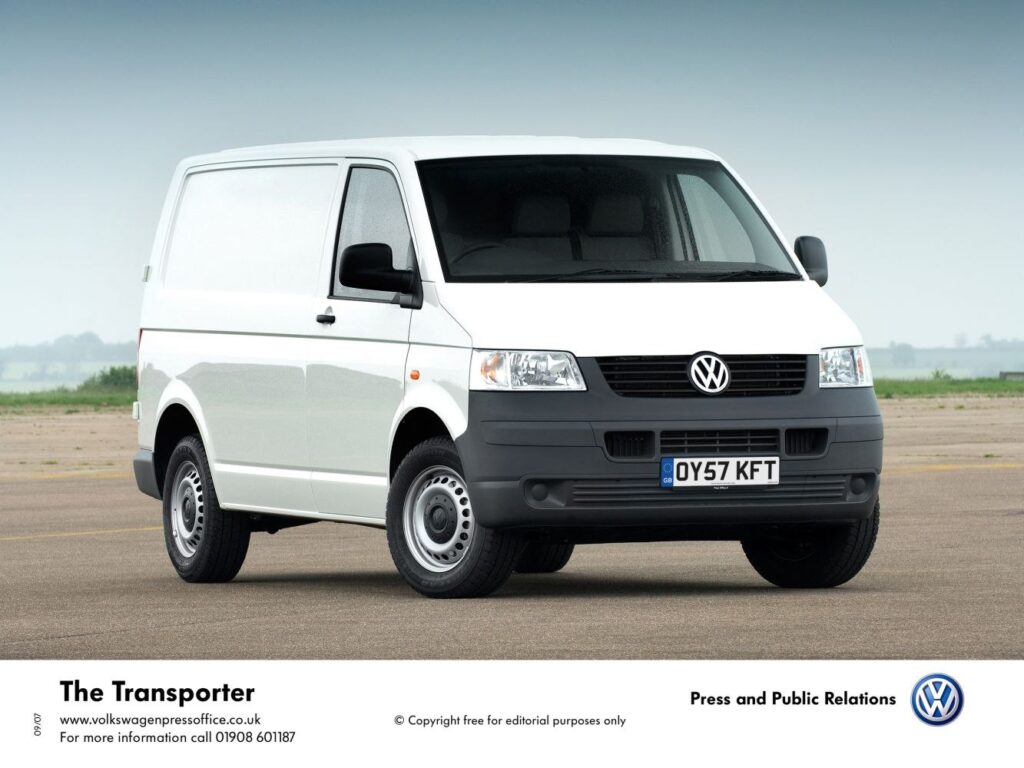
The Volkswagen Transporter (T5) Panel Van 2.5 TDI (174 Hp) L2H2 represents a significant iteration in the long-standing and highly successful lineage of Volkswagen’s iconic light commercial vehicle. Produced between 2003 and 2006 in this specific configuration, the T5 generation of the Transporter series continued the tradition of offering a versatile, robust, and efficient platform for businesses and individuals across Europe and other international markets. While the Transporter line, known colloquially as the “Bus” or “Microbus” in its passenger variants, holds a legendary status globally, this particular T5 Panel Van model was engineered primarily for the demanding commercial sector, excelling in cargo transport and utility roles where it became a ubiquitous sight on European roads. Its L2H2 designation signifies a Long Wheelbase and High Roof configuration, emphasizing its substantial cargo capacity and practical design tailored for heavy-duty commercial applications.
Engine & Performance: Powering the Volkswagen Transporter (T5) Panel Van
At the heart of the Volkswagen Transporter (T5) Panel Van 2.5 TDI L2H2 lies a powerful and efficient 2.5-liter (2460 cm3 or 150.12 cu. in.) inline five-cylinder diesel engine. Codenamed EA153 / AXE, this powerplant featured Volkswagen’s advanced Turbocharged Direct Injection (TDI) technology, which was highly regarded for its blend of performance and fuel economy. With a robust output of 174 horsepower at 3500 rpm, this engine delivered ample power for hauling heavy loads, navigating urban environments, and maintaining highway speeds.
A key characteristic of this engine was its impressive torque delivery. The 2.5 TDI generated a substantial 400 Nm (295.02 lb.-ft.) of torque, available across a broad rev range from 2000 to 2300 rpm. This high torque output was crucial for a commercial vehicle, ensuring strong pulling power from low engine speeds, which is essential for quick acceleration with a full cargo bay or when towing.
Performance figures for this variant were noteworthy for a panel van of its size and capacity. The Transporter T5 2.5 TDI could accelerate from 0 to 60 mph in a respectable 11.8 seconds, with a top speed of 113.09 mph (182 km/h). Power was delivered to the front wheels via a smooth and durable 6-speed manual transmission, offering drivers precise control and optimized gear ratios for varying driving conditions and load requirements.
Fuel efficiency was another strong suit, particularly for long-distance commercial operations. The extra-urban fuel consumption was rated at 6.5 liters per 100 km, which translates to an impressive 36.2 US miles per gallon. This efficiency, combined with an 80-liter (21.13 US gallon) fuel tank, provided a significant cruising range, reducing downtime for refueling. Adhering to the Euro 3 emission standard, the vehicle reflected the environmental regulations of its time, balancing performance with a reasonable carbon footprint for a commercial diesel.
Design & Features: The Utilitarian Appeal of the T5 Panel Van
The design of the Volkswagen Transporter (T5) Panel Van was a masterclass in functional aesthetics, prioritizing utility, durability, and practicality. As a panel van, its primary purpose was cargo transport, and the L2H2 configuration maximized this capability. With an overall length of 208.27 inches (5290 mm), a width of 74.96 inches (1904 mm), and a substantial height of 85.04 inches (2160 mm), the T5 L2H2 offered an enormous maximum trunk space of 7800 liters (275.45 cu. ft.). This cavernous interior, coupled with a maximum payload capacity ranging from 1907 to 2270.76 lbs. (865-1030 kg), made it an indispensable tool for tradespeople, delivery services, and logistics companies.
The body featured 4-5 doors, typically including large sliding side doors and rear barn doors, facilitating easy loading and unloading of goods. The cabin was designed for 2-3 occupants, with an emphasis on ergonomic controls and robust materials built to withstand the rigors of daily commercial use.
Underneath its practical exterior, the T5 Transporter boasted a well-engineered chassis. It featured an independent McPherson strut front suspension with coil springs and an anti-roll bar, providing a comfortable ride and stable handling even when fully loaded. The rear suspension also utilized independent coil springs with a transverse stabilizer and trailing arms, a sophisticated setup for a commercial vehicle of its era, contributing to superior road holding and improved cargo stability.
Safety features for the T5 generation included ventilated disc brakes on both the front (308×29.5 mm) and rear (294×22 mm) axles, ensuring strong and consistent stopping power. An Anti-lock Braking System (ABS) was standard, enhancing control during emergency braking. The hydraulic power steering system, with a rack and pinion setup, offered precise feedback and made maneuvering the large van surprisingly manageable, even in tight urban spaces, evidenced by a minimum turning circle of 43.31 feet (13.2 meters). The robust construction was further complemented by 215/65 R16 tires mounted on 6.5J x 16 wheel rims, providing a good balance of load-bearing capacity and ride comfort.
Technical Specifications: Volkswagen Transporter (T5) Panel Van 2.5 TDI (174 Hp) L2H2
| Category | Specification |
|---|---|
| Brand | Volkswagen |
| Model | Transporter |
| Generation | Transporter (T5) Panel Van |
| Type (Engine) | 2.5 TDI (174 Hp) L2H2 |
| Production Start | 2003 |
| Production End | 2006 |
| Powertrain Architecture | Internal Combustion Engine |
| Body Type | Van |
| Seats | 2-3 |
| Doors | 4-5 |
| Performance Specs | |
| Fuel Consumption (Extra Urban) | 6.5 l/100 km (36.2 US mpg) |
| Fuel Type | Diesel |
| Acceleration 0-60 mph | 11.8 sec |
| Maximum Speed | 182 km/h (113.09 mph) |
| Emission Standard | Euro 3 |
| Weight-to-Power Ratio | 11.1 kg/Hp (89.9 Hp/tonne) |
| Weight-to-Torque Ratio | 4.8 kg/Nm (206.7 Nm/tonne) |
| Engine Specs | |
| Power | 174 Hp @ 3500 rpm |
| Power per Liter | 70.7 Hp/l |
| Torque | 400 Nm (295.02 lb.-ft.) @ 2000-2300 rpm |
| Engine Layout | Front, Transverse |
| Engine Model/Code | EA153 / AXE |
| Engine Displacement | 2460 cm3 (150.12 cu. in.) |
| Number of Cylinders | 5 |
| Engine Configuration | Inline |
| Cylinder Bore | 81 mm (3.19 in.) |
| Piston Stroke | 95.5 mm (3.76 in.) |
| Compression Ratio | 18.5:1 |
| Valves per Cylinder | 2 |
| Fuel Injection System | Pump-nozzle (Unit Injector) |
| Engine Aspiration | Turbocharger, Intercooler |
| Valvetrain | SOHC |
| Engine Oil Capacity | 7.4 l (7.82 US qt) |
| Coolant Capacity | 7.1 l (7.5 US qt) |
| Space, Volume, and Weights | |
| Kerb Weight | 1935-2170 kg (4265.94 – 4784.03 lbs.) |
| Maximum Weight (GVWR) | 2800-3200 kg (6172.94 – 7054.79 lbs.) |
| Maximum Load | 865-1030 kg (1907 – 2270.76 lbs.) |
| Trunk (Boot) Space – Maximum | 7800 l (275.45 cu. ft.) |
| Fuel Tank Capacity | 80 l (21.13 US gal) |
| Permitted Trailer Load with Brakes (8%) | 2500 kg (5511.56 lbs.) |
| Permitted Trailer Load with Brakes (12%) | 2500 kg (5511.56 lbs.) |
| Permitted Trailer Load without Brakes | 750 kg (1653.47 lbs.) |
| Permitted Towbar Download | 100 kg (220.46 lbs.) |
| Dimensions | |
| Length | 5290 mm (208.27 in.) |
| Width | 1904 mm (74.96 in.) |
| Width Including Mirrors | 2242 mm (88.27 in.) |
| Height | 2160 mm (85.04 in.) |
| Wheelbase | 3400 mm (133.86 in.) |
| Front Track | 1628 mm (64.09 in.) |
| Rear Track | 1628 mm (64.09 in.) |
| Front Overhang | 894 mm (35.2 in.) |
| Rear Overhang | 996 mm (39.21 in.) |
| Ride Height (Ground Clearance) | 165 mm (6.5 in.) |
| Minimum Turning Circle | 13.2 m (43.31 ft.) |
| Approach Angle | 22° |
| Departure Angle | 16° |
| Wading Depth | 300 mm (11.81 in.) |
| Drivetrain, Brakes, and Suspension Specs | |
| Drivetrain Architecture | Front-wheel drive (Internal Combustion Engine drives front wheels) |
| Drive Wheel | Front-wheel drive |
| Number of Gears & Gearbox Type | 6 gears, manual transmission |
| Front Suspension | Independent, McPherson type with coil spring and anti-roll bar |
| Rear Suspension | Independent coil spring, Transverse stabilizer, Trailing arm |
| Front Brakes | Ventilated discs, 308×29.5 mm |
| Rear Brakes | Ventilated discs, 294×22 mm |
| Assisting Systems | ABS (Anti-lock Braking System) |
| Steering Type | Steering rack and pinion |
| Power Steering | Hydraulic Steering |
| Tires Size | 215/65 R16 |
| Wheel Rims Size | 6.5J x 16 |
Legacy & Market Impact of the Volkswagen Transporter (T5) Panel Van
The Volkswagen Transporter series has forged an unparalleled legacy in the light commercial vehicle (LCV) segment, and the T5 generation, including the Volkswagen Transporter (T5) Panel Van, further solidified this reputation. While passenger versions like the Multivan and Caravelle garnered attention for their comfort and versatility, the Panel Van models were the true workhorses, forming the backbone of countless businesses across Europe, Asia, and other global markets. The T5, with its modern design, enhanced comfort, and improved driving dynamics over its predecessors, set new benchmarks for commercial vans.
In its primary European market, the T5 Transporter competed fiercely with established rivals such as the Ford Transit, Mercedes-Benz Vito (and to some extent, the larger Sprinter), Renault Trafic, and Opel Vivaro. What distinguished the Transporter T5, particularly the 2.5 TDI L2H2 variant, was its blend of Volkswagen’s renowned build quality, robust engineering, and efficient powertrain. Its durable 5-cylinder TDI engine became a hallmark of reliability and performance, capable of withstanding high mileage and demanding usage cycles typical of commercial operations.
The L2H2 configuration was particularly impactful for businesses requiring maximum cargo volume and loading flexibility. Its generous interior space and impressive payload and towing capacities made it ideal for a wide array of vocations, from plumbers and electricians to couriers and small logistics firms. The ability to tow up to 5511.56 lbs. (2500 kg) with brakes further extended its utility, allowing for transport of trailers, equipment, or even other vehicles.
Beyond its commercial duties, the T5 Transporter also found a loyal following among recreational vehicle enthusiasts. Its spacious interior and robust chassis made it a popular choice for camper van conversions, a testament to its inherent versatility and the enduring appeal of the Transporter platform for leisure activities, much like its predecessors.
Although not officially sold in the United States in this commercial panel van guise, the T5 Transporter’s global influence is undeniable. It continued Volkswagen’s tradition of producing highly capable, dependable, and enduring light commercial vehicles that are not just tools for work but also adaptable platforms for a variety of needs. Its impact on the LCV market was profound, reinforcing Volkswagen’s position as a leader in commercial vehicle design and engineering, celebrated for its efficiency, durability, and practical design. The T5 remains a testament to German engineering excellence, a true workhorse that continues to serve its owners faithfully years after its production run.