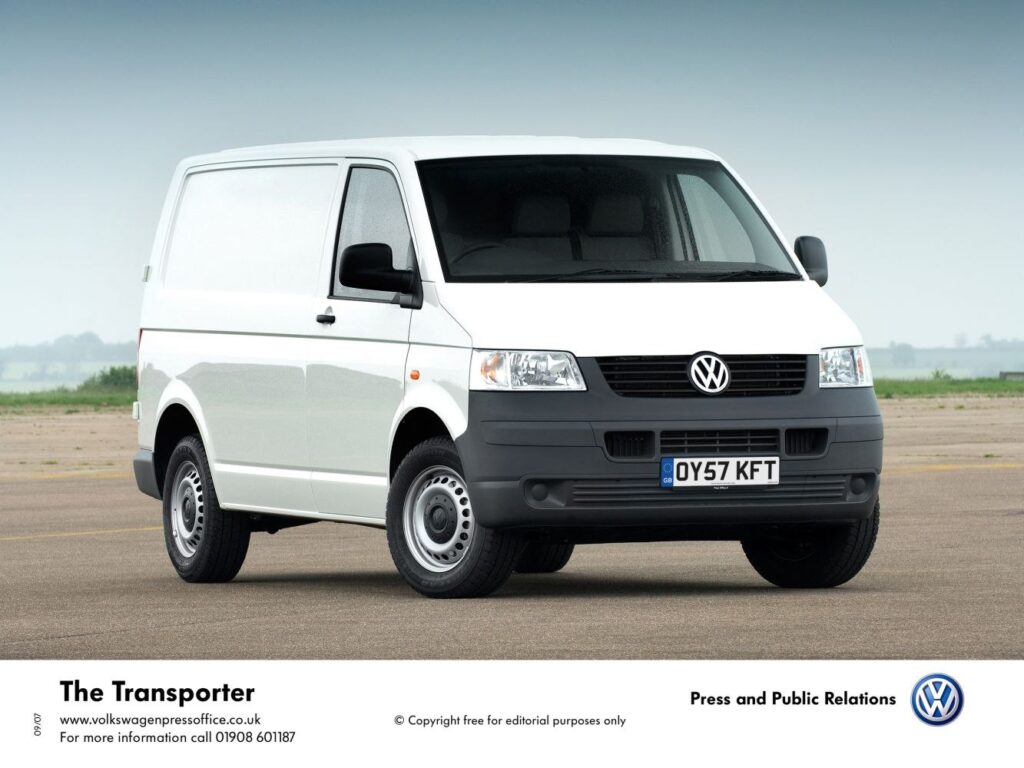
The Volkswagen Transporter (T5) Panel Van 2.5 TDI (174 Hp) Tiptronic L1H2: A European Workhorse
The Volkswagen Transporter, an iconic nameplate synonymous with versatility and utility across generations, saw its fifth iteration, the T5, introduced in 2003. Among its numerous configurations, the Volkswagen Transporter (T5) Panel Van 2.5 TDI (174 Hp) Tiptronic L1H2 stands out as a robust and efficient variant designed for demanding commercial applications. Produced from 2003 to 2006, this particular model, characterized by its powerful diesel engine, automatic transmission, and L1H2 (standard length, high roof) body, became a cornerstone of the European light commercial vehicle (LCV) market. While the Transporter series has a storied history globally, the T5 panel van was primarily a European and international market staple, not officially sold in the United States in this form. Its design and engineering were tailored to meet the specific needs of businesses and tradespeople requiring a dependable, spacious, and fuel-efficient van capable of navigating diverse urban and highway environments.
Engine and Performance of the Volkswagen Transporter (T5) Panel Van 2.5 TDI (174 Hp) Tiptronic L1H2
At the heart of this particular Transporter T5 model was a formidable 2.5-liter TDI (Turbocharged Direct Injection) diesel engine, an inline five-cylinder unit engineered for both power and longevity. With an engine displacement of 2460 cubic centimeters (150.12 cubic inches), it delivered a robust 174 horsepower at 3500 rpm. This power output was complemented by an impressive torque figure of 295.02 lb.-ft., available across a practical rev range of 2000-2300 rpm. Such a broad torque band was crucial for a commercial vehicle, ensuring ample pulling power for heavy loads and confident acceleration in various driving conditions.
The engine’s advanced architecture featured a SOHC (Single Overhead Camshaft) valvetrain with two valves per cylinder and utilized a pump-nozzle (unit injector) fuel injection system, known for its precision and efficiency in diesel applications. A turbocharger with an intercooler further enhanced performance by optimizing air intake, contributing to its strong power delivery. Mated to this powerful diesel plant was a 6-speed Tiptronic automatic transmission, offering smooth and responsive gear changes. This automatic gearbox significantly reduced driver fatigue, especially in congested urban areas, while still providing the option for manual gear selection when desired.
Performance figures for the Transporter T5 2.5 TDI were respectable for a vehicle of its class. It could accelerate from 0 to 60 mph in approximately 11.8 seconds, reaching a maximum speed of nearly 110 mph (109.98 mph, or 177 km/h). Despite its capabilities, the vehicle maintained commendable fuel efficiency, particularly in extra-urban driving, achieving an estimated 35.1 US miles per gallon. This balance of power, performance, and economy, combined with its front-wheel-drive architecture, made it a highly practical and cost-effective choice for businesses operating throughout Europe, adhering to Euro 3 emission standards for its production period.
Design and Features
The Volkswagen Transporter (T5) Panel Van 2.5 TDI (174 Hp) Tiptronic L1H2 embodied a functional and ergonomic design philosophy. As a panel van, its primary purpose was cargo transport, offering a generous maximum trunk space of 6700 liters (236.61 cubic feet). The L1H2 designation indicated a standard-length body with a high roof, providing ample vertical space for taller items or for workers to stand partially upright within the cargo area. The vehicle featured 4-5 doors, typically including sliding side doors for easy access to the cargo bay and a rear tailgate or barn doors.
With seating for 2-3 occupants, the cabin was designed to be a comfortable yet durable workspace for professionals. The interior focused on practicality, with robust materials and intuitive controls. In terms of dimensions, the L1H2 variant measured 192.52 inches in length, 74.96 inches in width (88.27 inches including mirrors), and 85.04 inches in height. Its 118.11-inch wheelbase contributed to a stable ride and good handling, while a minimum turning circle of 39.04 feet ensured decent maneuverability in tight urban settings.
Underneath, the T5 featured an independent suspension system both front and rear. The front utilized a McPherson strut setup with coil springs and an anti-roll bar, while the rear employed an independent coil spring system with a transverse stabilizer and trailing arms. This sophisticated suspension design, more akin to passenger cars than traditional commercial vans, provided superior ride comfort and handling characteristics, reducing fatigue for drivers on long routes. Braking was handled by ventilated discs on both the front (308×29.5 mm) and rear (294×22 mm) axles, complemented by an Anti-lock Braking System (ABS) for enhanced safety and control during emergency stops. Hydraulic power steering, along with 215/65 R16 tires on 6.5J x 16 wheels, completed the package, offering a confident and controlled driving experience.
Technical Specifications
| Category | Specification |
|---|---|
| General Information | |
| Brand | Volkswagen |
| Model | Transporter |
| Generation | Transporter (T5) Panel Van |
| Type (Engine) | 2.5 TDI (174 Hp) Tiptronic L1H2 |
| Start of Production | 2003 year |
| End of Production | 2006 year |
| Powertrain Architecture | Internal Combustion engine |
| Body type | Van |
| Seats | 2-3 |
| Doors | 4-5 |
| Performance Specs | |
| Fuel consumption (economy) – extra urban | 35.1 US mpg (6.7 l/100 km) |
| Fuel Type | Diesel |
| Acceleration 0 – 60 mph | 11.8 sec |
| Maximum speed | 109.98 mph (177 km/h) |
| Emission standard | Euro 3 |
| Weight-to-power ratio | 10.9 kg/Hp (91.3 Hp/tonne) |
| Weight-to-torque ratio | 4.8 kg/Nm (210 Nm/tonne) |
| Engine Specs | |
| Power | 174 Hp @ 3500 rpm |
| Power per liter | 70.7 Hp/l |
| Torque | 295.02 lb.-ft. @ 2000-2300 rpm (400 Nm) |
| Engine layout | Front, Transverse |
| Engine Model/Code | EA153 / AXE |
| Engine displacement | 2.5 liters (2460 cm3 / 150.12 cu. in.) |
| Number of cylinders | 5 |
| Engine configuration | Inline |
| Cylinder Bore | 3.19 in. (81 mm) |
| Piston Stroke | 3.76 in. (95.5 mm) |
| Compression ratio | 18.5:1 |
| Number of valves per cylinder | 2 |
| Fuel injection system | Pump-nozzle (Unit Injector) |
| Engine aspiration | Turbocharger, Intercooler |
| Valvetrain | SOHC |
| Engine oil capacity | 7.82 US qt (7.4 l) |
| Coolant | 7.5 US qt (7.1 l) |
| Space, Volume and Weights | |
| Kerb Weight | 4199.81 – 4640.73 lbs. (1905-2105 kg) |
| Max. weight | 6172.94 – 6613.87 lbs. (2800-3000 kg) |
| Max load | 1973.14 lbs. (895 kg) |
| Trunk (boot) space – maximum | 236.61 cu. ft. (6700 l) |
| Fuel tank capacity | 21.13 US gal (80 l) |
| Permitted trailer load with brakes (8%) | 5511.56 lbs. (2500 kg) |
| Permitted trailer load with brakes (12%) | 5511.56 lbs. (2500 kg) |
| Permitted trailer load without brakes | 1653.47 lbs. (750 kg) |
| Permitted towbar download | 220.46 lbs. (100 kg) |
| Dimensions | |
| Length | 192.52 in. (4890 mm) |
| Width | 74.96 in. (1904 mm) |
| Width including mirrors | 88.27 in. (2242 mm) |
| Height | 85.04 in. (2160 mm) |
| Wheelbase | 118.11 in. (3000 mm) |
| Front track | 64.09 in. (1628 mm) |
| Rear (Back) track | 64.09 in. (1628 mm) |
| Front overhang | 35.2 in. (894 mm) |
| Rear overhang | 39.21 in. (996 mm) |
| Ride height (ground clearance) | 6.5 in. (165 mm) |
| Minimum turning circle (turning diameter) | 39.04 ft. (11.9 m) |
| Approach angle | 22° |
| Departure angle | 16° |
| Ramp-over (brakeover) angle | 14° |
| Wading depth | 11.81 in. (300 mm) |
| Drivetrain, Brakes and Suspension Specs | |
| Drivetrain Architecture | Front-wheel drive. Internal Combustion engine. |
| Drive wheel | Front wheel drive |
| Number of gears and type of gearbox | 6 gears, automatic transmission Tiptronic |
| Front suspension | Independent, type McPherson with coil spring and anti-roll bar |
| Rear suspension | Independent coil spring, Transverse stabilizer, Trailing arm |
| Front brakes | Ventilated discs, 308×29.5 mm |
| Rear brakes | Ventilated discs, 294×22 mm |
| Assisting systems | ABS (Anti-lock braking system) |
| Steering type | Steering rack and pinion |
| Power steering | Hydraulic Steering |
| Tires size | 215/65 R16 |
| Wheel rims size | 6.5J x 16 |
Legacy and Market Impact
The Volkswagen Transporter T5, and specifically the 2.5 TDI (174 Hp) Tiptronic L1H2 panel van, built upon a rich heritage of Volkswagen utility vehicles, cementing its reputation as a highly capable and desirable light commercial vehicle. In markets like Europe, where compact yet spacious and efficient vans are critical for businesses, the T5 was a dominant force. Its robust construction, reliable diesel powertrains, and car-like driving dynamics set it apart from many competitors of its era.
The T5’s advanced independent suspension system contributed significantly to its appeal, offering a more comfortable ride and better handling than many rivals that still relied on simpler, leaf-sprung rear axles. This made it a more pleasant vehicle for drivers who spent long hours on the road, while also providing better stability for cargo. The powerful 2.5 TDI engine, with its strong torque and reasonable fuel economy, was particularly well-suited for the varied demands of commercial use, from urban deliveries to highway hauling. Its ability to tow up to 5511.56 pounds (with brakes) further enhanced its utility for tradespeople needing to transport trailers or heavy equipment.
Competitors in its primary European market included formidable contenders such as the Ford Transit, Mercedes-Benz Vito, Renault Trafic, Opel Vivaro, and Fiat Ducato. However, the Transporter T5 consistently held its own, often lauded for its perceived build quality, refinement, and strong residual values. Volkswagen’s commitment to engineering and durability ensured the T5 remained a popular choice for fleet operators and independent contractors alike.
While the Transporter T5 panel van was not a common sight in the mainstream American market, which traditionally favored larger, often body-on-frame, domestic-brand vans like the Ford E-Series or Chevrolet Express/GMC Savana, its influence and design principles did pave the way for a later shift. The growing demand for more fuel-efficient, space-optimized, and ergonomically advanced commercial vehicles eventually led to the introduction of larger European-style vans, such as the Mercedes-Benz Sprinter and later the Ford Transit, to the US market. The T5, therefore, represents a significant chapter in the evolution of modern commercial vans, embodying the blend of efficiency, practicality, and driving refinement that has become a benchmark in the segment. Its legacy is one of unwavering utility and continued leadership in the global commercial vehicle landscape, even if its direct presence in the USA was limited.