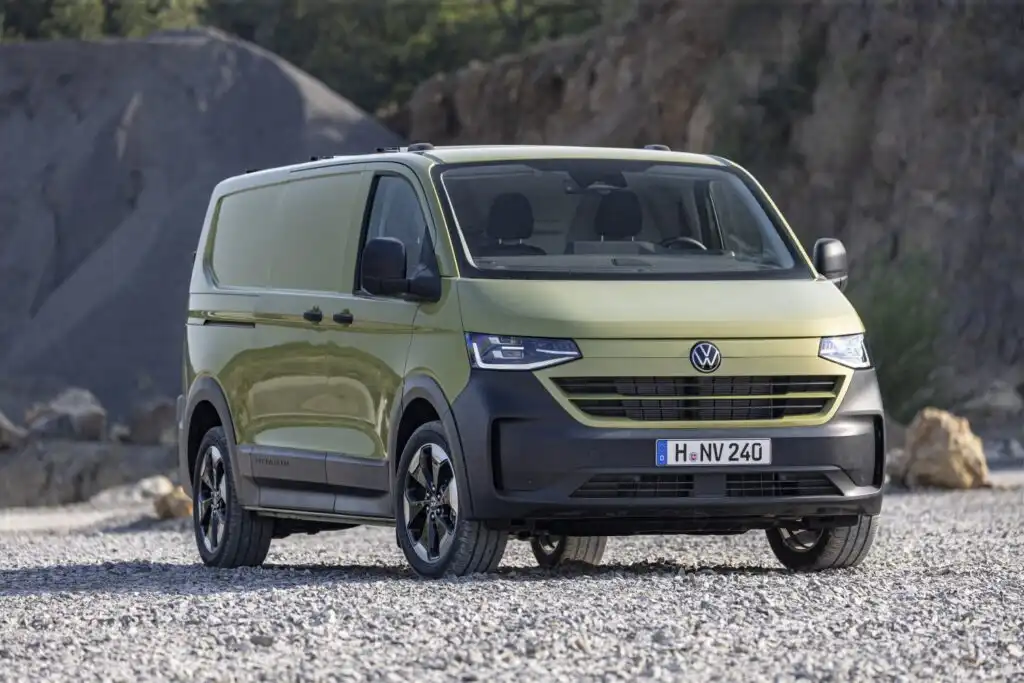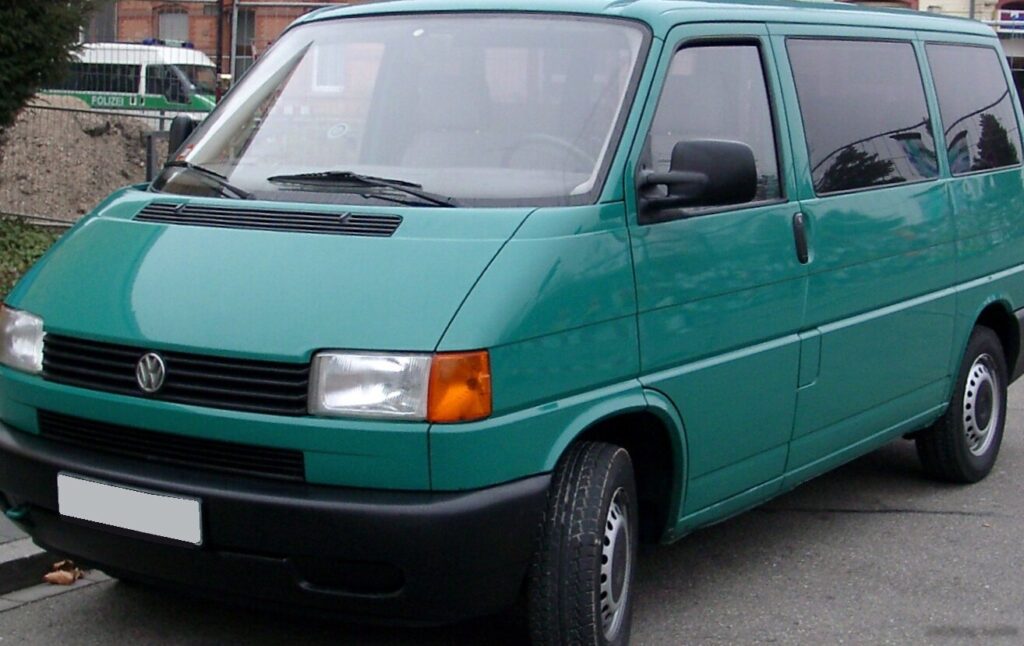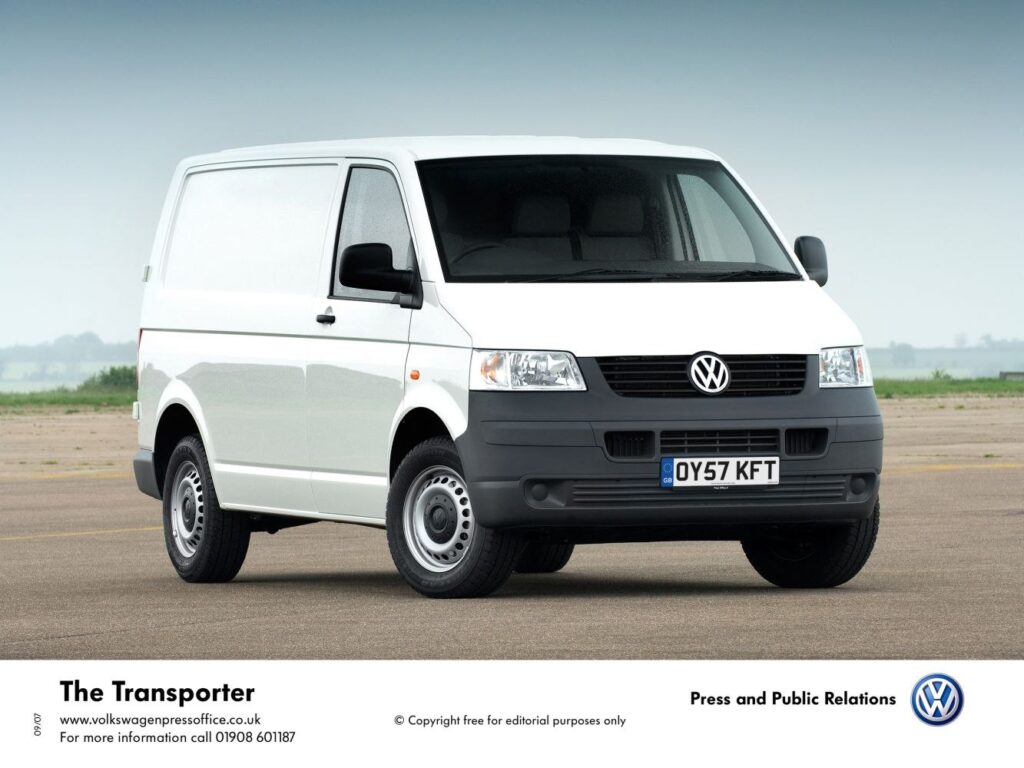
The Volkswagen Transporter (T5) Panel Van: A European Workhorse with Premium Power
The Volkswagen Transporter, known globally for its versatility and durability, entered its fifth generation (T5) in 2003, continuing a legacy that began with the iconic Type 2. The T5 generation built upon its predecessors’ reputation for robust engineering and adaptable design, serving a wide array of commercial and passenger transport needs across Europe and other international markets. This article focuses on a particularly potent variant: the Volkswagen Transporter (T5) Panel Van equipped with the 3.2-liter V6 engine, paired with a Tiptronic automatic transmission, and presented in the L1H1 (short wheelbase, standard roof height) configuration. This specific model, produced from 2003 to 2009, represented a premium offering within the commercial panel van segment, providing exceptional performance alongside its utilitarian capabilities.
While the Transporter line has a rich history and a strong following, it’s important to note that the T5 generation, particularly in its panel van guise, was not officially sold in the United States market. Instead, Volkswagen’s commercial vehicle offerings in North America during this period were primarily limited to larger, full-size vans like the EuroVan (which was the T4 Transporter) and later the Crafter-based Sprinter derivatives. In its primary European market, the T5 Transporter Panel Van was a cornerstone of small and medium enterprise fleets, renowned for its build quality, reliability, and broad range of configurations. The 3.2 V6 variant, in particular, catered to businesses or individuals requiring significant power for heavy loads, demanding terrains, or simply a more refined driving experience.
Engine and Performance: The Potent 3.2-Liter VR6
At the heart of this particular Volkswagen Transporter (T5) Panel Van variant lies a robust 3.2-liter VR6 engine, a distinctive and highly regarded powerplant within the Volkswagen Group’s portfolio. Designated with the engine code EA390 / BKK, this naturally aspirated, multi-port manifold injected gasoline engine produced a formidable 235 horsepower at 6200 rpm. Its unique VR-engine configuration, a narrow-angle V6, allowed for a compact packaging that was crucial for its transverse mounting in the Transporter’s front-wheel-drive architecture. The engine’s design featured a DOHC (Double Overhead Camshaft) valvetrain with 4 valves per cylinder, contributing to its efficient breathing and power delivery.
Torque output was equally impressive for a commercial vehicle of its class, peaking at 232.33 lb.-ft. (315 Nm) at a relatively low 2950 rpm. This ample torque at lower engine speeds was vital for a panel van, ensuring strong pulling power for heavy loads and confident acceleration from a standstill. The engine’s bore and stroke measured 3.31 inches (84 mm) and 3.78 inches (95.9 mm), respectively, with a compression ratio of 10.85:1, indicative of its performance-oriented design. Power per liter stood at 73.7 Hp/l, showcasing its efficient power generation.
Mated to this powerful engine was a 6-speed Tiptronic automatic transmission. This advanced gearbox allowed for both smooth, automatic shifts and the option for manual gear selection, providing drivers with greater control, particularly when navigating challenging conditions or hauling heavy cargo. The combination of the potent V6 and the Tiptronic transmission enabled the Transporter T5 to achieve surprisingly brisk performance for a van, accelerating from 0 to 60 mph in approximately 10 seconds and reaching a maximum speed of 127.38 mph (205 km/h). Despite its power, the engine met the Euro 4 emission standard, demonstrating Volkswagen’s commitment to environmental regulations of the time. Fuel consumption for the extra-urban cycle was rated at 24.8 US mpg (9.5 l/100 km), which was respectable for a large, powerful gasoline-powered van.
Design and Features: Form Follows Function
The Volkswagen Transporter (T5) Panel Van embodied a design philosophy where form strictly followed function, yet it managed to do so with a degree of sophistication and robustness characteristic of German engineering. The L1H1 configuration denotes the shortest wheelbase (118.11 inches / 3000 mm) and standard roof height (77.52 inches / 1969 mm), offering a balance between maneuverability in urban environments and substantial cargo capacity. Its overall length was 192.52 inches (4890 mm) and width 74.96 inches (1904 mm, 88.27 inches including mirrors), providing a substantial footprint without being overly cumbersome.
As a panel van, its primary purpose was cargo transport. The T5 offered an impressive maximum trunk (boot) space of 204.83 cubic feet (5800 liters), making it a highly capable vehicle for various commercial applications, from courier services to tradespeople. With a maximum payload capacity of 1984.16 lbs (900 kg) and a kerb weight ranging from 4188.78 to 4629.71 lbs (1900-2100 kg), the T5 V6 was engineered to handle substantial loads with ease. Furthermore, its towing capabilities were significant, rated at 5511.56 lbs (2500 kg) with brakes, underscoring its utility for heavier-duty tasks.
The interior, while focused on utility, was designed with driver comfort and ergonomics in mind. With seating for 2-3 occupants, the cabin provided a practical workspace. The driving position offered excellent visibility, a crucial aspect for commercial vehicles. Safety features for its era included ABS (Anti-lock Braking System), a standard offering to ensure controlled braking even under heavy loads. The hydraulic power steering system, coupled with a rack and pinion steering type, contributed to a manageable turning circle of 39.04 feet (11.9 m), enhancing its agility despite its size. The suspension system featured an independent McPherson setup with coil springs and an anti-roll bar at the front, and independent coil springs with a transverse stabilizer and trailing arms at the rear, providing a comfortable ride and stable handling characteristics, even when laden. Ventilated disc brakes on both front (333×32.5 mm) and rear (294×22 mm) axles ensured strong stopping power.
Technical Specifications
| Volkswagen Transporter (T5) Panel Van 3.2 V6 (235 Hp) Tiptronic L1H1 | |
|---|---|
| General Information | |
| Brand | Volkswagen |
| Model | Transporter |
| Generation | Transporter (T5) Panel Van |
| Type (Engine) | 3.2 V6 (235 Hp) Tiptronic L1H1 |
| Start of Production | 2003 year |
| End of Production | 2009 year |
| Powertrain Architecture | Internal Combustion engine |
| Body Type | Van |
| Seats | 2-3 |
| Doors | 4-5 |
| Performance Specs | |
| Fuel Consumption (Economy) – extra urban | 24.8 US mpg (9.5 l/100 km) |
| Fuel Type | Petrol (Gasoline) |
| Acceleration 0 – 60 mph | 10 sec |
| Maximum Speed | 127.38 mph (205 km/h) |
| Emission Standard | Euro 4 |
| Weight-to-Power Ratio | 8.1 kg/Hp, 123.7 Hp/tonne |
| Weight-to-Torque Ratio | 6 kg/Nm, 165.8 Nm/tonne |
| Engine Specs | |
| Power | 235 Hp @ 6200 rpm. |
| Power per liter | 73.7 Hp/l |
| Torque | 232.33 lb.-ft. (315 Nm) @ 2950 rpm. |
| Engine Layout | Front, Transverse |
| Engine Model/Code | EA390 / BKK |
| Engine Displacement | 3.2 liters (3189 cm3, 194.6 cu. in.) |
| Number of Cylinders | 6 |
| Engine Configuration | VR-engine |
| Cylinder Bore | 3.31 in. (84 mm) |
| Piston Stroke | 3.78 in. (95.9 mm) |
| Compression Ratio | 10.85:1 |
| Number of Valves per Cylinder | 4 |
| Fuel Injection System | Multi-port manifold injection |
| Engine Aspiration | Naturally aspirated engine |
| Valvetrain | DOHC |
| Engine Oil Capacity | 6.45 US qt (6.1 l) |
| Coolant | 7.5 US qt (7.1 l) |
| Space, Volume and Weights | |
| Kerb Weight | 4188.78 – 4629.71 lbs. (1900-2100 kg) |
| Max. Weight (GVWR) | 6172.94 – 6613.87 lbs. (2800-3000 kg) |
| Max Load | 1984.16 lbs. (900 kg) |
| Trunk (boot) space – maximum | 204.83 cu. ft. (5800 l) |
| Fuel Tank Capacity | 21.13 US gal (80 l) |
| Max. Roof Load | 220.46 lbs. (100 kg) |
| Permitted Trailer Load with Brakes (8%) | 5511.56 lbs. (2500 kg) |
| Permitted Trailer Load with Brakes (12%) | 5511.56 lbs. (2500 kg) |
| Permitted Trailer Load without Brakes | 1653.47 lbs. (750 kg) |
| Permitted Towbar Download | 220.46 lbs. (100 kg) |
| Dimensions | |
| Length | 192.52 in. (4890 mm) |
| Width | 74.96 in. (1904 mm) |
| Width including mirrors | 88.27 in. (2242 mm) |
| Height | 77.52 in. (1969 mm) |
| Wheelbase | 118.11 in. (3000 mm) |
| Front Track | 63.78 in. (1620 mm) |
| Rear (Back) Track | 63.78 in. (1620 mm) |
| Front Overhang | 35.2 in. (894 mm) |
| Rear Overhang | 39.21 in. (996 mm) |
| Ride Height (Ground Clearance) | 6.5 in. (165 mm) |
| Minimum Turning Circle (Turning Diameter) | 39.04 ft. (11.9 m) |
| Approach Angle | 22° |
| Departure Angle | 16° |
| Ramp-over (Brakeover) Angle | 14° |
| Wading Depth | 11.81 in. (300 mm) |
| Drivetrain, Brakes and Suspension Specs | |
| Drivetrain Architecture | The Internal combustion engine (ICE) drives the front wheels of the vehicle. |
| Drive Wheel | Front wheel drive |
| Number of Gears and Type of Gearbox | 6 gears, automatic transmission Tiptronic |
| Front Suspension | Independent, type McPherson with coil spring and anti-roll bar |
| Rear Suspension | Independent coil spring, Transverse stabilizer, Trailing arm |
| Front Brakes | Ventilated discs, 333×32.5 mm |
| Rear Brakes | Ventilated discs, 294×22 mm |
| Assisting Systems | ABS (Anti-lock braking system) |
| Steering Type | Steering rack and pinion |
| Power Steering | Hydraulic Steering |
| Tires Size | 235/55 R17 |
| Wheel Rims Size | 7J x 17 |
Legacy and Market Impact
The Volkswagen Transporter (T5) generation, including the Volkswagen Transporter (T5) Panel Van, carved out a significant niche in the European commercial vehicle market. It was lauded for its car-like driving dynamics, robust build quality, and extensive customization options, making it a favorite for tradespeople, delivery services, and even as a base for campervan conversions. The T5’s reputation for reliability and longevity contributed to strong residual values, making it a sound investment for businesses.
In its segment, the T5 Transporter faced stiff competition from other European mainstays such as the Ford Transit, Mercedes-Benz Vito, Renault Trafic, and Opel Vivaro (Vauxhall Vivaro in the UK). What set the 3.2 V6 Tiptronic L1H1 variant apart was its unique blend of commercial utility with a level of performance typically not associated with a panel van. It offered a compelling choice for those who needed to transport goods efficiently and quickly, or who operated in areas where the extra power and refinement were appreciated, such as mountainous regions or for towing heavy equipment.
The T5 generation also showcased advancements in comfort and safety features compared to its predecessors, helping to professionalize the image of light commercial vehicles. Its independent suspension design provided a ride quality that was a significant improvement over many competitors, enhancing driver comfort on long journeys. The presence of features like hydraulic power steering and ABS underscored its commitment to operational safety and ease of use.
Today, the T5 Transporter remains a highly sought-after used vehicle in Europe, particularly for its robust mechanicals and adaptable platform. The 3.2 V6 variant, while less common than its diesel counterparts, is particularly valued by enthusiasts and those seeking a powerful and durable workhorse. Its legacy is one of a versatile, high-quality commercial vehicle that successfully balanced the demands of hard work with surprising levels of refinement and performance, solidifying the Transporter’s place as an automotive icon.