The Volkswagen Transporter (T5) Panel Van: A European Workhorse with a Potent Heart
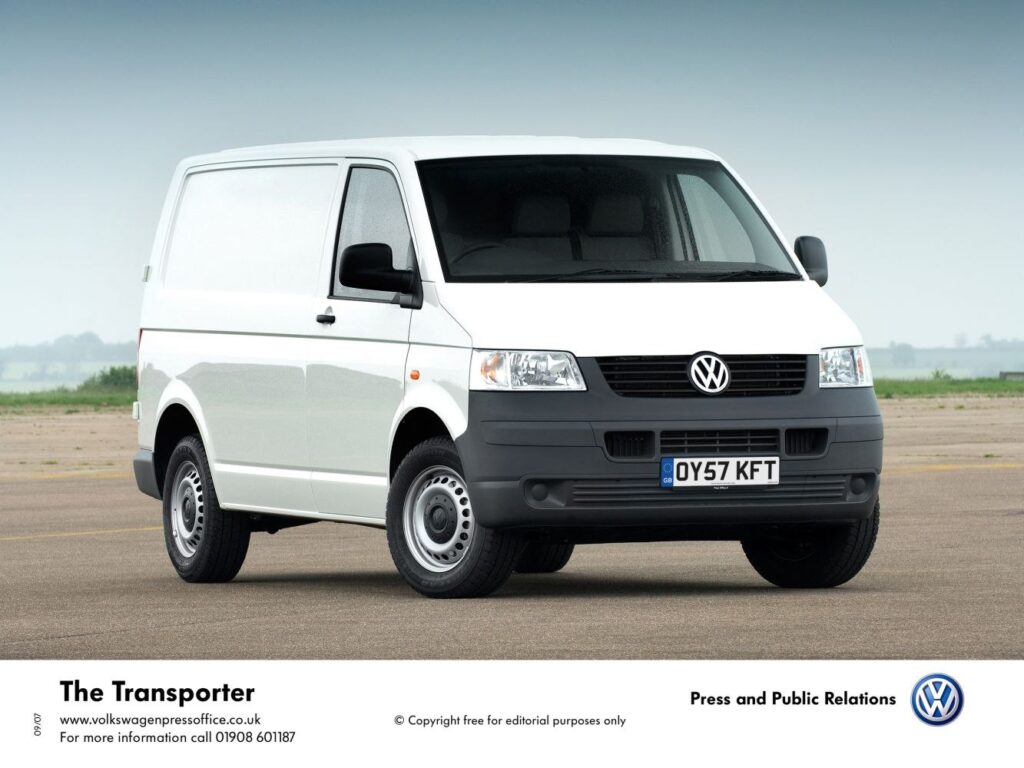
The Volkswagen Transporter, known globally for its versatility and robustness, entered its fifth generation, the T5, in 2003. This particular variant, the Volkswagen Transporter (T5) Panel Van 3.2 V6 (235 Hp) Tiptronic L2H2, stands out in the commercial vehicle segment for its unexpectedly powerful powertrain. While the Transporter has a storied history in the United States, primarily through its passenger-focused Microbus and Eurovan iterations, the T5 generation was not officially sold in the North American market. Instead, it cemented its reputation as a leading light commercial vehicle across Europe and other international markets, serving a wide array of businesses and individuals requiring a dependable, spacious, and often surprisingly capable van. The L2H2 designation signifies its long wheelbase (L2) and high roof (H2) configuration, maximizing cargo capacity, while the 3.2 V6 engine with Tiptronic automatic transmission offered a level of performance and refinement not commonly found in a panel van. Produced from 2003 to 2009, this Transporter combined Volkswagen’s renowned engineering with practical utility, creating a compelling package for those who needed both grunt and cargo space.
Engine and Performance: The Potent 3.2 V6 in the Volkswagen Transporter (T5) Panel Van
Under the hood of this particular Volkswagen Transporter (T5) Panel Van variant lay a formidable 3.2-liter VR6 engine, a powertrain more typically associated with high-performance Volkswagen passenger cars like the Golf R32 or Touareg. Coded as EA390 / BKK, this naturally aspirated, multi-port manifold injected gasoline engine was configured as a front, transverse-mounted VR-engine, a compact design allowing for six cylinders in a relatively small engine bay. It delivered a robust 235 horsepower at 6200 rpm, an impressive output for a commercial van, especially during its production years. Torque figures were equally compelling, peaking at 232.33 lb.-ft. (315 Nm) at a relatively low 2950 rpm, providing excellent pulling power crucial for a vehicle designed to carry heavy loads or tow trailers.
The engine’s specific output was 73.7 horsepower per liter, indicative of its advanced design for the era, featuring a DOHC (Double Overhead Camshaft) valvetrain with four valves per cylinder and a high compression ratio of 10.85:1. Power was channeled to the front wheels via a sophisticated 6-speed Tiptronic automatic transmission. This combination allowed the large panel van to achieve surprisingly brisk acceleration, reaching 60 mph from a standstill in an estimated 10.1 seconds and completing the 0-62 mph (0-100 km/h) sprint in 10.6 seconds. Top speed was rated at 123.65 mph (199 km/h), making it one of the faster vans on the road. Despite its performance, the vehicle was designed to meet Euro 4 emission standards, showcasing Volkswagen’s commitment to environmental responsibility even in its commercial offerings. Fuel economy, while not its primary selling point, was a respectable 24.2 US mpg (9.7 l/100 km) in extra-urban driving conditions, a testament to the efficient powertrain management and the Tiptronic transmission’s ability to optimize gear selection.
Design and Features: Maximizing Utility and Comfort
The Volkswagen Transporter (T5) Panel Van, in its L2H2 configuration, was engineered primarily for utility. The “Panel Van” designation means it was designed without rear windows and typically featured a closed cargo area, ideal for secure transport of goods or for conversion into a specialized service vehicle. With 4 to 5 doors, including side sliding doors and rear barn doors or a tailgate, access to the expansive cargo bay was highly practical. The L2H2 specification translated to a significant length of 208.27 inches (5290 mm) and a height of 85.43 inches (2170 mm), providing a cavernous maximum trunk space of 275.45 cubic feet (7800 liters). This made it suitable for transporting larger items or for comprehensive interior fit-outs.
Despite its commercial focus, Volkswagen did not neglect driver comfort and safety. The cabin typically accommodated 2 to 3 occupants, offering a functional yet ergonomic workspace. Features like power steering (hydraulic), independent McPherson strut front suspension, and independent coil spring rear suspension with a transverse stabilizer ensured a comfortable and stable ride, even when fully loaded. Braking performance was handled by ventilated discs both front (333×32.5 mm) and rear (294×22 mm), complemented by an Anti-lock Braking System (ABS), providing confident stopping power. The robust chassis was designed to handle substantial loads, with a maximum payload capacity ranging from 1845.27 to 1851.88 lbs (837-840 kg) and a maximum permissible gross weight of 6172.94 to 6613.87 lbs (2800-3000 kg). Furthermore, its towing capabilities were impressive, rated to pull up to 5511.56 lbs (2500 kg) with brakes, making it a versatile choice for tradespeople and businesses needing to haul equipment or trailers. The 17-inch wheels shod with 235/55 R17 tires provided a good balance of load-bearing capacity and ride quality.
Technical Specifications
| Category | Specification | Value (US/Imperial) |
|---|---|---|
General Information |
||
| Brand | Volkswagen | Volkswagen |
| Model | Transporter | Transporter |
| Generation | Transporter (T5) Panel Van | Transporter (T5) Panel Van |
| Type (Engine) | 3.2 V6 (235 Hp) Tiptronic L2H2 | 3.2 V6 (235 Hp) Tiptronic L2H2 |
| Start of Production | 2003 year | 2003 |
| End of Production | 2009 year | 2009 |
| Powertrain Architecture | Internal Combustion engine | Internal Combustion engine |
| Body Type | Van | Van |
| Seats | 2-3 | 2-3 |
| Doors | 4-5 | 4-5 |
Performance Specifications |
||
| Fuel Consumption (extra-urban) | 9.7 l/100 km | 24.2 US mpg |
| Fuel Type | Petrol (Gasoline) | Gasoline |
| Acceleration 0-60 mph | 10.1 sec | 10.1 sec |
| Acceleration 0-62 mph (0-100 km/h) | 10.6 sec | 10.6 sec |
| Maximum Speed | 199 km/h | 123.65 mph |
| Emission Standard | Euro 4 | Euro 4 |
| Weight-to-Power Ratio | 8.3 kg/Hp | 18.3 lbs/Hp |
| Weight-to-Torque Ratio | 6.2 kg/Nm | 13.7 lbs/lb.-ft. |
Engine Specifications |
||
| Power | 235 Hp @ 6200 rpm | 235 Hp @ 6200 rpm |
| Power per liter | 73.7 Hp/l | 73.7 Hp/l |
| Torque | 315 Nm @ 2950 rpm | 232.33 lb.-ft. @ 2950 rpm |
| Engine Layout | Front, Transverse | Front, Transverse |
| Engine Model/Code | EA390 / BKK | EA390 / BKK |
| Engine Displacement | 3189 cm3 | 194.6 cu. in. (3.2 L) |
| Number of Cylinders | 6 | 6 |
| Engine Configuration | VR-engine | VR-engine |
| Cylinder Bore | 84 mm | 3.31 in. |
| Piston Stroke | 95.9 mm | 3.78 in. |
| Compression Ratio | 10.85:1 | 10.85:1 |
| Number of Valves per Cylinder | 4 | 4 |
| Fuel Injection System | Multi-port manifold injection | Multi-port manifold injection |
| Engine Aspiration | Naturally aspirated engine | Naturally aspirated engine |
| Valvetrain | DOHC | DOHC |
| Engine Oil Capacity | 6.1 l | 6.45 US qt |
| Coolant Capacity | 7.1 l | 7.5 US qt |
Space, Volume and Weights |
||
| Kerb Weight | 1960-2163 kg | 4321.06 – 4768.6 lbs. |
| Max. Weight | 2800-3000 kg | 6172.94 – 6613.87 lbs. |
| Max Load | 837-840 kg | 1845.27 – 1851.88 lbs. |
| Trunk (Boot) Space – maximum | 7800 l | 275.45 cu. ft. |
| Fuel Tank Capacity | 80 l | 21.13 US gal |
| Permitted Trailer Load with Brakes (8%) | 2500 kg | 5511.56 lbs. |
| Permitted Trailer Load with Brakes (12%) | 2500 kg | 5511.56 lbs. |
| Permitted Trailer Load without Brakes | 750 kg | 1653.47 lbs. |
| Permitted Towbar Download | 100 kg | 220.46 lbs. |
Dimensions |
||
| Length | 5290 mm | 208.27 in. |
| Width | 1904 mm | 74.96 in. |
| Width including mirrors | 2242 mm | 88.27 in. |
| Height | 2170 mm | 85.43 in. |
| Wheelbase | 3400 mm | 133.86 in. |
| Front Track | 1620 mm | 63.78 in. |
| Rear (Back) Track | 1620 mm | 63.78 in. |
| Front Overhang | 894 mm | 35.2 in. |
| Rear Overhang | 996 mm | 39.21 in. |
| Ride Height (Ground Clearance) | 165 mm | 6.5 in. |
| Minimum Turning Circle (Turning Diameter) | 13.2 m | 43.31 ft. |
| Approach Angle | 22° | 22° |
| Departure Angle | 16° | 16° |
| Wading Depth | 300 mm | 11.81 in. |
Drivetrain, Brakes and Suspension Specs |
||
| Drivetrain Architecture | Internal combustion engine (ICE) drives front wheels | Front-wheel drive |
| Drive Wheel | Front wheel drive | Front wheel drive |
| Number of Gears and Type of Gearbox | 6 gears, automatic transmission Tiptronic | 6-speed automatic Tiptronic |
| Front Suspension | Independent, McPherson with coil spring and anti-roll bar | Independent McPherson strut with coil spring and anti-roll bar |
| Rear Suspension | Independent coil spring, Transverse stabilizer, Trailing arm | Independent coil spring, Transverse stabilizer, Trailing arm |
| Front Brakes | Ventilated discs, 333×32.5 mm | Ventilated discs, 13.11×1.28 in. |
| Rear Brakes | Ventilated discs, 294×22 mm | Ventilated discs, 11.57×0.87 in. |
| Assisting Systems | ABS (Anti-lock braking system) | ABS (Anti-lock braking system) |
| Steering Type | Steering rack and pinion | Steering rack and pinion |
| Power Steering | Hydraulic Steering | Hydraulic Steering |
| Tire Size | 235/55 R17 | 235/55 R17 |
| Wheel Rims Size | 7J x 17 | 7J x 17 |
Legacy and Market Impact
The Volkswagen Transporter (T5) built upon a rich heritage stretching back to the original Type 2 “Bus” of the 1950s. While the T5 Panel Van 3.2 V6 with Tiptronic was a niche offering, it represented the pinnacle of performance and refinement within the T5 commercial range. In its primary European market, the T5 Transporter, in its various configurations (panel van, Kombi, Caravelle, Multivan), was a dominant force. It competed fiercely with other established players in the light commercial vehicle segment, such as the Mercedes-Benz Vito and Sprinter, the Ford Transit, and models from Stellantis (e.g., Fiat Ducato, Peugeot Boxer) and Renault (e.g., Trafic).
What set the 3.2 V6 variant apart was its unique blend of commercial utility and unexpected driving dynamics. For businesses that required rapid transport of goods, or for those who simply appreciated a more engaging driving experience in their work vehicle, this Transporter offered a compelling proposition. Its robust VR6 engine, known for its smooth power delivery and characteristic exhaust note, transformed the humble panel van into something far more capable than its utilitarian appearance suggested. The Tiptronic automatic transmission further enhanced its appeal, providing ease of driving in urban traffic and on long-haul journeys, a significant comfort feature for professional drivers.
The T5 generation, including this powerful variant, earned a reputation for its build quality, durability, and strong residual values. Volkswagen’s commitment to engineering excellence meant that even their commercial vehicles benefited from advanced chassis design, reliable powertrains, and thoughtful ergonomics. The L2H2 configuration, in particular, was highly valued for its immense cargo volume and adaptability, making it a popular choice for everything from delivery services to mobile workshops and specialized conversions. The Volkswagen Transporter (T5) Panel Van 3.2 V6 (235 Hp) Tiptronic L2H2, though not a volume seller like its diesel counterparts, stands as a testament to Volkswagen’s willingness to offer diverse and sometimes unconventional powertrain options even in its most practical vehicles, carving out a unique place in the history of the modern commercial van. Its blend of power, practicality, and German engineering ensured its enduring legacy in the markets where it was sold.