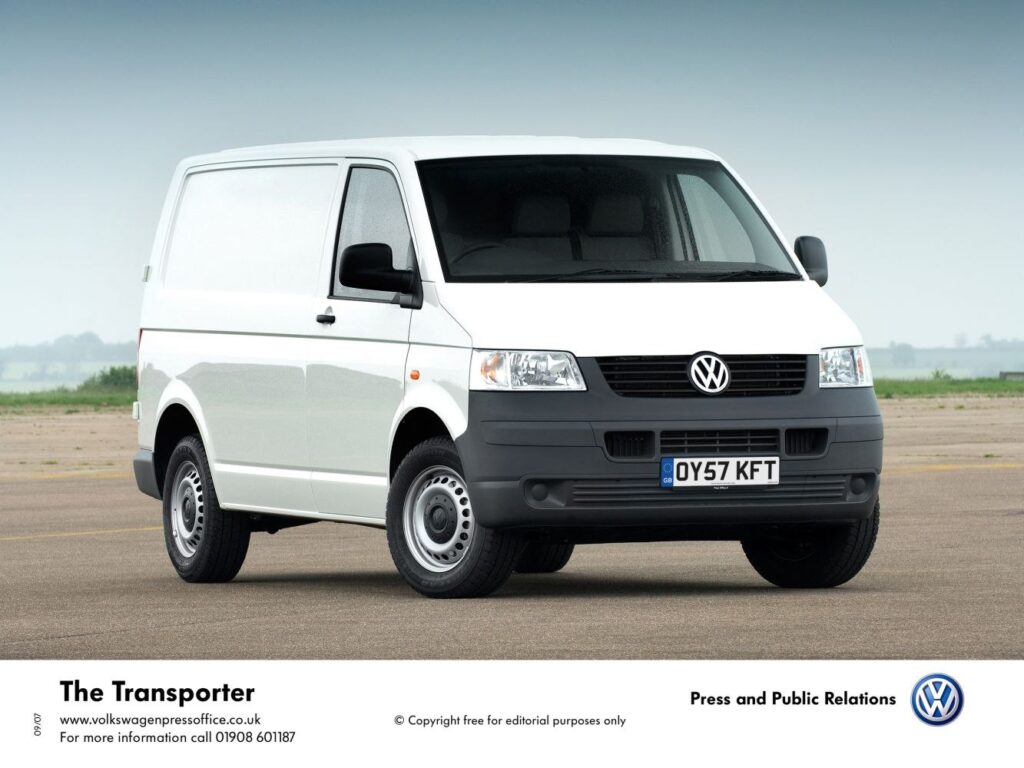
The Volkswagen Transporter (T5) Panel Van 3.2 V6 (235 Hp) Tiptronic L2H3: A European Workhorse with Potent Power
The Volkswagen Transporter, an iconic nameplate in the light commercial vehicle segment, has a storied history spanning over seven decades. The fifth-generation model, known internally as the T5, continued this legacy from its introduction in 2003 through 2009. Among its diverse powertrain offerings, the Volkswagen Transporter (T5) Panel Van 3.2 V6 (235 Hp) Tiptronic L2H3 stands out as a particularly powerful and somewhat unconventional variant. Primarily serving the European and international markets where the Transporter is a ubiquitous sight, this specific configuration combined the practicality of a large panel van with the robust performance of a high-displacement gasoline engine, offering a unique proposition for demanding commercial applications.
The T5 generation represented a significant evolution in design, engineering, and comfort for the Transporter line. While diesel engines typically dominate the commercial van sector due to their fuel efficiency and torque characteristics, Volkswagen offered this potent 3.2-liter V6 gasoline engine for those requiring exceptional power, smoother operation, or specific operational profiles where diesel was less preferred. This variant, with its L2H3 designation, signifies a long wheelbase (L2) and a high roof (H3), maximizing cargo volume and versatility, making it a formidable tool for businesses needing to transport substantial loads quickly and efficiently across various terrains.
Engine & Performance of the Volkswagen Transporter (T5) Panel Van 3.2 V6
At the heart of this particular Transporter T5 variant was Volkswagen’s renowned EA390 / BKK 3.2-liter VR6 engine. This naturally aspirated, six-cylinder powerplant was a sophisticated choice for a commercial vehicle, known for its smooth power delivery and distinct exhaust note. With a displacement of 3189 cubic centimeters (194.6 cubic inches), the engine was engineered for robust performance and durability. It featured a DOHC (Double Overhead Camshaft) valvetrain with four valves per cylinder and a multi-port manifold injection system, ensuring efficient fuel delivery and combustion.
The engine produced a substantial 235 horsepower at 6200 rpm, a figure more commonly associated with passenger cars than panel vans of its era. Torque output was equally impressive, peaking at 232.33 lb-ft (315 Nm) at a relatively low 2950 rpm. This broad torque band was crucial for a commercial vehicle, providing ample pulling power even when fully loaded. Power was transmitted to the front wheels via a sophisticated 6-speed Tiptronic automatic transmission, offering smooth shifts and the option for manual gear selection, enhancing driver control and adaptability to various driving conditions.
Despite its considerable size and weight, the Volkswagen Transporter (T5) Panel Van 3.2 V6 (235 Hp) Tiptronic L2H3 delivered surprisingly brisk performance for its class. It could accelerate from 0 to 60 mph in an estimated 10.3 seconds and reach a top speed of 118.06 mph (190 km/h). These figures underscored its capability for express deliveries or situations where maintaining higher speeds on highways was critical. Fuel consumption, while not its primary selling point compared to diesel alternatives, was rated at 23.1 US mpg (10.2 l/100 km) in extra-urban driving conditions, an acceptable figure given its power output and vehicle type. The engine complied with Euro 4 emission standards, reflecting its environmental considerations for the period.
Design & Features
The Volkswagen Transporter (T5) Panel Van was designed first and foremost as a highly practical and durable commercial vehicle. Its exterior design was functional yet modern for its time, characterized by clean lines and a robust stance. The L2H3 configuration meant a lengthy 208.27-inch (5290 mm) body and a towering 97.24-inch (2470 mm) height, providing an enormous cargo volume of up to 328.43 cubic feet (9300 liters). This cavernous space made it ideal for a wide range of commercial uses, from parcel delivery and trade services to specialized conversions.
The interior of the Panel Van was designed for utility and driver comfort over long working hours. Typically configured with 2-3 seats, the cabin offered a straightforward layout with durable materials. While not luxurious, the T5’s cabin was ergonomically sound, with intuitive controls and good visibility. Key features for the era included power steering, and importantly, an Anti-lock Braking System (ABS) for enhanced safety, especially critical when carrying heavy loads. The independent McPherson strut front suspension and independent coil spring rear suspension, combined with front and rear anti-roll bars, provided a car-like driving experience, a hallmark of the Transporter line, offering better handling and ride comfort compared to many competitors.
Braking performance was handled by large ventilated discs on both the front (333×32.5 mm) and rear (294×22 mm) axles, ensuring effective stopping power for a vehicle of its size and potential payload. The 235/55 R17 tires mounted on 7J x 17-inch wheel rims provided a good balance of load-bearing capacity and road grip. The vehicle’s practical design extended to its impressive towing capabilities, rated at 5511.56 lbs (2500 kg) with brakes, making it suitable for hauling trailers or additional equipment.
Technical Specifications
| Category | Specification |
|---|---|
| Brand | Volkswagen |
| Model | Transporter |
| Generation | Transporter (T5) Panel Van |
| Type (Engine) | 3.2 V6 (235 Hp) Tiptronic L2H3 |
| Production Years | 2003 – 2009 |
| Body Type | Van |
| Seats | 2-3 |
| Doors | 4-5 |
| Performance Specifications | |
| Fuel Consumption (Extra Urban) | 23.1 US mpg (10.2 l/100 km) |
| Fuel Type | Petrol (Gasoline) |
| Acceleration 0-60 mph | 10.3 sec |
| Maximum Speed | 118.06 mph (190 km/h) |
| Emission Standard | Euro 4 |
| Weight-to-Power Ratio | 8.4 kg/Hp (118.7 Hp/tonne) |
| Weight-to-Torque Ratio | 6.3 kg/Nm (159.1 Nm/tonne) |
| Engine Specifications | |
| Power | 235 Hp @ 6200 rpm |
| Power per liter | 73.7 Hp/l |
| Torque | 232.33 lb-ft (315 Nm) @ 2950 rpm |
| Engine Layout | Front, Transverse |
| Engine Model/Code | EA390 / BKK |
| Engine Displacement | 194.6 cu. in. (3189 cm3) |
| Number of Cylinders | 6 |
| Engine Configuration | VR-engine |
| Cylinder Bore | 3.31 in. (84 mm) |
| Piston Stroke | 3.78 in. (95.9 mm) |
| Compression Ratio | 10.85:1 |
| Valves per Cylinder | 4 |
| Fuel Injection System | Multi-port manifold injection |
| Engine Aspiration | Naturally aspirated |
| Valvetrain | DOHC |
| Engine Oil Capacity | 6.45 US qt (6.1 l) |
| Coolant Capacity | 7.5 US qt (7.1 l) |
| Dimensions, Volume & Weights | |
| Kerb Weight | 4365.15 – 4812.69 lbs (1980-2183 kg) |
| Max. Weight | 6172.94 – 6613.87 lbs (2800-3000 kg) |
| Max Load | 1801.18 – 1807.79 lbs (817-820 kg) |
| Trunk (Boot) Space – Max | 328.43 cu. ft. (9300 l) |
| Fuel Tank Capacity | 21.13 US gal (80 l) |
| Permitted Trailer Load (with brakes, 8%) | 5511.56 lbs (2500 kg) |
| Permitted Trailer Load (with brakes, 12%) | 5511.56 lbs (2500 kg) |
| Permitted Trailer Load (without brakes) | 1653.47 lbs (750 kg) |
| Permitted Towbar Download | 220.46 lbs (100 kg) |
| Length | 208.27 in. (5290 mm) |
| Width | 74.96 in. (1904 mm) |
| Width including mirrors | 88.27 in. (2242 mm) |
| Height | 97.24 in. (2470 mm) |
| Wheelbase | 133.86 in. (3400 mm) |
| Front Track | 63.78 in. (1620 mm) |
| Rear Track | 63.78 in. (1620 mm) |
| Front Overhang | 35.2 in. (894 mm) |
| Rear Overhang | 39.21 in. (996 mm) |
| Ride Height (Ground Clearance) | 6.5 in. (165 mm) |
| Minimum Turning Circle | 43.31 ft. (13.2 m) |
| Approach Angle | 22° |
| Departure Angle | 16° |
| Wading Depth | 11.81 in. (300 mm) |
| Drivetrain, Brakes & Suspension | |
| Drivetrain Architecture | Front-wheel drive, Internal Combustion Engine |
| Drive Wheel | Front wheel drive |
| Gearbox Type | 6 gears, automatic transmission Tiptronic |
| Front Suspension | Independent, McPherson with coil spring and anti-roll bar |
| Rear Suspension | Independent coil spring, Transverse stabilizer, Trailing arm |
| Front Brakes | Ventilated discs, 333×32.5 mm |
| Rear Brakes | Ventilated discs, 294×22 mm |
| Assisting Systems | ABS (Anti-lock braking system) |
| Steering Type | Steering rack and pinion |
| Power Steering | Hydraulic Steering |
| Tire Size | 235/55 R17 |
| Wheel Rims Size | 7J x 17 |
Legacy & Market Impact of the Volkswagen Transporter (T5) Panel Van 3.2 V6
The Volkswagen Transporter has long held a revered status in Europe and many other global markets, synonymous with reliability, versatility, and robust construction. The T5 generation continued this tradition, solidifying its position as a class leader in the medium-sized commercial van segment. While the 3.2 V6 gasoline engine variant was a niche offering, it played a significant role in showcasing the Transporter’s adaptability and Volkswagen’s commitment to offering diverse powertrain options to meet specific customer needs.
In a market heavily dominated by more fuel-efficient diesel engines like Volkswagen’s own TDI units, the 3.2 V6 Transporter appealed to a specific clientele. These might include operators requiring higher sustained speeds, smoother and quieter operation for sensitive cargo or passenger transport (even in a panel van configuration), or those with specific fleet requirements that favored gasoline engines. It could also be favored by emergency services, specialized trades, or custom conversion companies looking for a powerful and refined base vehicle. Competitors in its segment included models like the Mercedes-Benz Vito, Ford Transit, and Renault Trafic, but few offered a gasoline engine with such a high output and the refined characteristics of a VR6.
The T5 Transporter, regardless of engine, earned a reputation for its car-like driving dynamics, making it less fatiguing for drivers on long routes compared to some of its more truck-like rivals. The 3.2 V6 only enhanced this perception, offering a level of performance that was exceptional for a commercial van. Its strong resale value and Volkswagen’s extensive service network further contributed to its long-term appeal and market impact.
Ultimately, the Volkswagen Transporter (T5) Panel Van 3.2 V6 (235 Hp) Tiptronic L2H3 represents a fascinating chapter in the Transporter’s evolution. It highlighted a period when Volkswagen was willing to offer a powerful, high-performance gasoline option in a segment where practicality and economy usually took precedence. While not the volume seller, it cemented the T5’s image as a highly capable and versatile platform, capable of meeting a wide array of demanding commercial requirements with a touch of unexpected dynamism.