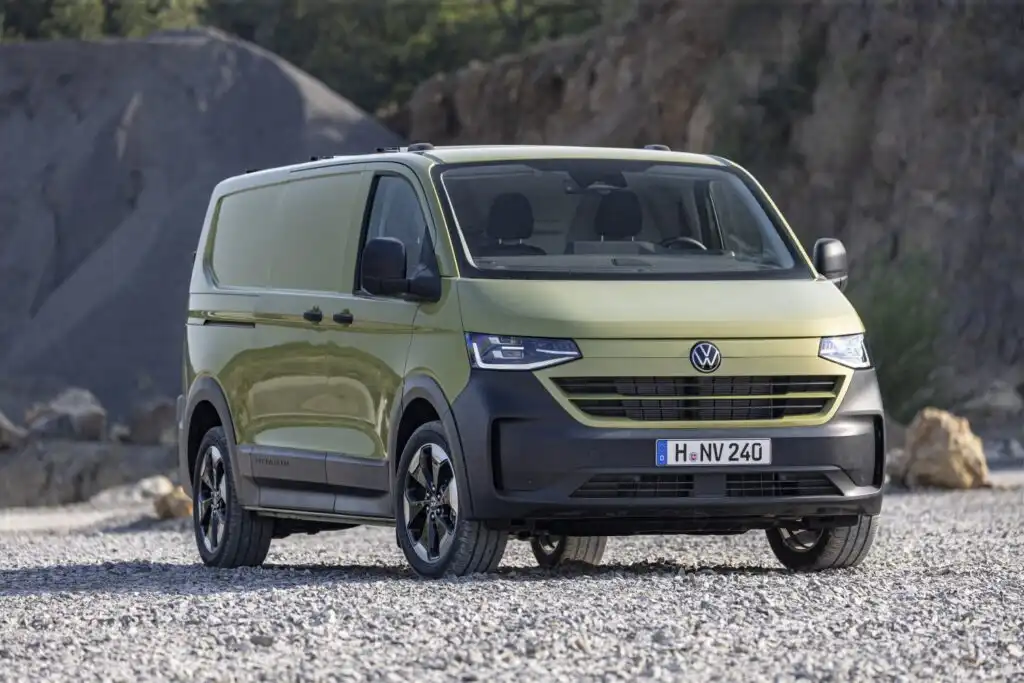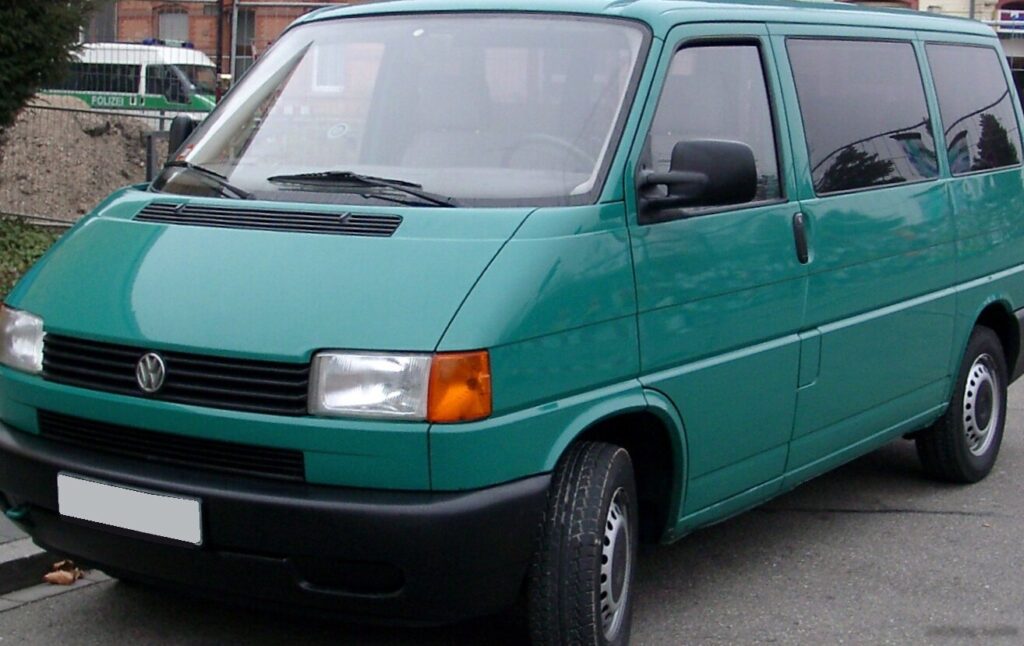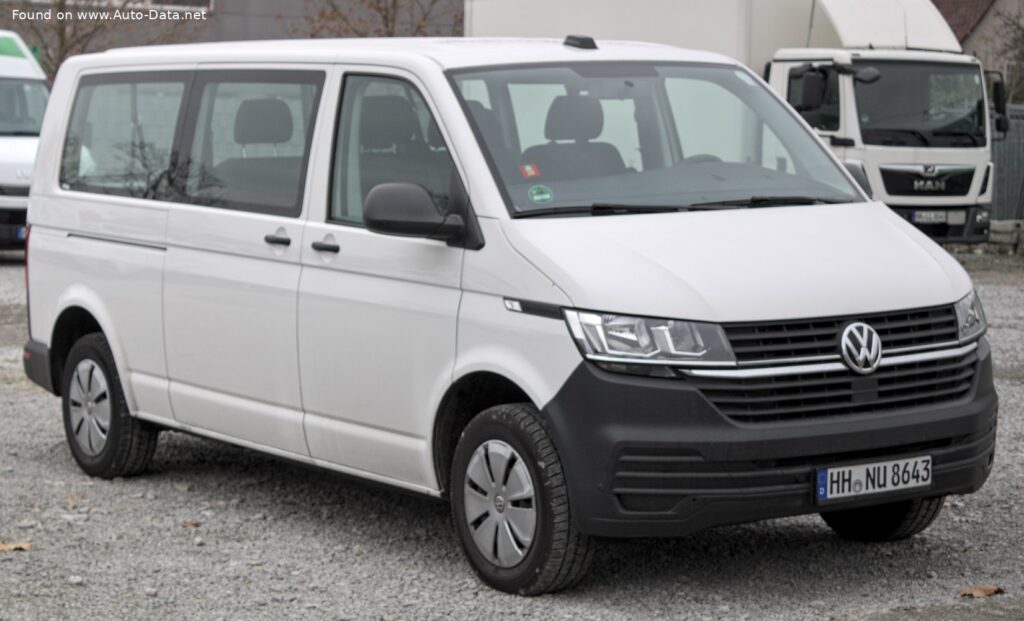
The Volkswagen Transporter, known as the Transporter T6.1 following a significant facelift in 2019, is a versatile light commercial vehicle and passenger van. This generation represents an evolution of the T6, bringing updated styling, enhanced technology, and improved efficiency. The T6.1 Kombi, specifically the 2.0 TDI (150 Hp) 4MOTION DSG L2H1 variant, caters to a broad market, primarily in Europe, where it serves as a popular choice for both commercial operators and families seeking a spacious and adaptable vehicle. While not officially sold in the United States, the Transporter’s lineage and capabilities are well-regarded globally, influencing the design and functionality of similar vans available in the North American market.
Volkswagen Transporter T6.1: Overview
The T6.1 generation of the Volkswagen Transporter was introduced in 2019 as a comprehensive update to the T6 model. The “T” designation signifies its place in the Transporter’s lineage, with each number representing a new generation. The T6.1 facelift included revisions to the exterior styling, a modernized interior with updated technology, and improvements to the vehicle’s mechanical components. The Kombi trim level denotes a passenger-oriented configuration, offering flexible seating arrangements and increased comfort features compared to the base panel van. The 2.0 TDI 4MOTION DSG L2H1 specification indicates a 2.0-liter turbocharged diesel engine producing 150 horsepower, a four-wheel-drive (4MOTION) system, a dual-clutch gearbox (DSG), and a long wheelbase (L2) combined with a high roof (H1) configuration.
Engine & Performance
The heart of the Transporter T6.1 Kombi 2.0 TDI 4MOTION DSG L2H1 is a 2.0-liter inline-four cylinder diesel engine, identified by the EA288 engine code (CXFA, CXHA). This engine delivers 150 horsepower at 3250-3750 rpm and a substantial 340 Nm (250.77 lb.-ft.) of torque between 1500-3000 rpm. The turbocharger and intercooler work in tandem to optimize power delivery and efficiency. Power is transmitted to all four wheels via Volkswagen’s 4MOTION all-wheel-drive system, providing enhanced traction and stability in various driving conditions. The seven-speed dual-clutch gearbox (DSG) ensures smooth and rapid gear changes, contributing to both performance and fuel economy. Acceleration from 0 to 100 km/h (0-62 mph) takes 12.5 seconds, while the vehicle achieves a maximum speed of 179 km/h (111.23 mph). Fuel consumption figures, measured using the NEDC and WLTP standards, range from 6.9 to 7.9 l/100 km (34.1 to 29.8 US mpg), with CO2 emissions between 183 and 207 g/km.
Design & Features
The Transporter T6.1 Kombi boasts a practical and functional design, characterized by its van body style and available in 4 or 5-door configurations. The L2H1 designation signifies a long wheelbase and a high roof, maximizing interior space and cargo capacity. The Kombi trim level prioritizes passenger comfort, offering seating for up to nine occupants. Key features include a spacious cabin, versatile seating arrangements, and a range of storage compartments. The vehicle is equipped with modern safety features such as ABS (Anti-lock Braking System) and advanced driver-assistance systems, depending on the specific equipment level. The interior incorporates updated technology, including a touchscreen infotainment system and connectivity options. The exterior styling features revised front-end aesthetics, including a new grille and headlights, giving the T6.1 a more contemporary appearance. The vehicle’s dimensions are as follows: length 5304 mm (208.82 in), width 1904 mm (74.96 in), and height 1990 mm (78.35 in). The maximum load capacity ranges from 801 to 949 kg (1765.9 to 2092.19 lbs), and the trunk space (with seats folded) extends to 6700 liters (236.61 cu. ft.).
Technical Specifications
| Brand | Volkswagen |
| Model | Transporter |
| Generation | Transporter (T6.1, facelift 2019) Kombi |
| Type (Engine) | 2.0 TDI (150 Hp) 4MOTION DSG L2H1 |
| Start of production | 2019 |
| End of production | 2020 |
| Powertrain Architecture | Internal Combustion engine |
| Body type | Van |
| Seats | 4-9 |
| Doors | 4-5 |
| Fuel consumption (urban) | 8-8.7 l/100 km (29.4 – 27 US mpg) |
| Fuel consumption (extra urban) | 6.3-7.5 l/100 km (37.3 – 31.4 US mpg) |
| Fuel consumption (combined) | 6.9-7.9 l/100 km (34.1 – 29.8 US mpg) |
| CO2 emissions | 183-207 g/km |
| Fuel Type | Diesel |
| Acceleration 0 – 100 km/h | 12.5 sec |
| Acceleration 0 – 62 mph | 12.5 sec |
| Acceleration 0 – 60 mph | 11.9 sec |
| Maximum speed | 179 km/h (111.23 mph) |
| Emission standard | Euro 6d TEMP-EVAP-ISC |
| Weight-to-power ratio | 13.7 kg/Hp |
| Weight-to-torque ratio | 6 kg/Nm |
| Power | 150 Hp @ 3250-3750 rpm |
| Torque | 340 Nm @ 1500-3000 rpm (250.77 lb.-ft.) |
| Engine layout | Front, Transverse |
| Engine Model/Code | EA288 / CXFA, CXHA |
| Engine displacement | 1968 cm3 (120.09 cu. in.) |
| Number of cylinders | 4 |
| Engine configuration | Inline |
| Cylinder Bore | 81 mm (3.19 in.) |
| Piston Stroke | 95.5 mm (3.76 in.) |
| Compression ratio | 15.5:1 |
| Engine oil capacity | 7.4 l (7.82 US qt | 6.51 UK qt) |
| Kerb Weight | 2051-2399 kg (4521.68 – 5288.89 lbs.) |
| Max. weight | 3000-3200 kg (6613.87 – 7054.79 lbs.) |
| Max load | 801-949 kg (1765.9 – 2092.19 lbs.) |
| Trunk (boot) space – maximum | 6700 l (236.61 cu. ft.) |
| Fuel tank capacity | 70 l (18.49 US gal | 15.4 UK gal) |
| AdBlue tank | 13 l (3.43 US gal | 2.86 UK gal) |
| Max. roof load | 100 kg (220.46 lbs.) |
| Permitted trailer load with brakes (12%) | 2500 kg (5511.56 lbs.) |
| Permitted trailer load without brakes | 750 kg (1653.47 lbs.) |
| Length | 5304 mm (208.82 in.) |
| Width | 1904 mm (74.96 in.) |
| Width including mirrors | 2297 mm (90.43 in.) |
| Height | 1990 mm (78.35 in.) |
| Wheelbase | 3400 mm (133.86 in.) |
The Volkswagen Transporter T6.1 Kombi 2.0 TDI 4MOTION DSG L2H1 represents a well-rounded package, offering a blend of practicality, efficiency, and capability. Its robust diesel engine, all-wheel-drive system, and versatile interior make it a suitable choice for a wide range of applications, particularly in markets where such vehicles are commonly used for both commercial and personal transport.