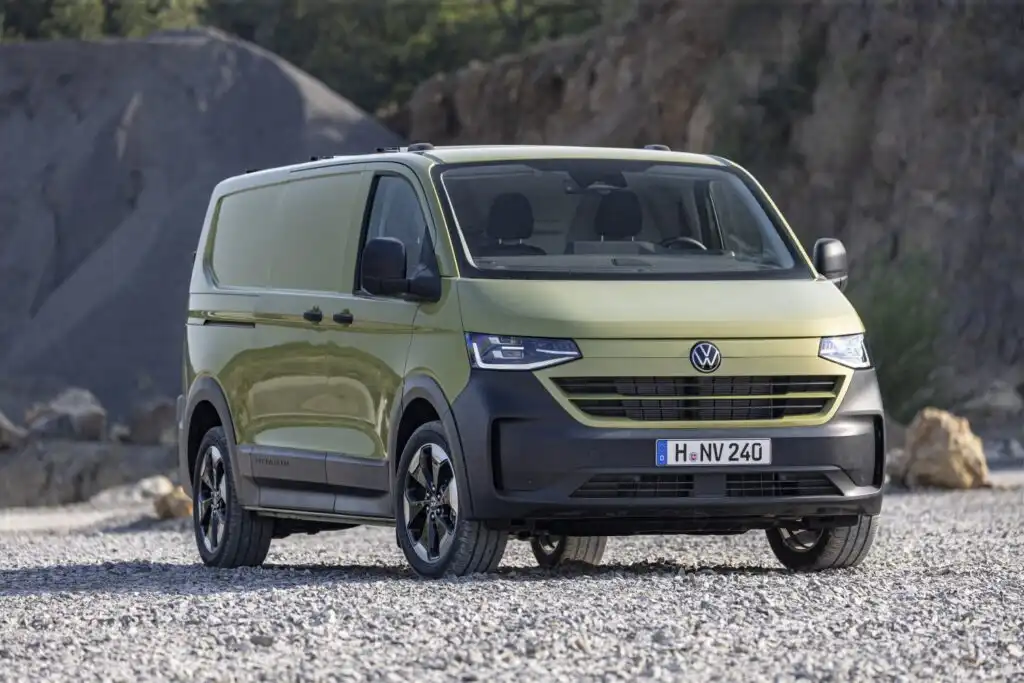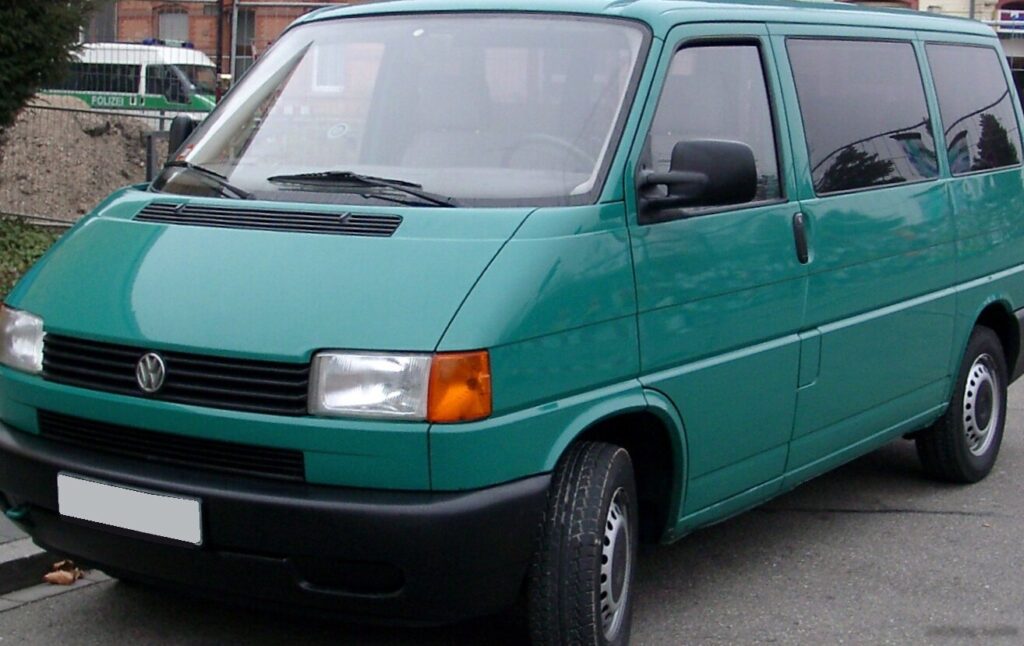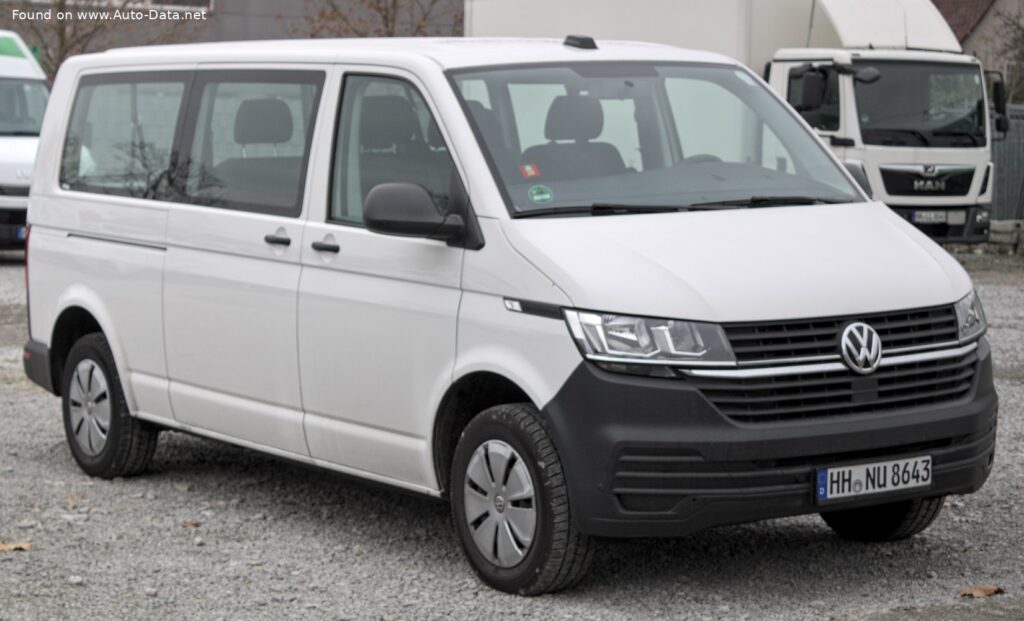
The Volkswagen Transporter, known as the T6.1 following a significant facelift in 2019, represents the latest iteration of a commercial vehicle lineage stretching back to the original Type 2 of the 1950s. This particular version, the Kombi 2.0 TDI with 150 horsepower and a dual-clutch gearbox (DSG), in the L2H3 configuration, was primarily marketed in Europe as a versatile panel van and passenger carrier. While not officially sold in the United States, the Transporter has a devoted following among van enthusiasts and is often imported as a used vehicle. The T6.1 update brought styling revisions, upgraded technology, and improved efficiency to the already popular T6 platform.
Volkswagen Transporter T6.1: Overview
The T6.1 generation of the Volkswagen Transporter built upon the foundation laid by the T6, addressing criticisms and enhancing the vehicle’s overall appeal. The “Kombi” designation signifies a multi-passenger configuration, blending commercial practicality with family-oriented usability. The L2H3 specification denotes a long wheelbase and a high roof, maximizing cargo and passenger space. This model year (2019-2020) focused on meeting stringent Euro 6d emission standards while delivering a balance of performance and fuel economy.
Engine & Performance
Powering the Transporter T6.1 Kombi 2.0 TDI is a 2.0-liter turbocharged diesel engine, producing 150 horsepower at 3250-3750 rpm and 340 Nm (250.77 lb.-ft.) of torque between 1500 and 3000 rpm. This engine, part of the Volkswagen Group’s EA288 series, utilizes common rail direct injection and a turbocharger with an intercooler to optimize combustion and power delivery. The engine is transversely mounted at the front of the vehicle. The power is transferred to the front wheels via a seven-speed dual-clutch gearbox (DSG), offering smooth and rapid gear changes. Acceleration from 0 to 100 km/h (0-62 mph) takes approximately 12 seconds, with a top speed of 182 km/h (113.09 mph). Fuel economy figures, measured using the NEDC and WLTP standards, range from 6.3 to 7.1 l/100 km (37.3 to 33.1 US mpg), depending on driving conditions.
Design & Features
The Volkswagen Transporter T6.1 Kombi L2H3 is a van body style, typically featuring four or five doors and seating for between four and nine passengers. The L2H3 configuration provides a generous cargo area behind the rear seats, making it suitable for both commercial and recreational use. The high roof allows for comfortable standing room for most adults. The 2019 facelift brought subtle but noticeable changes to the exterior styling, including a revised front grille, headlights, and bumper. Inside, the T6.1 features a more modern dashboard layout with updated infotainment systems and driver-assistance technologies. Standard safety features include ABS (Anti-lock Braking System) and a suite of stability control systems. The vehicle’s design prioritizes practicality and versatility, with a focus on maximizing interior space and ease of use. The vehicle’s dimensions are Length: 5304 mm (208.82 in), Width: 1904 mm (74.96 in), Height: 2477 mm (97.52 in), and Wheelbase: 3400 mm (133.86 in).
Technical Specifications
| Brand | Volkswagen |
| Model | Transporter |
| Generation | Transporter (T6.1, facelift 2019) Kombi |
| Type (Engine) | 2.0 TDI (150 Hp) DSG L2H3 |
| Start of production | 2019 |
| End of production | 2020 |
| Powertrain Architecture | Internal Combustion engine |
| Body type | Van |
| Seats | 4-9 |
| Doors | 4-5 |
| Fuel consumption (urban) | 6.9-7.8 l/100 km (34.1 – 30.2 US mpg) |
| Fuel consumption (extra urban) | 5.9-6.7 l/100 km (39.9 – 35.1 US mpg) |
| Fuel consumption (combined) | 6.3-7.1 l/100 km (37.3 – 33.1 US mpg) |
| CO2 emissions | 166-188 g/km |
| Fuel Type | Diesel |
| Acceleration 0 – 100 km/h | 12 sec |
| Acceleration 0 – 62 mph | 12 sec |
| Acceleration 0 – 60 mph | 11.4 sec |
| Maximum speed | 182 km/h (113.09 mph) |
| Emission standard | Euro 6d TEMP-EVAP-ISC |
| Weight-to-power ratio | 13.1 kg/Hp |
| Weight-to-torque ratio | 5.8 kg/Nm |
| Power | 150 Hp @ 3250-3750 rpm |
| Torque | 340 Nm @ 1500-3000 rpm (250.77 lb.-ft.) |
| Engine layout | Front, Transverse |
| Engine Model/Code | EA288 / CXFA, CXHA |
| Engine displacement | 1968 cm3 (120.09 cu. in.) |
| Number of cylinders | 4 |
| Engine configuration | Inline |
| Cylinder Bore | 81 mm (3.19 in.) |
| Piston Stroke | 95.5 mm (3.76 in.) |
| Compression ratio | 15.5:1 |
| Number of valves per cylinder | 4 |
| Fuel injection system | Diesel Commonrail |
| Engine aspiration | Turbocharger, Intercooler |
| Valvetrain | DOHC |
| Engine oil capacity | 7.4 l (7.82 US qt | 6.51 UK qt) |
| Kerb Weight | 1971-2274 kg (4345.31 – 5013.31 lbs.) |
| Max. weight | 2800-3200 kg (6172.94 – 7054.79 lbs.) |
| Max load | 829-926 kg (1827.63 – 2041.48 lbs.) |
| Trunk (boot) space – maximum | 9300 l (328.43 cu. ft.) |
| Fuel tank capacity | 70 l (18.49 US gal | 15.4 UK gal) |
| AdBlue tank | 13 l (3.43 US gal | 2.86 UK gal) |
| Permitted trailer load with brakes (12%) | 2500 kg (5511.56 lbs.) |
| Permitted trailer load without brakes | 750 kg (1653.47 lbs.) |
| Permitted towbar download | 100 kg (220.46 lbs.) |
| Length | 5304 mm (208.82 in.) |
| Width | 1904 mm (74.96 in.) |
| Width including mirrors | 2297 mm (90.43 in.) |
| Height | 2477 mm (97.52 in.) |
| Wheelbase | 3400 mm (133.86 in.) |
| Front overhang | 906 mm (35.67 in.) |
| Rear overhang | 998 mm (39.29 in.) |
| Ride height (ground clearance) | 202 mm (7.95 in.) |
| Minimum turning circle | 13.2 m (43.31 ft.) |
| Front suspension | Independent, McPherson with coil spring and anti-roll bar |
| Rear suspension | Independent coil spring, Wishbone, Transverse stabilizer |
| Front brakes | Ventilated discs, 308×29.5 mm |
| Rear brakes | Ventilated discs, 294×22 mm |
| Number of gears and type of gearbox | 7 gears, automatic transmission DSG |
| Drive wheel | Front wheel drive |
| Tires size | 205/65 R16; 215/65 R16 |
| Wheel rims size | 6.5J x 16 |
The Volkswagen Transporter T6.1 Kombi 2.0 TDI DSG L2H3 remains a popular choice for those seeking a practical, versatile, and relatively efficient commercial vehicle. Its blend of space, performance, and technology makes it well-suited for a variety of applications, from family transport to small business operations.