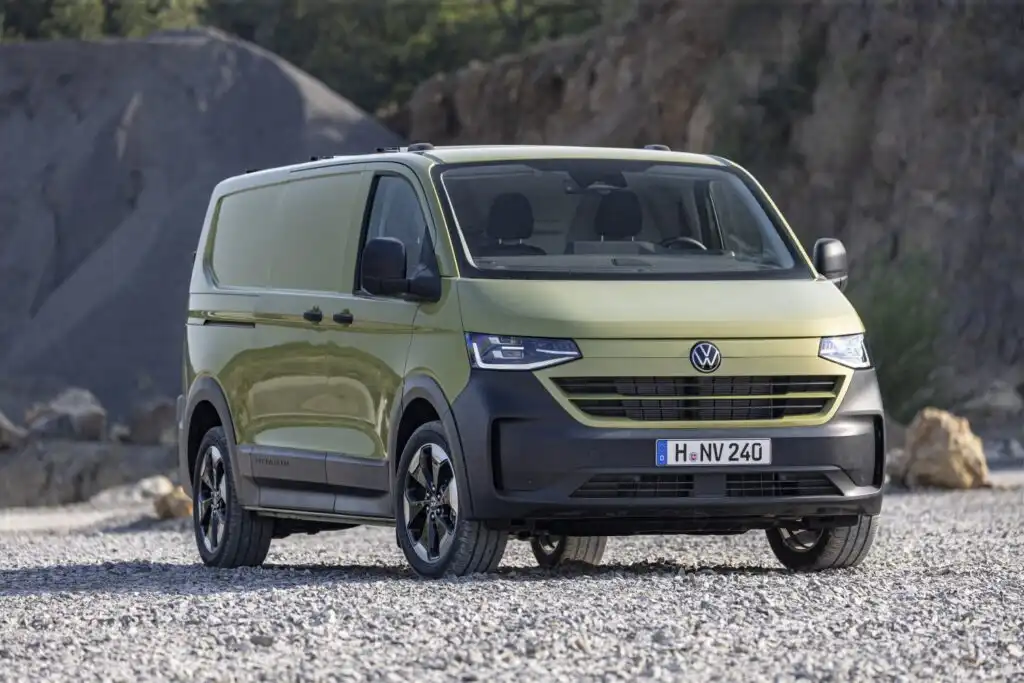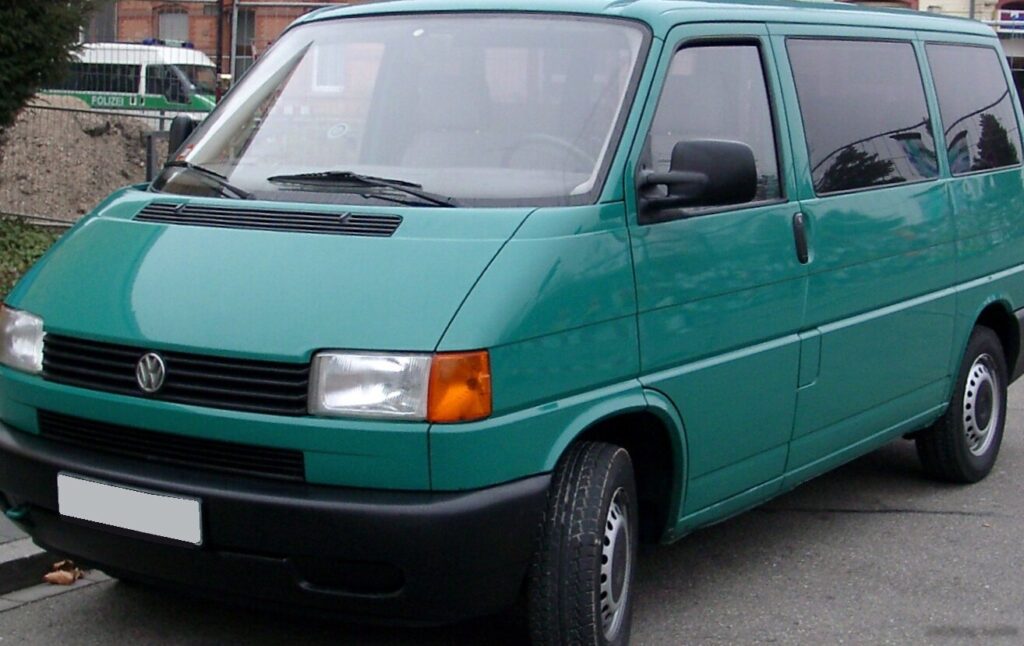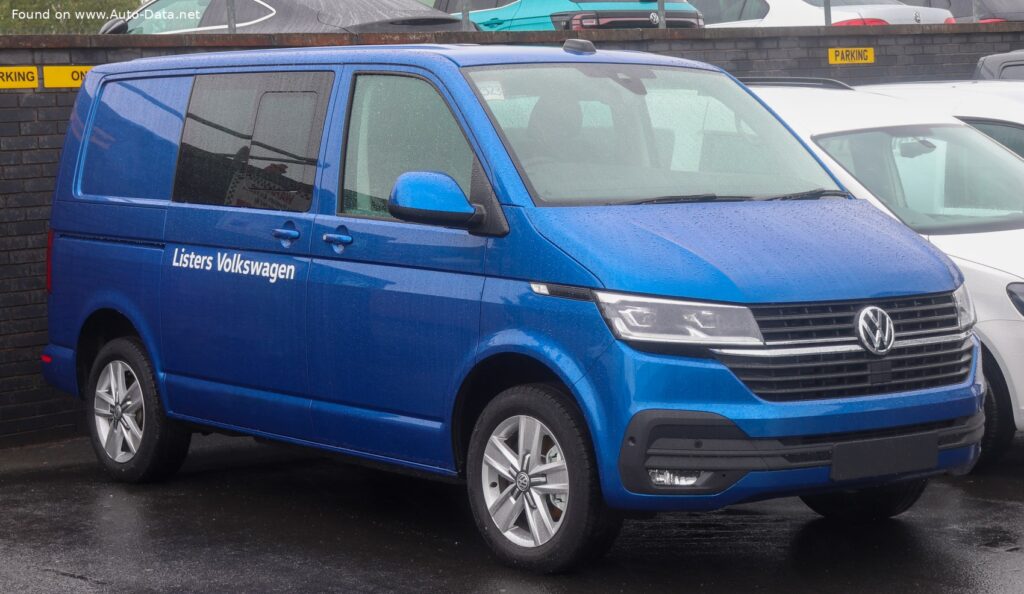
The Volkswagen Transporter, known as the Bulli in some markets, is a mainstay of the commercial vehicle segment in Europe and beyond. The T6.1 generation, a significant facelift of the T6, arrived in 2019, bringing updated styling, enhanced technology, and improved efficiency. This article focuses on the Volkswagen Transporter (T6.1) Kombi Crew Van 2.0 TDI (110 Hp) L1H1, a popular configuration particularly suited for both commercial and family use. The “Kombi” designation signifies a crew van layout, offering seating for up to six occupants alongside a useful cargo area. The L1H1 indicates a short wheelbase and a standard roof height, making it a versatile option for urban environments.
Volkswagen Transporter T6.1: Overview
The T6.1 represents a substantial update to the T6, rather than a complete ground-up redesign. It aimed to address criticisms of the T6’s interior and bring the Transporter in line with Volkswagen’s contemporary design language. While retaining the core functionality and robust build quality that have defined the Transporter for decades, the T6.1 introduced a more modern and refined driving experience. This particular variant, the 2.0 TDI with 110 horsepower, was a common choice for operators prioritizing fuel economy and reliability over outright performance. The T6.1 was not officially sold in the United States, but the Transporter lineage has a strong following among van enthusiasts and is often imported as a grey market vehicle.
Heritage and Market Position
The Volkswagen Transporter has a rich history dating back to 1950, originally conceived as a simple, utilitarian vehicle for tradespeople and families. Over the generations, it has evolved into a highly adaptable platform, available in numerous configurations to suit a wide range of needs. In Europe, the Transporter competes with models like the Ford Transit, Mercedes-Benz Vito, and Fiat Ducato. The Kombi Crew Van variant specifically targets users who require both passenger and cargo capacity, such as small businesses, tradespeople with crews, and families who enjoy outdoor activities.
Engine & Performance
The heart of the Transporter T6.1 2.0 TDI (110 Hp) L1H1 is a 2.0-liter four-cylinder turbocharged diesel engine. This engine, part of Volkswagen’s EA288 family, delivers 110 horsepower at 3100-4250 rpm and 250 Nm (184.39 lb.-ft.) of torque between 1350-3100 rpm. The engine is transversely mounted at the front of the vehicle. Power is delivered to the front wheels via a five-speed manual transmission. While not a performance-oriented vehicle, the 2.0 TDI provides adequate power for everyday driving and hauling moderate loads. Acceleration from 0 to 100 km/h (0-62 mph) takes 14.3 seconds, and the top speed is 164 km/h (101.9 mph). Fuel economy is a strong point, with combined cycle consumption ranging from 6.1 to 7.0 liters per 100 kilometers (38.6 to 33.6 US mpg). The engine incorporates a diesel particulate filter and Start & Stop technology to reduce emissions and improve fuel efficiency, meeting Euro 6d-ISC-FCM emission standards.
Design & Features
The Transporter T6.1 retains the classic van silhouette, but the facelift brought a more contemporary aesthetic. Key design updates included a revised front fascia with a more prominent grille and updated headlights, as well as a redesigned interior. The L1H1 configuration offers a practical balance between interior space and maneuverability. The Kombi Crew Van layout provides seating for five to six passengers, with a rear bench seat that can be folded or removed to create more cargo space. The vehicle features four or five doors for easy access. Inside, the T6.1 boasts a more car-like dashboard with improved materials and a modern infotainment system. Safety features include ABS (Anti-lock Braking System) and a robust chassis designed for durability and load-carrying capacity. The vehicle’s dimensions – 4904 mm in length, 1904 mm in width, and 1990 mm in height – make it suitable for navigating urban streets while still offering a generous cargo volume of 3500 liters (123.6 cu. ft.) with the rear seats in place.
Technical Specifications
| Brand | Volkswagen |
| Model | Transporter |
| Generation | Transporter (T6.1, facelift 2019) Kombi Crew Van |
| Type (Engine) | 2.0 TDI (110 Hp) L1H1 |
| Start of production | 2021 |
| End of production | 2022 |
| Powertrain Architecture | Internal Combustion engine |
| Body type | Van |
| Seats | 5-6 |
| Doors | 4-5 |
| Fuel consumption (urban) | 7.6-8.1 l/100 km (30.9 – 29 US mpg) |
| Fuel consumption (extra urban) | 5.2-6.4 l/100 km (45.2 – 36.8 US mpg) |
| Fuel consumption (combined) | 6.1-7 l/100 km (38.6 – 33.6 US mpg) |
| CO2 emissions | 161-185 g/km |
| Fuel Type | Diesel |
| Acceleration 0 – 100 km/h | 14.3 sec |
| Acceleration 0 – 62 mph | 14.3 sec |
| Acceleration 0 – 60 mph | 13.6 sec |
| Maximum speed | 164 km/h (101.9 mph) |
| Emission standard | Euro 6d-ISC-FCM |
| Weight-to-power ratio | 18 kg/Hp |
| Weight-to-torque ratio | 7.9 kg/Nm |
| Power | 110 Hp @ 3100-4250 rpm |
| Torque | 250 Nm @ 1350-3100 rpm (184.39 lb.-ft.) |
| Engine layout | Front, Transverse |
| Engine Model/Code | EA288MAR / DNAB |
| Engine displacement | 1968 cm3 (120.09 cu. in.) |
| Number of cylinders | 4 |
| Engine configuration | Inline |
| Cylinder Bore | 81 mm (3.19 in.) |
| Piston Stroke | 95.5 mm (3.76 in.) |
| Compression ratio | 15.5:1 |
| Engine oil capacity | 7.4 l (7.82 US qt | 6.51 UK qt) |
| Kerb Weight | 1983-2180 kg (4371.77 – 4806.08 lbs.) |
| Max. weight | 2800-3200 kg (6172.94 – 7054.79 lbs.) |
| Max load | 817-1020 kg (1801.18 – 2248.72 lbs.) |
| Trunk (boot) space – maximum | 3500 l (123.6 cu. ft.) |
| Fuel tank capacity | 70 l (18.49 US gal | 15.4 UK gal) |
| AdBlue tank | 22 l (5.81 US gal | 4.84 UK gal) |
| Length | 4904 mm (193.07 in.) |
| Width | 1904 mm (74.96 in.) |
| Height | 1990 mm (78.35 in.) |
| Wheelbase | 3000 mm (118.11 in.) |
| Number of gears | 5 |
| Gearbox type | Manual transmission |
The Volkswagen Transporter T6.1 Kombi Crew Van 2.0 TDI (110 Hp) L1H1 remains a popular choice for those seeking a versatile and reliable commercial vehicle. Its blend of practicality, efficiency, and updated features makes it a compelling option in its segment, even if it requires importation for North American buyers.