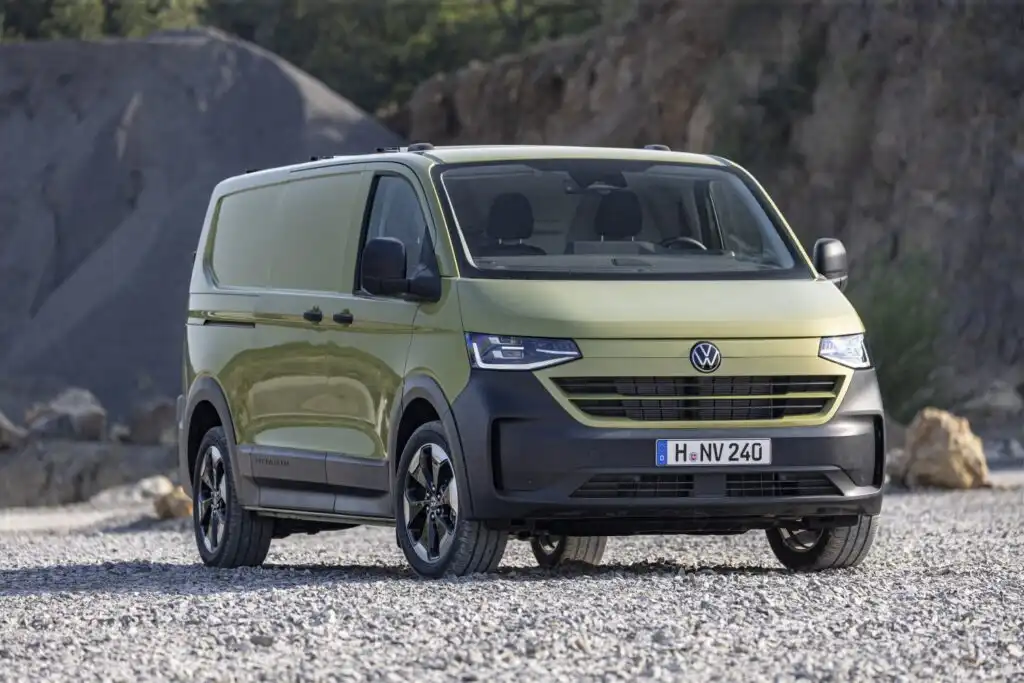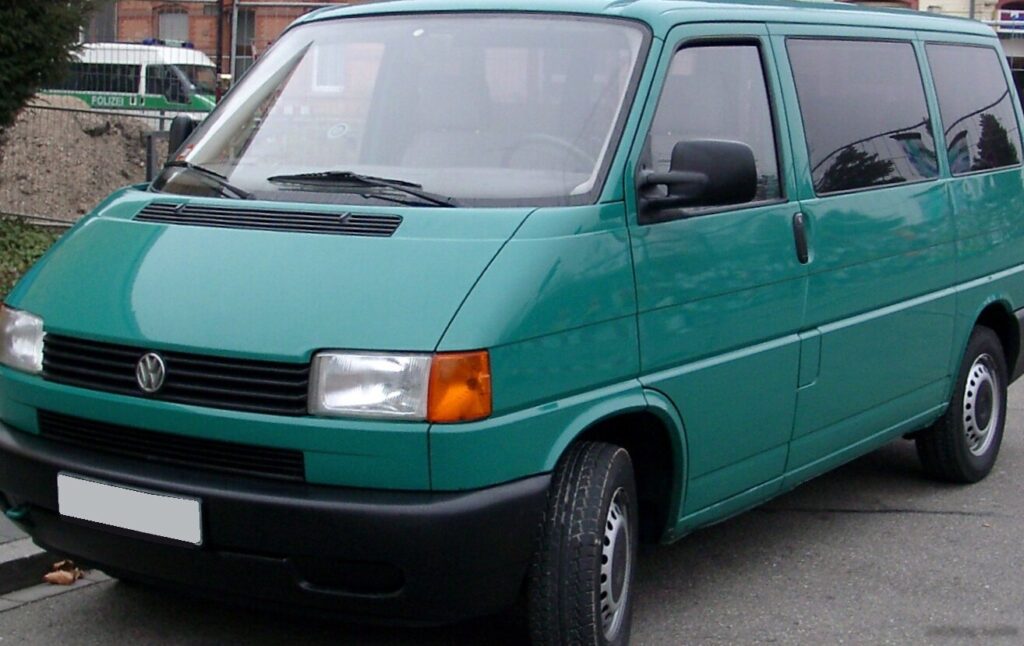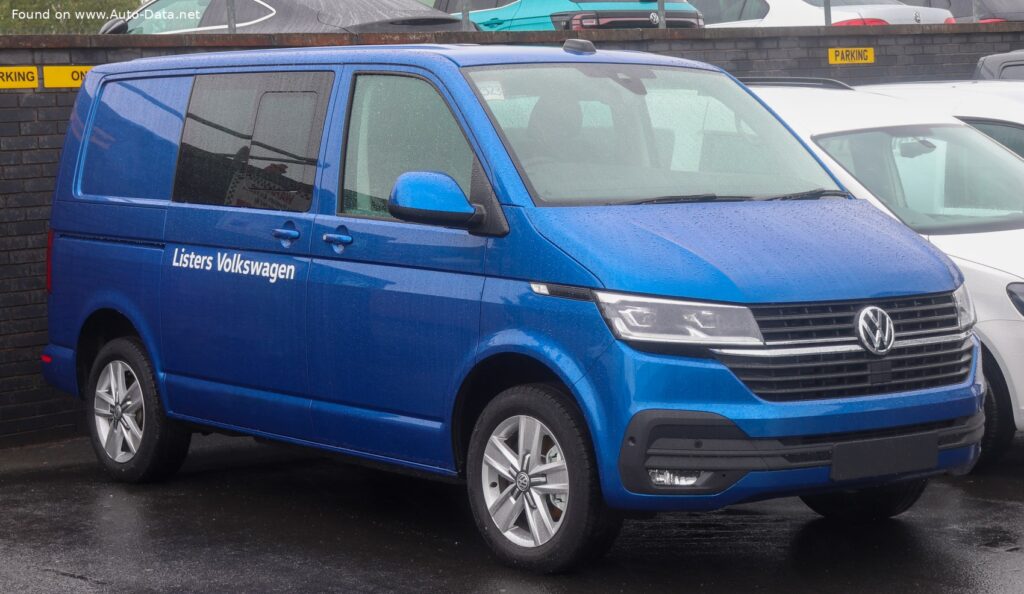
The Volkswagen Transporter, known as the T6.1 following a significant facelift in 2019, represents the latest iteration of a commercial vehicle lineage stretching back to the original Type 2 of the 1950s. This particular version, the Kombi Crew Van 2.0 TDI (150 Hp) 4MOTION L2H1, is a versatile panel van designed for both commercial and family use, popular throughout Europe and other markets. While not officially sold in the United States in this specific configuration, the Transporter’s influence can be seen in vehicles like the Ford Transit and Mercedes-Benz Sprinter, which dominate the American van market. The T6.1 update brought styling revisions, upgraded technology, and improved efficiency to the already successful T6 platform.
Volkswagen Transporter T6.1: Overview
The T6.1 generation of the Volkswagen Transporter, launched in 2019, is a mid-cycle refresh of the T6 model. It’s positioned as a light commercial vehicle, offering a blend of practicality, reliability, and a degree of comfort not always found in its segment. The “Kombi Crew Van” designation indicates a configuration geared towards carrying both passengers and cargo, typically with seating for five to six occupants. The “L2H1” code refers to the vehicle’s body length (L2 – long wheelbase) and roof height (H1 – standard roof). The 2.0 TDI engine with 150 horsepower and the 4MOTION all-wheel-drive system are key features of this variant, enhancing its capability and versatility.
Engine & Performance
Powering the Transporter T6.1 Kombi Crew Van 2.0 TDI is a 2.0-liter turbocharged diesel engine, part of Volkswagen’s EA288 engine family. This engine produces 150 horsepower at 3250-3750 rpm and 340 Nm (250.77 lb.-ft.) of torque between 1500 and 3000 rpm. The engine features a diesel commonrail fuel injection system and a turbocharger with an intercooler, optimizing both power delivery and fuel efficiency. The 4MOTION all-wheel-drive system provides enhanced traction, particularly useful in challenging weather conditions or when carrying heavy loads. Power is delivered to all four wheels through a six-speed manual transmission. Performance figures include a 0-100 km/h (0-62 mph) acceleration time of 11.3 seconds and a maximum speed of 180 km/h (111.85 mph). The vehicle’s weight-to-power ratio is 14.5 kg/Hp, and its weight-to-torque ratio is 6.4 kg/Nm.
Design & Features
The Volkswagen Transporter T6.1 maintains the classic van silhouette, but the T6.1 facelift brought a more modern aesthetic. The front end received a redesigned grille, headlights, and bumper, giving it a more contemporary appearance. The interior focuses on practicality and durability, with a functional dashboard layout and hard-wearing materials. The Kombi Crew Van configuration offers flexible seating arrangements, allowing for a balance between passenger and cargo space. Standard features typically include ABS, power steering, and a driver’s airbag. The T6.1 also benefited from updated infotainment systems and driver-assistance technologies, such as crosswind assist and automatic post-braking, enhancing safety and convenience. The vehicle’s dimensions are: length 5304 mm (208.82 in), width 1904 mm (74.96 in), and height 1990 mm (78.35 in). The wheelbase is 3400 mm (133.86 in). The maximum load capacity is 820-825 kg (1807.79 – 1818.81 lbs), and the trunk space (maximum) is 4400 liters (155.38 cu. ft.).
Technical Specifications
| Brand | Volkswagen |
| Model | Transporter |
| Generation | Transporter (T6.1, facelift 2019) Kombi Crew Van |
| Type (Engine) | 2.0 TDI (150 Hp) 4MOTION L2H1 |
| Start of production | 2019 |
| End of production | 2021 |
| Powertrain Architecture | Internal Combustion engine |
| Body type | Van |
| Seats | 5-6 |
| Doors | 4-5 |
| Fuel consumption (urban) | 8.6-8.9 l/100 km (27.4 – 26.4 US mpg) |
| Fuel consumption (extra urban) | 6.7-7.3 l/100 km (35.1 – 32.2 US mpg) |
| Fuel consumption (combined) | 7.4-7.9 l/100 km (31.8 – 29.8 US mpg) |
| CO2 emissions | 195-208 g/km |
| Fuel Type | Diesel |
| Acceleration 0 – 100 km/h | 11.3 sec |
| Acceleration 0 – 62 mph | 11.3 sec |
| Acceleration 0 – 60 mph | 10.7 sec |
| Maximum speed | 180 km/h (111.85 mph) |
| Emission standard | Euro 6d TEMP-EVAP-ISC |
| Weight-to-power ratio | 14.5 kg/Hp |
| Weight-to-torque ratio | 6.4 kg/Nm |
| Power | 150 Hp @ 3250-3750 rpm |
| Torque | 340 Nm @ 1500-3000 rpm (250.77 lb.-ft.) |
| Engine layout | Front, Transverse |
| Engine Model/Code | EA288 / CXFA, CXHA |
| Engine displacement | 1968 cm3 (120.09 cu. in.) |
| Number of cylinders | 4 |
| Engine configuration | Inline |
| Cylinder Bore | 81 mm (3.19 in.) |
| Piston Stroke | 95.5 mm (3.76 in.) |
| Compression ratio | 15.5:1 |
| Number of valves per cylinder | 4 |
| Fuel injection system | Diesel Commonrail |
| Engine aspiration | Turbocharger, Intercooler |
| Valvetrain | DOHC |
| Engine oil capacity | 7.4 l (7.82 US qt | 6.51 UK qt) |
| Kerb Weight | 2175-2380 kg (4795.05 – 5247 lbs.) |
| Max. weight | 3000-3200 kg (6613.87 – 7054.79 lbs.) |
| Max load | 820-825 kg (1807.79 – 1818.81 lbs.) |
| Trunk (boot) space – maximum | 4400 l (155.38 cu. ft.) |
| Fuel tank capacity | 70 l (18.49 US gal | 15.4 UK gal) |
| AdBlue tank | 13 l (3.43 US gal | 2.86 UK gal) |
| Max. roof load | 100 kg (220.46 lbs.) |
| Permitted trailer load with brakes (12%) | 2500 kg (5511.56 lbs.) |
| Permitted trailer load without brakes | 750 kg (1653.47 lbs.) |
| Permitted towbar download | 100 kg (220.46 lbs.) |
| Length | 5304 mm (208.82 in.) |
| Width | 1904 mm (74.96 in.) |
| Width including mirrors | 2297 mm (90.43 in.) |
| Height | 1990 mm (78.35 in.) |
| Wheelbase | 3400 mm (133.86 in.) |
| Front overhang | 906 mm (35.67 in.) |
| Rear overhang | 998 mm (39.29 in.) |
| Ride height (ground clearance) | 202 mm (7.95 in.) |
| Minimum turning circle | 13.2 m (43.31 ft.) |
| Drivetrain Architecture | All wheel drive (4×4). ICE drives front wheels, rear wheels engaged via clutch. |
| Number of gears and type of gearbox | 6 gears, manual transmission |
The Volkswagen Transporter T6.1 Kombi Crew Van 2.0 TDI 4MOTION L2H1 remains a popular choice for businesses and families needing a versatile and reliable vehicle. Its blend of practicality, efficiency, and all-wheel-drive capability makes it well-suited for a variety of tasks and environments.