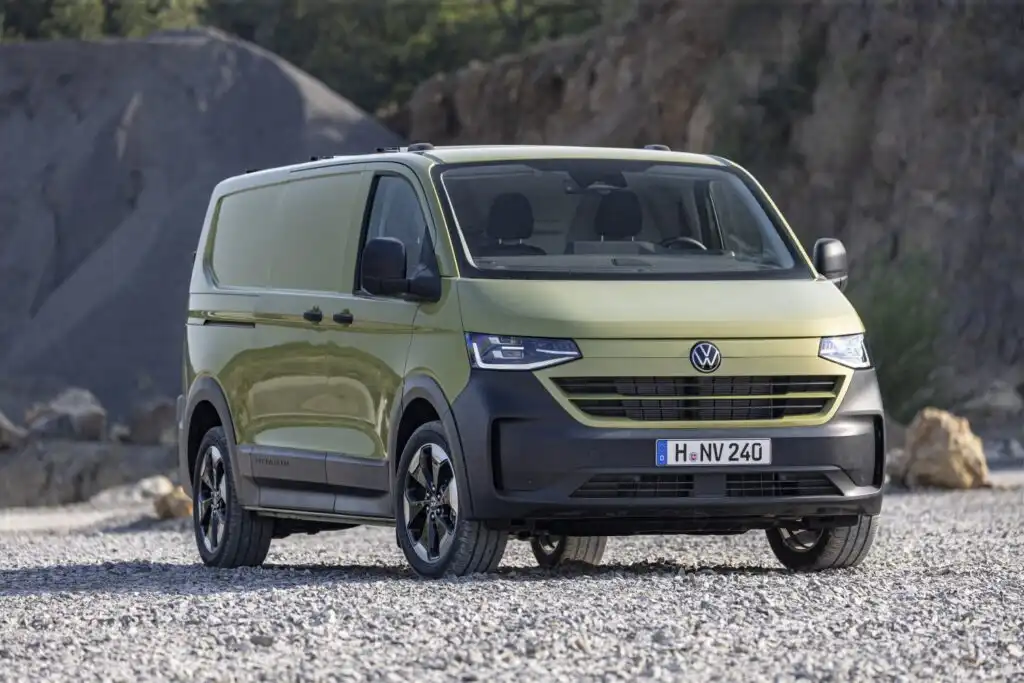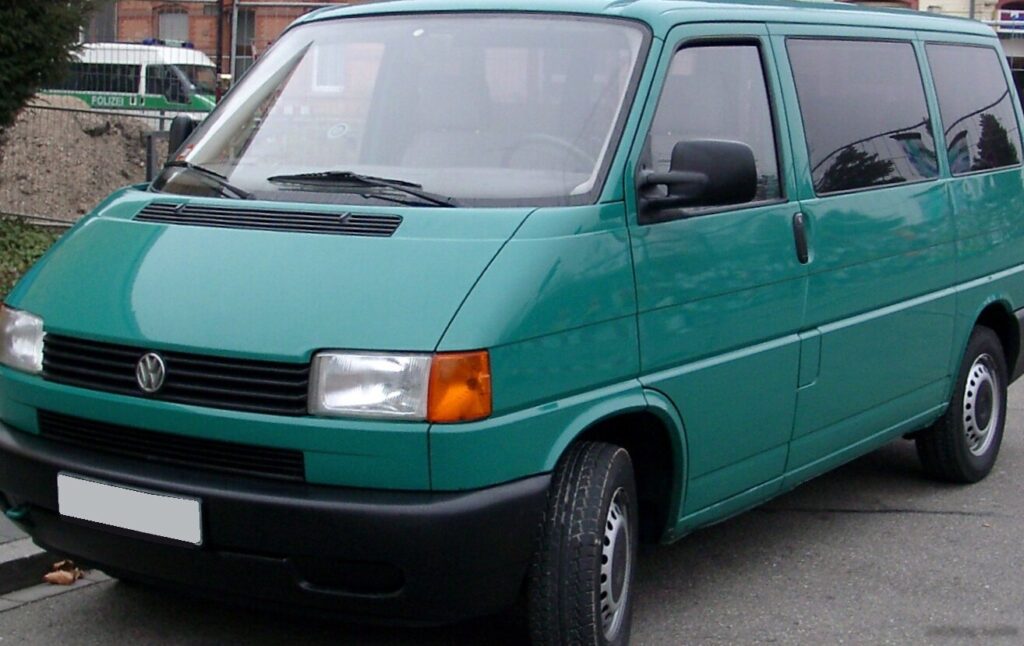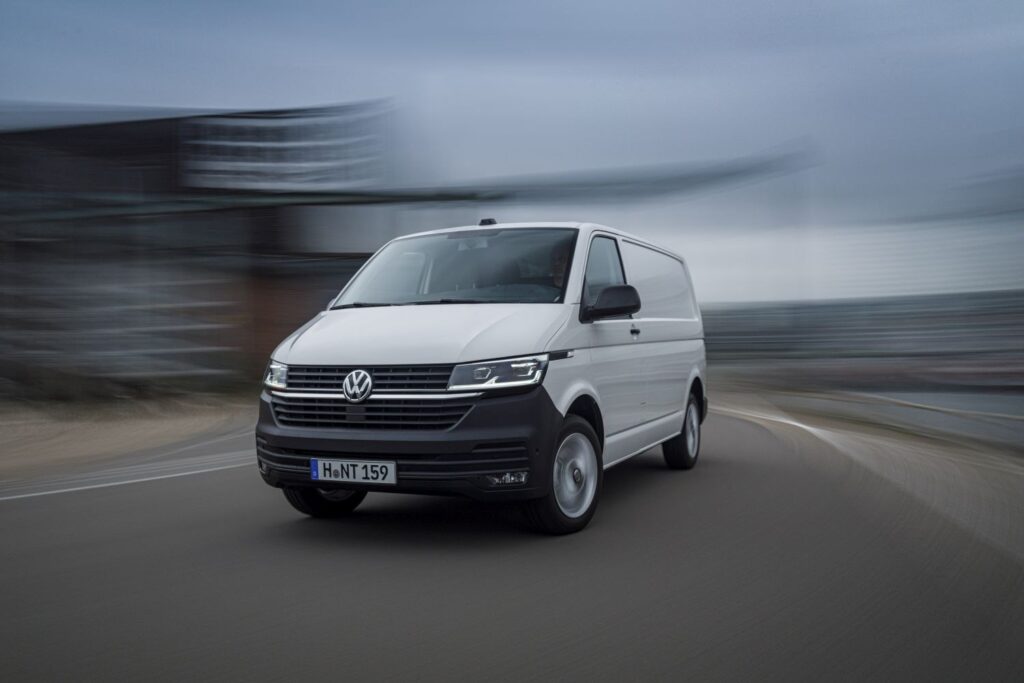
The Volkswagen Transporter, known as the Transporter T6.1 following a significant facelift in 2019, is a light commercial vehicle produced by Volkswagen Commercial Vehicles. This iteration represents an evolution of the T6 generation, offering updated styling, enhanced technology, and improved efficiency. Primarily sold in Europe, Australia, and other international markets, the T6.1 caters to businesses and individuals requiring a versatile and reliable van for cargo transport, tradespeople, and even camper conversions. The model detailed here is the Panel Van variant, equipped with a 2.0 TDI diesel engine producing 150 horsepower and a 7-speed Dual Clutch Gearbox (DSG) transmission, configured in the L1H1 wheelbase and roof height.
Volkswagen Transporter T6.1: Overview and Market Position
The Transporter has a long and storied history, dating back to the original Type 2, often referred to as the “Bus” or “Kombi.” The T6.1 continues this legacy as a workhorse vehicle, renowned for its practicality and durability. While not officially sold in the United States after the final Type 2 import in 1979, the Transporter remains a popular choice for enthusiasts who import models privately. The T6.1 facelift brought significant improvements to the vehicle, aligning it with modern emissions standards and incorporating contemporary features. It competes with other popular European vans such as the Ford Transit Custom, Mercedes-Benz Vito, and Fiat Ducato, offering a blend of functionality, comfort, and driving dynamics.
Engine & Performance
The heart of this Transporter T6.1 is a 2.0-liter four-cylinder turbocharged diesel engine, designated as the EA288 CXFA or CXHA. This engine delivers 150 horsepower at 3250-3750 rpm and a substantial 340 Nm (250.77 lb.-ft.) of torque between 1500 and 3000 rpm. The turbocharger and intercooler work in tandem to optimize power delivery and efficiency. Power is transmitted to the front wheels via a sophisticated 7-speed Dual Clutch Gearbox (DSG), providing smooth and rapid gear changes. Acceleration from 0 to 100 km/h (0-62 mph) takes 11.2 seconds, while 0 to 60 mph is achieved in 10.6 seconds. The van boasts a maximum speed of 182 km/h (113.09 mph). Fuel economy figures, measured using the NEDC and WLTP standards, range from 5.8 to 6.8 l/100 km (40.6 to 34.6 US mpg, or 48.7 to 41.5 UK mpg), depending on driving conditions. CO2 emissions are rated between 152 and 178 g/km.
Design & Features
The Transporter T6.1 Panel Van is characterized by its functional and utilitarian design. The L1H1 configuration denotes a standard wheelbase and roof height, providing a practical balance between cargo capacity and maneuverability. The van typically offers seating for two or three occupants, with a focus on driver comfort and ergonomics. Key features include a robust chassis, independent suspension on both axles (McPherson struts at the front and a wishbone setup at the rear), and disc brakes all around. Modern safety features, standard for the Euro 6d TEMP-EVAP-ISC emission standard, include ABS (Anti-lock Braking System) and electronic stability control. The interior is designed for durability and ease of cleaning, with a focus on providing a comfortable and functional workspace for drivers. The large cargo area, with a maximum volume of 5800 liters (204.83 cu. ft.), is accessible through rear and side doors, facilitating easy loading and unloading of goods.
Technical Specifications
| Brand | Volkswagen |
| Model | Transporter |
| Generation | Transporter (T6.1, facelift 2019) Panel Van |
| Type (Engine) | 2.0 TDI (150 Hp) DSG L1H1 |
| Start of production | 2019 |
| End of production | 2021 |
| Powertrain Architecture | Internal Combustion engine |
| Body type | Van |
| Seats | 2-3 |
| Doors | 4-5 |
| Fuel consumption (urban) | 6.5-7.6 l/100 km (36.2 – 30.9 US mpg) |
| Fuel consumption (extra urban) | 5.4-6.3 l/100 km (43.6 – 37.3 US mpg) |
| Fuel consumption (combined) | 5.8-6.8 l/100 km (40.6 – 34.6 US mpg) |
| CO2 emissions | 152-178 g/km |
| Fuel Type | Diesel |
| Acceleration 0 – 100 km/h | 11.2 sec |
| Acceleration 0 – 62 mph | 11.2 sec |
| Acceleration 0 – 60 mph | 10.6 sec |
| Maximum speed | 182 km/h (113.09 mph) |
| Emission standard | Euro 6d TEMP-EVAP-ISC |
| Weight-to-power ratio | 11.9 kg/Hp |
| Weight-to-torque ratio | 5.3 kg/Nm |
| Power | 150 Hp @ 3250-3750 rpm |
| Torque | 340 Nm @ 1500-3000 rpm (250.77 lb.-ft.) |
| Engine layout | Front, Transverse |
| Engine Model/Code | EA288 / CXFA, CXHA |
| Engine displacement | 1968 cm3 (120.09 cu. in.) |
| Number of cylinders | 4 |
| Engine configuration | Inline |
| Cylinder Bore | 81 mm (3.19 in.) |
| Piston Stroke | 95.5 mm (3.76 in.) |
| Compression ratio | 15.5:1 |
| Number of valves per cylinder | 4 |
| Fuel injection system | Diesel Commonrail |
| Engine aspiration | Turbocharger, Intercooler |
| Valvetrain | DOHC |
| Engine oil capacity | 7.4 l (7.82 US qt | 6.51 UK qt) |
| Kerb Weight | 1786-2183 kg (3937.46 – 4812.69 lbs.) |
| Max. weight | 2800-3200 kg (6172.94 – 7054.79 lbs.) |
| Max load | 1014-1017 kg (2235.49 – 2242.1 lbs.) |
| Trunk (boot) space – maximum | 5800 l (204.83 cu. ft.) |
| Fuel tank capacity | 70 l (18.49 US gal | 15.4 UK gal) |
| AdBlue tank | 13 l (3.43 US gal | 2.86 UK gal) |
| Max. roof load | 100 kg (220.46 lbs.) |
| Permitted trailer load with brakes (12%) | 2500 kg (5511.56 lbs.) |
| Permitted trailer load without brakes | 750 kg (1653.47 lbs.) |
| Permitted towbar download | 100 kg (220.46 lbs.) |
| Length | 4904 mm (193.07 in.) |
| Width | 1904 mm (74.96 in.) |
| Width including mirrors | 2297 mm (90.43 in.) |
| Height | 1990 mm (78.35 in.) |
| Wheelbase | 3000 mm (118.11 in.) |
| Front overhang | 906 mm (35.67 in.) |
| Rear overhang | 998 mm (39.29 in.) |
| Ride height (ground clearance) | 201 mm (7.91 in.) |
| Minimum turning circle | 11.9 m (39.04 ft.) |
| Drivetrain Architecture | Front wheel drive |
| Number of gears and type of gearbox | 7 gears, automatic transmission DSG |
The Volkswagen Transporter T6.1 continues to be a popular choice for commercial and private use, offering a compelling combination of practicality, reliability, and modern features. Its enduring appeal lies in its versatility and ability to adapt to a wide range of applications.