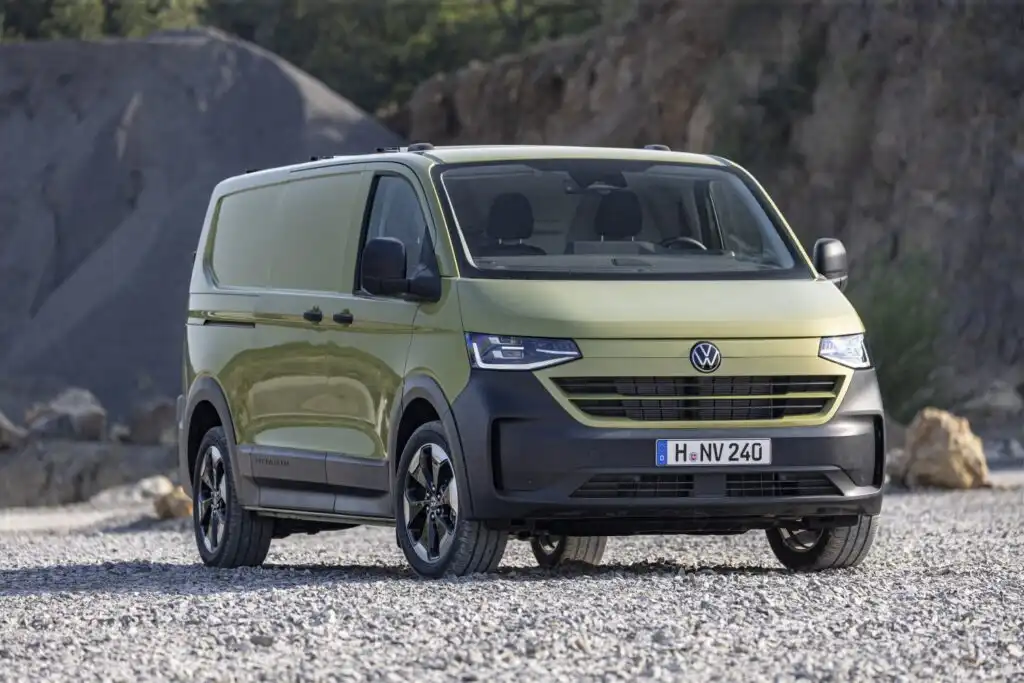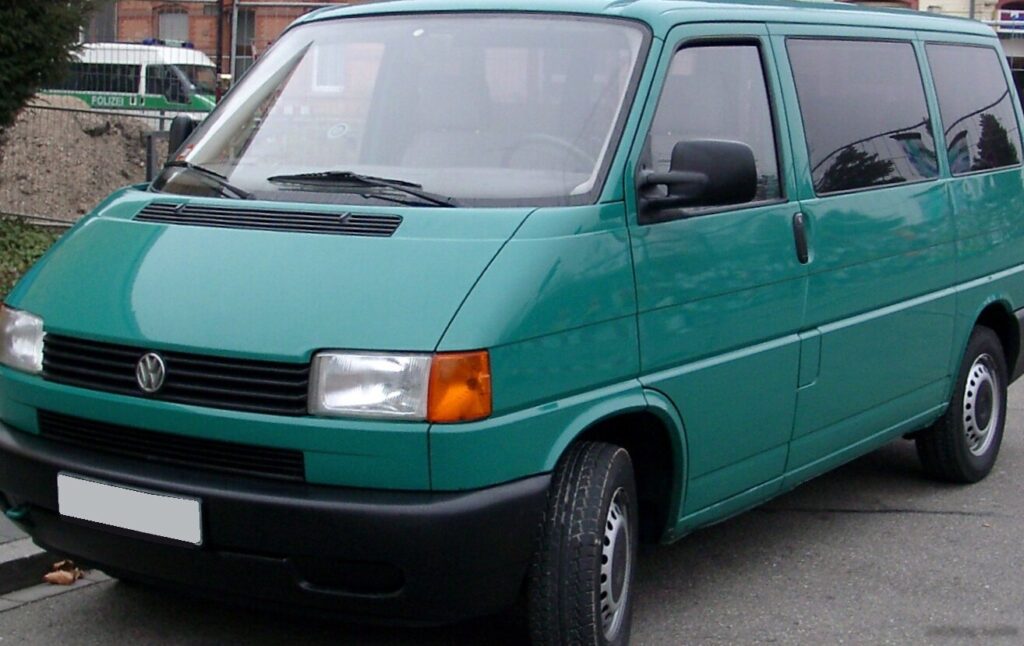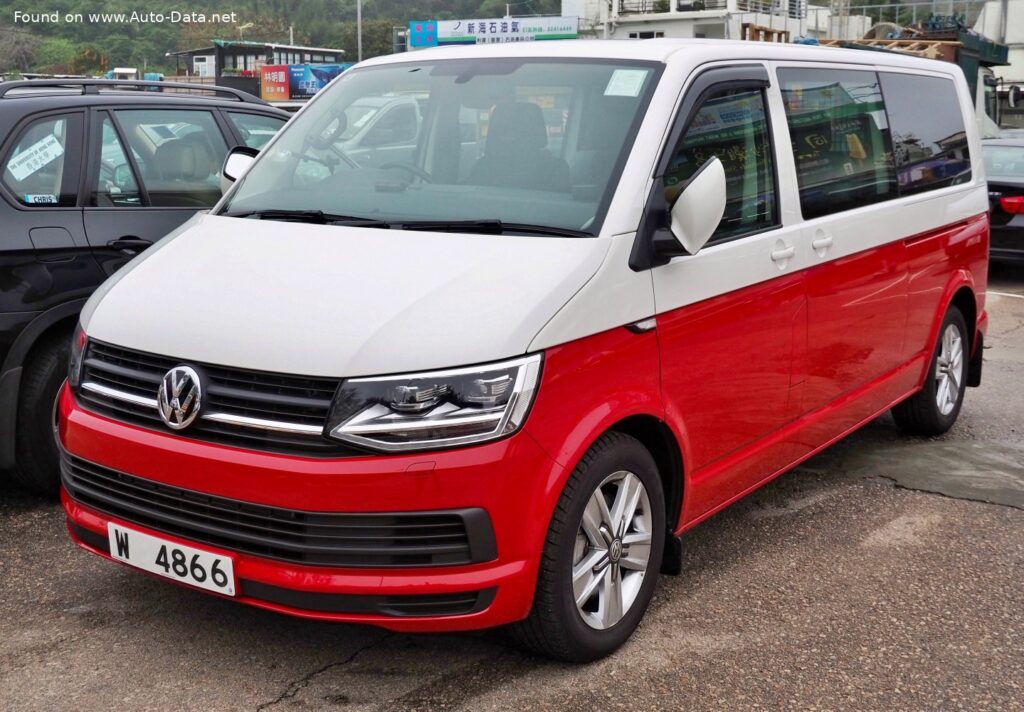
The Volkswagen Transporter (T6) Kombi 2.0 TDI (114 Hp) L2H3: A European Workhorse
The Volkswagen Transporter, an iconic nameplate in the light commercial vehicle segment, has a storied history stretching back to the original Type 2 “Bus.” The sixth generation, known as the T6, continued this legacy by offering a versatile and robust platform for both commercial and passenger transport. The specific variant under review, the Volkswagen Transporter (T6) Kombi 2.0 TDI (114 Hp) L2H3, represents a highly practical configuration within the T6 lineup, produced between 2018 and 2019. While not officially sold in the United States, where Volkswagen’s commercial van offerings have historically been limited to models like the Routan (a rebadged Chrysler minivan) or larger Crafter (available as the Ram ProMaster in some markets), the Transporter remains a cornerstone of Volkswagen’s global commercial vehicle strategy, particularly in Europe and other international markets.
The T6 generation, launched in 2015, built upon the strengths of its T5 predecessor, introducing updated styling, improved interiors, and more efficient powertrains. The Kombi designation signifies a multi-purpose vehicle capable of carrying both passengers and cargo, making it a flexible choice for businesses and larger families alike. The L2H3 nomenclature further details its dimensions: L2 denotes a long wheelbase, and H3 indicates a high roof, maximizing interior volume for both occupants and freight. This particular model, equipped with a 2.0-liter TDI diesel engine producing 114 horsepower, was engineered for economical operation and dependable performance, catering to the demanding needs of its primary European customer base.
Engine & Performance: The 2.0 TDI Powertrain in the Volkswagen Transporter (T6) Kombi
Under the hood of the Volkswagen Transporter (T6) Kombi 2.0 TDI (114 Hp) L2H3 lies a 2.0-liter (120.09 cubic inches) inline four-cylinder diesel engine, designated with the EA288 / CXHB, CXGC code. This turbocharged and intercooled unit, utilizing a common rail fuel injection system, was designed for a balance of efficiency and usable torque, crucial for a vehicle of its size and intended purpose. It delivers 114 horsepower at a relatively low 3200-4000 rpm, which is ideal for commercial applications where sustained power delivery rather than outright speed is paramount.
More significantly, the engine produces a robust 184.39 lb.-ft. (250 Nm) of torque, available across a wide band from 1400 to 3200 rpm. This broad torque curve ensures strong pulling power from low engine speeds, facilitating easy acceleration with a full load and confident merging into traffic. Power is sent to the front wheels via a 5-speed manual transmission, a common and reliable setup for commercial vehicles in its segment.
Performance figures for this configuration reflect its utility-oriented nature. The Transporter (T6) Kombi 2.0 TDI accelerates from 0 to 60 mph in an estimated 15.3 seconds, with a top speed of 94.45 mph (152 km/h). While these figures might seem modest compared to passenger cars, they are perfectly adequate for a large van designed for payload and efficiency. Fuel economy is a strong suit, with combined cycle figures ranging from 31.8 to 35.6 US mpg (6.6-7.4 l/100 km), thanks in part to technologies like a Start & Stop System and a particulate filter, which also help it meet the stringent Euro 6d TEMP-EVAP emission standard, with CO2 emissions between 173-194 g/km. The engine oil capacity is 7.82 US quarts (7.4 liters), indicating a robust lubrication system for commercial duty.
Design & Features: Practicality and Versatility
The design of the Volkswagen Transporter (T6) Kombi is inherently functional, adhering to the classic van silhouette that has defined the Transporter series for decades. The L2H3 designation signifies a long wheelbase (133.86 inches or 3400 mm) combined with a high roof (97.52 inches or 2477 mm), making it one of the largest variants available. This configuration maximizes interior space, offering a substantial 328.43 cubic feet (9300 liters) of maximum trunk space, making it exceptionally well-suited for cargo transport or for configuring with multiple rows of seating. The Kombi variant typically offers seating for 4 to 9 passengers, emphasizing its versatility as a people mover or a crew van.
Measuring 208.82 inches (5304 mm) in length and 74.96 inches (1904 mm) in width (90.43 inches or 2297 mm including mirrors), the T6 Kombi L2H3 presents a commanding presence on the road. Despite its size, a minimum turning circle of 43.31 feet (13.2 meters) indicates a surprising degree of maneuverability for urban environments. The van features 4-5 doors, typically including a sliding side door for easy access to the rear compartment, a hallmark of practical van design.
Safety and utility features are paramount in a commercial vehicle. The T6 Kombi comes equipped with ventilated disc brakes (12.1×1.16 inches front, 11.57×0.87 inches rear) and an Anti-lock Braking System (ABS) for confident stopping power. The robust chassis, featuring independent McPherson front suspension and independent coil spring/wishbone rear suspension, provides a comfortable ride even when loaded, alongside stable handling. A hydraulic power steering system ensures ease of operation. The vehicle’s substantial maximum load capacity of 2041.48 to 2239.9 lbs (926-1016 kg) and a permitted trailer load with brakes of up to 4850.17 lbs (2200 kg) underscore its capability as a serious work vehicle. Standard tire sizes include 205/65 R16 or 215/65 R16, mounted on 6.5J x 16-inch wheel rims.
Technical Specifications
| Category | Specification |
|---|---|
| General Information | |
| Brand | Volkswagen |
| Model | Transporter |
| Generation | Transporter (T6) Kombi |
| Type (Engine) | 2.0 TDI (114 Hp) L2H3 |
| Production Years | 2018 – 2019 |
| Powertrain Architecture | Internal Combustion engine |
| Body Type | Van |
| Seats | 4-9 |
| Doors | 4-5 |
| Performance Specs | |
| Fuel Consumption (Urban) | 26.7 – 29.8 US mpg (7.9-8.8 l/100 km) |
| Fuel Consumption (Extra Urban) | 35.1 – 39.9 US mpg (5.9-6.7 l/100 km) |
| Fuel Consumption (Combined) | 31.8 – 35.6 US mpg (6.6-7.4 l/100 km) |
| CO2 Emissions | 173-194 g/km |
| Fuel Type | Diesel |
| Acceleration 0-60 mph | 15.3 sec |
| Acceleration 0-62 mph (0-100 km/h) | 16.1 sec |
| Maximum Speed | 94.45 mph (152 km/h) |
| Emission Standard | Euro 6d TEMP-EVAP |
| Weight-to-Power Ratio | 15.6 kg/Hp (63.9 Hp/tonne) |
| Weight-to-Torque Ratio | 7.1 kg/Nm (140.1 Nm/tonne) |
| Engine Specs | |
| Power | 114 Hp @ 3200-4000 rpm |
| Power per liter | 57.9 Hp/l |
| Torque | 184.39 lb.-ft. (250 Nm) @ 1400-3200 rpm |
| Engine Layout | Front, Transverse |
| Engine Model/Code | EA288 / CXHB, CXGC |
| Engine Displacement | 120.09 cu. in. (1968 cm3) |
| Number of Cylinders | 4 |
| Engine Configuration | Inline |
| Cylinder Bore | 3.19 in. (81 mm) |
| Piston Stroke | 3.76 in. (95.5 mm) |
| Compression Ratio | 15.5:1 |
| Number of Valves per Cylinder | 4 |
| Fuel Injection System | Diesel Commonrail |
| Engine Aspiration | Turbocharger, Intercooler |
| Valvetrain | DOHC |
| Engine Oil Capacity | 7.82 US qt (7.4 l) |
| Engine Systems | Start & Stop System, Particulate filter |
| Space, Volume and Weights | |
| Curb Weight | 3933.05 – 5013.31 lbs (1784-2274 kg) |
| Max. Weight (GVWR) | 6172.94 – 7054.79 lbs (2800-3200 kg) |
| Max Load | 2041.48 – 2239.9 lbs (926-1016 kg) |
| Trunk (Boot) Space – Maximum | 328.43 cu. ft. (9300 l) |
| Fuel Tank Capacity | 18.49 US gal (70 l) |
| AdBlue Tank | 3.43 US gal (13 l) |
| Max. Roof Load | 220.46 lbs (100 kg) |
| Permitted Trailer Load with Brakes (12%) | 4850.17 lbs (2200 kg) |
| Permitted Trailer Load without Brakes | 1653.47 lbs (750 kg) |
| Permitted Towbar Download | 220.46 lbs (100 kg) |
| Dimensions | |
| Length | 208.82 in. (5304 mm) |
| Width | 74.96 in. (1904 mm) |
| Width including mirrors | 90.43 in. (2297 mm) |
| Height | 97.52 in. (2477 mm) |
| Wheelbase | 133.86 in. (3400 mm) |
| Front Overhang | 35.75 in. (908 mm) |
| Rear Overhang | 39.09 in. (993 mm) |
| Ride Height (Ground Clearance) | 7.95 in. (202 mm) |
| Minimum Turning Circle (Turning Diameter) | 43.31 ft. (13.2 m) |
| Approach Angle | 21.2° |
| Departure Angle | 16.2° |
| Ramp-over (Brakeover) Angle | 12.2° |
| Drivetrain, Brakes and Suspension Specs | |
| Drivetrain Architecture | The Internal combustion engine (ICE) drives the front wheels of the vehicle. |
| Drive Wheel | Front-wheel drive |
| Number of Gears and Type of Gearbox | 5-speed, manual transmission |
| Front Suspension | Independent, McPherson with coil spring and anti-roll bar |
| Rear Suspension | Independent coil spring, Wishbone, Transverse stabilizer |
| Front Brakes | Ventilated discs, 12.1×1.16 in. (308×29.5 mm) |
| Rear Brakes | Ventilated discs, 11.57×0.87 in. (294×22 mm) |
| Assisting Systems | ABS (Anti-lock braking system) |
| Steering Type | Steering rack and pinion |
| Power Steering | Hydraulic Steering |
| Tires Size | 205/65 R16; 215/65 R16 |
| Wheel Rims Size | 6.5J x 16 |
Legacy & Market Impact of the Volkswagen Transporter (T6) Kombi
The Volkswagen Transporter series has achieved legendary status in many parts of the world, particularly in Europe, where it is often referred to affectionately as the “Bulli” or “Bus.” The T6 generation, including the Volkswagen Transporter (T6) Kombi 2.0 TDI (114 Hp) L2H3, continued this proud heritage, cementing its reputation as a highly versatile and dependable workhorse. Its robust construction, efficient diesel powertrains, and flexible interior configurations made it a staple for small businesses, tradespeople, delivery services, and even large families requiring significant passenger and cargo capacity.
In its primary markets, the T6 Kombi faced stiff competition from other European manufacturers, including the Ford Transit Custom, Mercedes-Benz Vito, Renault Trafic, and Opel Vivaro (Vauxhall Vivaro in the UK). Despite this crowded segment, the Transporter consistently held its own, often being praised for its car-like driving dynamics, build quality, and strong resale values. The T6 generation specifically benefited from Volkswagen’s continuous refinement, offering improved comfort, enhanced safety features, and more sophisticated infotainment options than previous generations, blurring the lines between a utilitarian commercial vehicle and a comfortable daily driver.
The L2H3 variant, with its long wheelbase and high roof, was particularly impactful for specific niches, providing maximum cargo volume for professional users or ample headroom and luggage space for shuttle services. Its ability to accommodate between 4 and 9 seats further underscored its adaptability, serving as anything from a dedicated cargo van to a multi-passenger shuttle. The 2.0 TDI engine, with its 114 horsepower, represented a sweet spot in the range, offering sufficient power for most tasks while maintaining excellent fuel economy and low running costs, which are critical considerations for commercial operators.
While the Transporter T6 Kombi never officially graced American showrooms, its underlying engineering principles and market success abroad highlight Volkswagen’s global expertise in light commercial vehicles. It stands as a testament to the enduring appeal of a well-engineered, multi-purpose van that can adapt to a multitude of roles, from a rugged commercial transporter to a comfortable family adventure vehicle. The T6 paved the way for its successor, the T6.1, and continues to be a highly sought-after used vehicle in markets where it was sold, a clear indicator of its lasting legacy and positive market impact.