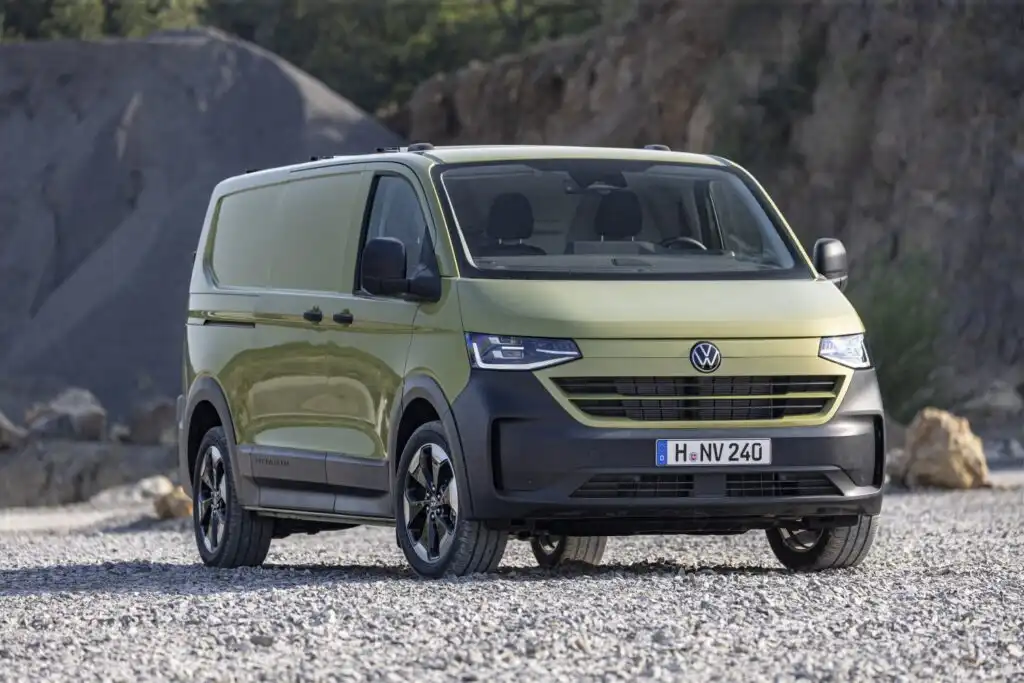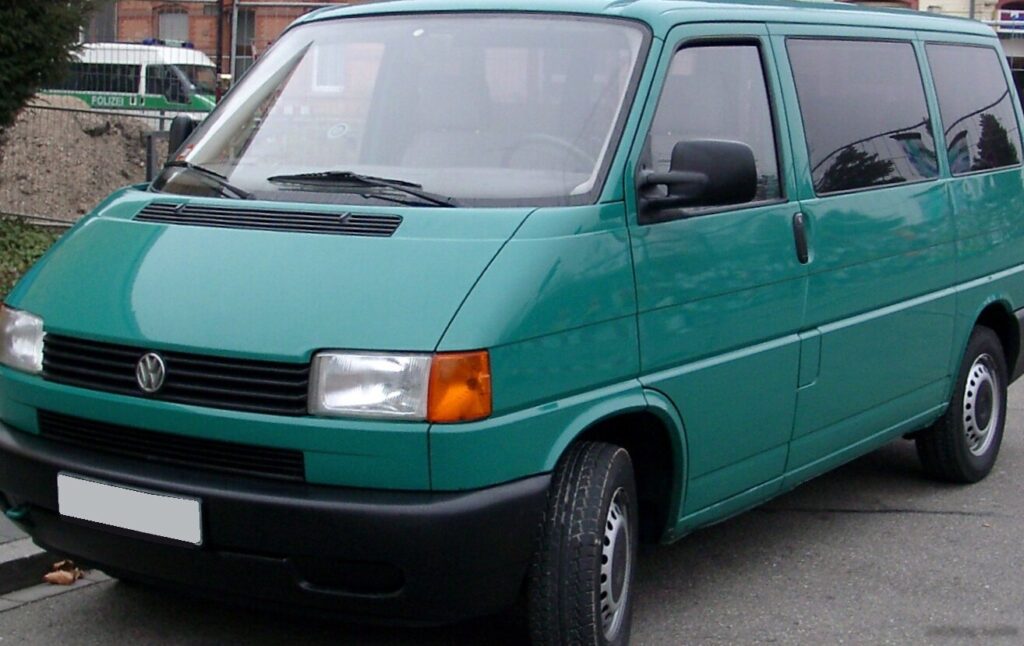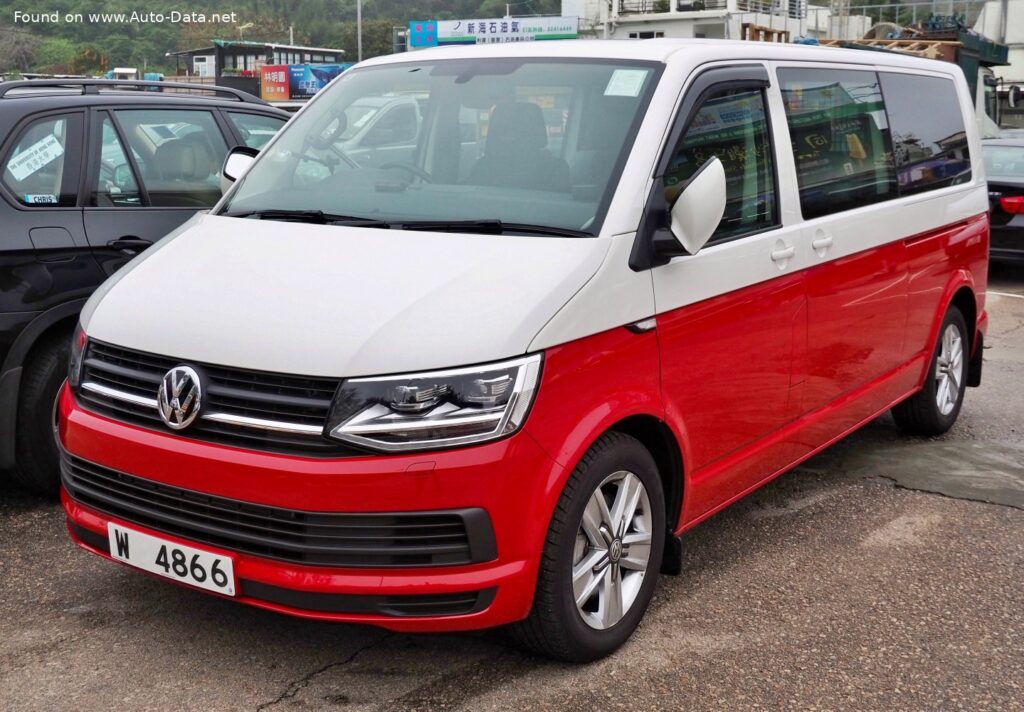
The Volkswagen Transporter (T6) Kombi: A Global Icon’s Sixth Generation
The Volkswagen Transporter, known affectionately as the “Bus” or “Microbus” in its earlier iterations, represents one of the longest-running and most iconic vehicle lines in automotive history. For decades, it has served as a versatile workhorse, a family hauler, and a symbol of freedom for adventurers worldwide. The T6 generation, produced from 2015 to 2019, continued this esteemed lineage, building upon the strengths of its predecessors while introducing modern refinements in technology, efficiency, and comfort. The specific variant under examination, the Volkswagen Transporter (T6) Kombi 2.0 TDI (150 Hp) 4MOTION DSG L1H2, exemplifies the sophisticated blend of utility and engineering that defines the Transporter’s appeal in its primary markets, particularly across Europe and Asia.
The “Kombi” designation in the Transporter lineup signifies its flexible nature, designed to accommodate both passengers and cargo with ease, making it an ideal choice for businesses, large families, or individuals requiring substantial space and versatility. This particular model, with its 2.0-liter TDI diesel engine, 150 horsepower output, 4MOTION all-wheel-drive system, and DSG automatic transmission, coupled with the L1H2 (short wheelbase, high roof) body configuration, offers a compelling package of performance, capability, and practicality. While not a common sight on American roads, the T6 Transporter family played a pivotal role in the global light commercial vehicle and multi-purpose vehicle segments during its production run.
Engine and Performance of the Volkswagen Transporter (T6) Kombi
Powertrain Excellence: 2.0 TDI, 4MOTION, and DSG
At the heart of this Volkswagen Transporter (T6) Kombi variant lies a robust and efficient 2.0-liter TDI (Turbocharged Direct Injection) diesel engine, part of Volkswagen’s highly regarded EA288 family (specifically engine codes CXFA/CXHA). This inline four-cylinder powerplant, mounted transversely at the front, delivers a respectable 150 horsepower at a range of 3250-3750 rpm. More critically for a vehicle of its utility, it generates a substantial 250.77 lb.-ft. of torque, available broadly from 1500 to 3000 rpm. This wide torque band ensures strong pulling power and effortless acceleration, even when the vehicle is fully loaded or towing. The DOHC (Double Overhead Camshaft) valvetrain and common rail fuel injection system contribute to its refined operation and fuel efficiency.
The engine’s performance is complemented by a sophisticated drivetrain. Power is routed through a 7-speed automatic DSG (Direct-Shift Gearbox) transmission, a hallmark of Volkswagen Group engineering. This dual-clutch transmission is renowned for its rapid, smooth gear changes, offering an optimal balance between performance and fuel economy. The inclusion of Volkswagen’s 4MOTION all-wheel-drive system further enhances the Transporter’s capabilities. This architecture intelligently drives the front wheels permanently, engaging the rear wheels via an electrically or mechanically operated clutch when additional traction is required, such as on slippery surfaces or uneven terrain. This system significantly improves stability and grip, making the Kombi a reliable choice for diverse driving conditions, including light off-road excursions.
In terms of raw performance, the Volkswagen Transporter (T6) Kombi 2.0 TDI (150 Hp) 4MOTION DSG L1H2 can accelerate from 0 to 60 mph in approximately 12 seconds, reaching a maximum speed of 106.88 mph. While not designed for outright speed, these figures underscore its capability to maintain pace with highway traffic and execute overtakes safely. Fuel economy, a crucial factor for commercial and family vehicles, is impressive for its class. The combined NEDC cycle estimates show an efficiency range of 28.3 to 37.9 US mpg, demonstrating Volkswagen’s commitment to economical operation. Furthermore, with CO2 emissions ranging from 161-216 g/km and adherence to the Euro 6 emission standard, the T6 Kombi was designed with modern environmental regulations in mind, featuring a Start & Stop system and a particulate filter to reduce its ecological footprint.
Design and Features
Versatility in Form: L1H2 Body and Practical Appointments
The Volkswagen Transporter (T6) Kombi is fundamentally a van, but its “Kombi” designation highlights its dual-purpose design. It can be configured with anywhere from 4 to 9 seats, offering immense flexibility for passenger transport or cargo hauling. This particular variant is specified as L1H2, denoting a short wheelbase (4904 mm or 193.07 inches in length) combined with a high roof (2177 mm or 85.71 inches in height). This configuration maximizes interior volume and headroom, making it comfortable for passengers and practical for carrying taller items, while the shorter wheelbase maintains maneuverability in urban environments. The vehicle typically features 4 to 5 doors, including sliding side doors for easy access to the rear cabin or cargo area.
Inside, the T6 Kombi emphasizes functionality and durability. While specific luxury features were optional, the standard setup prioritized a driver-centric cockpit with clear instrumentation and ergonomic controls. The seating arrangements are highly adaptable, with rear seats often removable or foldable to create a vast cargo area. The maximum trunk (boot) space is an impressive 236.61 cubic feet (6700 liters), showcasing its tremendous carrying capacity. Practical features include a 70-liter (18.49 US gallons) fuel tank for extended range and a 13-liter (3.43 US gallons) AdBlue tank to support its advanced emissions control system.
Safety and capability were key considerations for the T6. The vehicle is equipped with ventilated disc brakes at both the front and rear, coupled with an Anti-lock Braking System (ABS) for confident stopping power. The independent McPherson strut front suspension with a coil spring and anti-roll bar, combined with an independent coil spring rear suspension with wishbones and a transverse stabilizer, provides a comfortable ride and stable handling, even when heavily laden. Its robust construction allows for a maximum payload of up to 2041.48 lbs. and a substantial permitted trailer load with brakes of 5511.56 lbs., further cementing its utility credentials. The 4MOTION system, combined with a healthy 7.91 inches of ground clearance and respectable approach (21.2°), departure (16.2°), and ramp-over (13.7°) angles, also gives the Kombi a degree of capability on unpaved roads and challenging surfaces, complemented by a wading depth of 11.81 inches.
Technical Specifications
| Category | Specification |
|---|---|
| General Information | |
| Brand | Volkswagen |
| Model | Transporter |
| Generation | Transporter (T6) Kombi |
| Type (Engine) | 2.0 TDI (150 Hp) 4MOTION DSG L1H2 |
| Start of Production | 2015 year |
| End of Production | 2019 year |
| Powertrain Architecture | Internal Combustion engine |
| Body type | Van |
| Seats | 4-9 |
| Doors | 4-5 |
| Performance Specs | |
| Fuel consumption (economy) – urban (NEDC) | 34.1 – 24.5 US mpg (6.9-9.6 l/100 km) |
| Fuel consumption (economy) – extra urban (NEDC) | 40.6 – 30.5 US mpg (5.8-7.7 l/100 km) |
| Fuel consumption (economy) – combined (NEDC) | 37.9 – 28.3 US mpg (6.2-8.3 l/100 km) |
| CO2 emissions (NEDC) | 161-216 g/km |
| Fuel Type | Diesel |
| Acceleration 0 – 60 mph | 12 sec |
| Acceleration 0 – 100 km/h | 12.6 sec |
| Maximum speed | 106.88 mph (172 km/h) |
| Emission standard | Euro 6 |
| Weight-to-power ratio | 12.8 kg/Hp, 77.9 Hp/tonne |
| Weight-to-torque ratio | 5.7 kg/Nm, 176.5 Nm/tonne |
| Engine Specs | |
| Power | 150 Hp @ 3250-3750 rpm |
| Power per liter | 76.2 Hp/l |
| Torque | 250.77 lb.-ft. @ 1500-3000 rpm (340 Nm) |
| Engine layout | Front, Transverse |
| Engine Model/Code | EA288 / CXFA, CXHA |
| Engine displacement | 120.09 cu. in. (1968 cm3) |
| Number of cylinders | 4 |
| Engine configuration | Inline |
| Cylinder Bore | 3.19 in. (81 mm) |
| Piston Stroke | 3.76 in. (95.5 mm) |
| Compression ratio | 15.5:1 |
| Number of valves per cylinder | 4 |
| Fuel injection system | Diesel Commonrail |
| Engine aspiration | Turbocharger, Intercooler |
| Valvetrain | DOHC |
| Engine oil capacity | 7.82 US qt (7.4 l) |
| Engine systems | Start & Stop System, Particulate filter |
| Space, Volume and Weights | |
| Kerb Weight | 4246.1 – 5013.31 lbs. (1926-2274 kg) |
| Max. weight | 6172.94 – 7054.79 lbs. (2800-3200 kg) |
| Max load | 1926.84 – 2041.48 lbs. (874-926 kg) |
| Trunk (boot) space – maximum | 236.61 cu. ft. (6700 l) |
| Fuel tank capacity | 18.49 US gal (70 l) |
| AdBlue tank | 3.43 US gal (13 l) |
| Max. roof load | 220.46 lbs. (100 kg) |
| Permitted trailer load with brakes (12%) | 5511.56 lbs. (2500 kg) |
| Permitted trailer load without brakes | 1653.47 lbs. (750 kg) |
| Permitted towbar download | 220.46 lbs. (100 kg) |
| Dimensions | |
| Length | 193.07 in. (4904 mm) |
| Width | 74.96 in. (1904 mm) |
| Width including mirrors | 90.43 in. (2297 mm) |
| Height | 85.71 in. (2177 mm) |
| Wheelbase | 118.11 in. (3000 mm) |
| Front overhang | 35.75 in. (908 mm) |
| Rear overhang | 39.09 in. (993 mm) |
| Ride height (ground clearance) | 7.91 in. (201 mm) |
| Minimum turning circle (turning diameter) | 39.04 ft. (11.9 m) |
| Approach angle | 21.2° |
| Departure angle | 16.2° |
| Ramp-over (brakeover) angle | 13.7° |
| Climb angle | 37° |
| Wading depth | 11.81 in. (300 mm) |
| Drivetrain, Brakes and Suspension Specs | |
| Drivetrain Architecture | The Internal combustion engine (ICE) drives the front wheels permanently, and the rear wheels are driven through an electrically or mechanically operated clutch if necessary. |
| Drive wheel | All wheel drive (4×4) |
| Number of gears and type of gearbox | 7 gears, automatic transmission DSG |
| Front suspension | Independent, type McPherson with coil spring and anti-roll bar |
| Rear suspension | Independent coil spring, Wishbone, Transverse stabilizer |
| Front brakes | Ventilated discs, 308×29.5 mm |
| Rear brakes | Ventilated discs, 294×22 mm |
| Assisting systems | ABS (Anti-lock braking system) |
| Steering type | Steering rack and pinion |
| Power steering | Hydraulic Steering |
| Tires size | 205/65 R16; 215/65 R16 |
| Wheel rims size | 6.5J x 16 |
Legacy and Market Impact
The Volkswagen Transporter series holds an almost mythical status in automotive culture, a heritage that the T6 generation proudly upheld. While its iconic predecessors like the T1 and T2 “Bus” captured the hearts of a generation, the T6 evolved the concept for the modern era, focusing on safety, efficiency, and technological integration without sacrificing its core values of utility and reliability. In markets where it was sold, primarily Europe, Australia, and parts of Asia, the T6 Transporter was a dominant force in the light commercial vehicle (LCV) and multi-purpose vehicle (MPV) segments.
Its reputation as a durable, versatile, and comfortable vehicle made it a popular choice for a wide array of users. Commercial fleets appreciated its low running costs, robust build quality, and vast cargo capacity. Families and adventurers, particularly in its more passenger-oriented Caravelle or California camper variants, valued its spacious interior, comfortable ride, and the prestige associated with the Transporter badge. The 4MOTION all-wheel-drive system, as seen in this Kombi variant, further extended its appeal to those living in rural areas or requiring enhanced traction for various work or leisure activities, distinguishing it from many front-wheel-drive-only competitors.
The T6 Transporter faced stiff competition from other European manufacturers, including the Mercedes-Benz Vito and V-Class, Ford Transit Custom, Renault Trafic, and Opel/Vauxhall Vivaro. However, Volkswagen’s strong brand loyalty, extensive dealer network, and the Transporter’s proven track record often gave it an edge. Its blend of car-like driving dynamics, especially with the DSG transmission, and van-like practicality made it a compelling proposition against rivals that sometimes leaned too heavily towards one extreme.
In the United States, the Transporter (T6) was not officially sold, continuing a trend since the T4 generation (EuroVan). Volkswagen instead focused on other segments in the North American market, with the large Atlas SUV and the smaller Tiguan serving as their primary family haulers, and the limited presence of commercial vehicles like the Crafter being a rebadged Mercedes-Benz Sprinter. This absence meant that American consumers missed out on a highly capable and refined van that served as a cornerstone of transportation in many other parts of the world. Despite its non-presence in the U.S., the Volkswagen Transporter (T6) Kombi 2.0 TDI (150 Hp) 4MOTION DSG L1H2 remains a significant model, representing the continued evolution of an automotive legend and a testament to Volkswagen’s engineering prowess in creating highly adaptable and efficient vehicles for a global audience.