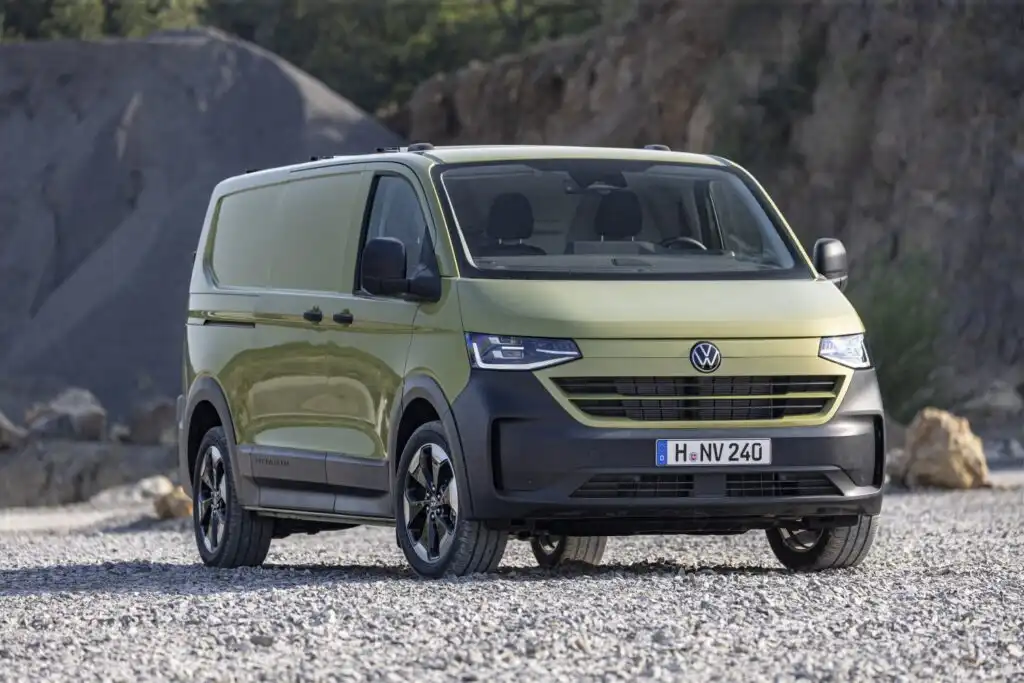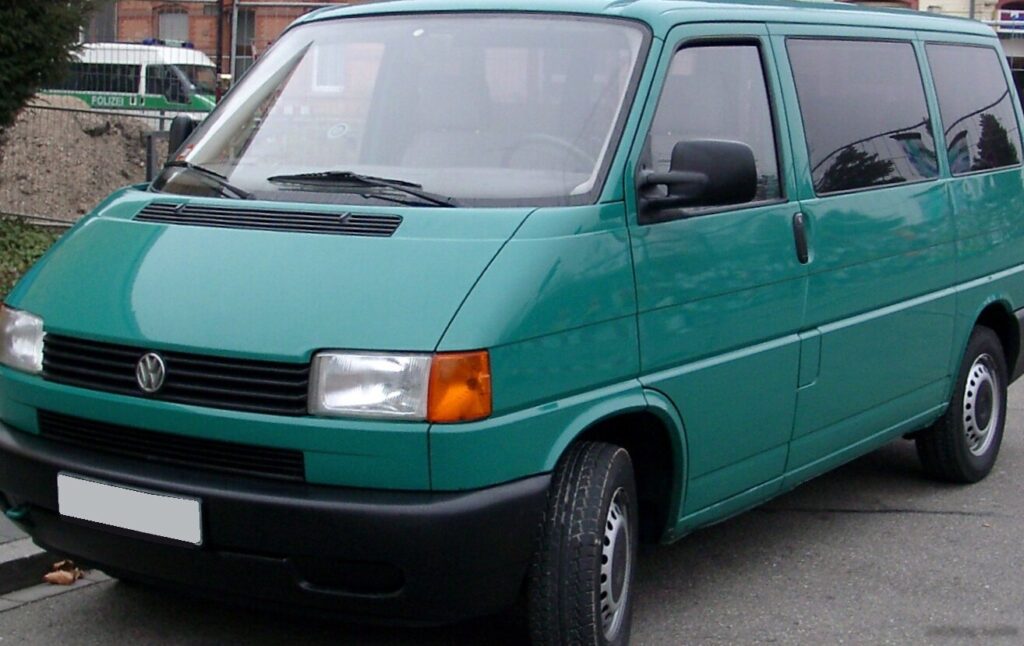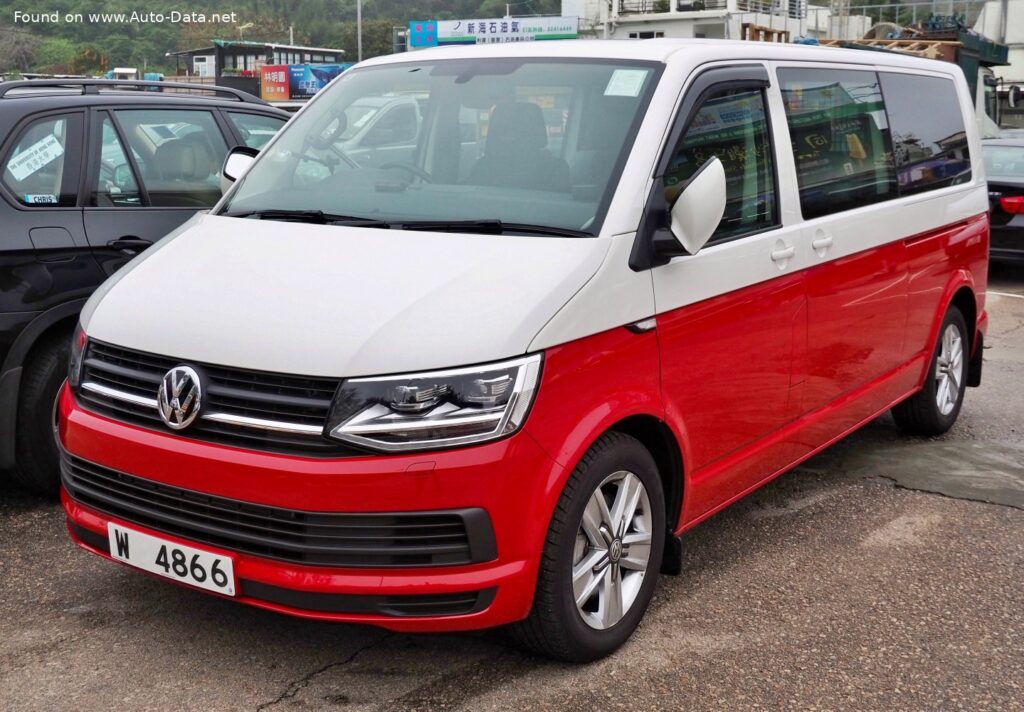
The Volkswagen Transporter (T6) Kombi represents the sixth generation of Volkswagen’s highly successful and iconic Transporter van series, a lineage tracing its roots back to the legendary Type 2 “Bus.” Produced from 2015 to 2019, the T6 Kombi variant, specifically the 2.0 TDI (150 Hp) L2H1 model, carved out a significant niche in the European and international commercial and private vehicle markets. While not officially sold in the United States, the Transporter series is a cornerstone of Volkswagen’s global light commercial vehicle strategy, revered for its robust engineering, versatile design, and enduring reliability. The T6 generation continued this tradition, offering a blend of modern technology, improved efficiency, and enhanced comfort over its predecessors, making it a popular choice for businesses, large families, and a common platform for campervan conversions across Europe and beyond.
The Volkswagen Transporter (T6) Kombi: A European Workhorse
The Volkswagen Transporter (T6) Kombi builds upon decades of heritage, evolving from a simple utility vehicle into a sophisticated, multi-purpose van. The “Kombi” designation in the Transporter lineup typically refers to a versatile configuration that can accommodate both passengers and cargo, often featuring removable or foldable seating to adapt to various transport needs. The L2H1 designation further specifies its physical attributes: L2 denotes a long wheelbase, providing increased interior volume and stability, while H1 signifies a standard roof height, offering a good balance between interior space and accessibility for urban environments or multi-story parking. This specific model, with its 2.0-liter TDI engine producing 150 horsepower, was a popular mid-range option, balancing power, fuel economy, and operational costs.
Evolution of the Transporter Series
The Transporter’s journey began in 1950 with the Type 2, affectionately known as the “Bus” or “Microbus” in the US, establishing a legacy of functionality and adaptability. Each subsequent generation, from the T1 through to the T5, brought incremental improvements in design, safety, and powertrain technology. The T6, launched in 2015, represented a significant update rather than a complete overhaul of the T5 platform, sharing much of its underlying architecture but introducing substantial refinements. Key changes included updated exterior styling, a redesigned interior with improved ergonomics and infotainment systems, and a new range of Euro 6 compliant engines, enhancing both power and efficiency. The T6 thus continued Volkswagen’s commitment to producing a robust, reliable, and highly adaptable vehicle for a wide array of commercial and passenger transport applications, solidifying its position as a benchmark in the light commercial vehicle segment in its primary markets.
Engine & Performance
At the heart of the Volkswagen Transporter (T6) Kombi 2.0 TDI (150 Hp) L2H1 lies a highly efficient and robust diesel powertrain. This particular variant is equipped with Volkswagen’s widely acclaimed 2.0-liter (1968 cm3 or 120.09 cu. in.) TDI (Turbocharged Direct Injection) inline four-cylinder engine, part of the EA288 engine family (specifically models CXFA or CXHA). This engine is renowned for its blend of power delivery, fuel efficiency, and low emissions, making it an ideal choice for a vehicle intended for both frequent commercial use and long-distance travel.
The 2.0 TDI Powertrain
The 2.0 TDI engine in this configuration produces a respectable 150 horsepower, peaking between 3250 and 3750 rpm. More importantly for a utility vehicle, it delivers a substantial 250.77 lb.-ft. (340 Nm) of torque, available across a broad rev range from 1500 to 3000 rpm. This low-end torque is crucial for effortless acceleration, carrying heavy loads, and maintaining speed on inclines, providing a confident driving experience even when fully laden. Power is transmitted to the front wheels via a smooth-shifting 6-speed manual transmission, a common and reliable setup for commercial vehicles that prioritizes driver engagement and control over gear selection.
Performance figures for the T6 Kombi 2.0 TDI (150 Hp) L2H1 are commendable for its class. It can accelerate from 0 to 60 mph in an estimated 11.3 seconds, with a maximum speed of 113.09 mph (182 km/h). These figures underscore its capability to keep up with highway traffic and perform confidently in various driving conditions. Fuel efficiency is a strong suit, with combined (NEDC) consumption ranging from 31.4 to 39.2 US mpg (6-7.5 l/100 km). Urban consumption is rated between 26.4 and 32.7 US mpg, while extra-urban driving can achieve 35.1 to 44.4 US mpg. This efficiency is partly attributed to modern engine technologies, including a Commonrail fuel injection system, a turbocharger with an intercooler, and a DOHC valvetrain. Furthermore, the engine incorporates a Start & Stop System and a Particulate Filter, contributing to its Euro 6 emission standard compliance and reduced environmental footprint, with CO2 emissions between 157-195 g/km.
Design & Features
The Volkswagen Transporter (T6) Kombi 2.0 TDI (150 Hp) L2H1 embodies a design philosophy that prioritizes functionality, durability, and ergonomic efficiency. As a van body type, its primary purpose is versatile transport, whether for goods, passengers, or a combination of both. The T6 generation refined the exterior aesthetics with sharper lines, updated lighting signatures, and a more modern grille, giving it a contemporary yet timeless appeal that is instantly recognizable as a Volkswagen.
Functional Aesthetics and Versatility
Measuring 208.82 inches (5304 mm) in length, 74.96 inches (1904 mm) in width (90.43 inches or 2297 mm including mirrors), and 78.35 inches (1990 mm) in height, the L2H1 variant offers a substantial footprint while maintaining a manageable size for diverse operational environments. Its generous 133.86-inch (3400 mm) wheelbase contributes to a stable ride and expansive interior volume. The Kombi’s seating configuration can range from 4 to 9 seats, making it incredibly flexible for either passenger shuttle duties or crew transport, with the option to remove or fold seats to maximize cargo space. With 4 to 5 doors, including often a large rear liftgate or barn doors and sliding side doors, access to both the passenger and cargo areas is highly practical.
Cargo capacity is a significant strong point, with a maximum trunk (boot) space of 6700 liters (236.61 cu. ft.), enabling it to swallow large items or extensive equipment. The maximum load capacity ranges from 2052.5 to 2083.37 lbs. (931-945 kg), underscoring its capabilities as a true workhorse. A fuel tank capacity of 18.49 US gallons (70 liters) ensures a decent range between fill-ups, while a 3.43 US gallon (13 liters) AdBlue tank supports its advanced emission control system. The T6 Kombi is also capable of towing, with a permitted trailer load with brakes (12%) of 5511.56 lbs. (2500 kg) and a towbar download of 220.46 lbs. (100 kg), further enhancing its utility.
Underneath, the T6 features an independent front suspension with McPherson struts, coil springs, and an anti-roll bar, paired with an independent coil spring rear suspension with wishbones and a transverse stabilizer. This setup provides a comfortable ride quality and stable handling, crucial for a vehicle that might carry varying loads. Braking is handled by ventilated discs both front (308×29.5 mm) and rear (294×22 mm), complemented by an Anti-lock Braking System (ABS) for enhanced safety. Hydraulic power steering, utilizing a steering rack and pinion, ensures responsive and manageable steering, even in tight urban spaces, despite a minimum turning circle of 43.31 feet (13.2 meters). The vehicle comes with tire sizes 205/65 R16 or 215/65 R16 on 6.5J x 16 wheel rims, balancing load capacity with ride comfort. Its ground clearance of 7.95 inches (202 mm), along with approach, departure, and ramp-over angles of 21.2°, 16.2°, and 12.2° respectively, indicate a degree of capability for navigating varied terrains, though it remains primarily a road-going vehicle.
Technical Specifications
| Category | Specification |
|---|---|
| Brand | Volkswagen |
| Model | Transporter |
| Generation | Transporter (T6) Kombi |
| Type (Engine) | 2.0 TDI (150 Hp) L2H1 |
| Start of production | 2015 year |
| End of production | 2019 year |
| Powertrain Architecture | Internal Combustion engine |
| Body type | Van |
| Seats | 4-9 |
| Doors | 4-5 |
| Fuel consumption (economy) – urban (NEDC) | 7.2-8.9 l/100 km (32.7 – 26.4 US mpg) |
| Fuel consumption (economy) – extra urban (NEDC) | 5.3-6.7 l/100 km (44.4 – 35.1 US mpg) |
| Fuel consumption (economy) – combined (NEDC) | 6-7.5 l/100 km (39.2 – 31.4 US mpg) |
| CO2 emissions (NEDC) | 157-195 g/km |
| Fuel Type | Diesel |
| Acceleration 0 – 100 km/h | 11.9 sec |
| Acceleration 0 – 62 mph | 11.9 sec |
| Acceleration 0 – 60 mph (Calculated) | 11.3 sec |
| Maximum speed | 182 km/h (113.09 mph) |
| Emission standard | Euro 6 |
| Weight-to-power ratio | 12.4 kg/Hp, 80.9 Hp/tonne |
| Weight-to-torque ratio | 5.5 kg/Nm, 183.3 Nm/tonne |
| Power | 150 Hp @ 3250-3750 rpm |
| Power per liter | 76.2 Hp/l |
| Torque | 340 Nm @ 1500-3000 rpm (250.77 lb.-ft.) |
| Engine layout | Front, Transverse |
| Engine Model/Code | EA288 / CXFA, CXHA |
| Engine displacement | 1968 cm3 (120.09 cu. in.) |
| Number of cylinders | 4 |
| Engine configuration | Inline |
| Cylinder Bore | 81 mm (3.19 in.) |
| Piston Stroke | 95.5 mm (3.76 in.) |
| Compression ratio | 15.5:1 |
| Number of valves per cylinder | 4 |
| Fuel injection system | Diesel Commonrail |
| Engine aspiration | Turbocharger, Intercooler |
| Valvetrain | DOHC |
| Engine oil capacity | 7.4 l (7.82 US qt) |
| Engine systems | Start & Stop System, Particulate filter |
| Kerb Weight | 1855-2269 kg (4089.57 – 5002.29 lbs.) |
| Max. weight | 2800-3200 kg (6172.94 – 7054.79 lbs.) |
| Max load | 931-945 kg (2052.5 – 2083.37 lbs.) |
| Trunk (boot) space – maximum | 6700 l (236.61 cu. ft.) |
| Fuel tank capacity | 70 l (18.49 US gal) |
| AdBlue tank | 13 l (3.43 US gal) |
| Max. roof load | 100 kg (220.46 lbs.) |
| Permitted trailer load with brakes (12%) | 2500 kg (5511.56 lbs.) |
| Permitted trailer load without brakes | 750 kg (1653.47 lbs.) |
| Permitted towbar download | 100 kg (220.46 lbs.) |
| Length | 5304 mm (208.82 in.) |
| Width | 1904 mm (74.96 in.) |
| Width including mirrors | 2297 mm (90.43 in.) |
| Height | 1990 mm (78.35 in.) |
| Wheelbase | 3400 mm (133.86 in.) |
| Front overhang | 908 mm (35.75 in.) |
| Rear overhang | 993 mm (39.09 in.) |
| Ride height (ground clearance) | 202 mm (7.95 in.) |
| Minimum turning circle (turning diameter) | 13.2 m (43.31 ft.) |
| Approach angle | 21.2° |
| Departure angle | 16.2° |
| Ramp-over (brakeover) angle | 12.2° |
| Drivetrain Architecture | The Internal combustion engine (ICE) drives the front wheels of the vehicle. |
| Drive wheel | Front wheel drive |
| Number of gears and type of gearbox | 6 gears, manual transmission |
| Front suspension | Independent, type McPherson with coil spring and anti-roll bar |
| Rear suspension | Independent coil spring, Wishbone, Transverse stabilizer |
| Front brakes | Ventilated discs, 308×29.5 mm |
| Rear brakes | Ventilated discs, 294×22 mm |
| Assisting systems | ABS (Anti-lock braking system) |
| Steering type | Steering rack and pinion |
| Power steering | Hydraulic Steering |
| Tires size | 205/65 R16; 215/65 R16 |
| Wheel rims size | 6.5J x 16 |
Legacy & Market Impact
The Volkswagen Transporter (T6) Kombi 2.0 TDI (150 Hp) L2H1, like its predecessors, solidified its position as a cornerstone of the light commercial vehicle segment in Europe and several other global markets. Its production run from 2015 to 2019 saw it continue to be a top seller, revered for its blend of practicality, robust construction, and Volkswagen’s reputation for engineering quality. While it never officially graced the showrooms of the United States, its influence and heritage are undeniable, representing a vehicle type that is essential for many businesses and families internationally.
A Staple in the Commercial Vehicle Segment
The T6 Kombi’s market impact stems from its exceptional versatility. For businesses, it serves as a reliable and efficient panel van for logistics, a comfortable crew van for transporting workers, or a specialized platform for various trades, from electricians to plumbers. Its ample cargo space, strong towing capabilities, and efficient diesel engine made it an economically sensible choice for fleet operators. For private buyers, especially in Europe, the Kombi’s ability to switch between passenger and cargo duties, combined with its renowned build quality and driving dynamics, made it a popular family vehicle, particularly for those with active lifestyles or a need for significant carrying capacity. Furthermore, the Transporter series, including the T6, is perhaps most famous for being the base vehicle for countless campervan conversions, offering a compact yet capable platform for adventurers and travelers.
In its competitive landscape, the T6 Transporter faced strong rivals such as the Mercedes-Benz Vito, Ford Transit Custom, Renault Trafic, and Opel Vivaro. Despite this formidable competition, the Transporter maintained its leading position due to its strong brand loyalty, proven reliability, and a comprehensive range of configurations and powertrains. Its enduring appeal lies in its ability to adapt to nearly any requirement, from a basic work van to a semi-luxury passenger shuttle, all while maintaining excellent residual values.
The legacy of the Volkswagen Transporter (T6) Kombi is one of continued evolution and unwavering commitment to utility. It represents the modern iteration of a vehicle concept that has been serving the world for over seven decades, carrying forward the spirit of the original “Bus