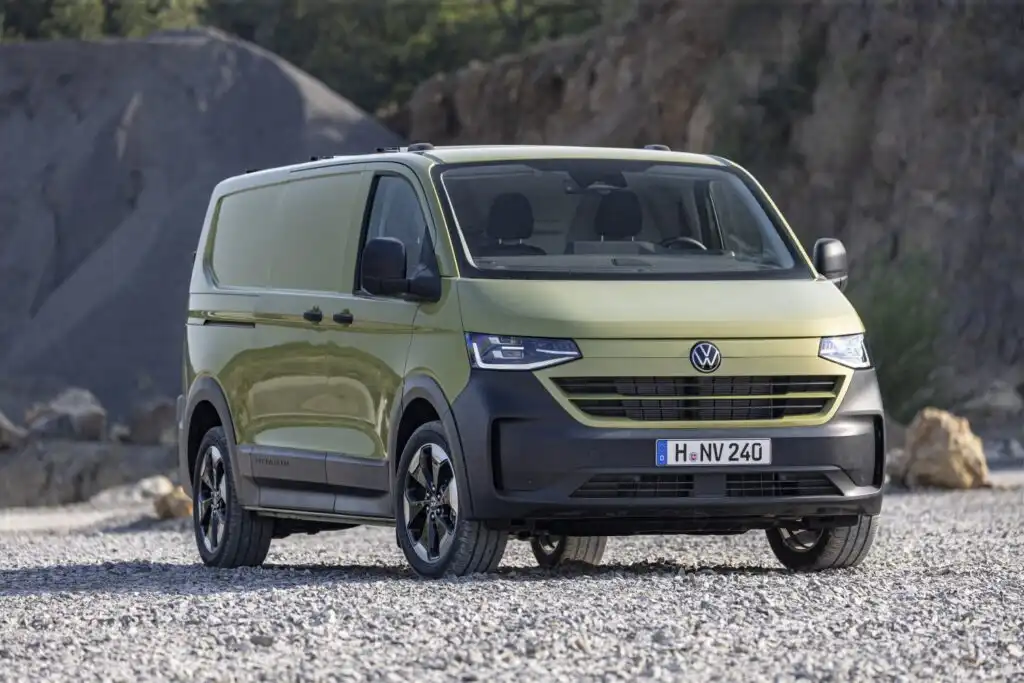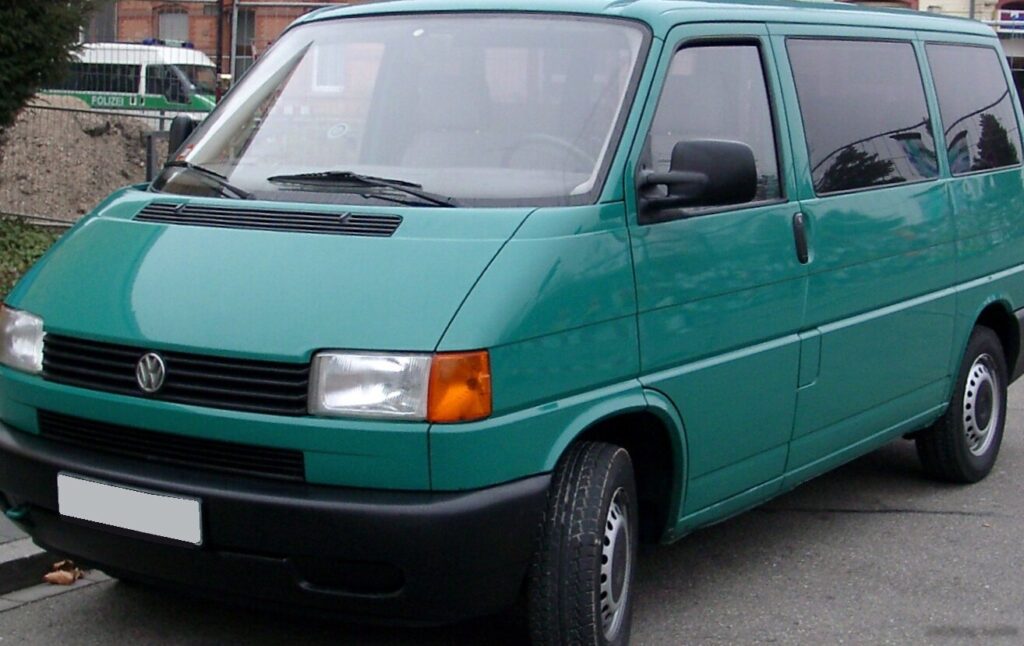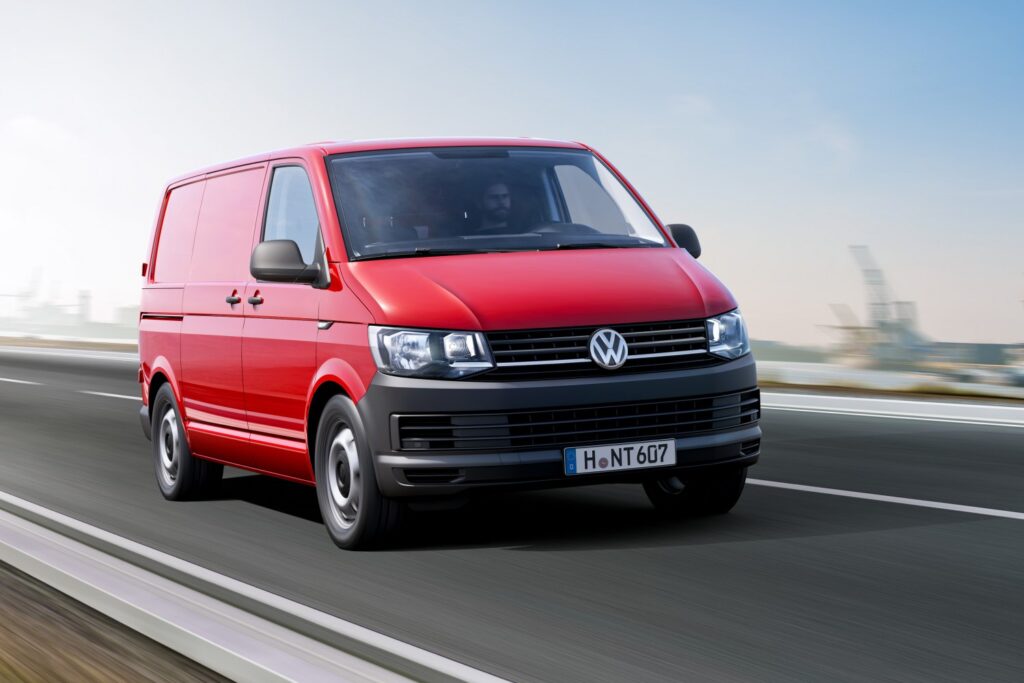
The Volkswagen Transporter (T6) Panel Van 2.0 TDI (180 Hp) DSG L2H3 represents a significant iteration of Volkswagen’s enduring light commercial vehicle line, specifically the sixth generation, produced from 2015 to 2016. This particular configuration, denoted by its 2.0-liter TDI engine producing 180 horsepower, paired with a Direct-Shift Gearbox (DSG) automatic transmission, and featuring a Long Wheelbase (L2) and High Roof (H3), solidifies its reputation as a versatile and robust workhorse in its primary European market. While not as commonly sold in the United States as a new vehicle, the Transporter series, affectionately known as the “Bus” or “Microbus” in earlier generations, holds a legendary status globally, influencing commercial and passenger vehicle design for decades. The T6 Panel Van variant focuses squarely on utility, offering substantial cargo capacity and efficient performance tailored for businesses and demanding professional applications.
Powertrain and Performance of the Transporter (T6) Panel Van
Engine Dynamics
At the heart of the Volkswagen Transporter (T6) Panel Van 2.0 TDI (180 Hp) DSG L2H3 lies a meticulously engineered 2.0-liter turbocharged direct injection (TDI) diesel engine, designated with the internal code EA189 / CFCA. This inline four-cylinder unit, with a displacement of 1968 cubic centimeters (120.09 cubic inches), is transversely mounted at the front. It is equipped with a sophisticated BiTurbo aspiration system and an intercooler, which work in concert to deliver a compelling blend of power and efficiency. The engine’s architecture features a DOHC (Dual Overhead Camshaft) valvetrain with four valves per cylinder, optimizing airflow and combustion. With a compression ratio of 16.5:1, typical for a modern diesel, and a precise Commonrail fuel injection system, the engine generates a robust 180 horsepower at 4000 revolutions per minute. Crucially for a commercial vehicle, torque output is substantial, peaking at 400 Newton meters (295.02 lb.-ft.) available across a broad and usable rev range from 1500 to 2500 rpm, ensuring excellent pulling power even when fully loaded. This powerplant also incorporates contemporary engine systems such as a Start & Stop system to enhance fuel economy in urban environments and a Particulate filter to reduce emissions, meeting the stringent Euro 5 emission standard.
Transmission and Driving Dynamics
Power is efficiently transferred to the front wheels via a 7-speed DSG automatic transmission, a hallmark of Volkswagen’s advanced powertrain technology. This dual-clutch gearbox provides rapid and seamless gear changes, contributing to both driving comfort and fuel efficiency, a critical factor for commercial operators. The front-wheel-drive architecture ensures predictable handling and maximizes interior space by eliminating a central driveshaft tunnel. Performance figures underscore the van’s capability, with an acceleration from 0 to 60 mph achieved in a swift 9.9 seconds, and a maximum speed of 109.36 mph (176 km/h). Despite its size and utility focus, the T6 Panel Van delivers impressive fuel economy for its class. The combined NEDC cycle rating ranges from 7.3-7.9 liters per 100 kilometers, translating to an estimated 32.2 to 29.8 US miles per gallon. Urban consumption is rated at 27.7-26.7 US mpg, while extra-urban driving can yield up to 35.6-32.2 US mpg. These figures, coupled with CO2 emissions of 192-208 g/km, highlight Volkswagen’s commitment to balancing robust performance with environmental responsibility. The vehicle’s weight-to-power ratio stands at 10.2 kg/Hp (98.5 Hp/tonne) and a weight-to-torque ratio of 4.6 kg/Nm (218.8 Nm/tonne), indicative of its strong hauling potential relative to its mass.
Design, Utility, and Features
Exterior and Dimensions
The Volkswagen Transporter (T6) Panel Van is purpose-built for commercial utility, evident in its functional and aerodynamic design. The L2H3 designation indicates a long wheelbase and a high roof configuration, maximizing its load-carrying capabilities. Its overall length measures 5304 mm (208.82 inches), while its width, excluding mirrors, is 1904 mm (74.96 inches), expanding to 2297 mm (90.43 inches) with mirrors. The impressive height of 2477 mm (97.52 inches) is a direct result of the H3 high-roof specification, allowing for stand-up access within the cargo area for many individuals. The generous wheelbase of 3400 mm (133.86 inches) contributes to stable road manners, even with heavy loads. Practical considerations for commercial use are further reflected in its ground clearance of 202 mm (7.95 inches) and respectable approach (21.2°), departure (16.2°), and ramp-over (12.2°) angles, enabling it to navigate varied terrain and loading docks. Its minimum turning circle of 13.2 meters (43.31 feet) demonstrates a surprising degree of maneuverability for a vehicle of its size.
Interior and Cargo Capacity
As a panel van, the interior is primarily optimized for cargo, offering seating for 2-3 occupants in the front cabin. The true highlight of the L2H3 variant is its cavernous cargo volume, reaching a maximum of 9300 liters (328.43 cubic feet), making it exceptionally well-suited for transporting large quantities of goods or specialized equipment. The robust construction allows for a substantial maximum load capacity ranging from 972 to 1055 kilograms (2142.89 to 2325.88 lbs), with a gross vehicle weight (GVW) spanning 2800-3200 kg (6172.94-7054.79 lbs). The curb weight itself ranges from 1828-2145 kg (4030.05-4728.92 lbs), reflecting its solid build. Furthermore, the Transporter T6 is a capable hauler, with a permitted trailer load of 2500 kg (5511.56 lbs) with brakes and 750 kg (1653.47 lbs) without brakes, complemented by a permitted towbar download of 100 kg (220.46 lbs). A substantial 80-liter (21.13 US gallons) fuel tank ensures extended operational range between refills, minimizing downtime for commercial users. Additionally, a maximum roof load of 100 kg (220.46 lbs) adds to its overall versatility.
Chassis and Safety
The T6 Panel Van features a sophisticated chassis designed to handle heavy loads while providing a comfortable and stable ride. The front suspension employs an independent McPherson strut design with coil springs and an anti-roll bar, ensuring precise steering and effective damping. At the rear, an independent coil spring setup with wishbones and a transverse stabilizer provides excellent load support and road holding. Braking performance is handled by ventilated discs on both the front (308×29.5 mm) and rear (294×22 mm) axles, offering strong, fade-resistant stopping power, essential for a commercial vehicle. An Anti-lock Braking System (ABS) is standard, enhancing safety by preventing wheel lock-up during emergency braking maneuvers. The steering system is a hydraulic rack and pinion type, providing reliable and communicative feedback to the driver. The vehicle is fitted with tire sizes 215/65 R16 or 235/55 R17, mounted on 6.5J x 16 or 7J x 17 wheel rims, respectively, chosen to balance load capacity, durability, and ride comfort. These combined attributes underscore the T6 Transporter’s commitment to safety, reliability, and practical functionality in its demanding operational environment.
Technical Specifications
| Brand | Volkswagen |
| Model | Transporter |
| Generation | Transporter (T6) Panel Van |
| Type (Engine) | 2.0 TDI (180 Hp) DSG L2H3 |
| Start of production | 2015 year |
| End of production | 2016 year |
| Powertrain Architecture | Internal Combustion engine |
| Body type | Van |
| Seats | 2-3 |
| Doors | 4-5 |
| Fuel consumption (economy) – urban (NEDC) | 8.5-8.8 l/100 km (27.7 – 26.7 US mpg) |
| Fuel consumption (economy) – extra urban (NEDC) | 6.6-7.3 l/100 km (35.6 – 32.2 US mpg) |
| Fuel consumption (economy) – combined (NEDC) | 7.3-7.9 l/100 km (32.2 – 29.8 US mpg) |
| CO2 emissions (NEDC) | 192-208 g/km |
| Fuel Type | Diesel |
| Acceleration 0 – 100 km/h | 10.4 sec |
| Acceleration 0 – 62 mph | 10.4 sec |
| Acceleration 0 – 60 mph (Calculated) | 9.9 sec |
| Maximum speed | 176 km/h (109.36 mph) |
| Emission standard | Euro 5 |
| Weight-to-power ratio | 10.2 kg/Hp (98.5 Hp/tonne) |
| Weight-to-torque ratio | 4.6 kg/Nm (218.8 Nm/tonne) |
| Power | 180 Hp @ 4000 rpm |
| Power per litre | 91.5 Hp/l |
| Torque | 400 Nm @ 1500-2500 rpm (295.02 lb.-ft.) |
| Engine layout | Front, Transverse |
| Engine Model/Code | EA189 / CFCA |
| Engine displacement | 1968 cm³ (120.09 cu. in.) |
| Number of cylinders | 4 |
| Engine configuration | Inline |
| Cylinder Bore | 81 mm (3.19 in.) |
| Piston Stroke | 95.5 mm (3.76 in.) |
| Compression ratio | 16.5:1 |
| Number of valves per cylinder | 4 |
| Fuel injection system | Diesel Commonrail |
| Engine aspiration | BiTurbo, Intercooler |
| Valvetrain | DOHC |
| Engine oil capacity | 7 l (7.4 US qt) |
| Engine oil specification | Not specified |
| Engine systems | Start & Stop System, Particulate filter |
| Kerb Weight | 1828-2145 kg (4030.05 – 4728.92 lbs) |
| Max. weight | 2800-3200 kg (6172.94 – 7054.79 lbs) |
| Max load | 972-1055 kg (2142.89 – 2325.88 lbs) |
| Trunk (boot) space – maximum | 9300 l (328.43 cu. ft.) |
| Fuel tank capacity | 80 l (21.13 US gal) |
| Max. roof load | 100 kg (220.46 lbs) |
| Permitted trailer load with brakes (12%) | 2500 kg (5511.56 lbs) |
| Permitted trailer load without brakes | 750 kg (1653.47 lbs) |
| Permitted towbar download | 100 kg (220.46 lbs) |
| Length | 5304 mm (208.82 in.) |
| Width | 1904 mm (74.96 in.) |
| Width including mirrors | 2297 mm (90.43 in.) |
| Height | 2477 mm (97.52 in.) |
| Wheelbase | 3400 mm (133.86 in.) |
| Front overhang | 908 mm (35.75 in.) |
| Rear overhang | 993 mm (39.09 in.) |
| Ride height (ground clearance) | 202 mm (7.95 in.) |
| Minimum turning circle (turning diameter) | 13.2 m (43.31 ft.) |
| Approach angle | 21.2° |
| Departure angle | 16.2° |
| Ramp-over (brakeover) angle | 12.2° |
| Drivetrain Architecture | Front wheel drive |
| Drive wheel | Front wheel drive |
| Number of gears and type of gearbox | 7 gears, automatic transmission DSG |
| Front suspension | Independent, type McPherson with coil spring and anti-roll bar |
| Rear suspension | Independent coil spring, Wishbone, Transverse stabilizer |
| Front brakes | Ventilated discs, 308×29.5 mm |
| Rear brakes | Ventilated discs, 294×22 mm |
| Assisting systems | ABS (Anti-lock braking system) |
| Steering type | Steering rack and pinion |
| Power steering | Hydraulic Steering |
| Tires size | 215/65 R16; 235/55 R17 |
| Wheel rims size | 6.5J x 16; 7J x 17 |