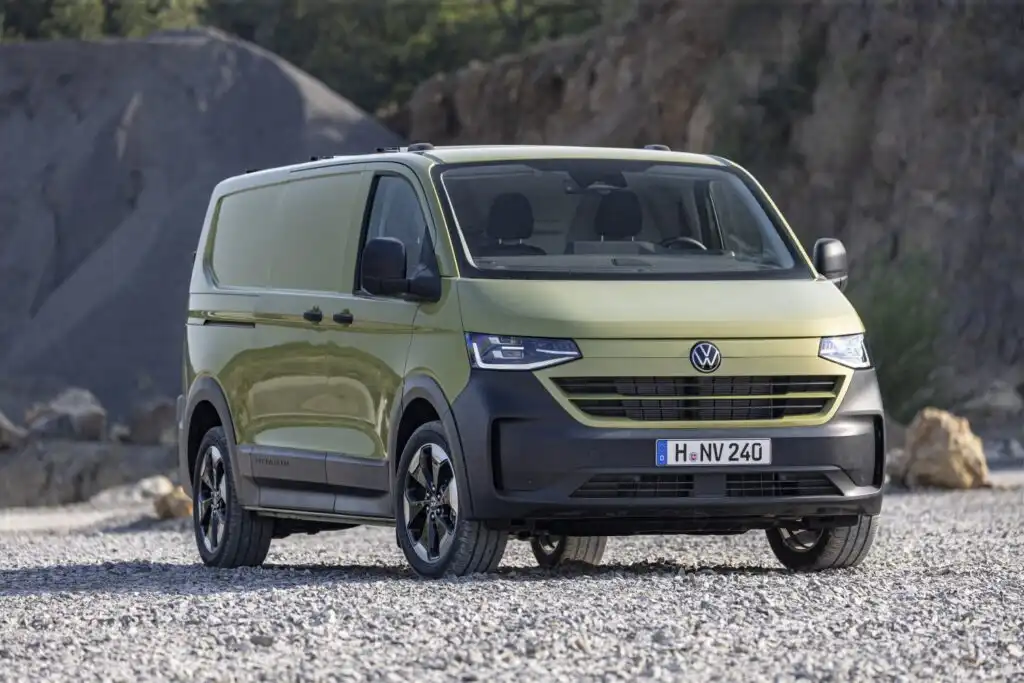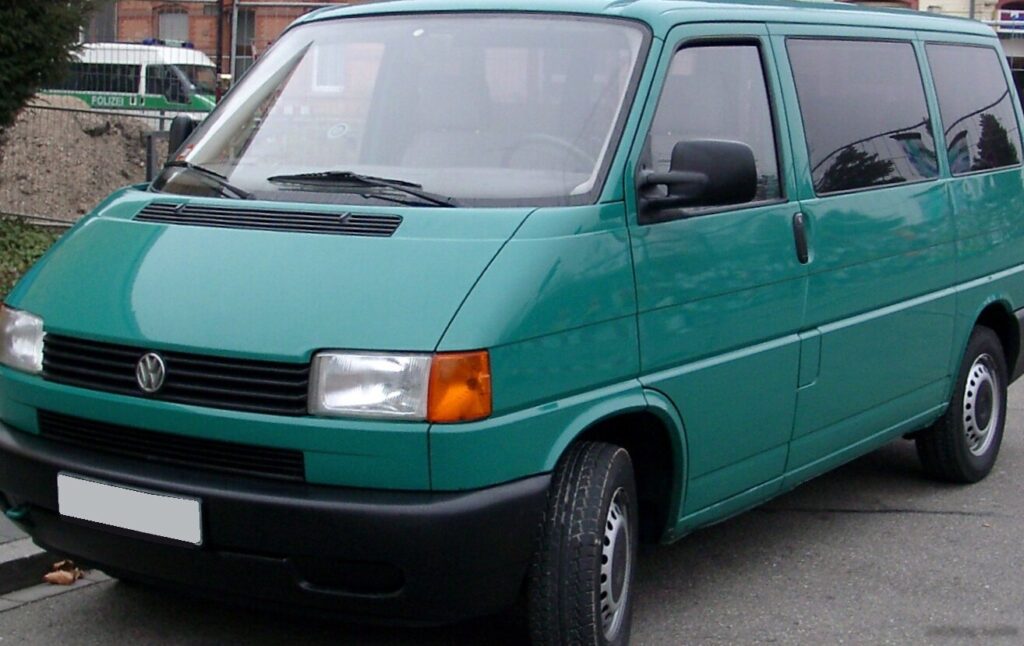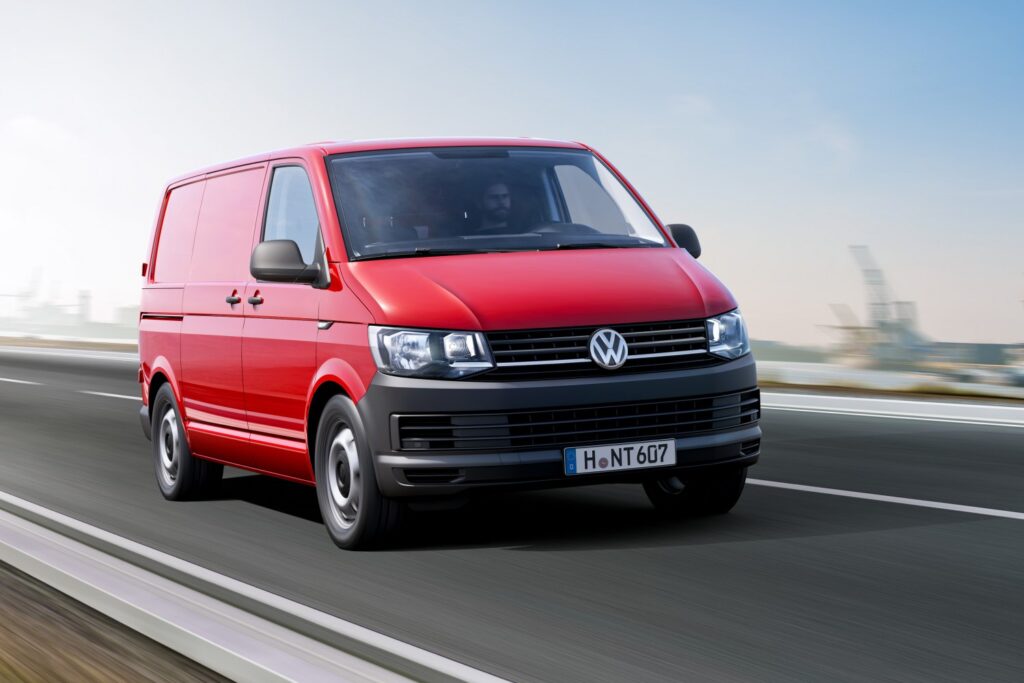
The Volkswagen Transporter, a name synonymous with utility, reliability, and innovation in the light commercial vehicle (LCV) segment, continued its storied legacy with the introduction of the T6 generation. Produced from 2016 to 2019, the Transporter (T6) Panel Van represented the latest evolution of a vehicle line that has been serving businesses and individuals for decades. Specifically, the variant under examination, the Volkswagen Transporter (T6) Panel Van 2.0 TDI (204 Hp) 4MOTION L1H2, stands out as a highly capable and robust offering within its class. While not a common sight in the United States market, where larger, purpose-built vans from domestic manufacturers or their European counterparts like the Mercedes-Benz Sprinter dominate, the Transporter series has achieved legendary status in Europe, Asia, and other global markets. It is revered for its blend of car-like driving dynamics, impressive cargo capacity, and a powertrain designed for efficiency and durability. This particular configuration, with its powerful 2.0-liter BiTurbo diesel engine, advanced 4MOTION all-wheel drive, and L1H2 body style (short wheelbase, medium roof), embodies Volkswagen’s commitment to providing a versatile and high-performance solution for demanding commercial applications, from urban deliveries to challenging worksite navigation.
Engine and Performance: The Heart of the Volkswagen Transporter (T6) Panel Van 2.0 TDI (204 Hp) 4MOTION L1H2
At the core of the Volkswagen Transporter (T6) Panel Van 2.0 TDI (204 Hp) 4MOTION L1H2 lies a sophisticated 2.0-liter (1968 cm3 / 120.09 cu. in.) inline four-cylinder diesel engine, designated by the code EA288 / CXEB. This powerplant is a testament to modern diesel engineering, featuring a BiTurbo setup coupled with an intercooler to maximize efficiency and output. The engine utilizes a common rail fuel injection system and a DOHC (Double Overhead Camshaft) valvetrain with four valves per cylinder, ensuring precise fuel delivery and optimal combustion. With a compression ratio of 15.5:1, it generates a robust 204 horsepower at 4000 rpm, translating to a specific output of 103.7 Hp per liter. More critically for a commercial vehicle, it delivers an impressive 450 Nm (331.9 lb.-ft.) of torque, available across a broad and usable rev range from 1400 to 2400 rpm. This wide torque band is essential for effortless hauling, confident acceleration, and maintaining speed under load, making it an ideal choice for businesses requiring significant pulling power.
Performance figures for this Transporter variant underscore its capability. It can accelerate from 0 to 60 mph in a swift 8.5 seconds (0-100 km/h in 8.9 seconds), an impressive feat for a panel van. Its maximum speed of 119.92 mph (193 km/h) ensures it can keep pace with highway traffic, even when fully laden. Power is effectively managed by a 6-speed manual transmission, offering drivers precise control over the vehicle’s output. The innovative 4MOTION all-wheel-drive system further enhances its performance envelope. This drivetrain architecture ensures that the internal combustion engine permanently drives the front wheels, with the rear wheels engaging through an electrically or mechanically operated clutch when additional traction is required. This intelligent system provides superior grip on slippery surfaces, improved stability in adverse weather conditions, and enhanced capability for light off-road or construction site environments, significantly broadening the van’s utility.
Beyond raw power, the 2.0 TDI engine is engineered for efficiency and environmental responsibility. It adheres to the strict Euro 6 emission standard, a crucial factor in many European markets. Fuel consumption figures are noteworthy for a vehicle of this size and capability: a combined (NEDC) economy of 6.7-7.1 l/100 km, translating to an excellent 35.1 – 33.1 US mpg. Urban consumption ranges from 28.3 – 27.4 US mpg, while extra-urban driving can yield 41.3 – 37.9 US mpg. CO2 emissions are kept between 174-185 g/km. Contributing to these figures are advanced engine systems such as the Start & Stop System, which conserves fuel by shutting off the engine during idle, and a Particulate filter, which reduces harmful emissions. With a fuel tank capacity of 70 liters (18.49 US gallons) and an AdBlue tank of 13 liters (3.43 US gallons), the Transporter (T6) offers a practical operating range, minimizing downtime for refueling.
Design and Features: Utility and Versatility
The design of the Volkswagen Transporter (T6) Panel Van is a masterclass in functional aesthetics, prioritizing utility without sacrificing modern appeal. As a panel van, its primary purpose is cargo transport, and the L1H2 designation indicates a short wheelbase (L1) and a medium roof (H2) configuration. This specific combination strikes an excellent balance between interior volume and maneuverability, particularly advantageous for navigating congested urban environments while still offering substantial load space. The exterior dimensions—a length of 193.07 inches (4904 mm), a width of 74.96 inches (1904 mm), and a height of 85.71 inches (2177 mm)—contribute to its practical footprint. The 118.11-inch (3000 mm) wheelbase provides a stable ride and contributes to a minimum turning circle of 39.04 feet (11.9 m), allowing for relatively agile handling in tight spaces.
Inside, the Transporter (T6) Panel Van is designed for efficiency and durability. Typically configured with 2-3 seats and 4-5 doors, it offers ample space for a driver and one or two passengers, alongside extensive cargo capacity. The maximum trunk (boot) space is an impressive 6700 liters (236.61 cu. ft.), making it capable of accommodating a wide array of goods, tools, or equipment. Its robust construction allows for a substantial maximum load capacity ranging from 885-968 kg (1951.09 – 2134.07 lbs.), making it a true workhorse. Furthermore, its towing capabilities are formidable, with a permitted trailer load of 2500 kg (5511.56 lbs.) with brakes and 750 kg (1653.47 lbs.) without brakes, along with a permissible towbar download of 100 kg (220.46 lbs.). A maximum roof load of 100 kg (220.46 lbs.) adds to its versatility for carrying longer items or additional equipment.
Underneath, the Transporter (T6) features a sophisticated suspension system engineered for comfort and load-bearing capability. The front suspension employs an independent McPherson type with coil springs and an anti-roll bar, while the rear utilizes an independent coil spring, wishbone, and transverse stabilizer setup. This combination ensures a stable ride, even with a full load, and contributes to the van’s car-like handling. Braking power is provided by ventilated discs at both the front (340×32.5 mm) and rear (294×22 mm), complemented by an ABS (Anti-lock Braking System) for enhanced safety. The hydraulic steering rack and pinion system provides precise feedback and ease of maneuverability. Equipped with various tire sizes (e.g., 215/60 R17; 235/55 R17) and corresponding wheel rims (7J x 17; 8J x 18), the Transporter maintains excellent road contact. For demanding terrains, its impressive ride height (ground clearance) of 7.91 inches (201 mm), approach angle of 21.2°, departure angle of 16.2°, ramp-over angle of 13.7°, and a wading depth of 11.81 inches (300 mm) make it surprisingly capable for a commercial van, especially when combined with the 4MOTION all-wheel drive, reinforcing its suitability for a wide range of professional tasks and environments.
Technical Specifications
| Brand | Volkswagen |
| Model | Transporter |
| Generation | Transporter (T6) Panel Van |
| Type (Engine) | 2.0 TDI (204 Hp) 4MOTION L1H2 |
| Start of production | 2016 year |
| End of production | 2019 year |
| Powertrain Architecture | Internal Combustion engine |
| Body type | Van |
| Seats | 2-3 |
| Doors | 4-5 |
| Fuel consumption (economy) – urban (NEDC) | 8.3-8.6 l/100 km (28.3 – 27.4 US mpg) |
| Fuel consumption (economy) – extra urban (NEDC) | 5.7-6.2 l/100 km (41.3 – 37.9 US mpg) |
| Fuel consumption (economy) – combined (NEDC) | 6.7-7.1 l/100 km (35.1 – 33.1 US mpg) |
| CO2 emissions (NEDC) | 174-185 g/km |
| Fuel Type | Diesel |
| Acceleration 0 – 100 km/h | 8.9 sec |
| Acceleration 0 – 60 mph | 8.5 sec |
| Maximum speed | 193 km/h (119.92 mph) |
| Emission standard | Euro 6 |
| Weight-to-power ratio | 9.4 kg/Hp (106.5 Hp/tonne) |
| Weight-to-torque ratio | 4.3 kg/Nm (235 Nm/tonne) |
| Power | 204 Hp @ 4000 rpm |
| Power per liter | 103.7 Hp/l |
| Torque | 450 Nm (331.9 lb.-ft.) @ 1400-2400 rpm |
| Engine layout | Front, Transverse |
| Engine Model/Code | EA288 / CXEB |
| Engine displacement | 1968 cm3 (120.09 cu. in.) |
| Number of cylinders | 4 |
| Engine configuration | Inline |
| Cylinder Bore | 81 mm (3.19 in.) |
| Piston Stroke | 95.5 mm (3.76 in.) |
| Compression ratio | 15.5:1 |
| Number of valves per cylinder | 4 |
| Fuel injection system | Diesel Commonrail |
| Engine aspiration | BiTurbo, Intercooler |
| Valvetrain | DOHC |
| Engine oil capacity | 7.4 l (7.82 US qt) |
| Engine systems | Start & Stop System, Particulate filter |
| Kerb Weight | 1915-2232 kg (4221.85 – 4920.72 lbs.) |
| Max. weight | 2800-3200 kg (6172.94 – 7054.79 lbs.) |
| Max load | 885-968 kg (1951.09 – 2134.07 lbs.) |
| Trunk (boot) space – maximum | 6700 l (236.61 cu. ft.) |
| Fuel tank capacity | 70 l (18.49 US gal) |
| AdBlue tank | 13 l (3.43 US gal) |
| Max. roof load | 100 kg (220.46 lbs.) |
| Permitted trailer load with brakes (12%) | 2500 kg (5511.56 lbs.) |
| Permitted trailer load without brakes | 750 kg (1653.47 lbs.) |
| Permitted towbar download | 100 kg (220.46 lbs.) |
| Length | 4904 mm (193.07 in.) |
| Width | 1904 mm (74.96 in.) |
| Width including mirrors | 2297 mm (90.43 in.) |
| Height | 2177 mm (85.71 in.) |
| Wheelbase | 3000 mm (118.11 in.) |
| Front overhang | 908 mm (35.75 in.) |
| Rear overhang | 993 mm (39.09 in.) |
| Ride height (ground clearance) | 201 mm (7.91 in.) |
| Minimum turning circle (turning diameter) | 11.9 m (39.04 ft.) |
| Approach angle | 21.2° |
| Departure angle | 16.2° |
| Ramp-over (brakeover) angle | 13.7° |
| Climb angle | 37° |
| Wading depth | 300 mm (11.81 in.) |
| Drivetrain Architecture | ICE drives front wheels permanently; rear wheels driven through clutch if necessary. |
| Drive wheel | All wheel drive (4×4) |
| Number of gears and type of gearbox | 6 gears, manual transmission |
| Front suspension | Independent, type McPherson with coil spring and anti-roll bar |
| Rear suspension | Independent coil spring, Wishbone, Transverse stabilizer |
| Front brakes | Ventilated discs, 340×32.5 mm |
| Rear brakes | Ventilated discs, 294×22 mm |
| Assisting systems | ABS (Anti-lock braking system) |
| Steering type | Steering rack and pinion |
| Power steering | Hydraulic Steering |
| Tires size | 215/60 R17; 215/65 R17; 235/55 R17; 255/45 R18 |
| Wheel rims size | 7J x 17; 8J x 18 |