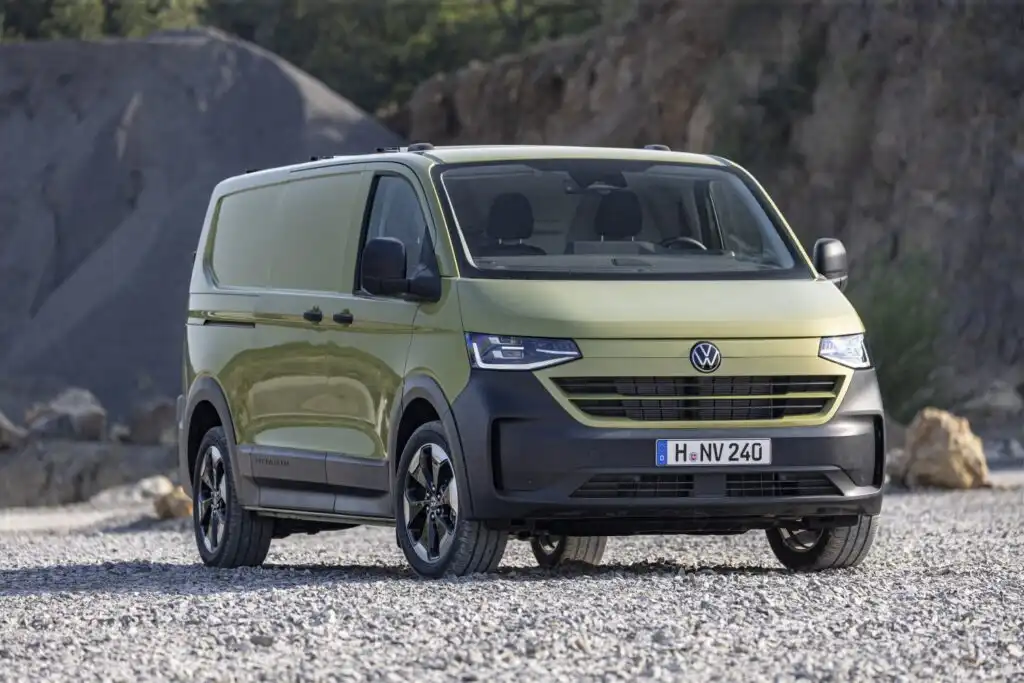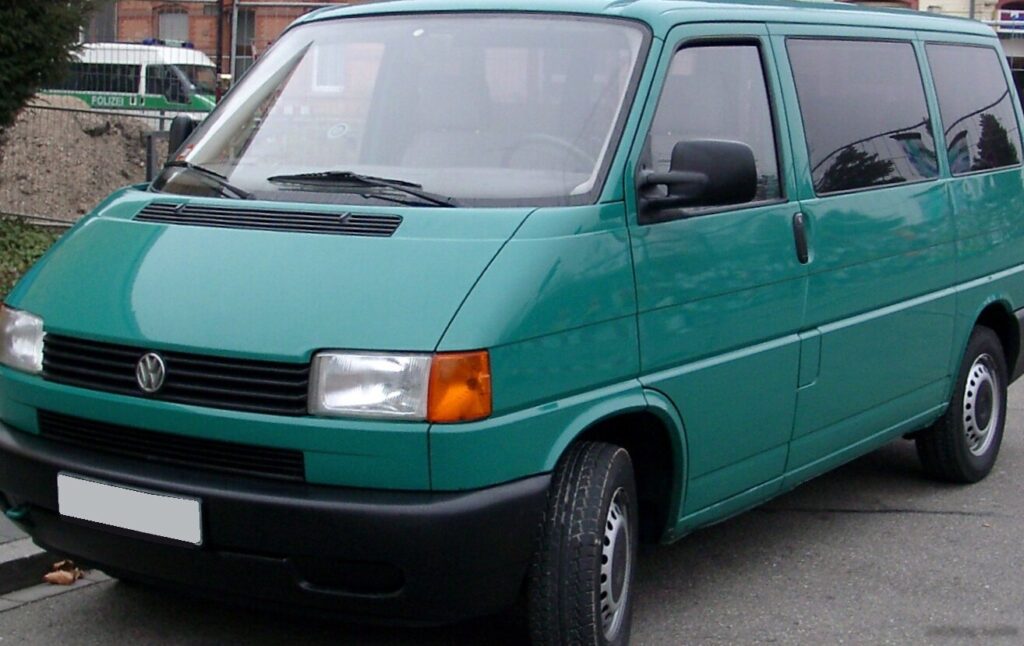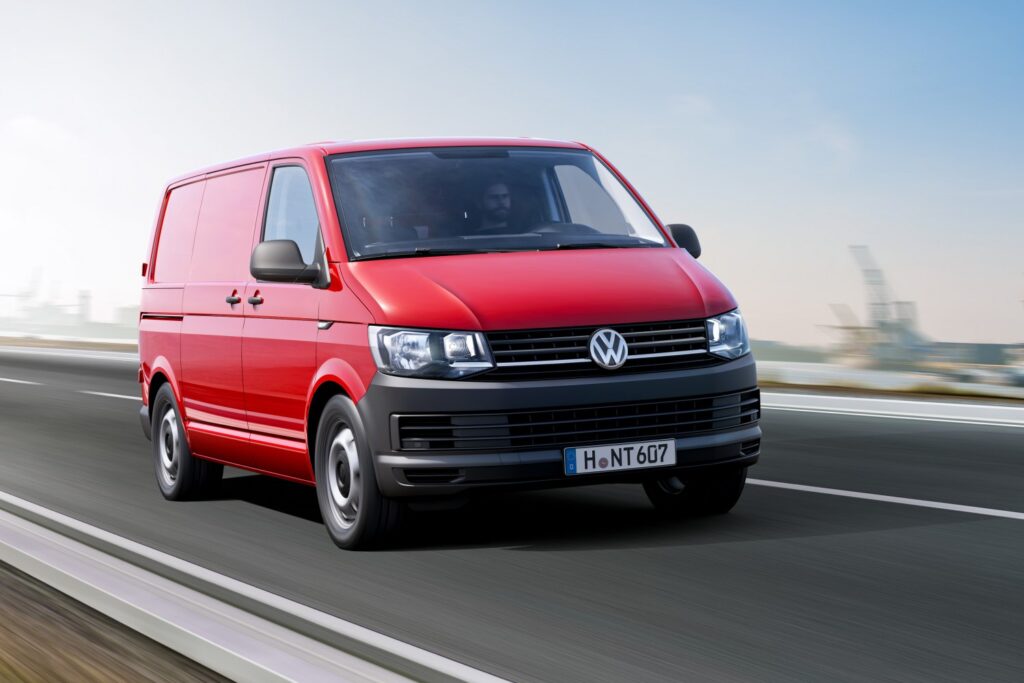
The Volkswagen Transporter (T6) Panel Van 2.0 TDI (204 Hp) L1H1 represents a significant evolution in Volkswagen’s long-standing lineage of commercial vehicles, a testament to practical engineering and robust design that has made the Transporter series a global icon. Produced between 2016 and 2019, this particular iteration of the T6 generation solidified its position as a highly capable and efficient workhorse, particularly within European and international markets where commercial vans are integral to logistics and various trades. While not as commonly retailed in the United States as its passenger-focused Multivan or California siblings, the T6 Panel Van showcases the technical prowess and versatility that defines Volkswagen’s approach to light commercial transport. Its designation, L1H1, signifies the standard wheelbase and standard roof height configuration, offering a balanced blend of cargo capacity and maneuverability for urban and highway operations.
Engine & Performance: The Potent 2.0 TDI Powertrain
At the heart of the Volkswagen Transporter (T6) Panel Van 2.0 TDI (204 Hp) L1H1 lies a sophisticated and powerful 2.0-liter TDI (Turbocharged Direct Injection) diesel engine, a prime example of modern diesel technology prioritizing both performance and efficiency. This inline four-cylinder engine, identified by the EA288 / CXEB code, generates a robust 204 horsepower at 4000 rpm, delivering substantial power for hauling heavy loads or maintaining highway speeds. What truly sets this engine apart is its impressive torque output: a commanding 331.9 lb-ft (450 Nm), available across a broad and usable rev range from 1400 to 2400 rpm. This wide torque band ensures strong acceleration from a standstill and excellent flexibility in varying driving conditions, crucial for a vehicle designed to operate under diverse loads.
The engine’s advanced architecture includes a BiTurbo setup, meaning it utilizes two turbochargers to optimize power delivery across the entire rpm range, minimizing turbo lag and enhancing responsiveness. Coupled with a Commonrail fuel injection system, it achieves precise fuel delivery, contributing to both power output and fuel economy. A Double Overhead Camshaft (DOHC) valvetrain with four valves per cylinder further refines combustion efficiency. With a compression ratio of 15.5:1, the engine is optimized for diesel combustion dynamics. The 1968 cubic centimeter (120.09 cu. in.) displacement, with a bore of 3.19 inches (81 mm) and a piston stroke of 3.76 inches (95.5 mm), reflects a design focused on durability and sustained output.
Performance figures for the T6 Panel Van with this powertrain are remarkably agile for a commercial vehicle. It can accelerate from 0 to 60 mph in a swift 8.2 seconds and reach a top speed of 126.14 mph (203 km/h). These numbers underscore its capability to keep pace with passenger cars, an important attribute for businesses requiring prompt deliveries. Fuel efficiency, a critical factor for commercial operators, is also commendable. The combined NEDC cycle rating stands at 37.3 – 34.6 US mpg (6.3-6.8 l/100 km), with extra-urban figures reaching 42.8 – 38.6 US mpg (5.5-6.1 l/100 km). These figures highlight Volkswagen’s commitment to reducing running costs. Furthermore, the engine complies with the stringent Euro 6 emission standard, featuring a Start & Stop System and a Particulate filter to minimize environmental impact.
Power is transmitted to the front wheels through a precise 6-speed manual transmission, offering the driver direct control and engagement, which many commercial drivers appreciate for its reliability and efficiency. The front-wheel-drive architecture ensures predictable handling and optimal traction, especially when the vehicle is laden. The engine oil capacity is 7.4 liters (7.82 US quarts), indicating a robust lubrication system designed for demanding use.
Design & Features: Engineered for Utility and Durability
The design of the Volkswagen Transporter (T6) Panel Van 2.0 TDI (204 Hp) L1H1 is a masterclass in functional aesthetics, blending robust utility with the clean, modern lines characteristic of Volkswagen. As a panel van, its primary purpose is cargo transport, and the L1H1 configuration (standard length, standard height) provides a practical balance. The vehicle measures 193.07 inches (4904 mm) in length, 74.96 inches (1904 mm) in width (90.43 inches or 2297 mm including mirrors), and 78.35 inches (1990 mm) in height. These dimensions contribute to its maneuverability, particularly in urban environments, as evidenced by its relatively tight minimum turning circle of 39.04 feet (11.9 m).
Inside, the Panel Van typically offers 2-3 seats, prioritizing cargo space. The maximum trunk (boot) space is an impressive 204.83 cubic feet (5800 liters), providing ample room for tools, equipment, or goods. This generous volume is complemented by a substantial maximum payload capacity, ranging from 2191.39 to 2374.38 lbs (994-1077 kg), depending on the specific configuration and options. The vehicle’s kerb weight ranges from 3981.55 to 4680.41 lbs (1806-2123 kg), while its maximum permissible weight is between 6172.94 and 7054.79 lbs (2800-3200 kg), underscoring its heavy-duty capabilities.
For businesses requiring towing, the T6 Panel Van is well-equipped. It boasts a permitted trailer load with brakes (12%) of 5511.56 lbs (2500 kg) and a permitted trailer load without brakes of 1653.47 lbs (750 kg), with a permitted towbar download of 220.46 lbs (100 kg). The fuel tank capacity of 18.49 US gallons (70 liters) ensures a considerable range between fill-ups, while a 3.43 US gallon (13-liter) AdBlue tank supports its Euro 6 emission compliance. A maximum roof load of 220.46 lbs (100 kg) adds to its versatility.
The T6’s chassis is engineered for durability and comfort, even under load. It features an independent McPherson strut front suspension with coil springs and an anti-roll bar, providing precise steering and good road holding. The rear suspension is also independent, utilizing coil springs, wishbones, and a transverse stabilizer, ensuring stability and ride comfort, which is crucial for long working days. Braking performance is robust, with large ventilated discs measuring 13.39 x 1.28 inches (340×32.5 mm) at the front and 11.57 x 0.87 inches (294×22 mm) at the rear, complemented by an Anti-lock Braking System (ABS) for enhanced safety. The hydraulic rack-and-pinion steering system offers direct feedback and assistance, making the van easy to maneuver. Various tire sizes, including 215/60 R17, 215/65 R17, 235/55 R17, and 255/45 R18, mounted on 7J x 17 or 8J x 18 wheel rims, allow for customization based on specific operational needs and desired handling characteristics. The ground clearance of 7.91 inches (201 mm) and respectable approach (21.2°), departure (16.2°), and ramp-over (13.7°) angles provide decent capability for navigating varied terrains, from construction sites to urban curbs.
The Volkswagen Transporter (T6) Panel Van 2.0 TDI (204 Hp) L1H1: A Legacy of Utility
The Volkswagen Transporter (T6) Panel Van 2.0 TDI (204 Hp) L1H1 is not merely a commercial vehicle; it’s a continuation of a storied legacy that began with the iconic T1 “Bus” or “Microbus.” Each generation of the Transporter has built upon its predecessor’s reputation for reliability, practicality, and enduring design. The T6, produced from 2016 to 2019, represents a modern chapter in this history, integrating contemporary technology and efficiency without sacrificing the core utility that defines the series. In its primary markets, particularly across Europe, the T6 Panel Van is ubiquitous, serving as the backbone for countless small businesses, large fleets, and specialized services. Its adaptability allows it to be configured for a vast array of tasks, from courier services and tradespeople to mobile workshops and utility providers.
This specific 2.0 TDI (204 Hp) L1H1 variant stands out for its potent engine, which offers a rare combination of power and fuel economy in the light commercial vehicle segment. This makes it an attractive proposition for operators who need to transport significant loads quickly and efficiently, or those who frequently cover long distances. The robust construction, refined driving dynamics, and comprehensive safety features ensure that drivers experience reduced fatigue and increased confidence, contributing to overall operational efficiency. The T6’s interior, while designed for durability and functionality, also incorporates ergonomic considerations and practical storage solutions, reflecting Volkswagen’s understanding of the daily demands placed on commercial vehicles. Its enduring popularity and strong resale value further cement its status as a prudent investment for businesses worldwide, embodying a legacy of continuous innovation in the commercial vehicle sector.
Technical Specifications
| Brand | Volkswagen |
| Model | Transporter |
| Generation | Transporter (T6) Panel Van |
| Type (Engine) | 2.0 TDI (204 Hp) L1H1 |
| Start of production | 2016 year |
| End of production | 2019 year |
| Powertrain Architecture | Internal Combustion engine |
| Body type | Van |
| Seats | 2-3 |
| Doors | 4-5 |
| Fuel consumption (economy) – urban (NEDC) | 7.6-8.1 l/100 km (30.9 – 29 US mpg) |
| Fuel consumption (economy) – extra urban (NEDC) | 5.5-6.1 l/100 km (42.8 – 38.6 US mpg) |
| Fuel consumption (economy) – combined (NEDC) | 6.3-6.8 l/100 km (37.3 – 34.6 US mpg) |
| CO2 emissions (NEDC) | 163-179 g/km |
| Fuel Type | Diesel |
| Acceleration 0 – 60 mph (Calculated) | 8.2 sec |
| Acceleration 0 – 100 km/h | 8.6 sec |
| Maximum speed | 126.14 mph (203 km/h) |
| Emission standard | Euro 6 |
| Weight-to-power ratio | 8.9 kg/Hp (113 Hp/tonne) |
| Weight-to-torque ratio | 4 kg/Nm (249.2 Nm/tonne) |
| Power | 204 Hp @ 4000 rpm |
| Power per liter | 103.7 Hp/l |
| Torque | 331.9 lb.-ft. (450 Nm) @ 1400-2400 rpm |
| Engine layout | Front, Transverse |
| Engine Model/Code | EA288 / CXEB |
| Engine displacement | 120.09 cu. in. (1968 cm3) |
| Number of cylinders | 4 |
| Engine configuration | Inline |
| Cylinder Bore | 3.19 in. (81 mm) |
| Piston Stroke | 3.76 in. (95.5 mm) |
| Compression ratio | 15.5:1 |
| Number of valves per cylinder | 4 |
| Fuel injection system | Diesel Commonrail |
| Engine aspiration | BiTurbo, Intercooler |
| Valvetrain | DOHC |
| Engine oil capacity | 7.82 US qt (7.4 l) |
| Engine systems | Start & Stop System, Particulate filter |
| Kerb Weight | 3981.55 – 4680.41 lbs. (1806-2123 kg) |
| Max. weight | 6172.94 – 7054.79 lbs. (2800-3200 kg) |
| Max load | 2191.39 – 2374.38 lbs. (994-1077 kg) |
| Trunk (boot) space – maximum | 204.83 cu. ft. (5800 l) |
| Fuel tank capacity | 18.49 US gal (70 l) |
| AdBlue tank | 3.43 US gal (13 l) |
| Max. roof load | 220.46 lbs. (100 kg) |
| Permitted trailer load with brakes (12%) | 5511.56 lbs. (2500 kg) |
| Permitted trailer load without brakes | 1653.47 lbs. (750 kg) |
| Permitted towbar download | 220.46 lbs. (100 kg) |
| Length | 193.07 in. (4904 mm) |
| Width | 74.96 in. (1904 mm) |
| Width including mirrors | 90.43 in. (2297 mm) |
| Height | 78.35 in. (1990 mm) |
| Wheelbase | 118.11 in. (3000 mm) |
| Front overhang | 35.75 in. (908 mm) |
| Rear overhang | 39.09 in. (993 mm) |
| Ride height (ground clearance) | 7.91 in. (201 mm) |
| Minimum turning circle (turning diameter) | 39.04 ft. (11.9 m) |
| Approach angle | 21.2° |
| Departure angle | 16.2° |
| Ramp-over (brakeover) angle | 13.7° |
| Drivetrain Architecture | Internal combustion engine drives the front wheels |
| Drive wheel | Front wheel drive |
| Number of gears and type of gearbox | 6 gears, manual transmission |
| Front suspension | Independent, McPherson with coil spring and anti-roll bar |
| Rear suspension | Independent coil spring, Wishbone, Transverse stabilizer |
| Front brakes | Ventilated discs, 13.39×1.28 in. (340×32.5 mm) |
| Rear brakes | Ventilated discs, 11.57×0.87 in. (294×22 mm) |
| Assisting systems | ABS (Anti-lock braking system) |
| Steering type | Steering rack and pinion |
| Power steering | Hydraulic Steering |
| Tires size | 215/60 R17; 215/65 R17; 235/55 R17; 255/45 R18 |
| Wheel rims size | 7J x 17; 8J x 18 |