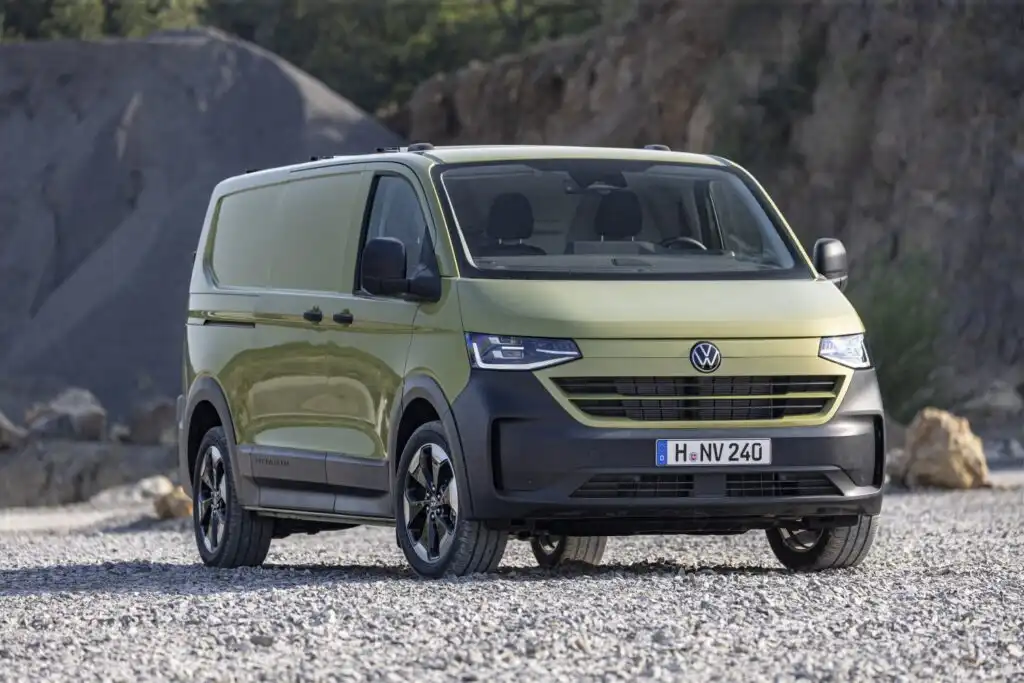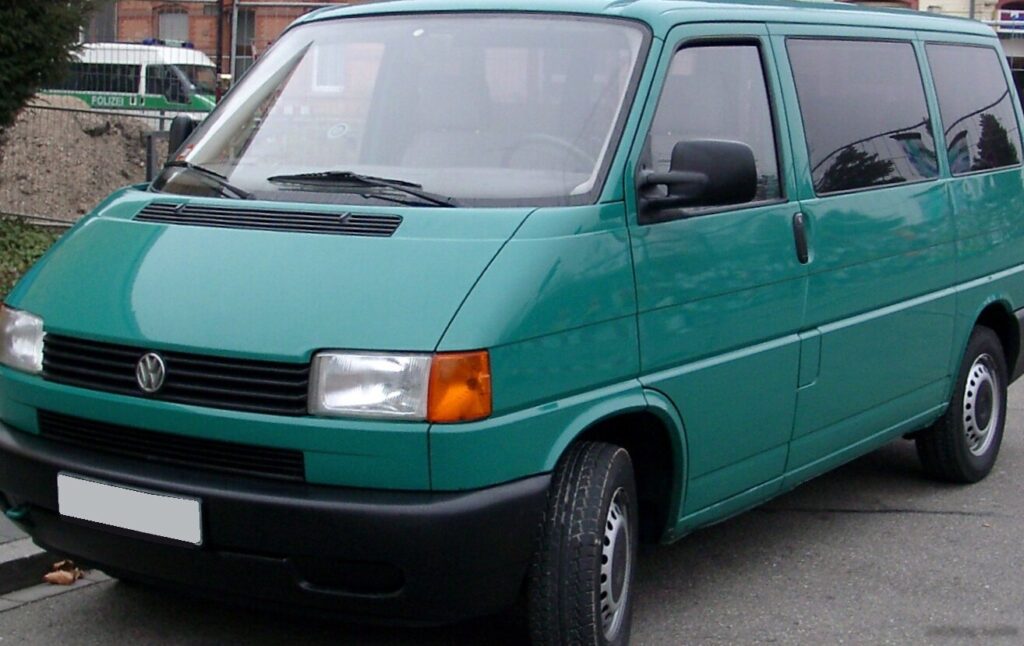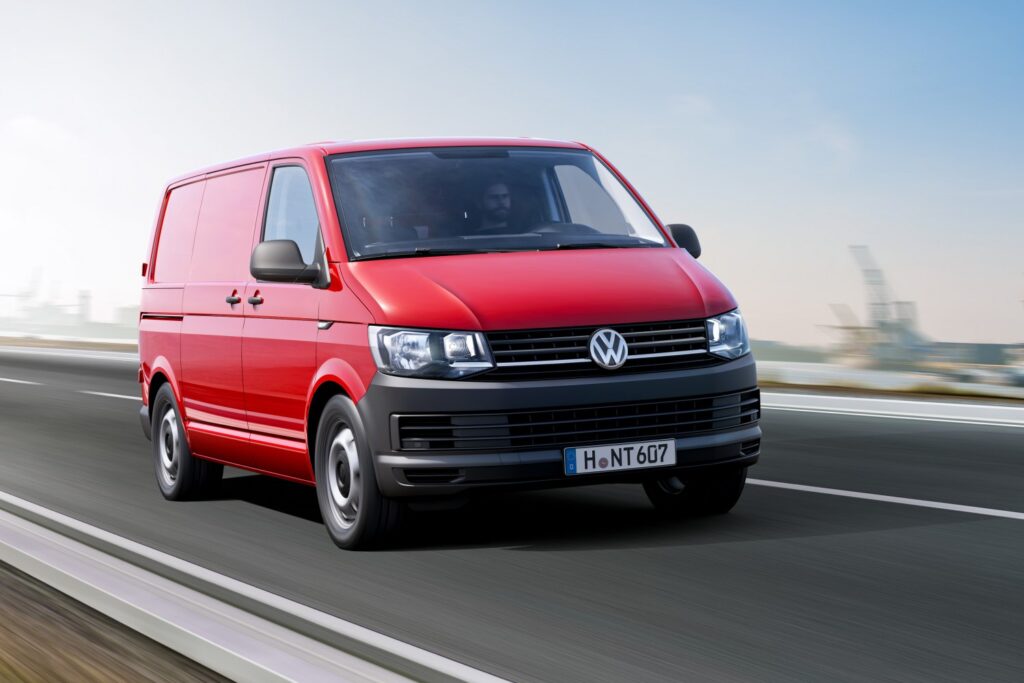
The Volkswagen Transporter (T6) Panel Van represents a pivotal iteration in a lineage of commercial vehicles renowned for their versatility, reliability, and practical engineering. Produced between 2016 and 2019, the T6 generation built upon the foundational strengths of its predecessors, offering enhanced efficiency, refined driving dynamics, and a suite of modern features tailored for the demands of businesses across Europe and other global markets where the Transporter holds a dominant position. While not a common sight in its panel van configuration on American roads, the Transporter series is a benchmark in the light commercial vehicle segment, celebrated for its robust build and adaptable cargo solutions. This particular variant, the 2.0 TDI (204 Hp) L2H1, signifies a long-wheelbase, standard-height panel van equipped with a high-output diesel engine, designed to deliver a compelling balance of performance and cargo capacity for demanding commercial applications.
Engine & Performance: Powering the Volkswagen Transporter (T6) Panel Van
At the heart of the Volkswagen Transporter (T6) Panel Van 2.0 TDI (204 Hp) L2H1 lies a sophisticated 2.0-liter inline four-cylinder diesel engine, designated with the EA288 / CXEB code. This robust powertrain, featuring a DOHC valvetrain and four valves per cylinder, is a testament to Volkswagen’s expertise in diesel technology. It employs a common rail fuel injection system and is boosted by a BiTurbo setup with an intercooler, allowing it to generate an impressive 204 horsepower at 4000 rpm. The power per liter is a substantial 103.7 Hp/l, indicating a highly efficient engine design for its displacement of 120.09 cubic inches (1968 cm³).
Perhaps even more critical for a commercial vehicle, the engine delivers a formidable 331.9 lb.-ft. (450 Nm) of torque, available across a broad and usable rev range from 1400 to 2400 rpm. This wide torque band is crucial for effortless acceleration, confident overtaking, and, most importantly, for hauling heavy loads without strain. The vehicle’s weight-to-power ratio stands at 9.1 kg/Hp (109.5 Hp/tonne), while the weight-to-torque ratio is an excellent 4.1 kg/Nm (241.5 Nm/tonne), underscoring its capability to move significant mass efficiently. Coupled with a smooth-shifting 6-speed manual transmission, this front-wheel-drive architecture ensures optimal power delivery for a variety of tasks.
Performance figures for the 2.0 TDI (204 Hp) L2H1 are notable for a panel van. It can accelerate from 0 to 60 mph in a swift 8.2 seconds (0-100 km/h in 8.6 seconds), with a maximum speed of 126.14 mph (203 km/h). This level of performance not only ensures that the Transporter can keep pace with highway traffic but also provides a dynamic driving experience atypical for its segment. Fuel economy is a strong suit, with combined (NEDC) figures ranging from 33.6 to 37.3 US mpg (6.3-7 l/100 km). Urban consumption is rated between 28.7 and 30.9 US mpg, while extra-urban driving yields 36.8 to 42.8 US mpg. These figures, combined with a 18.49 US gallon (70 l) fuel tank, contribute to a respectable driving range, minimizing downtime for refueling. The vehicle also adheres to the stringent Euro 6 emission standard, thanks to systems like the Start & Stop System and a Particulate filter, ensuring a reduced environmental footprint with CO2 emissions ranging from 163-184 g/km.
Design & Features: Practicality Meets Modernity in the Volkswagen Transporter (T6) Panel Van
The Volkswagen Transporter (T6) Panel Van is fundamentally designed for utility, offering a robust and adaptable platform for commercial use. As a panel van, its primary focus is on maximizing cargo space while providing a comfortable and functional cabin for 2-3 occupants. This L2H1 variant signifies a long wheelbase (L2) and standard roof height (H1), providing a substantial cargo volume without compromising maneuverability or access in urban environments. The body features 4-5 doors, typically including sliding side doors for easy load access and rear barn doors for maximum aperture.
Dimensions are critical for a commercial vehicle, and the T6 L2H1 boasts a length of 208.82 inches (5304 mm), a width of 74.96 inches (1904 mm) (or 90.43 inches / 2297 mm including mirrors), and a height of 78.35 inches (1990 mm). The generous 133.86-inch (3400 mm) wheelbase contributes to excellent stability and ride quality, even when fully loaded. With a maximum trunk (boot) space of 236.61 cubic feet (6700 liters), the Transporter offers ample room for goods, tools, or equipment, making it a highly flexible mobile workspace. Load capacities are equally impressive, with a kerb weight ranging from 4107.21 to 4806.08 lbs (1863-2180 kg) and a maximum permissible weight between 6172.94 and 7054.79 lbs (2800-3200 kg). This translates to a substantial maximum payload capacity of 2065.73 to 2248.72 lbs (937-1020 kg). Furthermore, the Transporter is well-equipped for towing, capable of pulling a permitted trailer load with brakes (12%) of up to 5511.56 lbs (2500 kg) and a maximum roof load of 220.46 lbs (100 kg).
Underneath its practical exterior, the Transporter (T6) features a sophisticated chassis designed for both durability and driving comfort. The front suspension consists of an independent McPherson strut setup with coil springs and an anti-roll bar, providing precise steering response and good damping. The rear benefits from an independent coil spring, wishbone, and transverse stabilizer configuration, which is crucial for maintaining stability and ride comfort, especially when carrying variable loads. Stopping power is provided by robust ventilated disc brakes on both the front (340×32.5 mm) and rear (294×22 mm) axles, complemented by an Anti-lock Braking System (ABS) for enhanced safety and control in various conditions. Steering is managed by a hydraulic rack and pinion system, offering direct feedback to the driver. The vehicle offers a variety of tire sizes, including 215/60 R17, 215/65 R17, 235/55 R17, and 255/45 R18, mounted on 7J x 17 or 8J x 18 wheel rims, providing options for different load requirements and driving preferences. Its practical design is further underscored by a minimum turning circle of 43.31 feet (13.2 meters), making it surprisingly agile for its size in urban environments, along with respectable approach (21.2°), departure (16.2°), and ramp-over (12.2°) angles for navigating varied terrains.
Technical Specifications: Volkswagen Transporter (T6) Panel Van 2.0 TDI (204 Hp) L2H1
| Brand | Volkswagen |
| Model | Transporter |
| Generation | Transporter (T6) Panel Van |
| Type (Engine) | 2.0 TDI (204 Hp) L2H1 |
| Start of production | 2016 year |
| End of production | 2019 year |
| Powertrain Architecture | Internal Combustion engine |
| Body type | Van |
| Seats | 2-3 |
| Doors | 4-5 |
| Fuel consumption (economy) – urban (NEDC) | 7.6-8.2 l/100 km (30.9 – 28.7 US mpg) |
| Fuel consumption (economy) – extra urban (NEDC) | 5.5-6.4 l/100 km (42.8 – 36.8 US mpg) |
| Fuel consumption (economy) – combined (NEDC) | 6.3-7 l/100 km (37.3 – 33.6 US mpg) |
| CO2 emissions (NEDC) | 163-184 g/km |
| Fuel Type | Diesel |
| Acceleration 0 – 60 mph | 8.2 sec |
| Acceleration 0 – 100 km/h | 8.6 sec |
| Maximum speed | 126.14 mph (203 km/h) |
| Emission standard | Euro 6 |
| Weight-to-power ratio | 9.1 kg/Hp (109.5 Hp/tonne) |
| Weight-to-torque ratio | 4.1 kg/Nm (241.5 Nm/tonne) |
| Power | 204 Hp @ 4000 rpm |
| Power per liter | 103.7 Hp/l |
| Torque | 331.9 lb.-ft. (450 Nm @ 1400-2400 rpm) |
| Engine layout | Front, Transverse |
| Engine Model/Code | EA288 / CXEB |
| Engine displacement | 120.09 cu. in. (1968 cm³) |
| Number of cylinders | 4 |
| Engine configuration | Inline |
| Cylinder Bore | 3.19 in. (81 mm) |
| Piston Stroke | 3.76 in. (95.5 mm) |
| Compression ratio | 15.5:1 |
| Number of valves per cylinder | 4 |
| Fuel injection system | Diesel Commonrail |
| Engine aspiration | BiTurbo, Intercooler |
| Valvetrain | DOHC |
| Engine oil capacity | 7.82 US qt (7.4 l) |
| Engine systems | Start & Stop System, Particulate filter |
| Kerb Weight | 4107.21 – 4806.08 lbs (1863-2180 kg) |
| Max. weight | 6172.94 – 7054.79 lbs (2800-3200 kg) |
| Max load | 2065.73 – 2248.72 lbs (937-1020 kg) |
| Trunk (boot) space – maximum | 236.61 cu. ft. (6700 l) |
| Fuel tank capacity | 18.49 US gal (70 l) |
| AdBlue tank | 3.43 US gal (13 l) |
| Max. roof load | 220.46 lbs (100 kg) |
| Permitted trailer load with brakes (12%) | 5511.56 lbs (2500 kg) |
| Permitted trailer load without brakes | 1653.47 lbs (750 kg) |
| Permitted towbar download | 220.46 lbs (100 kg) |
| Length | 208.82 in. (5304 mm) |
| Width | 74.96 in. (1904 mm) |
| Width including mirrors | 90.43 in. (2297 mm) |
| Height | 78.35 in. (1990 mm) |
| Wheelbase | 133.86 in. (3400 mm) |
| Front overhang | 35.75 in. (908 mm) |
| Rear overhang | 39.09 in. (993 mm) |
| Ride height (ground clearance) | 7.95 in. (202 mm) |
| Minimum turning circle (turning diameter) | 43.31 ft. (13.2 m) |
| Approach angle | 21.2° |
| Departure angle | 16.2° |
| Ramp-over (brakeover) angle | 12.2° |
| Drivetrain Architecture | Front wheel drive. Internal Combustion engine. |
| Drive wheel | Front wheel drive |
| Number of gears and type of gearbox | 6 gears, manual transmission |
| Front suspension | Independent, type McPherson with coil spring and anti-roll bar |
| Rear suspension | Independent coil spring, Wishbone, Transverse stabilizer |
| Front brakes | Ventilated discs, 340×32.5 mm |
| Rear brakes | Ventilated discs, 294×22 mm |
| Assisting systems | ABS (Anti-lock braking system) |
| Steering type | Steering rack and pinion |
| Power steering | Hydraulic Steering |
| Tires size | 215/60 R17; 215/65 R17; 235/55 R17; 255/45 R18 |
| Wheel rims size | 7J x 17; 8J x 18 |