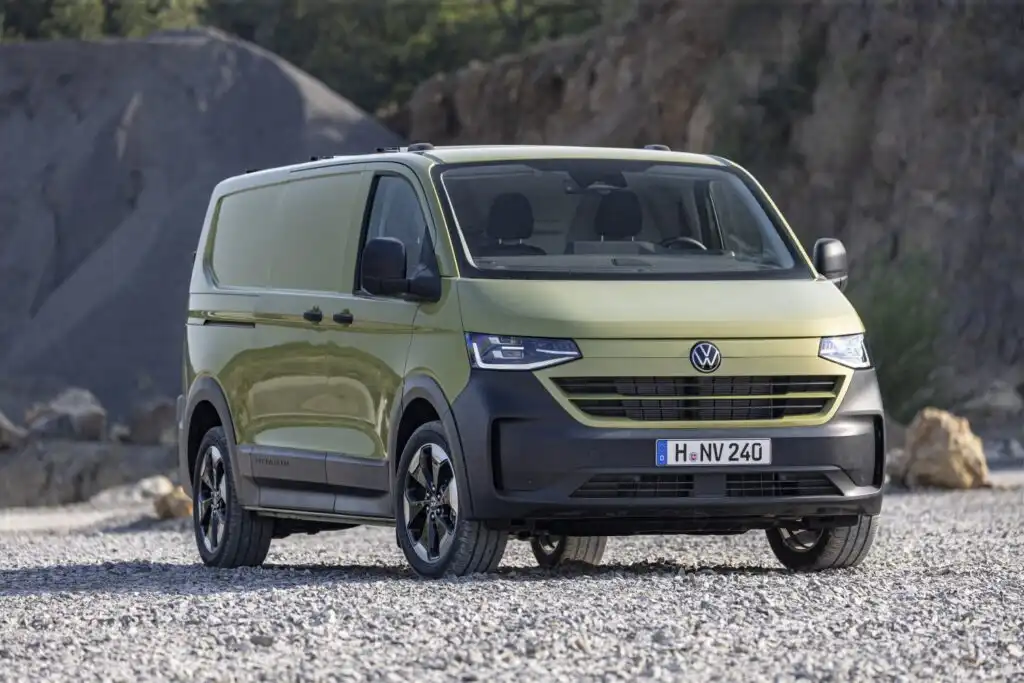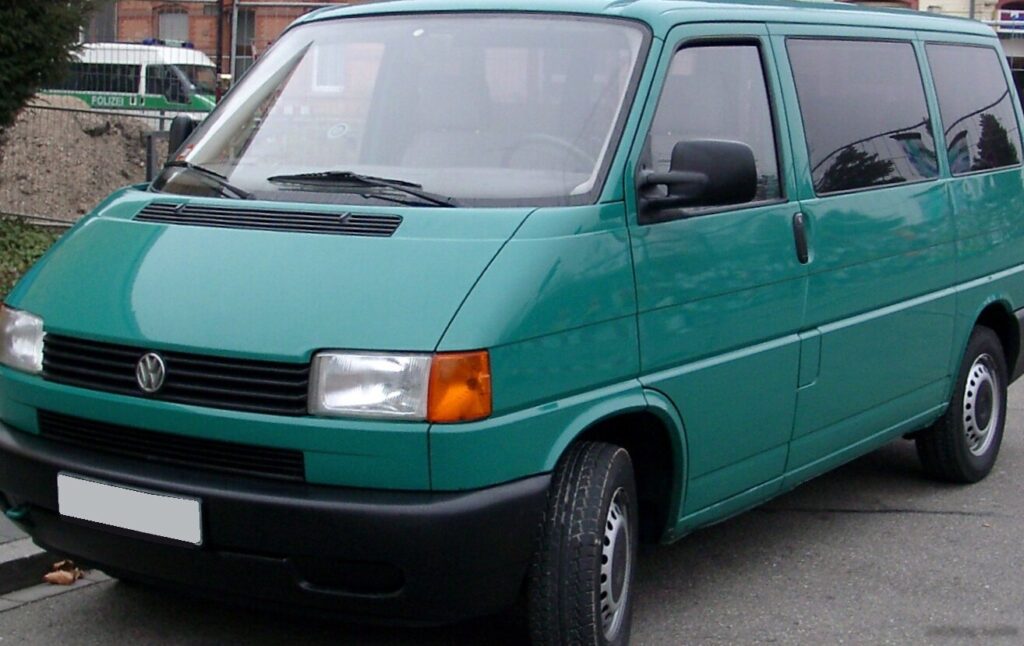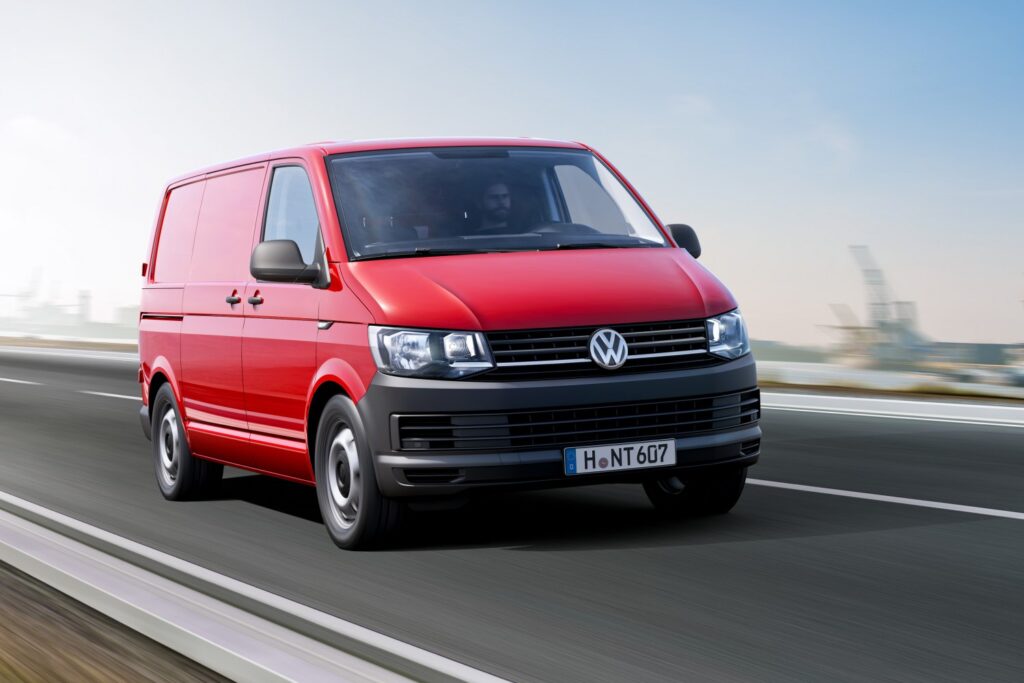
The Volkswagen Transporter, a name synonymous with versatility and robust utility across Europe and beyond, saw its sixth generation, the T6, continue this storied legacy. The specific variant, the Volkswagen Transporter (T6) Panel Van 2.0 TSI (150 Hp) L1H2, represents a potent blend of practicality and modern engineering, serving as a quintessential workhorse for businesses and tradespeople from its introduction in 2015 until the end of its production run in 2019. While not a primary fixture in the North American market, the Transporter series holds an iconic status globally, evolving from the legendary Type 2 ‘Bus’ into a sophisticated commercial vehicle designed to meet the rigorous demands of daily operations. This particular model, designated L1H2, indicates a standard wheelbase (Length 1) and a medium-high roof (Height 2), optimizing cargo volume without compromising maneuverability, making it a highly adaptable choice within its segment.
Engine and Performance of the Volkswagen Transporter (T6) Panel Van 2.0 TSI (150 Hp) L1H2
At the heart of the Volkswagen Transporter (T6) Panel Van 2.0 TSI (150 Hp) L1H2 lies a technically advanced 2.0-liter TSI gasoline engine, a testament to Volkswagen’s commitment to efficient and powerful powertrains. This inline four-cylinder engine, identified by the EA888 / CJKB code, features a displacement of 1984 cubic centimeters, or approximately 121.07 cubic inches. It is configured with a front, transverse layout, driving the front wheels through a precise 6-speed manual transmission, a common and reliable setup for commercial vehicles prioritizing driver engagement and control.
The engine’s performance is impressive for a panel van, delivering 150 horsepower (Hp) at a broad rev range of 3750 to 6000 rpm. This wide power band ensures strong pulling power across various driving conditions, whether navigating urban traffic or cruising on highways. Torque output is equally significant, peaking at 280 Newton-meters (approximately 206.52 lb.-ft.) available from a low 1500 rpm all the way up to 3750 rpm. This robust low-end torque is crucial for a commercial vehicle, enabling confident acceleration even when fully loaded, and aiding in tasks like merging onto busy roads or climbing inclines.
Technologically, the 2.0 TSI engine benefits from direct fuel injection and a turbocharger with an intercooler. Direct injection optimizes fuel delivery for improved combustion efficiency and power output, while the turbocharger significantly boosts volumetric efficiency, allowing a smaller engine to produce power typically associated with larger, naturally aspirated units. An intercooler cools the compressed air from the turbo, further enhancing power and reducing the risk of pre-ignition. The engine also features a Double Overhead Camshaft (DOHC) valvetrain with four valves per cylinder, contributing to efficient breathing and power delivery. With a compression ratio of 9.8:1, the engine is finely tuned for both performance and fuel economy.
In terms of outright speed, the Transporter 2.0 TSI can achieve a maximum speed of 176 kilometers per hour (approximately 109.36 mph). Acceleration from 0 to 62 mph (0-100 km/h) is accomplished in 11.1 seconds, while the 0-60 mph sprint is calculated at a respectable 10.5 seconds, demonstrating its capability to keep pace with modern traffic. Despite its robust performance, Volkswagen engineered this powertrain with efficiency in mind. Fuel consumption figures, based on the NEDC cycle, show a combined economy of 9-9.7 liters per 100 kilometers, which translates to a competitive 26.1 – 24.2 US miles per gallon. Urban consumption ranges from 12.2-12.7 l/100 km (19.3 – 18.5 US mpg), while extra-urban driving yields 7.2-8 l/100 km (32.7 – 29.4 US mpg). The inclusion of a Start & Stop System further aids in reducing fuel consumption and CO2 emissions, which fall within the Euro 6 standard, ranging from 206-221 g/km, reflecting a commitment to environmental responsibility.
Design and Features
The Volkswagen Transporter (T6) Panel Van 2.0 TSI (150 Hp) L1H2 is fundamentally designed for utility, embodying a purposeful aesthetic that prioritizes functionality and durability. As a panel van, its primary role is cargo transport, reflected in its robust construction and thoughtful dimensions. The L1H2 designation signifies a specific configuration: ‘L1’ for the standard length, and ‘H2’ for the medium-high roof, offering an ideal balance between exterior compactness and generous internal volume. The vehicle measures 4904 mm (193.07 inches) in length, 1904 mm (74.96 inches) in width (2297 mm or 90.43 inches including mirrors), and stands 2177 mm (85.71 inches) tall. Its wheelbase of 3000 mm (118.11 inches) contributes to a stable ride and ample cargo space, while a minimum turning circle of 11.9 meters (39.04 feet) ensures good maneuverability in tight urban environments.
With 4 to 5 doors, including generous side and rear access, loading and unloading are made efficient. The interior is configured with 2-3 seats, providing flexibility for a driver and one or two passengers, catering to various crew requirements. The maximum trunk (boot) space is an impressive 6700 liters (236.61 cubic feet), allowing for significant cargo capacity. This substantial volume is complemented by a maximum payload ranging from 1054 to 1137 kg (2323.67 to 2506.66 lbs.), underscoring its capability as a serious commercial vehicle. The Transporter also boasts considerable towing capacity, capable of pulling 2500 kg (5511.56 lbs.) with braked trailers and 750 kg (1653.47 lbs.) without brakes, further extending its utility for businesses that require hauling equipment or additional cargo.
Underneath its practical exterior, the T6 Panel Van features a well-engineered chassis and suspension system designed for comfort and load-carrying ability. The front suspension employs an independent McPherson strut setup with coil springs and an anti-roll bar, providing responsive handling and effective damping. At the rear, an independent coil spring system with wishbones and a transverse stabilizer ensures stability and comfort, even when the vehicle is heavily loaded. Braking performance is handled by ventilated discs both front (308×29.5 mm) and rear (294×22 mm), coupled with an Anti-lock Braking System (ABS) for enhanced safety and control under diverse conditions. The hydraulic rack and pinion steering system offers precise feedback and ease of operation, crucial for a vehicle that spends much of its life navigating various terrains and traffic scenarios. The vehicle rides on 205/65 R16 or 215/65 R16 tires, mounted on 6.5J x 16 wheel rims, providing a good balance of durability and ride quality for commercial applications. With a ground clearance of 201 mm (7.91 inches) and respectable approach, departure, and ramp-over angles, the Transporter is also capable of handling less-than-perfect road surfaces or construction site access with confidence.
Technical Specifications
| Brand | Volkswagen |
| Model | Transporter |
| Generation | Transporter (T6) Panel Van |
| Type (Engine) | 2.0 TSI (150 Hp) L1H2 |
| Start of production | 2015 year |
| End of production | 2019 year |
| Powertrain Architecture | Internal Combustion engine |
| Body type | Van |
| Seats | 2-3 |
| Doors | 4-5 |
| Fuel consumption (economy) – urban (NEDC) | 12.2-12.7 l/100 km | 19.3 – 18.5 US mpg |
| Fuel consumption (economy) – extra urban (NEDC) | 7.2-8 l/100 km | 32.7 – 29.4 US mpg |
| Fuel consumption (economy) – combined (NEDC) | 9-9.7 l/100 km | 26.1 – 24.2 US mpg |
| CO2 emissions (NEDC) | 206-221 g/km |
| Fuel Type | Petrol (Gasoline) |
| Acceleration 0 – 60 mph | 10.5 sec |
| Acceleration 0 – 100 km/h | 11.1 sec |
| Maximum speed | 176 km/h | 109.36 mph |
| Emission standard | Euro 6 |
| Weight-to-power ratio | 11.6 kg/Hp, 85.9 Hp/tonne |
| Weight-to-torque ratio | 6.2 kg/Nm, 160.4 Nm/tonne |
| Power | 150 Hp @ 3750-6000 rpm |
| Power per liter | 75.6 Hp/l |
| Torque | 280 Nm @ 1500-3750 rpm | 206.52 lb.-ft. @ 1500-3750 rpm |
| Engine layout | Front, Transverse |
| Engine Model/Code | EA888 / CJKB |
| Engine displacement | 1984 cm3 | 121.07 cu. in. |
| Number of cylinders | 4 |
| Engine configuration | Inline |
| Cylinder Bore | 82.5 mm | 3.25 in. |
| Piston Stroke | 92.8 mm | 3.65 in. |
| Compression ratio | 9.8:1 |
| Number of valves per cylinder | 4 |
| Fuel injection system | Direct injection |
| Engine aspiration | Turbocharger, Intercooler |
| Valvetrain | DOHC |
| Engine oil capacity | 5.7 l | 6.02 US qt |
| Engine systems | Start & Stop System |
| Kerb Weight | 1746-2063 kg | 3849.27 – 4548.14 lbs. |
| Max. weight | 2800-3200 kg | 6172.94 – 7054.79 lbs. |
| Max load | 1054-1137 kg | 2323.67 – 2506.66 lbs. |
| Trunk (boot) space – maximum | 6700 l | 236.61 cu. ft. |
| Fuel tank capacity | 80 l | 21.13 US gal |
| Max. roof load | 100 kg | 220.46 lbs. |
| Permitted trailer load with brakes (12%) | 2500 kg | 5511.56 lbs. |
| Permitted trailer load without brakes | 750 kg | 1653.47 lbs. |
| Permitted towbar download | 100 kg | 220.46 lbs. |
| Length | 4904 mm | 193.07 in. |
| Width | 1904 mm | 74.96 in. |
| Width including mirrors | 2297 mm | 90.43 in. |
| Height | 2177 mm | 85.71 in. |
| Wheelbase | 3000 mm | 118.11 in. |
| Front overhang | 908 mm | 35.75 in. |
| Rear overhang | 993 mm | 39.09 in. |
| Ride height (ground clearance) | 201 mm | 7.91 in. |
| Minimum turning circle (turning diameter) | 11.9 m | 39.04 ft. |
| Approach angle | 21.2° |
| Departure angle | 16.2° |
| Ramp-over (brakeover) angle | 13.7° |
| Drivetrain Architecture | Internal combustion engine (ICE) drives the front wheels |
| Drive wheel | Front wheel drive |
| Number of gears and type of gearbox | 6 gears, manual transmission |
| Front suspension | Independent, McPherson with coil spring and anti-roll bar |
| Rear suspension | Independent coil spring, Wishbone, Transverse stabilizer |
| Front brakes | Ventilated discs, 308×29.5 mm |
| Rear brakes | Ventilated discs, 294×22 mm |
| Assisting systems | ABS (Anti-lock braking system) |
| Steering type | Steering rack and pinion |
| Power steering | Hydraulic Steering |
| Tires size | 205/65 R16; 215/65 R16 |
| Wheel rims size | 6.5J x 16 |