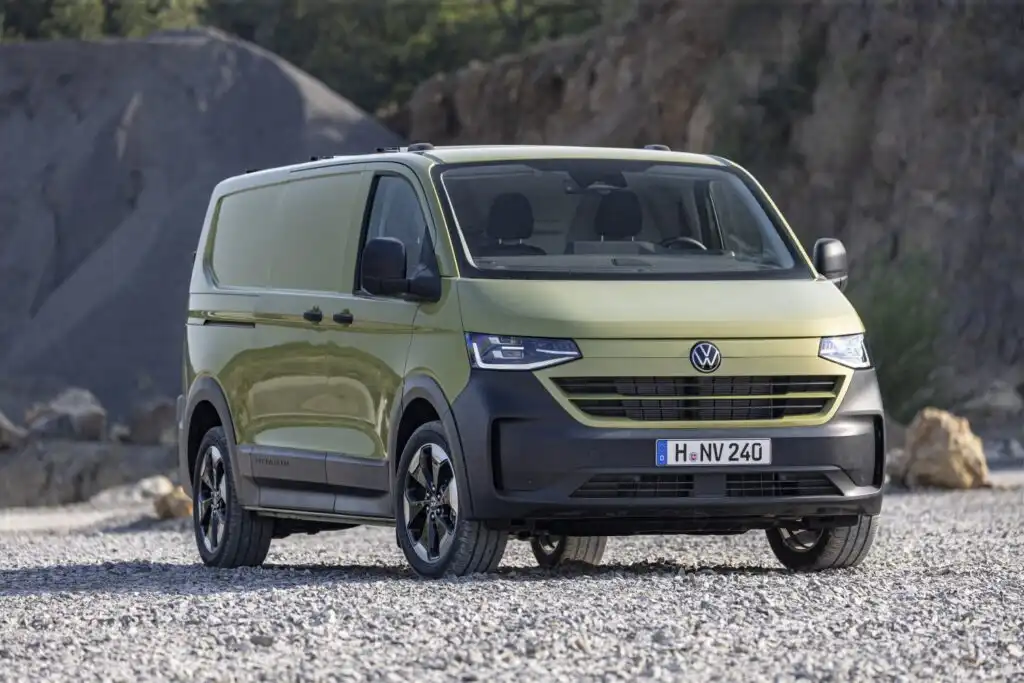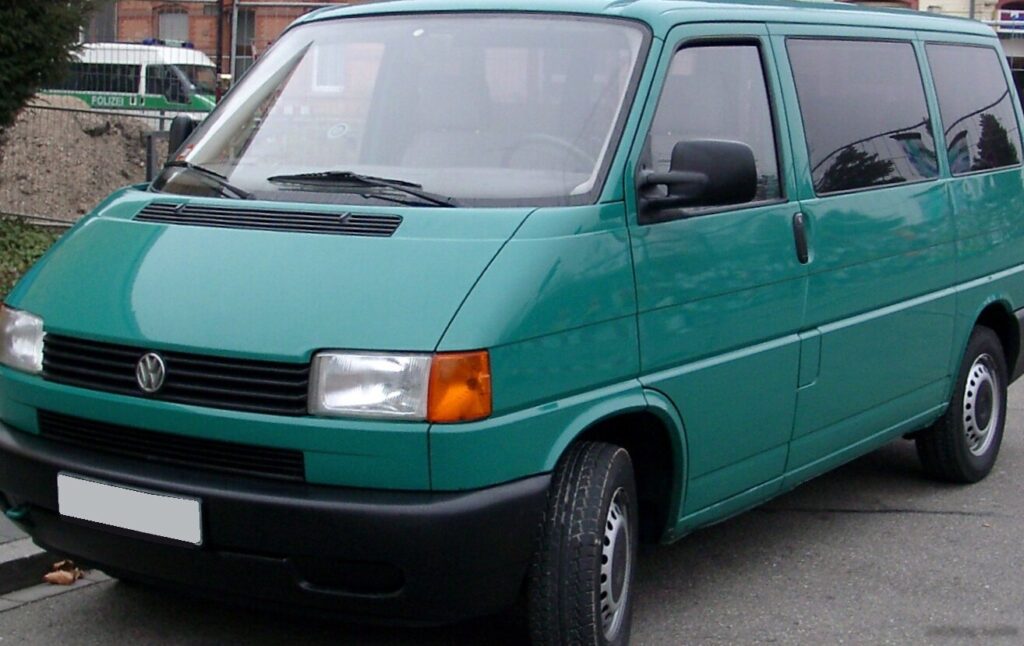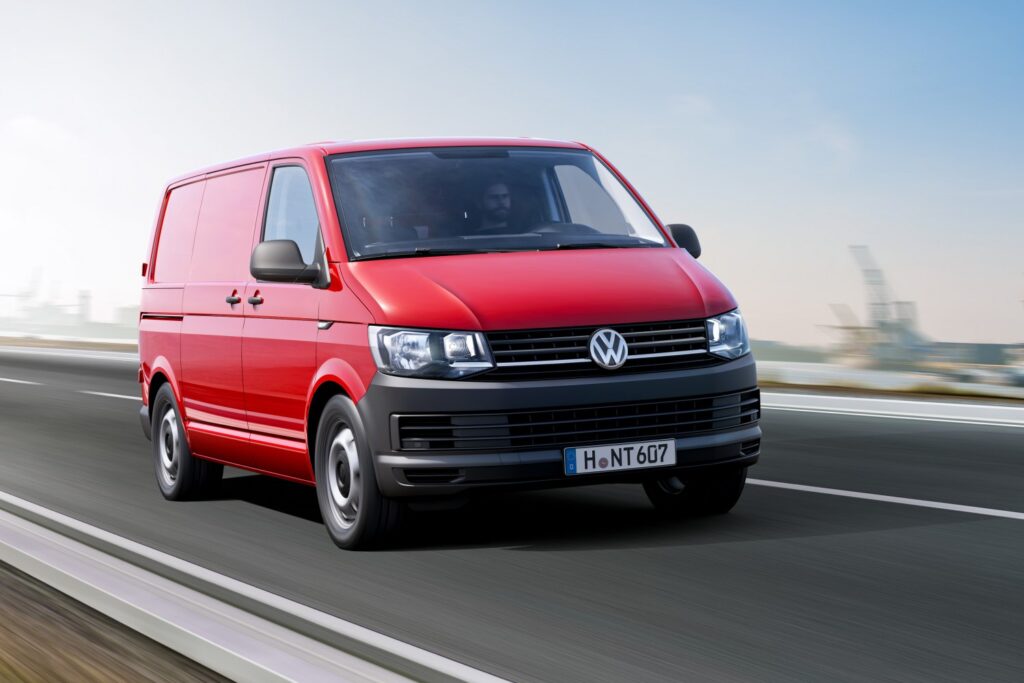
The Volkswagen Transporter, an iconic nameplate synonymous with versatility and robust utility, entered its sixth generation, the T6, in 2015, continuing a legacy that stretches back over seven decades. The specific variant under scrutiny, the Volkswagen Transporter (T6) Panel Van 2.0 TSI (150 Hp) L2H2, represents a crucial segment within the light commercial vehicle (LCV) market, particularly across Europe and other global regions where its blend of practicality, efficiency, and driving dynamics has made it a perennial favorite. Produced from 2015 to 2019, this iteration built upon the well-established reputation of its predecessors, offering enhanced technology, improved ergonomics, and a more refined driving experience, all while maintaining its core identity as a workhorse. As a panel van, its primary role is to serve businesses requiring significant cargo capacity and reliable transport for goods and equipment, making it an indispensable asset for tradespeople, delivery services, and various commercial enterprises. The L2H2 designation further specifies its configuration: a long wheelbase (L2) paired with a high roof (H2), maximizing internal volume for larger or taller loads, a critical consideration for many commercial applications. While not as commonly sold in this specific panel van configuration in the United States, where larger, domestically produced vans often dominate the commercial segment, the T6 Transporter’s influence and technical prowess are globally recognized, embodying German engineering principles applied to the demanding world of commercial transport.
Engine and Performance of the Volkswagen Transporter (T6) Panel Van 2.0 TSI (150 Hp) L2H2
At the heart of the Volkswagen Transporter (T6) Panel Van 2.0 TSI (150 Hp) L2H2 lies Volkswagen’s highly regarded 2.0-liter TSI (Turbocharged Stratified Injection) petrol engine, a powerplant celebrated for its blend of power, refinement, and efficiency. This specific iteration, designated with the engine code EA888 / CJKB, is a four-cylinder inline unit featuring a DOHC (Double Overhead Camshaft) valvetrain and four valves per cylinder, ensuring optimal airflow and combustion. With a displacement of 1984 cm3 (121.07 cu. in.), the engine delivers a robust 150 horsepower, available across a broad rev range from 3750 to 6000 rpm. This wide power band is particularly beneficial for a commercial vehicle, providing ample power for acceleration even when fully loaded. More critically for a van, the torque output is impressive: 280 Nm, or approximately 206.52 lb.-ft., available from a low 1500 rpm up to 3750 rpm. This strong low-end torque is vital for effortless starts, confident acceleration, and maintaining speed, especially on inclines or when navigating urban environments with frequent stops and starts.
The engine’s advanced technology includes direct fuel injection and a turbocharger with an intercooler. Direct injection ensures precise fuel delivery directly into the combustion chamber, optimizing fuel atomization and efficiency, while the turbocharger significantly boosts power and torque output without increasing engine displacement. The intercooler, in turn, cools the compressed air before it enters the engine, further enhancing combustion efficiency and power. This sophisticated powertrain is mated to a 6-speed manual transmission, offering the driver precise control over gear selection and contributing to the vehicle’s overall efficiency. The drivetrain architecture is front-wheel drive, a common and practical choice for commercial vans, providing good traction and simplifying maintenance. This setup allows for a flat load floor and maximizes interior cargo space, which is paramount in a panel van.
Performance figures for the Transporter (T6) Panel Van 2.0 TSI (150 Hp) L2H2 are respectable for its class. It can accelerate from 0 to 60 mph in an estimated 10.5 seconds, while reaching 100 km/h in 11.1 seconds. The maximum speed is rated at 176 km/h, or approximately 109.36 mph, which is more than adequate for highway cruising. Fuel economy, a crucial factor for commercial operators, varies depending on driving conditions. According to NEDC standards, urban consumption ranges from 12.2-12.7 l/100 km (18.5-19.3 US mpg), extra-urban from 7.4-8.2 l/100 km (28.7-31.8 US mpg), and combined consumption between 9.1-9.8 l/100 km (24-25.8 US mpg). These figures highlight the engine’s efficiency, further aided by features like a Start & Stop System, which automatically shuts off the engine when the vehicle is stationary, reducing fuel consumption and emissions in city traffic. The vehicle also complies with the stringent Euro 6 emission standard, underscoring its commitment to environmental responsibility.
Design and Features
The design of the Volkswagen Transporter (T6) Panel Van 2.0 TSI (150 Hp) L2H2 is characterized by its functional elegance, a hallmark of Volkswagen’s commercial vehicle philosophy. As a panel van, its primary purpose dictates its form: a boxy, robust structure optimized for cargo transport. The L2H2 designation signifies its long wheelbase and high roof configuration, providing an expansive internal volume. With a length of 5304 mm (208.82 inches), a width of 1904 mm (74.96 inches), and a height of 2170 mm (85.43 inches), this variant offers a substantial footprint, balancing maneuverability with cargo capacity. The wheelbase of 3400 mm (133.86 inches) contributes to stable handling, while the minimum turning circle of 13.2 meters (43.31 feet) ensures decent agility for a vehicle of its size, crucial for navigating tight urban streets and loading docks.
The body type is a traditional van, typically featuring 4 to 5 doors, including a sliding side door (or doors) for easy access to the cargo area and rear barn doors or a tailgate. The cabin is designed to accommodate 2 to 3 seats, prioritizing driver and passenger comfort for long working hours. The focus is on durability and practicality, with hard-wearing materials chosen for the interior to withstand the rigors of daily commercial use. The cargo area is truly the star of the show for a panel van. The T6 L2H2 boasts an impressive maximum trunk (boot) space of 7800 liters (275.45 cu. ft.), allowing for the transport of substantial volumes of goods. The kerb weight ranges from 1803-2120 kg (3974.93 – 4673.8 lbs.), with a maximum permissible weight of 2800-3200 kg (6172.94 – 7054.79 lbs.), indicating a robust construction capable of handling heavy loads. The maximum payload capacity ranges from 997-1080 kg (2198.01 – 2380.99 lbs.), further cementing its utility.
Beyond its cargo-carrying capabilities, the Transporter T6 incorporates essential features for safety and driver convenience. The braking system comprises ventilated discs on both the front (308×29.5 mm) and rear (294×22 mm) axles, ensuring strong and consistent stopping power, complemented by an Anti-lock Braking System (ABS) for enhanced control during emergency braking. The suspension system is engineered for both load-bearing and ride comfort; the front features an independent McPherson type with coil springs and an anti-roll bar, while the rear utilizes an independent coil spring, wishbone, and transverse stabilizer setup. This independent suspension at both ends is a significant advantage, providing a more car-like ride quality and improved handling compared to traditional leaf-spring commercial setups, even when the vehicle is unladen. The hydraulic power steering, with a steering rack and pinion mechanism, offers precise feedback to the driver. Standard tire sizes include 205/65 R16 or 215/65 R16 on 6.5J x 16 wheel rims, providing a good balance of load capacity and ride comfort. The Transporter T6 also offers practical towing capabilities, with a permitted trailer load of 2500 kg (5511.56 lbs.) with brakes and 750 kg (1653.47 lbs.) without brakes, making it a versatile tool for businesses requiring additional hauling capacity.
Technical Specifications: Volkswagen Transporter (T6) Panel Van 2.0 TSI (150 Hp) L2H2
| Brand | Volkswagen |
| Model | Transporter |
| Generation | Transporter (T6) Panel Van |
| Type (Engine) | 2.0 TSI (150 Hp) L2H2 |
| Start of production | 2015 year |
| End of production | 2019 year |
| Powertrain Architecture | Internal Combustion engine |
| Body type | Van |
| Seats | 2-3 |
| Doors | 4-5 |
| Fuel consumption (economy) – urban (NEDC) | 12.2-12.7 l/100 km (19.3 – 18.5 US mpg) |
| Fuel consumption (economy) – extra urban (NEDC) | 7.4-8.2 l/100 km (31.8 – 28.7 US mpg) |
| Fuel consumption (economy) – combined (NEDC) | 9.1-9.8 l/100 km (25.8 – 24 US mpg) |
| CO2 emissions (NEDC) | 208-224 g/km |
| Fuel Type | Petrol (Gasoline) |
| Acceleration 0 – 60 mph (Calculated) | 10.5 sec |
| Acceleration 0 – 100 km/h | 11.1 sec |
| Maximum speed | 176 km/h (109.36 mph) |
| Emission standard | Euro 6 |
| Weight-to-power ratio | 12 kg/Hp (83.2 Hp/tonne) |
| Weight-to-torque ratio | 6.4 kg/Nm (155.3 Nm/tonne) |
| Power | 150 Hp @ 3750-6000 rpm. |
| Power per litre | 75.6 Hp/l |
| Torque | 280 Nm @ 1500-3750 rpm (206.52 lb.-ft.) |
| Engine layout | Front, Transverse |
| Engine Model/Code | EA888 / CJKB |
| Engine displacement | 1984 cm3 (121.07 cu. in.) |
| Number of cylinders | 4 |
| Engine configuration | Inline |
| Cylinder Bore | 82.5 mm (3.25 in.) |
| Piston Stroke | 92.8 mm (3.65 in.) |
| Compression ratio | 9.8:1 |
| Number of valves per cylinder | 4 |
| Fuel injection system | Direct injection |
| Engine aspiration | Turbocharger, Intercooler |
| Valvetrain | DOHC |
| Engine oil capacity | 5.7 l (6.02 US qt) |
| Engine systems | Start & Stop System |
| Kerb Weight | 1803-2120 kg (3974.93 – 4673.8 lbs.) |
| Max. weight | 2800-3200 kg (6172.94 – 7054.79 lbs.) |
| Max load | 997-1080 kg (2198.01 – 2380.99 lbs.) |
| Trunk (boot) space – maximum | 7800 l (275.45 cu. ft.) |
| Fuel tank capacity | 80 l (21.13 US gal) |
| Max. roof load | 100 kg (220.46 lbs.) |
| Permitted trailer load with brakes (12%) | 2500 kg (5511.56 lbs.) |
| Permitted trailer load without brakes | 750 kg (1653.47 lbs.) |
| Permitted towbar download | 100 kg (220.46 lbs.) |
| Length | 5304 mm (208.82 in.) |
| Width | 1904 mm (74.96 in.) |
| Width including mirrors | 2297 mm (90.43 in.) |
| Height | 2170 mm (85.43 in.) |
| Wheelbase | 3400 mm (133.86 in.) |
| Front overhang | 908 mm (35.75 in.) |
| Rear overhang | 993 mm (39.09 in.) |
| Ride height (ground clearance) | 202 mm (7.95 in.) |
| Minimum turning circle (turning diameter) | 13.2 m (43.31 ft.) |
| Approach angle | 21.2° |
| Departure angle | 16.2° |
| Ramp-over (brakeover) angle | 12.2° |
| Drivetrain Architecture | The Internal combustion engine (ICE) drives the front wheels of the vehicle. |
| Drive wheel | Front wheel drive |
| Number of gears and type of gearbox | 6 gears, manual transmission |
| Front suspension | Independent, type McPherson with coil spring and anti-roll bar |
| Rear suspension | Independent coil spring, Wishbone, Transverse stabilizer |
| Front brakes | Ventilated discs, 308×29.5 mm |
| Rear brakes | Ventilated discs, 294×22 mm |
| Assisting systems | ABS (Anti-lock braking system) |
| Steering type | Steering rack and pinion |
| Power steering | Hydraulic Steering |
| Tires size | 205/65 R16; 215/65 R16 |
| Wheel rims size | 6.5J x 16 |