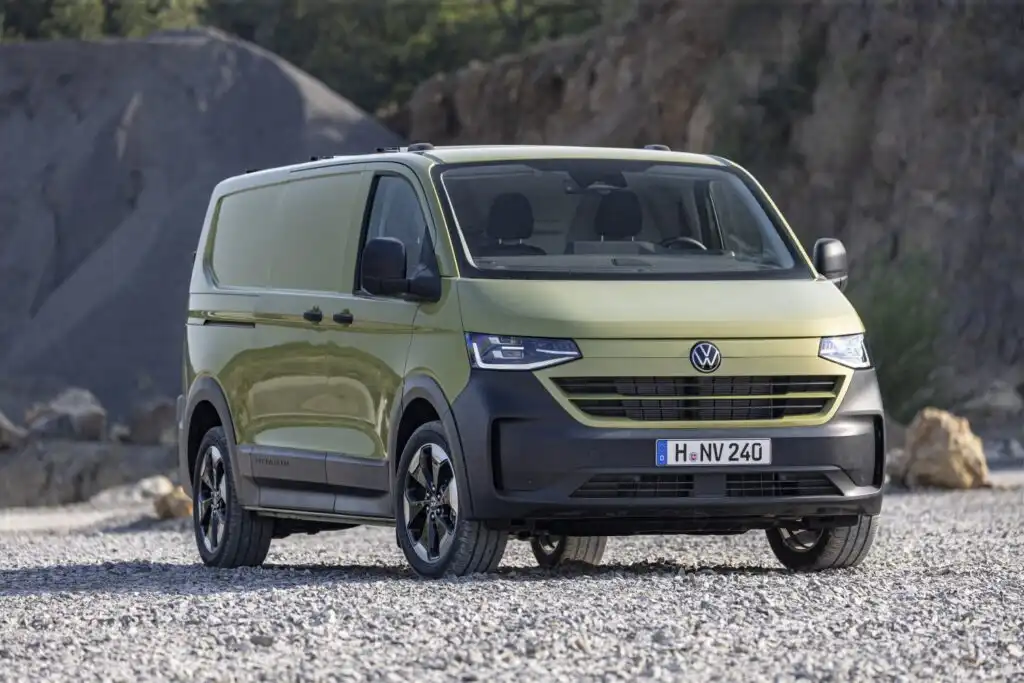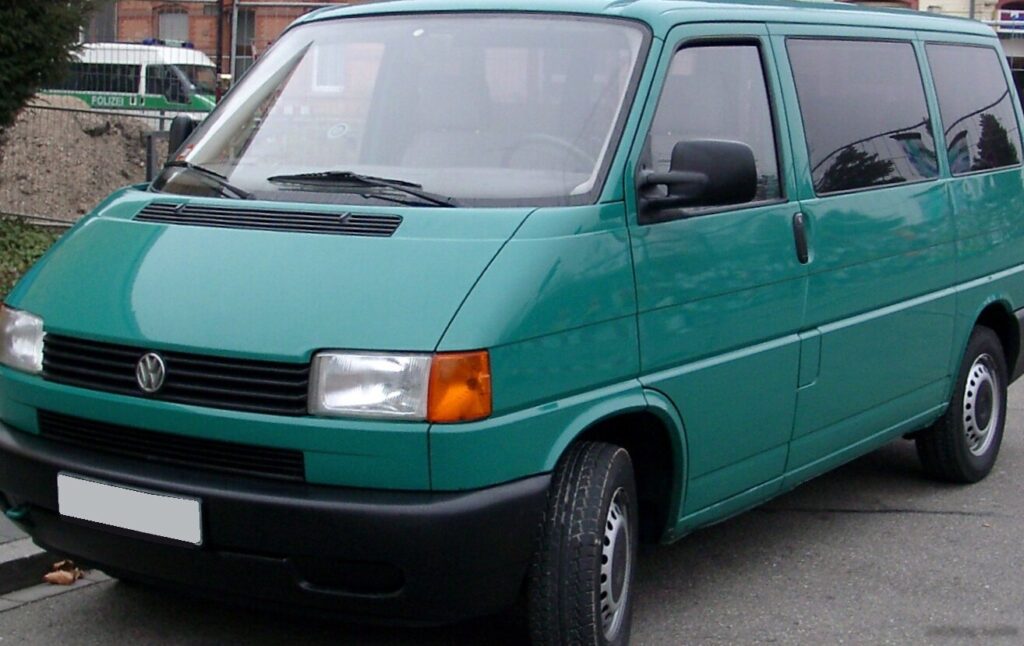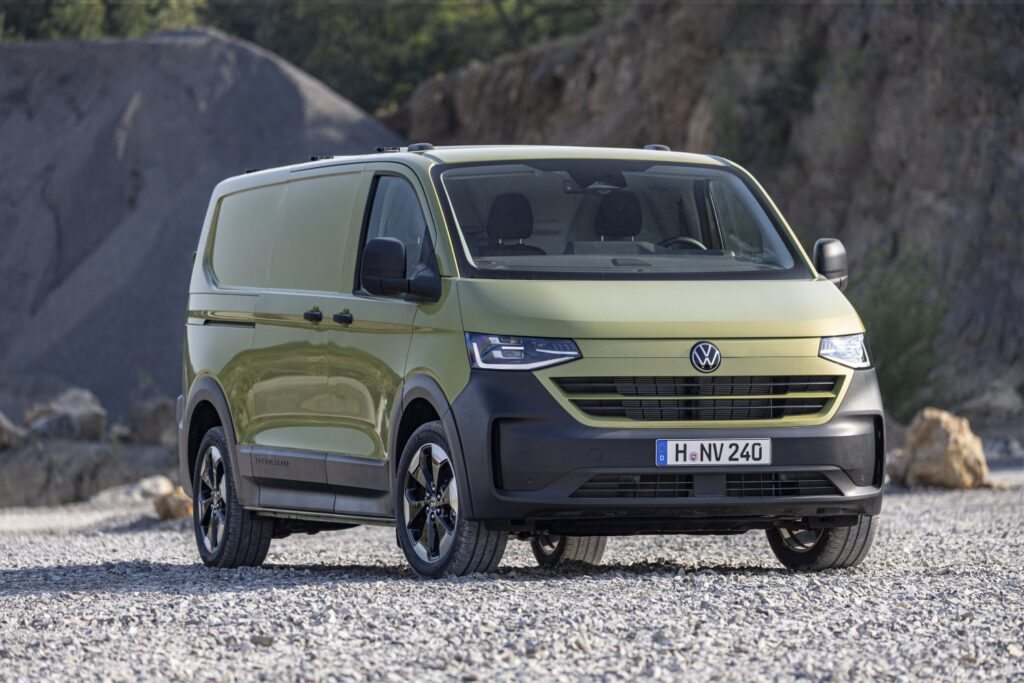
The Volkswagen Transporter (T7) Panel Van represents the latest iteration of Volkswagen’s iconic commercial vehicle, continuing a legacy that began in 1950. Introduced in August 2024, the T7 is primarily aimed at the European market, where it serves as a versatile workhorse for businesses and tradespeople. While not directly sold in the United States in this specific configuration, the Transporter lineage has a significant following among van enthusiasts in North America, often imported and modified. The T7 Panel Van 2.0 TDI (110 Hp) L2H1 variant is a mid-range offering, balancing practicality, efficiency, and a reasonable payload capacity. It competes with other light commercial vehicles like the Ford Transit Custom, Mercedes-Benz Vito, and Citroën Dispatch.
Volkswagen Transporter (T7) Panel Van: An Overview
The T7 generation marks a significant step forward in terms of technology and driver assistance systems compared to its predecessor, the T6.1. While retaining the core functionality expected of a commercial van – cargo capacity, durability, and reliability – the T7 integrates modern features such as a digital cockpit, advanced connectivity options, and a suite of safety technologies. The “L2H1” designation refers to the vehicle’s body length (L2 – long wheelbase) and roof height (H1 – standard roof), influencing its overall dimensions and cargo volume. This particular model is powered by a 2.0-liter turbocharged diesel engine, offering a blend of fuel efficiency and adequate performance for typical commercial applications.
Engine & Performance
The heart of the Transporter T7 Panel Van 2.0 TDI (110 Hp) L2H1 is a 2.0-liter four-cylinder diesel engine, internally known as the Panther engine. This engine produces 110 horsepower (Hp) and 310 Newton-meters (228.64 lb.-ft.) of torque. The engine is transversely mounted at the front of the vehicle and utilizes a diesel commonrail fuel injection system coupled with a turbocharger and intercooler to optimize combustion and power delivery. Power is delivered to the front wheels via a six-speed manual transmission. While not designed for outright speed, the engine provides sufficient power for hauling loads and navigating various road conditions. Acceleration from 0 to 100 km/h (0-62 mph) takes 16.9 seconds, and 0 to 60 mph is achieved in 16.1 seconds. The maximum speed is electronically limited to 155 km/h (96.31 mph). Fuel consumption is rated at 7.1 liters per 100 kilometers (33.1 US mpg, 39.8 UK mpg), and CO2 emissions are 186 g/km, meeting Euro 6e emission standards. The inclusion of a Start & Stop system and a particulate filter further contributes to reducing emissions.
Design & Features
The T7 Panel Van maintains the classic van silhouette while incorporating modern design elements. It’s a four or five-door vehicle with a functional interior designed for cargo transport. The L2H1 configuration offers a practical balance between interior space and maneuverability. The vehicle’s dimensions are 5450 mm (214.57 in) in length, 2032 mm (80 in) in width, and 1980 mm (77.95 in) in height. The wheelbase is 3500 mm (137.8 in). The interior prioritizes practicality, with a focus on durability and ease of cleaning. Key features include a driver-focused cockpit with digital instrumentation, a multifunction steering wheel, and various storage compartments. Modern safety features, such as ABS (Anti-lock Braking System) and electric power steering, are standard. The T7 also boasts a respectable payload capacity of 1182 kg (2605.86 lbs) and a maximum roof load of 170 kg (374.79 lbs). Towing capabilities include a permitted trailer load of 2000 kg (4409.25 lbs) with brakes and 750 kg (1653.47 lbs) without brakes.
Technical Specifications
| Brand | Volkswagen |
| Model | Transporter |
| Generation | Transporter (T7) Panel Van |
| Type (Engine) | 2.0 TDI (110 Hp) L2H1 |
| Start of production | August, 2024 |
| Powertrain Architecture | Internal Combustion engine |
| Body type | Van |
| Seats | 2-3 |
| Doors | 4-5 |
| Combined fuel consumption (WLTP) | 7.1 l/100 km |
| Fuel Economy (US mpg) | 33.1 US mpg |
| Fuel Economy (UK mpg) | 39.8 UK mpg |
| Fuel Economy (km/l) | 14.1 km/l |
| CO2 emissions (WLTP) | 186 g/km |
| Fuel Type | Diesel |
| Acceleration 0 – 100 km/h | 16.9 sec |
| Acceleration 0 – 62 mph | 16.9 sec |
| Acceleration 0 – 60 mph | 16.1 sec |
| Maximum speed | 155 km/h (96.31 mph) |
| Emission standard | Euro 6e |
| Weight-to-power ratio | 16.8 kg/Hp |
| Power-to-weight ratio | 59.7 Hp/tonne |
| Weight-to-torque ratio | 5.9 kg/Nm |
| Torque-to-weight ratio | 168.2 Nm/tonne |
| Power | 110 Hp |
| Power per litre | 55.1 Hp/l |
| Torque | 310 Nm (228.64 lb.-ft.) |
| Engine layout | Front, Transverse |
| Engine Model/Code | Panther |
| Engine displacement | 1996 cm3 (121.8 cu. in.) |
| Number of cylinders | 4 |
| Engine configuration | Inline |
| Cylinder Bore | 84.01 mm (3.31 in.) |
| Piston Stroke | 90.03 mm (3.54 in.) |
| Compression ratio | 16.5:1 |
| Number of valves per cylinder | 4 |
| Fuel injection system | Diesel Commonrail |
| Engine aspiration | Turbocharger, Intercooler |
| Valvetrain | DOHC |
| Kerb Weight | 1843 kg (4063.12 lbs.) |
| Max. weight | 3025 kg (6668.98 lbs.) |
| Max load | 1182 kg (2605.86 lbs.) |
| Fuel tank capacity | 70 l (18.49 US gal | 15.4 UK gal) |
| AdBlue tank | 20 l (5.28 US gal | 4.4 UK gal) |
| Max. roof load | 170 kg (374.79 lbs.) |
| Permitted trailer load with brakes (12%) | 2000 kg (4409.25 lbs.) |
| Permitted trailer load without brakes | 750 kg (1653.47 lbs.) |
| Permitted towbar download | 100 kg (220.46 lbs.) |
| Length | 5450 mm (214.57 in.) |
| Width | 2032 mm (80 in.) |
| Width including mirrors | 2275 mm (89.57 in.) |
| Height | 1980 mm (77.95 in.) |
| Wheelbase | 3500 mm (137.8 in.) |
| Minimum turning circle | 13.8 m (45.28 ft.) |
| Drivetrain Architecture | Front wheel drive |
| Number of gears | 6 |
| Gearbox type | Manual transmission |
| Tires size | 215/65 R16; 215/60 R17 |
| Wheel rims size | 6.5J x 16; 6.5J x 17 |