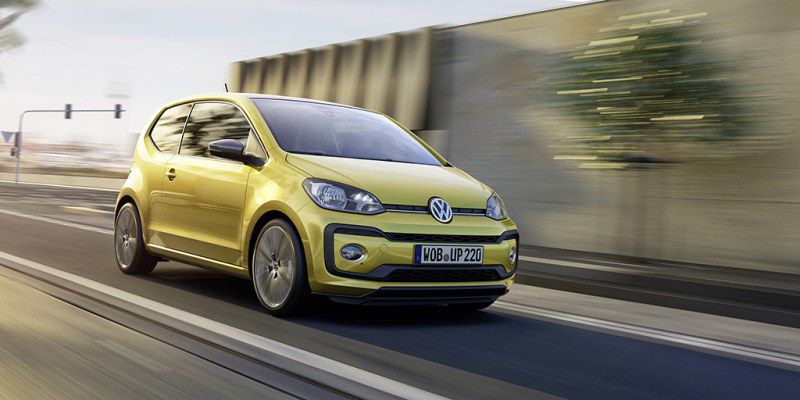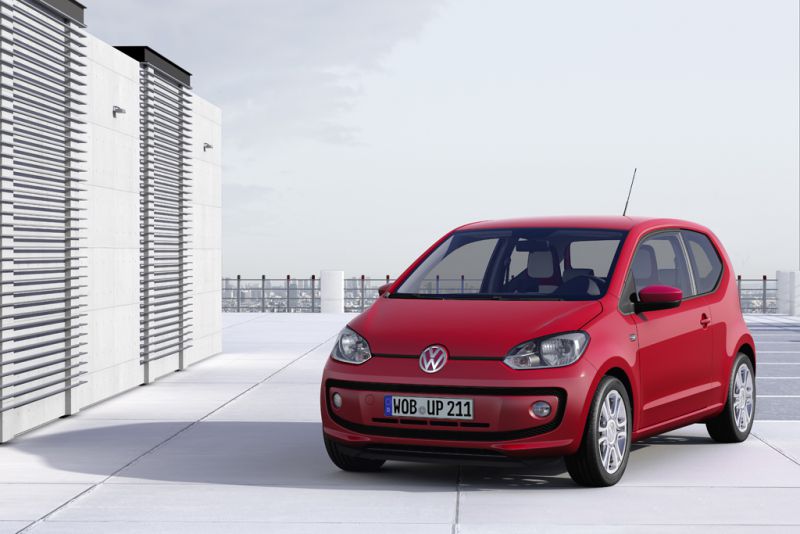
The Volkswagen Up! is a city car manufactured by the German automaker Volkswagen from 2012 to 2016. Positioned as an entry-level vehicle, the Up! aimed to provide affordable and efficient transportation, particularly within urban environments. This article focuses on the 1.0-liter, 68 horsepower Compressed Natural Gas (CNG) variant, a model primarily sold in European markets as a response to increasing environmental regulations and a desire for alternative fuel vehicles. While not officially sold in the United States, the Up! represents Volkswagen’s commitment to compact, fuel-efficient vehicles and offers a compelling case study in small car engineering.
Volkswagen Up! 1.0 (68 Hp) CNG: An Overview
The Up! was conceived as a modern successor to the Volkswagen Lupo, offering a fresh design and updated technology. The CNG version specifically targeted environmentally conscious consumers, offering reduced emissions and lower running costs compared to traditional gasoline-powered vehicles. The Up!’s compact size and nimble handling made it well-suited for navigating congested city streets, while its relatively spacious interior provided comfortable accommodation for four passengers. The model year range of 2012-2016 saw incremental improvements to the vehicle, but the core design and mechanical components remained consistent.
Engine & Performance
The heart of the Volkswagen Up! 1.0 CNG is a naturally aspirated, three-cylinder engine displacing 999 cubic centimeters (60.96 cubic inches). This engine produces 68 horsepower at 6200 rpm and 90 Nm (66.38 lb.-ft.) of torque at 3000 rpm. The engine utilizes multi-port manifold fuel injection and is transversely mounted at the front of the vehicle. While not designed for outright speed, the engine provides adequate power for urban driving and occasional highway use. Acceleration from 0 to 100 km/h (0-62 mph) takes 16.3 seconds, and 0 to 60 mph is achieved in 15.5 seconds. The Up! CNG achieves a maximum speed of 164 km/h (101.9 mph). A key feature of this model is its bi-fuel capability, allowing it to run on either petrol (gasoline) or CNG, providing flexibility and extending the vehicle’s range. The power-to-weight ratio is 15.2 kg/Hp, and the torque-to-weight ratio is 11.5 kg/Nm.
Design & Features
The Volkswagen Up! is a hatchback available in both three-door and five-door configurations. Its design is characterized by clean lines, a relatively high roofline for its size, and a cheerful, approachable aesthetic. The interior is surprisingly spacious for a car of its dimensions, with a focus on practicality and functionality. Safety features, even in early models, included ABS (Anti-lock Braking System) as standard equipment. The Up! also featured electric power steering for ease of maneuverability. The rear seats can be folded down to increase cargo capacity, ranging from a minimum of 251 liters (8.86 cubic feet) to a maximum of 951 liters (33.58 cubic feet) with the seats folded. The vehicle’s compact footprint and tight turning circle (9.8 meters / 32.15 feet) make it exceptionally easy to park and navigate in tight urban spaces. The Up!’s design prioritized efficiency and usability over luxurious appointments, making it a sensible choice for budget-conscious buyers.
Technical Specifications
| Brand | Volkswagen |
| Model | Up! |
| Generation | Up! |
| Type (Engine) | 1.0 (68 Hp) CNG |
| Start of production | 2012 |
| End of production | 2016 |
| Powertrain Architecture | Internal Combustion engine |
| Body type | Hatchback |
| Seats | 4 |
| Doors | 3-5 |
| CO2 emissions | 79 g/km |
| Fuel Type | Petrol / CNG |
| Acceleration 0 – 100 km/h | 16.3 sec |
| Acceleration 0 – 62 mph | 16.3 sec |
| Acceleration 0 – 60 mph | 15.5 sec |
| Maximum speed | 164 km/h / 101.9 mph |
| Emission standard | Euro 5 |
| Weight-to-power ratio | 15.2 kg/Hp |
| Weight-to-torque ratio | 11.5 kg/Nm |
| Power | 68 Hp @ 6200 rpm |
| Power per litre | 68.1 Hp/l |
| Torque | 90 Nm @ 3000 rpm / 66.38 lb.-ft. @ 3000 rpm |
| Engine layout | Front, Transverse |
| Engine Model/Code | CPGA |
| Engine displacement | 999 cm3 / 60.96 cu. in. |
| Number of cylinders | 3 |
| Engine configuration | Inline |
| Number of valves per cylinder | 4 |
| Fuel injection system | Multi-port manifold injection |
| Engine aspiration | Naturally aspirated engine |
| Engine oil capacity | 3.4 l / 3.59 US qt | 2.99 UK qt |
| Kerb Weight | 1031 kg / 2272.97 lbs |
| Max. weight | 1370 kg / 3020.33 lbs |
| Max load | 339 kg / 747.37 lbs |
| Trunk (boot) space – minimum | 251 l / 8.86 cu. ft. |
| Trunk (boot) space – maximum | 951 l / 33.58 cu. ft. |
| Fuel tank capacity | 35 l / 9.25 US gal | 7.7 UK gal |
| Length | 3540 mm / 139.37 in |
| Width | 1645 mm / 64.76 in |
| Height | 1489 mm / 58.62 in |
| Wheelbase | 2420 mm / 95.28 in |
| Front track | 1428 mm / 56.22 in |
| Rear (Back) track | 1424 mm / 56.06 in |
| Minimum turning circle | 9.8 m / 32.15 ft |
| Drivetrain Architecture | Front wheel drive |
| Number of gears | 5 gears, manual transmission |
| Front brakes | Ventilated discs |
| Steering type | Steering rack and pinion |
| Power steering | Electric Steering |
The Volkswagen Up! 1.0 CNG, while not a performance car, offered a compelling package of affordability, efficiency, and practicality. Its bi-fuel capability and low emissions made it a popular choice in Europe, particularly in countries with incentives for alternative fuel vehicles. Although never officially available in the US market, the Up! demonstrates Volkswagen’s engineering prowess in creating a small, efficient, and well-rounded city car.