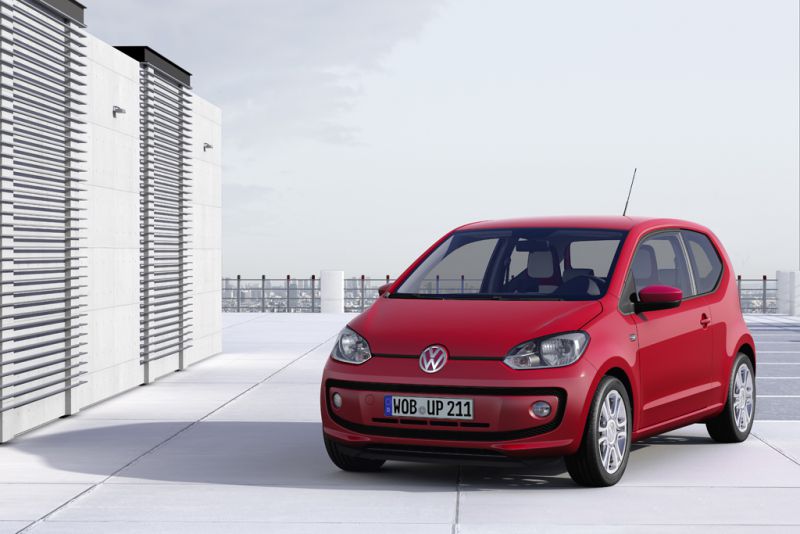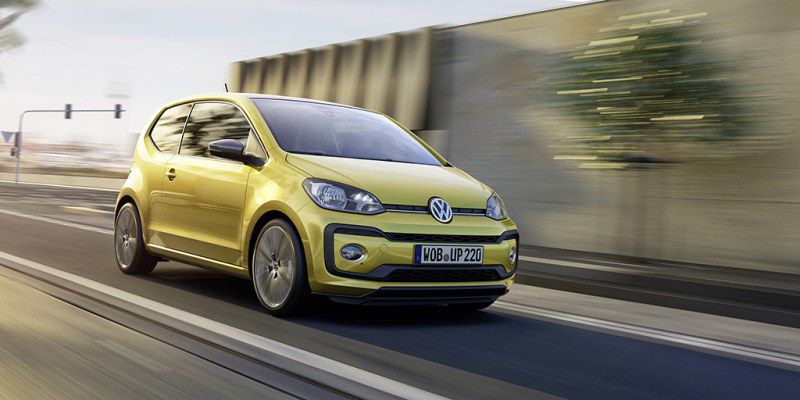
The Volkswagen Up! is a city car manufactured by the German automaker Volkswagen. Introduced in 2011, the Up! was designed as a modern, affordable, and fuel-efficient vehicle aimed at the urban driving environment. The model underwent a significant facelift in 2016, bringing updated styling, improved equipment, and enhanced technology. This article focuses on the 2016-2018 facelifted Volkswagen Up! equipped with the 1.0-liter, 75 horsepower engine, detailing its specifications, performance, and place within the Volkswagen lineup.
Volkswagen Up! (Facelift 2016) 1.0 (75 Hp): An Overview
The Up! was conceived as a successor to the Volkswagen Lupo, offering a more contemporary design and a focus on practicality. While not initially sold in the United States, the Up! found considerable success in Europe, where its compact size, nimble handling, and low running costs made it a popular choice for city dwellers. The 2016 facelift brought a more mature aesthetic, with revised front and rear fascias, updated interior materials, and the introduction of new technology features. The 1.0-liter engine, producing 75 horsepower, represented a key powertrain option, balancing performance with fuel efficiency.
Engine & Performance
The 2016 Volkswagen Up! 1.0 (75 Hp) is powered by a naturally aspirated, three-cylinder 1.0-liter (999 cm3 or 60.96 cu. in.) gasoline engine. This engine, designated CHYB, produces a maximum power output of 75 horsepower at 6200 rpm and 95 Nm (70.07 lb.-ft.) of torque between 3000 and 4300 rpm. The engine utilizes multi-port manifold fuel injection. Power is delivered to the front wheels via a five-speed manual transmission.
Performance figures include a 0-100 km/h (0-62 mph) acceleration time of 13.5 seconds, and a 0-60 mph time of 12.8 seconds. The vehicle has a maximum speed of 172 km/h (106.88 mph). The Up!’s lightweight construction, with a kerb weight of 861 kg (1898.18 lbs), contributes to its relatively sprightly performance despite the modest engine output. The weight-to-power ratio is 11.5 kg/Hp, and the weight-to-torque ratio is 9.1 kg/Nm.
Fuel economy is a significant strength of the Up!, with combined fuel consumption rated at 4.1 l/100 km (57.4 US mpg or 68.9 UK mpg). Urban fuel consumption is 4.9 l/100 km (48 US mpg or 57.6 UK mpg), while extra-urban consumption is 3.7 l/100 km (63.6 US mpg or 76.3 UK mpg). CO2 emissions are rated at 96 g/km, meeting Euro 6 emission standards.
Design & Features
The 2016 facelifted Volkswagen Up! is a compact hatchback available in both three-door and five-door configurations, seating up to four passengers. Its dimensions are: length 3600 mm (141.73 in), width 1641 mm (64.61 in) (1910 mm including mirrors), and height 1504 mm (59.21 in). The wheelbase measures 2407 mm (94.76 in).
The exterior design of the facelifted model features a more prominent grille, redesigned headlights, and a revised front bumper. The interior received updates including improved dashboard materials and a more modern infotainment system. Standard features typically included ABS (Anti-lock braking system), electric power steering, and front ventilated disc brakes with rear discs.
Practicality is a key aspect of the Up!’s design. Despite its small footprint, the vehicle offers a usable trunk space of 251 liters (8.86 cu. ft.) with the rear seats up, expanding to 959 liters (33.87 cu. ft.) when the rear seats are folded down. The fuel tank capacity is 35 liters (9.25 US gal or 7.7 UK gal). The maximum roof load is 50 kg (110.23 lbs). The vehicle’s turning circle is 9.8 meters (32.15 ft).
Technical Specifications
| Brand | Volkswagen |
| Model | Up! |
| Generation | Up! (facelift 2016) |
| Type (Engine) | 1.0 (75 Hp) |
| Start of production | 2016 |
| End of production | 2018 |
| Powertrain Architecture | Internal Combustion engine |
| Body type | Hatchback |
| Seats | 4 |
| Doors | 3-5 |
| Fuel consumption (urban) | 4.9 l/100 km (48 US mpg, 57.6 UK mpg, 20.4 km/l) |
| Fuel consumption (extra urban) | 3.7 l/100 km (63.6 US mpg, 76.3 UK mpg, 27 km/l) |
| Fuel consumption (combined) | 4.1 l/100 km (57.4 US mpg, 68.9 UK mpg, 24.4 km/l) |
| CO2 emissions | 96 g/km |
| Fuel Type | Petrol (Gasoline) |
| Acceleration 0 – 100 km/h | 13.5 sec |
| Acceleration 0 – 62 mph | 13.5 sec |
| Acceleration 0 – 60 mph | 12.8 sec |
| Maximum speed | 172 km/h (106.88 mph) |
| Emission standard | Euro 6 |
| Weight-to-power ratio | 11.5 kg/Hp |
| Weight-to-torque ratio | 9.1 kg/Nm |
| Power | 75 Hp @ 6200 rpm |
| Torque | 95 Nm @ 3000-4300 rpm (70.07 lb.-ft. @ 3000-4300 rpm) |
| Engine layout | Front, Transverse |
| Engine Model/Code | CHYB |
| Engine displacement | 999 cm3 (60.96 cu. in.) |
| Number of cylinders | 3 |
| Engine configuration | Inline |
| Number of valves per cylinder | 4 |
| Fuel injection system | Multi-port manifold injection |
| Engine oil capacity | 3.4 l (3.59 US qt | 2.99 UK qt) |
| Kerb Weight | 861 kg (1898.18 lbs) |
| Max. weight | 1330 kg (2932.15 lbs) |
| Max load | 469 kg (1033.97 lbs) |
| Trunk (boot) space – minimum | 251 l (8.86 cu. ft.) |
| Trunk (boot) space – maximum | 959 l (33.87 cu. ft.) |
| Fuel tank capacity | 35 l (9.25 US gal | 7.7 UK gal) |
| Max. roof load | 50 kg (110.23 lbs) |
| Length | 3600 mm (141.73 in) |
| Width | 1641 mm (64.61 in) |
| Width including mirrors | 1910 mm (75.2 in) |
| Height | 1504 mm (59.21 in) |
| Wheelbase | 2407 mm (94.76 in) |
| Front track | 1412-1428 mm (55.59 – 56.22 in) |
| Rear (Back) track | 1408-1424 mm (55.43 – 56.06 in) |
| Ride height (ground clearance) | 144 mm (5.67 in) |
| Minimum turning circle (turning diameter) | 9.8 m (32.15 ft) |
| Drive wheel | Front wheel drive |
| Number of gears and type of gearbox | 5 gears, manual transmission |
| Front brakes | Ventilated discs |
| Rear brakes | Disc |
| Steering type | Steering rack and pinion |
| Power steering | Electric Steering |
| Tires size | 175/65 R14; 185/55 R15 |
| Wheel rims size | 5J x 14; 5.5J x 15 |
The Volkswagen Up! (facelift 2016) 1.0 (75 Hp) represents a well-rounded package for urban transportation, offering a blend of efficiency, practicality, and affordability. While never officially offered in the US market, it remains a popular choice in Europe and other regions where compact city cars are in high demand.