
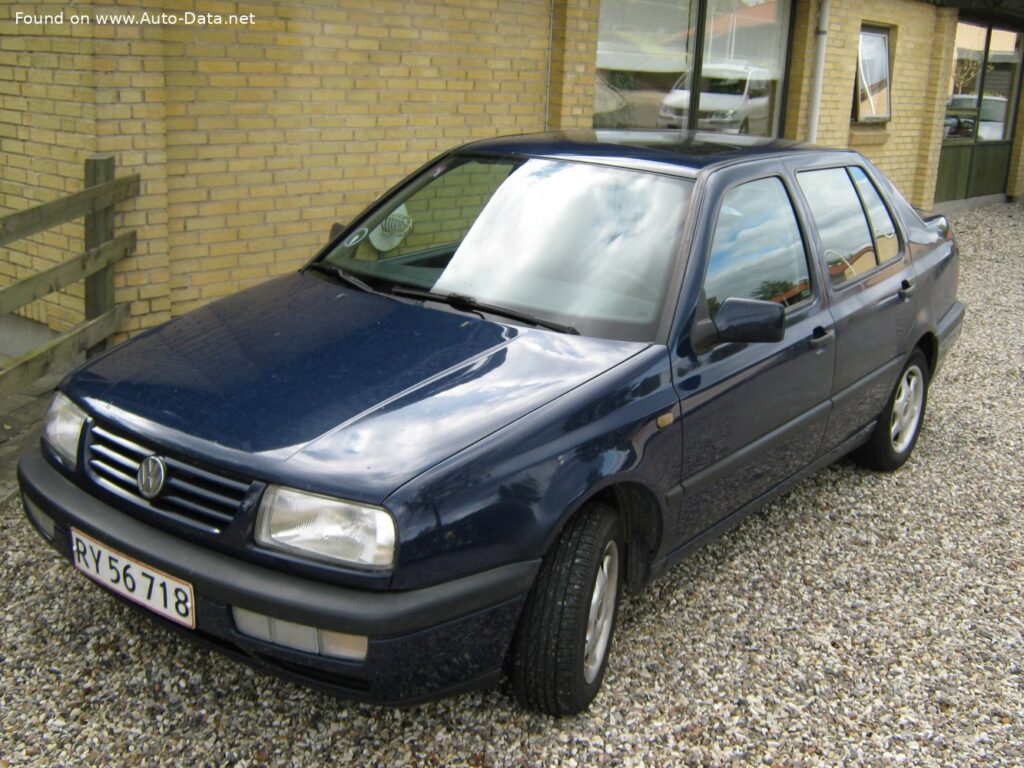
The Volkswagen Vento, produced from 1992 to 1998, was Volkswagen’s successor to the Jetta in many markets, particularly in South America and parts of Europe. Built on the A2 platform (1HX0), the Vento represented a significant update to the Jetta II, offering improved styling, interior refinements, and a range of engine options. Among these, the 1.9 TD (75 hp) variant, equipped with a five-speed manual transmission, occupied a specific niche within the Vento lineup, appealing to buyers prioritizing fuel efficiency and long-distance comfort over outright performance. This model served as a practical and economical choice, particularly popular in regions where diesel fuel was readily available and affordable.
The 1.9 TD (75 hp) Vento: Positioning and Overview
The 1.9 TD (75 hp) Vento was positioned as the entry-level diesel offering within the Vento range. Above it sat more powerful diesel variants, such as the 1.9 TDI with 90 or 100 horsepower, and gasoline-powered models ranging from 1.6L to 2.0L engines. The 75 hp version was designed for drivers seeking a reliable and economical sedan for daily commuting and longer journeys. It wasn’t intended to be a sporty model, but rather a pragmatic and durable vehicle. Compared to the gasoline options, the 1.9 TD offered significantly better fuel economy, making it a popular choice for high-mileage drivers. It was a step up in refinement and features from the base gasoline models, but a more affordable option than the higher-spec TDI versions.
Powertrain & Engine Architecture
The heart of the 1.9 TD Vento is the AAZ engine code, a 1.9-liter inline four-cylinder diesel engine. This engine utilizes a precombustion chamber injection system, a common technology in diesel engines of that era. This system involves injecting fuel into a precombustion chamber, where it partially ignites before entering the main combustion chamber, promoting more complete combustion and reducing emissions. The engine features an overhead camshaft (OHC) valvetrain with two valves per cylinder. A turbocharger, a relatively small unit for the time, is integrated into the engine to boost power and torque. The turbocharger provides increased air intake, allowing for more efficient combustion and improved performance.
The 1.9 TD engine produces 75 horsepower at 4400 rpm and 140 Nm (103.26 lb-ft) of torque at 2400 rpm. This torque output, available at relatively low engine speeds, is a key characteristic of diesel engines and contributes to the Vento’s usability in everyday driving conditions. The engine’s displacement is 1896 cm³ (115.7 cu. in.), with a bore of 79.5 mm (3.13 in.) and a stroke of 95.5 mm (3.76 in.). The compression ratio is a high 22.5:1, typical for diesel engines. The engine oil capacity is 4.3 liters (4.54 US qt | 3.78 UK qt), and the recommended oil specification should be consulted in the vehicle’s owner’s manual.
Driving Characteristics
The driving experience in the 1.9 TD Vento is characterized by its relaxed and efficient nature. Acceleration is not its strong suit; 0-100 km/h (0-62 mph) takes approximately 15.7 seconds. However, the engine’s torque provides adequate power for overtaking and maintaining highway speeds. The five-speed manual transmission is well-matched to the engine’s characteristics, allowing drivers to select the appropriate gear for optimal performance and fuel economy. The gear ratios are geared towards maximizing fuel efficiency rather than providing rapid acceleration. Compared to the more powerful TDI versions, the 75 hp model feels noticeably slower, particularly when accelerating from a standstill or climbing hills. However, it offers a smoother and more predictable power delivery, making it easier to drive in congested traffic. The turbocharger provides a noticeable boost in power once it spools up, but there is some turbo lag present.
Equipment & Trim Levels
The 1.9 TD Vento typically came with a relatively basic level of equipment, reflecting its position as an entry-level model. Standard features generally included power steering, central locking, and cloth upholstery. Depending on the market and optional packages, features like power windows, air conditioning, and an upgraded audio system could be added. The dashboard layout was functional and straightforward, with clearly labeled controls. Interior trim levels varied, but generally featured durable plastics and fabrics. Optional extras included alloy wheels, a sunroof, and a more sophisticated audio system. The level of equipment was often dependent on the specific market the vehicle was sold in, with some regions offering more standard features than others.
Chassis & Braking
The Vento’s chassis features a front independent suspension with wishbones and a rear suspension with traction connecting levers. This suspension setup provides a comfortable ride quality, absorbing bumps and irregularities in the road surface effectively. The front brakes are discs, providing good stopping power, while the rear brakes are drums, a cost-saving measure common in entry-level models. Anti-lock braking system (ABS) was often available as an option, enhancing safety by preventing wheel lockup during hard braking. The steering system is a rack and pinion type with hydraulic power assistance, providing precise and responsive steering feel. The standard tire size is 185/60 R14, mounted on 6J x 14 inch wheel rims. The kerb weight of the 1.9 TD Vento is approximately 1235 kg (2722.71 lbs).
Market Reception & Comparison
The 1.9 TD Vento was generally well-received by critics and consumers alike, particularly for its fuel efficiency and reliability. It was praised for its practicality and durability, making it a popular choice for families and individuals seeking a dependable and economical sedan. Compared to the gasoline-powered Vento models, the 1.9 TD offered significantly better fuel economy, with combined fuel consumption figures around 6.2 l/100 km (37.9 US mpg / 45.6 UK mpg). However, it was criticized for its relatively slow acceleration and lack of refinement compared to more powerful and luxurious vehicles. Compared to the higher-spec TDI models, the 75 hp version offered a more affordable entry point into diesel ownership, but at the expense of performance. The 1.9 TD Vento competed with other compact diesel sedans of the era, such as the Ford Escort Diesel and the Opel Astra Diesel.
Technical Specifications
| Brand | Volkswagen |
| Model | Vento |
| Generation | Vento (1HX0) |
| Type (Engine) | 1.9 TD (75 Hp) |
| Start of production | January, 1992 |
| End of production | 1998 |
| Engine Code | AAZ |
| Engine Displacement | 1896 cm3 (115.7 cu. in.) |
| Number of Cylinders | 4 |
| Engine Configuration | Inline |
| Power | 75 Hp @ 4400 rpm |
| Torque | 140 Nm @ 2400 rpm (103.26 lb.-ft. @ 2400 rpm) |
| Fuel Type | Diesel |
| Acceleration 0-100 km/h | 15.7 sec |
| Maximum Speed | 165 km/h (102.53 mph) |
| Kerb Weight | 1235 kg (2722.71 lbs) |
| Fuel Consumption (Urban) | 7.5 l/100 km (31.4 US mpg) |
| Fuel Consumption (Extra Urban) | 5.5 l/100 km (42.8 US mpg) |
| Fuel Consumption (Combined) | 6.2 l/100 km (37.9 US mpg) |
| Fuel Tank Capacity | 55 l (14.53 US gal) |
Legacy
The 1.9 TD engine, particularly the AAZ code, has earned a reputation for its robustness and longevity. Many examples of the 1.9 TD Vento are still on the road today, testament to the engine’s durability. While maintenance costs can increase with age, the engine is relatively simple to repair and parts are generally readily available. In the used car market, the 1.9 TD Vento is often sought after by buyers looking for a reliable and economical classic car. Its fuel efficiency and simple mechanical design make it an attractive option for those seeking a practical and affordable vehicle. However, potential buyers should be aware of the age-related issues common to vehicles of this era, such as rust and wear and tear on suspension components. The 1.9 TD Vento remains a popular choice for enthusiasts and everyday drivers alike, representing a practical and dependable option from Volkswagen’s past.
