
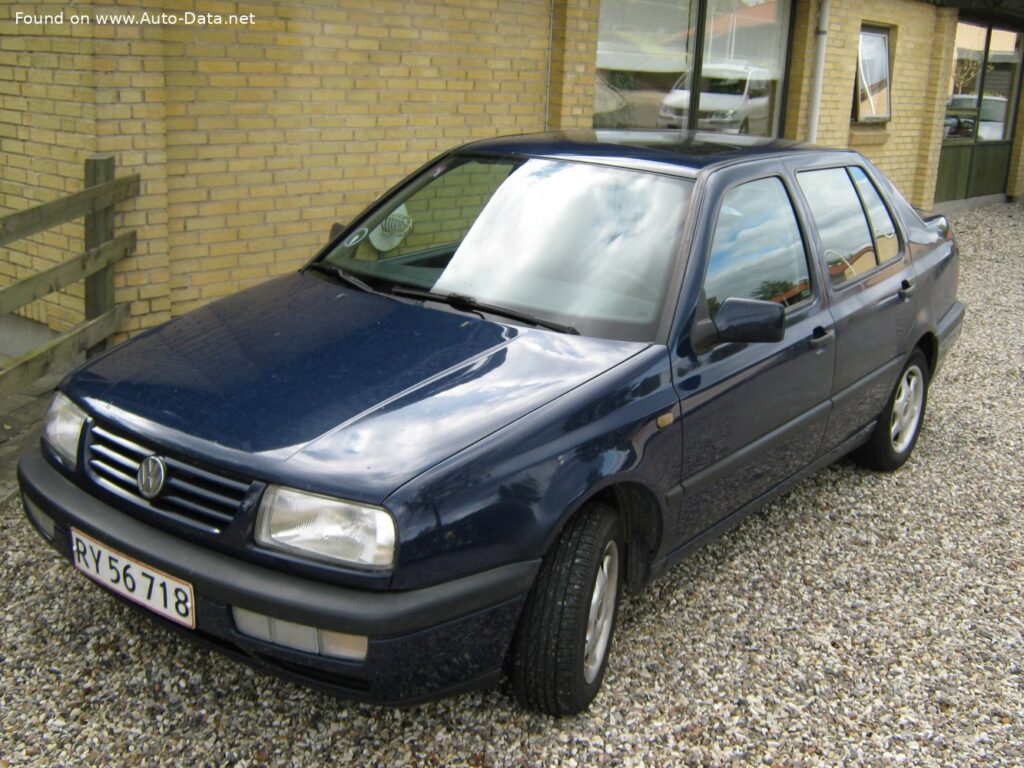
The Volkswagen Vento (1HX0) 1.9 TDI CL, produced from 1996 to 1997, represented a significant offering in Volkswagen’s compact sedan lineup. Built on the A3 platform – also known internally as the 1HX0 – the Vento served as the successor to the Jetta in many markets, particularly in Europe and South America. The 1.9 TDI CL trim occupied a middle ground within the Vento range, balancing fuel efficiency and reasonable performance with a more accessible price point compared to the higher-specification models. It was positioned as a practical and economical choice for buyers seeking a comfortable and reliable family sedan.
1.9 TDI CL: Powertrain & Engine Architecture
The heart of the Vento 1.9 TDI CL was the Volkswagen Group’s 1.9-liter inline-four cylinder diesel engine, specifically the AFN engine code. This engine was a cornerstone of Volkswagen’s diesel offerings during the mid-to-late 1990s, known for its durability and fuel economy. The AFN featured direct injection, a technology that significantly improved combustion efficiency and reduced emissions compared to older indirect injection systems. Fuel was delivered via a Bosch VE distributor-type injection pump, delivering precise fuel metering for optimal performance.
The engine employed an overhead camshaft (OHC) valvetrain with two valves per cylinder. A turbocharger with an intercooler was integrated into the system, boosting power output and providing improved torque across a wider RPM range. The engine’s displacement was 1896 cc (115.7 cubic inches), and it produced 110 horsepower at 4150 rpm and 235 Nm (173.33 lb-ft) of torque at 1900 rpm. The engine was mounted longitudinally in the front of the vehicle.
The Vento 1.9 TDI CL was equipped with a five-speed manual transmission. This transmission was chosen to complement the engine’s torque characteristics and provide a responsive driving experience. The gear ratios were tailored to maximize fuel efficiency and provide adequate acceleration for everyday driving conditions.
Fuel Injection and Turbocharging
The direct injection system in the AFN engine was a key element of its efficiency. Unlike indirect injection, where fuel is sprayed into the intake manifold, direct injection sprays fuel directly into the combustion chamber. This allows for more precise control over the combustion process, resulting in improved fuel economy and reduced emissions. The turbocharger and intercooler worked in tandem to increase the amount of air entering the engine, allowing it to burn more fuel and produce more power. The intercooler cooled the compressed air from the turbocharger, further increasing its density and improving combustion efficiency.
Driving Characteristics
The Vento 1.9 TDI CL offered a driving experience focused on practicality and fuel economy rather than outright performance. The 110 horsepower engine provided adequate power for everyday driving, but acceleration was not particularly brisk. The 0-100 km/h (0-62 mph) sprint took approximately 11.2 seconds. However, the engine’s 235 Nm of torque, available from a low 1900 rpm, provided good responsiveness in everyday driving situations, making it easy to navigate city streets and maintain highway speeds.
The five-speed manual transmission allowed drivers to effectively utilize the engine’s torque band. The gear ratios were well-spaced, providing smooth and predictable shifts. Compared to the gasoline-powered Vento models, the 1.9 TDI CL offered significantly better fuel economy. The combined fuel consumption was rated at 5 l/100 km (47 US mpg, 56.5 UK mpg), making it an economical choice for long-distance driving. Compared to higher-output TDI variants, the 1.9 TDI CL prioritized fuel efficiency over peak power, making it a more accessible option for budget-conscious buyers.
Equipment & Trim Levels
The Vento 1.9 TDI CL trim level was positioned as a mid-range offering, providing a balance of comfort and features. Standard equipment typically included power steering, central locking, electric front windows, and a basic audio system. The interior was typically finished with cloth upholstery, and the dashboard featured a functional, if somewhat spartan, design.
Optional extras available for the Vento 1.9 TDI CL included air conditioning, alloy wheels, a sunroof, and upgraded audio systems. Safety features were relatively basic for the time, typically including ABS (Anti-lock Braking System) as standard equipment. The CL trim aimed to provide essential features for comfortable daily driving without the added cost of more luxurious options.
Chassis & Braking
The Vento 1.9 TDI CL utilized a front-wheel-drive layout with an independent wishbone suspension at the front and a semi-independent suspension with traction connecting levers at the rear. This suspension setup provided a comfortable ride quality, although it was not particularly sporty. The front brakes were ventilated discs, providing good stopping power, while the rear brakes were solid discs. The steering system was a hydraulic power steering rack and pinion, offering precise and responsive steering feel.
The Vento 1.9 TDI CL rode on 185/60 R14 tires mounted on 6J x 14 inch steel wheels. The chassis was designed to provide a stable and predictable handling experience, prioritizing comfort and safety over outright performance.
Market Reception & Comparison
The Vento 1.9 TDI CL was generally well-received by automotive critics as a practical and economical family sedan. Its fuel efficiency and durability were particularly praised. However, some critics noted that its performance was not particularly exciting compared to higher-output models. Compared to the gasoline-powered Vento variants, the 1.9 TDI CL offered significantly better fuel economy and a more relaxed driving experience. Compared to other diesel-powered sedans in its class, the Vento 1.9 TDI CL offered a competitive combination of fuel efficiency, performance, and price.
Technical Specifications
| Body Type | Sedan, 4 Doors, 5 Seats |
| Fuel Economy (Combined) | 5 l/100 km (47 US mpg, 56.5 UK mpg, 20 km/l) |
| Maximum Speed | 193 km/h (119.92 mph) |
| 0-100 km/h | 11.2 sec |
| 0-60 mph | 10.6 sec |
| Power | 110 Hp @ 4150 rpm |
| Torque | 235 Nm @ 1900 rpm (173.33 lb.-ft. @ 1900 rpm) |
| Engine Layout | Front, Longitudinal |
| Engine Model/Code | AFN |
| Engine Displacement | 1896 cm3 (115.7 cu. in.) |
| Number of Cylinders | 4 |
| Engine Configuration | Inline |
| Cylinder Bore | 79.5 mm (3.13 in.) |
| Piston Stroke | 95.5 mm (3.76 in.) |
| Compression Ratio | 19.5:1 |
| Number of Valves per Cylinder | 2 |
| Fuel Injection System | Direct Injection |
| Engine Aspiration | Turbocharger, Intercooler |
| Valvetrain | OHC |
| Engine Oil Capacity | 4.3 l (4.54 US qt | 3.78 UK qt) |
| Coolant Capacity | 6.5 l (6.87 US qt | 5.72 UK qt) |
| Kerb Weight | 1280 kg (2821.92 lbs.) |
| Max. Weight | 1685 kg (3714.79 lbs.) |
| Max Load | 405 kg (892.87 lbs.) |
| Trunk (Boot) Space (Minimum) | 500 l (17.66 cu. ft.) |
| Trunk (Boot) Space (Maximum) | 835 l (29.49 cu. ft.) |
| Fuel Tank Capacity | 55 l (14.53 US gal | 12.1 UK gal) |
| Length | 4380 mm (172.44 in.) |
| Width | 1710 mm (67.32 in.) |
| Height | 1425 mm (56.1 in.) |
| Wheelbase | 2475 mm (97.44 in.) |
| Front Track | 1484 mm (58.43 in.) |
| Rear Track | 1448 mm (57.01 in.) |
| Drivetrain | Front Wheel Drive |
| Number of Gears | 5, Manual Transmission |
Legacy
The Volkswagen Vento 1.9 TDI CL, and the AFN engine it utilized, have proven to be remarkably durable and reliable over the long term. Properly maintained examples can still be found on the road today, testament to the quality of engineering and construction. In the used car market, these vehicles are often sought after by enthusiasts and those looking for an economical and reliable mode of transportation. While parts availability may be becoming more challenging, the AFN engine’s robust design and relatively simple mechanics make it a popular choice for restoration and modification projects. The Vento 1.9 TDI CL remains a respected and fondly remembered vehicle within the Volkswagen community.
