
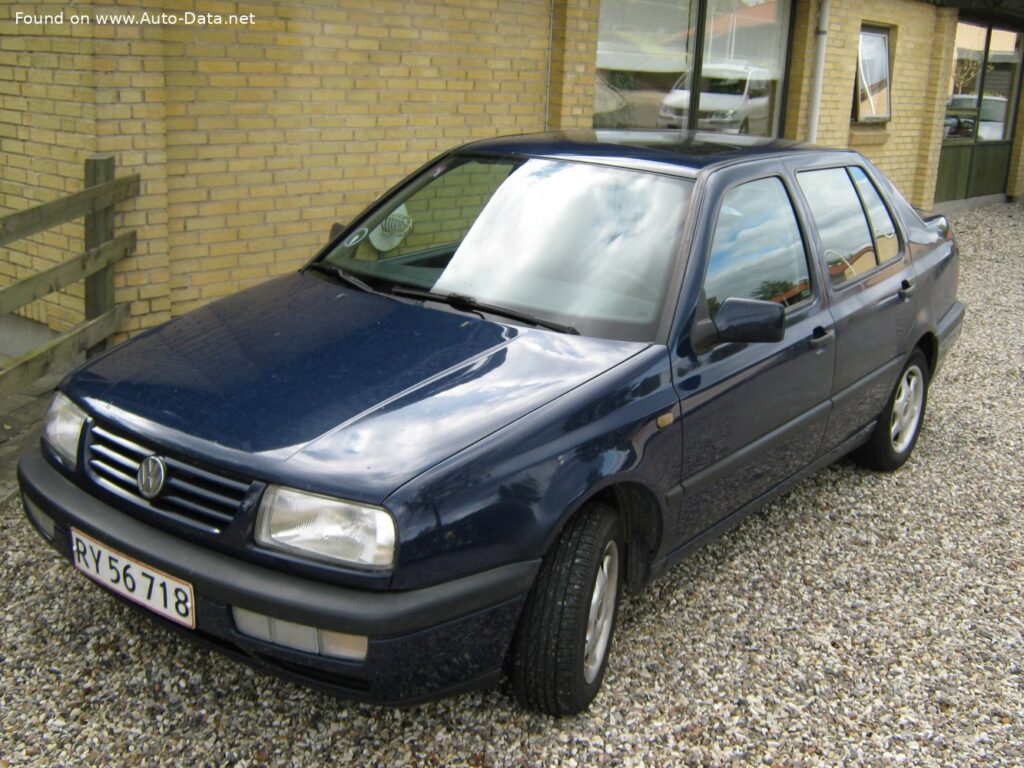
The Volkswagen Vento (1HX0) 2.8 VR6, produced between 1992 and 1998, represented the performance flagship of the Vento lineup, a compact sedan sold primarily in Europe and Latin America. Built on the Volkswagen Group’s A2 platform (internally designated 1HX0/A3), the Vento aimed to offer a more sophisticated and spacious alternative to the aging Jetta. The 2.8 VR6 variant, boasting 174 horsepower, occupied the premium segment of the Vento range, appealing to drivers seeking a blend of performance, comfort, and refinement. It was positioned above the base 1.6 and 1.8 liter inline-four cylinder models, and served as a more accessible alternative to the larger and more expensive Passat.
Powertrain & Engine Architecture
The heart of the Vento 2.8 VR6 is the AAA engine code, a 2.8-liter naturally aspirated VR6 engine. This engine is notable for its unique 15-degree V-angle, which allows it to be relatively narrow, enabling it to fit within the engine bay designed for inline-four engines. This configuration contributes to a smoother power delivery and reduced vibrations compared to traditional V6 designs. The engine features a cast iron block and an aluminum cylinder head, incorporating dual overhead camshafts (DOHC) and two valves per cylinder. Fuel delivery is managed by a Bosch Motronic multi-port fuel injection system, optimizing air-fuel mixture for efficient combustion.
While a five-speed manual transmission was standard, an optional four-speed automatic transmission was available. This automatic, a common unit within the Volkswagen Group at the time, featured electronic control for smoother shifting and improved fuel efficiency. The automatic transmission’s gear ratios were tuned to balance acceleration with comfortable cruising, though it generally resulted in slightly slower acceleration times compared to the manual version. The engine’s torque curve is relatively flat, providing usable power across a broad RPM range, making it well-suited for both city driving and highway overtaking.
Engine Specifications
Key engine specifications include a compression ratio of 10:1, a bore of 81mm, and a stroke of 90.3mm. The engine produces 174 hp at 5800 rpm and 235 Nm (173.33 lb-ft) of torque at 4200 rpm. The engine oil capacity is 5.5 liters (5.81 US quarts / 4.84 UK quarts), and Volkswagen specified the use of a particular oil grade to ensure optimal performance and longevity.
Driving Characteristics
The Vento 2.8 VR6 offered a noticeably more engaging driving experience than its lower-powered siblings. The 174 hp output, combined with the relatively lightweight chassis, resulted in brisk acceleration. Independent tests of the period recorded a 0-60 mph time of approximately 7.4 to 7.8 seconds, and a top speed of 225 km/h (139.81 mph). The VR6 engine’s smooth power delivery and distinctive exhaust note added to the driving enjoyment.
The automatic transmission, while convenient, did slightly diminish the car’s responsiveness. Gear changes were not as crisp as those achieved with the manual gearbox, and the automatic’s programming prioritized comfort over outright performance. However, the automatic provided a more relaxed driving experience, particularly in urban traffic. The Vento’s suspension, tuned for a balance of comfort and handling, provided a stable and predictable ride, although it wasn’t as sporty as some of its competitors.
Equipment & Trim Levels
The Vento 2.8 VR6 typically came equipped with a higher level of standard features than the base models. These included power windows, power door locks, central locking, and an upgraded audio system. Interior upholstery was typically cloth, though leather options were available as an upgrade. The dashboard featured a comprehensive instrument cluster with gauges for speed, tachometer, fuel level, coolant temperature, and a trip computer.
Optional extras included air conditioning, a sunroof, alloy wheels, and upgraded sound systems. The VR6 trim often featured unique exterior styling cues, such as a rear spoiler and chrome trim accents. The level of equipment varied slightly depending on the specific market and year of production.
Chassis & Braking
The Vento 2.8 VR6 utilized a front-wheel-drive layout with an independent front suspension featuring wishbones and a torsion beam rear suspension. The front suspension provided good handling characteristics, while the rear suspension offered a comfortable ride. The braking system consisted of ventilated disc brakes at the front and disc brakes at the rear, providing adequate stopping power for the car’s weight and performance. Anti-lock Braking System (ABS) was standard, enhancing safety and control during emergency braking situations. The steering system was a hydraulic power steering rack and pinion, offering precise and responsive steering feel. The Vento 2.8 VR6 rode on 205/50 R15 tires mounted on 6.5J x 15 inch wheels.
Market Reception & Comparison
The Vento 2.8 VR6 was generally well-received by automotive critics. It was praised for its smooth and powerful engine, comfortable ride, and relatively spacious interior. However, some critics noted that the automatic transmission could feel sluggish at times, and that the car’s handling wasn’t as sharp as some of its rivals. Compared to the base 1.6 and 1.8 liter Vento models, the 2.8 VR6 offered a significant performance upgrade, but at a higher price point.
In terms of fuel economy, the 2.8 VR6 was less efficient than the smaller-engined versions. Combined fuel consumption was around 8.9 l/100 km (26.4 US mpg / 31.7 UK mpg). Reliability was generally good, although the VR6 engine’s complex valvetrain required regular maintenance to prevent issues. The Vento 2.8 VR6 competed with other compact sedans such as the Ford Escort, Opel Astra, and Peugeot 306.
Technical Specifications
| Brand | Volkswagen |
| Model | Vento |
| Generation | Vento (1HX0) |
| Type (Engine) | 2.8 VR6 (174 Hp) |
| Start of production | 1992 |
| End of production | 1998 |
| Body type | Sedan |
| Seats | 5 |
| Doors | 4 |
| Fuel consumption (urban) | 12.5 l/100 km (18.8 US mpg, 22.6 UK mpg) |
| Fuel consumption (extra urban) | 7.3 l/100 km (32.2 US mpg, 38.7 UK mpg) |
| Fuel consumption (combined) | 8.9 l/100 km (26.4 US mpg, 31.7 UK mpg) |
| Fuel Type | Petrol (Gasoline) |
| Acceleration 0 – 100 km/h | 7.8 sec |
| Acceleration 0 – 62 mph | 7.8 sec |
| Acceleration 0 – 60 mph | 7.4 sec |
| Maximum speed | 225 km/h (139.81 mph) |
| Weight-to-power ratio | 7.7 kg/Hp |
| Weight-to-torque ratio | 5.7 kg/Nm |
| Power | 174 Hp @ 5800 rpm |
| Torque | 235 Nm @ 4200 rpm (173.33 lb.-ft. @ 4200 rpm) |
| Engine layout | Front, Transverse |
| Engine Model/Code | AAA |
| Engine displacement | 2792 cm3 (170.38 cu. in.) |
| Number of cylinders | 6 |
| Engine configuration | VR-engine |
| Cylinder Bore | 81 mm (3.19 in.) |
| Piston Stroke | 90.3 mm (3.56 in.) |
| Compression ratio | 10:1 |
| Number of valves per cylinder | 2 |
| Fuel injection system | Multi-port manifold injection |
| Engine aspiration | Naturally aspirated engine |
| Valvetrain | OHC |
| Engine oil capacity | 5.5 l (5.81 US qt | 4.84 UK qt) |
| Kerb Weight | 1340 kg (2954.19 lbs.) |
| Max. weight | 1725 kg (3802.97 lbs.) |
| Max load | 385 kg (848.78 lbs.) |
| Trunk (boot) space – minimum | 500 l (17.66 cu. ft.) |
| Trunk (boot) space – maximum | 885 l (31.25 cu. ft.) |
| Fuel tank capacity | 55 l (14.53 US gal | 12.1 UK gal) |
| Length | 4380 mm (172.44 in.) |
| Width | 1710 mm (67.32 in.) |
| Height | 1405 mm (55.31 in.) |
| Wheelbase | 2475 mm (97.44 in.) |
| Drive wheel | Front wheel drive |
| Number of gears and type of gearbox | 5 gears, manual transmission |
| Front suspension | Wishbone |
| Rear suspension | Suspension with traction connecting levers |
| Front brakes | Ventilated discs |
| Rear brakes | Disc |
| Assisting systems | ABS (Anti-lock braking system) |
| Steering type | Steering rack and pinion |
| Power steering | Hydraulic Steering |
| Tires size | 205/50 R15 |
| Wheel rims size | 6.5J x 15 |
Legacy
The Vento 2.8 VR6, while not produced in large numbers, has gained a following among enthusiasts. The VR6 engine is known for its durability and tunability, and well-maintained examples are sought after by collectors and drivers alike. The car’s relatively simple construction and readily available parts make it a relatively affordable classic to own and maintain. Today, the Vento 2.8 VR6 represents a unique blend of performance, comfort, and style from the early 1990s, and remains a popular choice for those seeking a distinctive and engaging driving experience.
