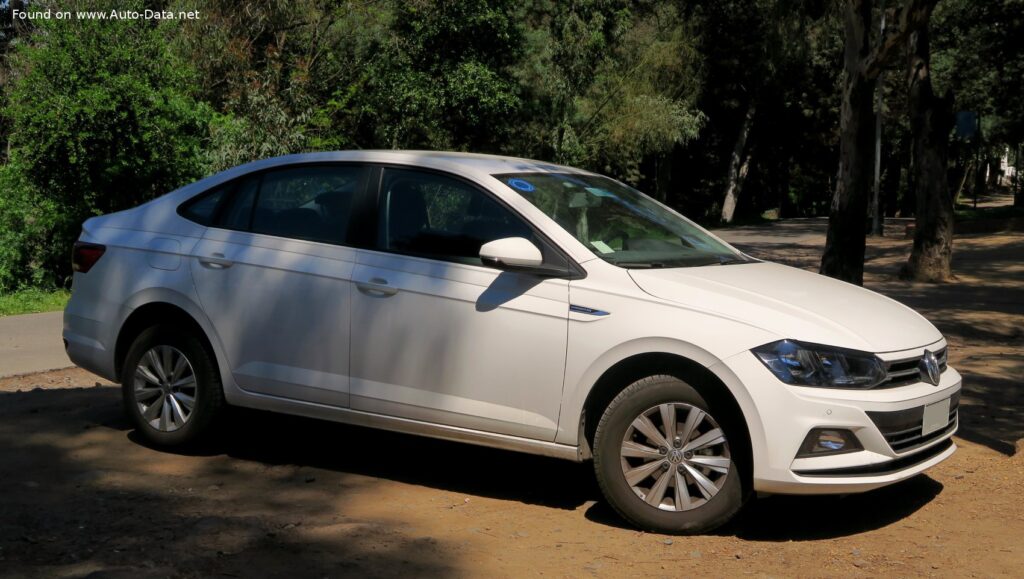
The Volkswagen Virtus 1.6 MSI (110/117) Ethanol, produced from January 2018 to February 2023, represents a significant entry point into the Virtus sedan range, specifically tailored for the South American market. Positioned as the base model, it offered a balance of affordability, fuel efficiency, and practicality within the broader Virtus lineup, which also included more powerful engine options. The Virtus itself is a subcompact sedan developed by Volkswagen, based on the PQ24 platform – a localized version of the global Polo platform – and designed to cater to the growing demand for sedans in Brazil and Argentina. This variant’s flexibility to run on both gasoline and ethanol (E85) was a key feature, reflecting the prevalent fuel infrastructure in those regions.
Powertrain & Engine Architecture
At the heart of the Virtus 1.6 MSI lies Volkswagen’s EA111 family 1.6-liter inline-four cylinder engine. This engine, designated as the XQ5 code, is a naturally aspirated powerplant utilizing a multi-port fuel injection system. The ‘MSI’ designation stands for ‘Motorização Simples Inteligente’ (Simple Intelligent Motorization), highlighting Volkswagen’s focus on a robust and efficient design. The engine features a single overhead camshaft (SOHC) valvetrain with two valves per cylinder. Its relatively simple design contributes to its reliability and ease of maintenance. The engine is transversely mounted in the front of the vehicle, driving the front wheels.
The 1.6-liter engine is capable of running on both gasoline and ethanol, or any blend thereof. When fueled with ethanol, the engine management system adjusts parameters to take advantage of ethanol’s higher octane rating and increased oxygen content, resulting in a slight power increase – from 110 horsepower on gasoline to 117 horsepower on ethanol. The engine also incorporates a Start & Stop system to improve fuel economy in city driving conditions. While a particulate filter was added in later iterations of the EA111 engine family, its inclusion in the Virtus 1.6 MSI varied depending on the specific production year and market regulations.
Transmission
The Virtus 1.6 MSI was primarily equipped with a five-speed manual transmission. This transmission was chosen to maximize fuel efficiency and provide a direct driving experience, aligning with the vehicle’s positioning as an affordable and practical option. The gear ratios were optimized for everyday driving conditions, prioritizing acceleration in the lower gears and comfortable cruising at highway speeds. While an optional six-speed automatic transmission was available on higher trim levels of the Virtus, it was not offered with the 1.6 MSI engine.
Driving Characteristics
The 1.6-liter engine, producing 110 hp and 155 Nm (114.32 lb-ft) of torque, provides adequate performance for typical urban and highway driving. Acceleration from 0 to 100 km/h (0-62 mph) takes approximately 10.2 seconds, while 0-60 mph is achieved in around 9.7 seconds. These figures are comparable to other vehicles in its class with similar engine displacements. The engine’s torque curve is relatively flat, providing usable power throughout the rev range. However, it lacks the punch of the more powerful 1.0 TSI turbocharged engine or the higher-spec 1.6 engines found in other Virtus variants.
The five-speed manual transmission allows for precise control over gear selection, enabling drivers to optimize performance and fuel economy. The gear ratios are well-matched to the engine’s characteristics, providing smooth and predictable shifts. Compared to the automatic transmissions available on other Virtus models, the manual transmission offers a more engaging driving experience and slightly improved fuel efficiency. The relatively light weight of the vehicle (1139 kg / 2511.07 lbs) helps to offset the engine’s modest power output, resulting in a reasonably responsive driving experience.
Equipment & Trim Levels
The Virtus 1.6 MSI typically served as the entry-level trim, and as such, came equipped with a standard set of features focused on practicality and value. Standard equipment generally included air conditioning, power steering, electric front windows, central locking, and a basic audio system with USB connectivity. Safety features included dual front airbags, ABS (Anti-lock Braking System), and rear parking sensors. Interior upholstery was typically cloth, with a functional and durable design.
Optional extras available for the 1.6 MSI included alloy wheels, a more advanced audio system with touchscreen display, rear power windows, and a multi-function steering wheel. Higher sub-trims within the 1.6 MSI range might have included features like fog lights and chrome exterior trim. The dashboard layout was relatively simple and straightforward, prioritizing ease of use and functionality.
Chassis & Braking
The Virtus 1.6 MSI utilizes a MacPherson strut front suspension and a torsion beam rear suspension. This suspension setup provides a comfortable ride quality and predictable handling characteristics. The torsion beam rear suspension is a cost-effective solution that offers a good balance of ride comfort and stability. The steering system is an electric power steering (EPS) rack and pinion system, providing light and precise steering feel.
Braking duties are handled by ventilated discs on the front wheels and drum brakes on the rear wheels. This configuration is typical for vehicles in this price segment. The ABS system helps to prevent wheel lockup during hard braking, enhancing safety and control. Tire size is typically 195/65 R15, mounted on 15-inch steel or alloy wheels.
Market Reception & Comparison
The Virtus 1.6 MSI was generally well-received in the South American market as an affordable and practical sedan. Critics praised its fuel efficiency, comfortable ride, and spacious interior. However, some reviewers noted that the engine’s performance was somewhat lacking, particularly when fully loaded or driving uphill. Compared to the more powerful Virtus variants, the 1.6 MSI offered a more economical option for buyers who prioritized fuel efficiency and affordability over outright performance.
In terms of fuel economy, the 1.6 MSI achieved approximately 13.3 km/l (31.3 mpg) on gasoline and 8.8 km/l (20.7 mpg) on ethanol in combined driving conditions. These figures are competitive with other vehicles in its class. Reliability was generally good, with the EA111 engine being a well-proven and durable powerplant. However, like all vehicles, regular maintenance is essential to ensure long-term reliability.
Technical Specifications
| Brand | Volkswagen |
| Model | Virtus |
| Type (Engine) | 1.6 MSI (110/117) Ethanol |
| Start of production | January, 2018 |
| End of production | February, 2023 |
| Powertrain Architecture | Internal Combustion engine |
| Body type | Sedan |
| Seats | 5 |
| Doors | 4 |
| Fuel Type | Petrol / Ethanol – E85 |
| Acceleration 0 – 100 km/h | 10.2 sec |
| Acceleration 0 – 62 mph | 10.2 sec |
| Acceleration 0 – 100 km/h (Ethanol – E85) | 9.8 sec |
| Acceleration 0 – 60 mph (Calculated by Auto-Data.net) | 9.7 sec |
| Maximum speed | 191 km/h (118.68 mph) |
| Maximum speed (Ethanol – E85) | 195 km/h |
| Weight-to-power ratio | 10.4 kg/Hp, 96.6 Hp/tonne |
| Weight-to-torque ratio | 7.3 kg/Nm, 136.1 Nm/tonne |
| Power | 110 Hp @ 5750 rpm |
| Power per litre | 68.8 Hp/l |
| Power (Ethanol – E85) | 117 Hp @ 5750 rpm |
| Power per litre (Ethanol – E85) | 73.2 Hp/l |
| Torque | 155 Nm @ 4000 rpm (114.32 lb.-ft. @ 4000 rpm) |
| Torque (Ethanol – E85) | 162 Nm @ 4000 rpm |
| Engine layout | Front, Transverse |
| Engine displacement | 1598 cm3 (97.52 cu. in.) |
| Number of cylinders | 4 |
| Engine configuration | Inline |
| Fuel injection system | Multi-port manifold injection |
| Engine aspiration | Naturally aspirated engine |
| Kerb Weight | 1139 kg (2511.07 lbs) |
| Trunk (boot) space – minimum | 521 l (18.4 cu. ft.) |
| Fuel tank capacity | 52 l (13.74 US gal | 11.44 UK gal) |
| Length | 4482 mm (176.46 in) |
| Width | 1751 mm (68.94 in) |
| Height | 1472 mm (57.95 in) |
| Wheelbase | 2651 mm (104.37 in) |
| Drive wheel | Front wheel drive |
| Number of gears and type of gearbox | 5 gears, manual transmission |
| Front brakes | Ventilated discs |
| Rear brakes | Drum |
Legacy
The Volkswagen Virtus 1.6 MSI, while not the most powerful or technologically advanced variant of the Virtus, remains a popular choice in the used car market due to its affordability, fuel efficiency, and proven reliability. The EA111 engine is known for its durability and relatively low maintenance costs. Parts availability is generally good, and the engine is relatively easy to repair. As a result, the 1.6 MSI Virtus continues to offer a practical and economical transportation solution for budget-conscious buyers. Its simplicity and robust design ensure it will remain a common sight on roads in South America for years to come.