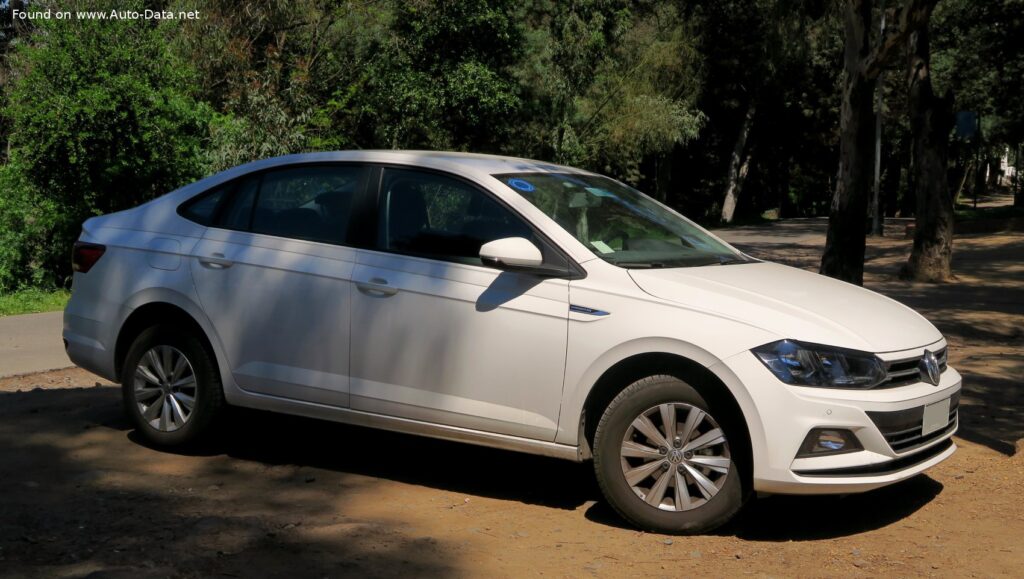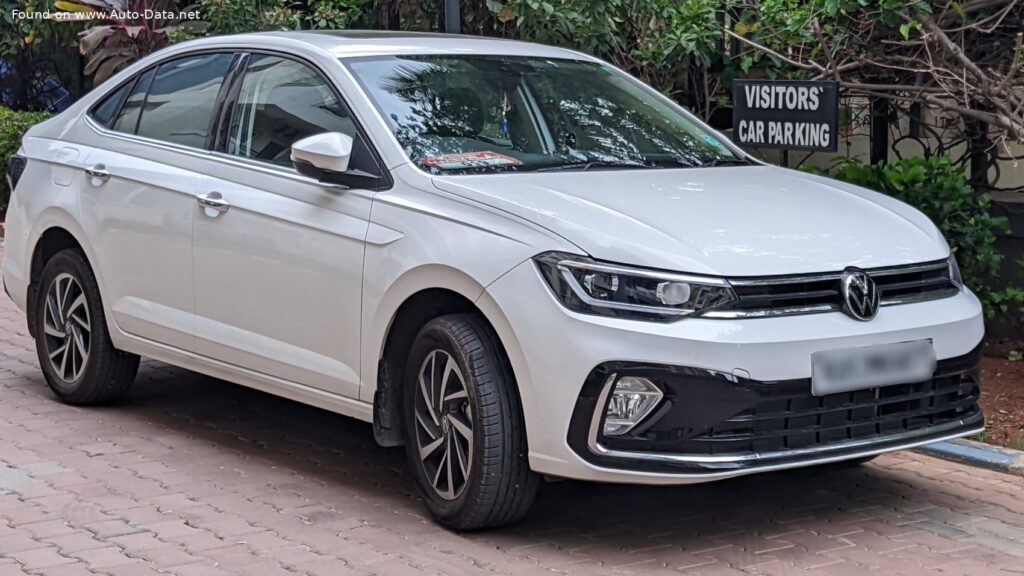
The Volkswagen Virtus (facelift 2023) 1.0 TSI, producing 109/116 horsepower, represents an entry-level offering within the refreshed Virtus lineup. Introduced in February 2023, this variant is a compact sedan positioned as a fuel-efficient and accessible option for buyers in markets like South America and India. It builds upon the foundation of the original Virtus, which itself is based on the Volkswagen Group’s MQB A0 platform – also known as the 1HX0/A3 platform – shared with models like the Polo and T-Cross. The facelift brought styling updates and refinements to the existing model, with the 1.0 TSI serving as the standard engine option in many regions.
Powertrain & Engine Architecture
At the heart of the Virtus 1.0 TSI lies the EA211 engine family, a three-cylinder, 1.0-liter (999 cc / 60.96 cubic inches) turbocharged gasoline engine. This engine is notable for its compact size and relatively lightweight construction. It utilizes direct fuel injection, a technology that improves fuel efficiency and reduces emissions by injecting fuel directly into the combustion chamber. The engine also features an intercooler, which cools the intake air, increasing its density and further enhancing performance. The valvetrain employs four valves per cylinder, contributing to improved breathing and power output.
The 1.0 TSI engine is capable of running on both gasoline and ethanol (E85) blends, with a slight power increase when utilizing ethanol. When running on gasoline, the engine produces 109 horsepower at 5000 rpm and 165 Nm (121.7 lb-ft) of torque between 1750-4250 rpm. When fueled with E85, output increases to 116 horsepower at 5000 rpm, with torque remaining at 165 Nm but with a slightly altered torque curve peaking at 4500 rpm. The engine incorporates a Start & Stop system to further improve fuel economy by automatically shutting off the engine when the vehicle is stationary.
This particular Virtus variant is equipped with a 5-speed manual transmission. While an automatic transmission is offered on higher trim levels, the manual gearbox is standard on the 1.0 TSI, contributing to its lower price point and focus on fuel efficiency. The transmission is a conventional, fully synchronized unit designed for smooth and reliable operation.
Driving Characteristics
The 1.0 TSI engine, paired with the 5-speed manual transmission, delivers a driving experience geared towards practicality and fuel economy rather than outright performance. Acceleration from 0 to 100 km/h (0-62 mph) takes approximately 10 seconds, while 0-60 mph is achieved in around 9.5 seconds. The maximum speed is rated at 192 km/h (119.3 mph), increasing to 196 km/h (121.6 mph) when running on E85.
The engine’s turbocharger provides a noticeable boost in power during acceleration, but the overall power delivery is relatively linear. The 5-speed manual transmission offers a reasonable spread of gear ratios, allowing the driver to keep the engine within its optimal torque band. Compared to higher-output versions of the Virtus, such as those equipped with larger engines, the 1.0 TSI feels less responsive and requires more driver involvement to maintain momentum, especially when fully loaded or driving uphill. However, its lighter weight and efficient engine contribute to better fuel economy.
Equipment & Trim Levels
The Virtus 1.0 TSI typically serves as the base trim level, offering a solid set of standard features. Interior upholstery is generally cloth, with a functional and durable design. The dashboard layout is straightforward, prioritizing ease of use. Standard equipment often includes air conditioning, power windows, power steering, and a basic audio system with Bluetooth connectivity. Safety features typically include ABS (Anti-lock Braking System), dual front airbags, and rear parking sensors.
Optional extras available for the 1.0 TSI trim may include alloy wheels, a touchscreen infotainment system with Apple CarPlay and Android Auto compatibility, a rearview camera, and additional safety features like electronic stability control. Higher trim levels build upon the 1.0 TSI’s foundation, adding more premium features and comfort amenities.
Chassis & Braking
The Virtus 1.0 TSI utilizes a front-wheel-drive configuration. The suspension system consists of MacPherson struts at the front and a torsion beam axle at the rear. This setup provides a comfortable ride quality suitable for everyday driving conditions. The torsion beam rear suspension is a cost-effective solution that balances ride comfort and handling. Stabilizer bars are typically included to reduce body roll during cornering.
Braking duties are handled by ventilated discs at the front and solid discs at the rear. The braking system is assisted by ABS, ensuring optimal stopping performance and preventing wheel lockup during emergency braking. The electric power steering system provides light and precise steering feel, making it easy to maneuver in urban environments.
Market Reception & Comparison
The Virtus 1.0 TSI has generally been well-received as an affordable and fuel-efficient option in its target markets. Critics have praised its practicality, comfortable ride, and reasonable fuel economy. However, some reviewers have noted its relatively modest performance compared to higher-output variants.
Compared to other trims in the Virtus lineup, the 1.0 TSI offers the best fuel economy. Its fuel consumption figures are typically in the range of 5.5-6.5 liters per 100 kilometers (42.8-36.2 mpg) depending on driving conditions. Reliability is generally good, with the EA211 engine family proving to be a durable and dependable unit. However, as with any turbocharged engine, regular maintenance and the use of high-quality oil are essential to ensure long-term reliability.
Technical Specifications
| Brand | Volkswagen |
| Model | Virtus (facelift 2023) |
| Type (Engine) | 1.0 TSI (109/116 Hp) |
| Start of production | February, 2023 |
| Powertrain Architecture | Internal Combustion engine |
| Body type | Sedan |
| Seats | 5 |
| Doors | 4 |
| Fuel Type | Petrol / Ethanol – E85 |
| Acceleration 0 – 100 km/h | 10 sec |
| Acceleration 0 – 62 mph | 10 sec |
| Acceleration 0 – 100 km/h (Ethanol – E85) | 9.8 sec |
| Acceleration 0 – 60 mph (Calculated by Auto-Data.net) | 9.5 sec |
| Maximum speed | 192 km/h (119.3 mph) |
| Maximum speed (Ethanol – E85) | 196 km/h |
| Weight-to-power ratio | 10.7 kg/Hp, 93.9 Hp/tonne |
| Weight-to-torque ratio | 7 kg/Nm, 142.1 Nm/tonne |
| Power | 109 Hp @ 5000 rpm |
| Power per litre | 109.1 Hp/l |
| Power (Ethanol – E85) | 116 Hp @ 5000 rpm |
| Power per litre (Ethanol – E85) | 116.1 Hp/l |
| Torque | 165 Nm @ 1750-4250 rpm (121.7 lb.-ft. @ 1750-4250 rpm) |
| Torque (Ethanol – E85) | 165 Nm @ 1750-4500 rpm |
| Engine layout | Front, Transverse |
| Engine Model/Code | EA211 |
| Engine displacement | 999 cm3 (60.96 cu. in.) |
| Number of cylinders | 3 |
| Engine configuration | Inline |
| Number of valves per cylinder | 4 |
| Fuel injection system | Direct injection |
| Engine aspiration | Turbocharger, Intercooler |
| Kerb Weight | 1161 kg (2559.57 lbs) |
| Max. weight | 1550 kg (3417.17 lbs) |
| Max load | 389 kg (857.6 lbs) |
| Trunk (boot) space – minimum | 521 l (18.4 cu. ft.) |
| Fuel tank capacity | 52 l (13.74 US gal | 11.44 UK gal) |
| Length | 4561 mm (179.57 in) |
| Width | 1751 mm (68.94 in) |
| Height | 1476 mm (58.11 in) |
| Wheelbase | 2651 mm (104.37 in) |
| Drivetrain Architecture | The Internal combustion engine (ICE) drives the front wheels of the vehicle. |
| Drive wheel | Front wheel drive |
| Number of gears and type of gearbox | 5 gears, manual transmission |
| Front brakes | Ventilated discs |
| Rear brakes | Disc |
| Assisting systems | ABS (Anti-lock braking system) |
| Steering type | Steering rack and pinion |
| Power steering | Electric Steering |
| Tires size | 195/65 R15 |
| Wheel rims size | 15 |
Legacy
The 1.0 TSI engine in the Virtus represents a shift towards smaller, more efficient powertrains. While not offering the performance of larger engines, it provides a compelling balance of fuel economy and practicality. In the used car market, the Virtus 1.0 TSI is likely to appeal to buyers seeking an affordable and reliable compact sedan. Its relatively simple mechanicals and proven engine design should contribute to lower maintenance costs over the long term. As fuel prices continue to rise, the demand for fuel-efficient vehicles like the Virtus 1.0 TSI is expected to remain strong.