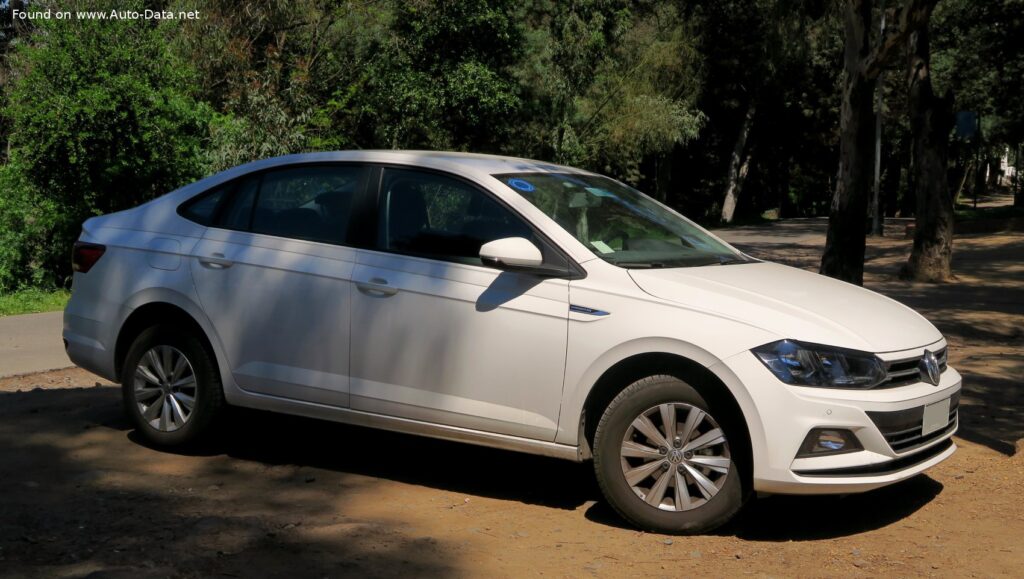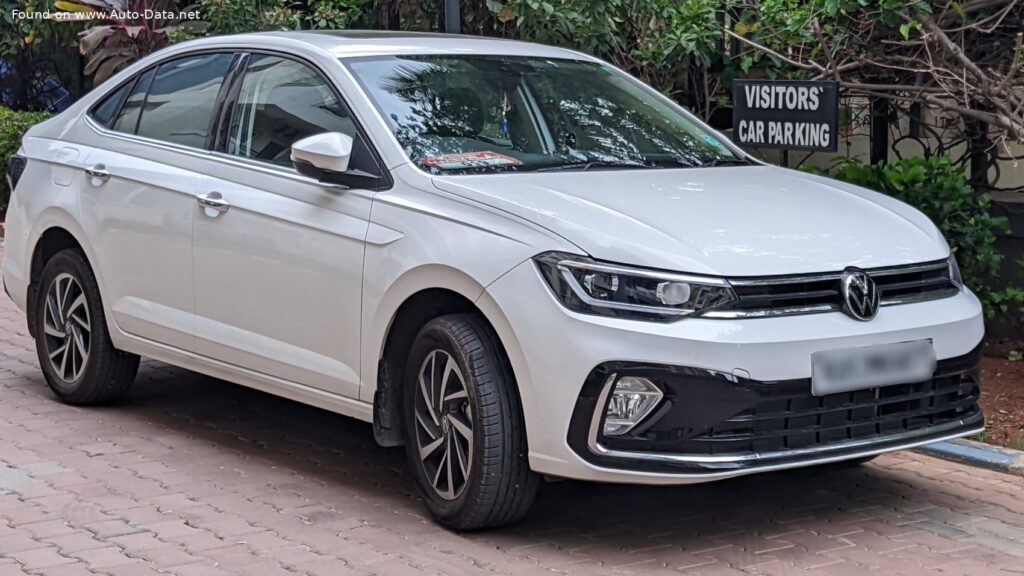
The Volkswagen Virtus (facelift 2023) 1.0 TSI (116 hp) Automatic represents a significant iteration within the Virtus lineup, a compact sedan primarily marketed in South America and India. Introduced in July 2023, this variant occupies the mid-range position within the facelifted Virtus range, offering a balance between fuel efficiency, performance, and affordability. It builds upon the foundation of the original Virtus, which itself is based on the Volkswagen Group’s MQB-A0 platform – also known as the 1HX0/A3 platform – shared with models like the Polo and T-Cross. The facelift brought styling updates, enhanced technology, and refinements to the powertrain options, including this 1.0 TSI configuration.
Powertrain & Engine Architecture
At the heart of the Virtus 1.0 TSI Automatic lies the EA211 engine family, a three-cylinder, 1.0-liter turbocharged gasoline engine. Specifically, this engine produces 116 horsepower at 5000-5500 rpm and 178 Nm (131.29 lb-ft) of torque between 1750-4500 rpm. This translates to a power-to-liter ratio of 116.1 hp/l. The engine utilizes direct fuel injection, a technology that improves combustion efficiency and power output. A single scroll turbocharger with an intercooler further enhances performance by forcing more air into the cylinders. The engine’s valvetrain features four valves per cylinder, contributing to improved breathing and overall efficiency.
The engine is paired with a six-speed automatic transmission. This transmission is a conventional torque-converter automatic, chosen for its smoothness and ease of use, particularly in urban driving conditions. While not offering the outright performance of a dual-clutch transmission (DCT), it provides a comfortable and accessible driving experience for a broader range of drivers. The transmission is calibrated to prioritize fuel economy and smooth shifts, rather than aggressive acceleration.
Engine Specifications
The EA211 engine benefits from modern engine management systems, including a Start & Stop system designed to reduce fuel consumption during idling. The engine requires 4 liters (4.23 US qt / 3.52 UK qt) of engine oil, and Volkswagen specifies a particular oil grade for optimal performance and longevity.
Driving Characteristics
The 1.0 TSI Automatic Virtus delivers a comfortable and refined driving experience, particularly suited for city commuting and highway cruising. While not a performance-oriented variant, the turbocharger provides a noticeable boost in power when needed, allowing for confident overtaking maneuvers. The six-speed automatic transmission contributes to relaxed cruising, keeping engine speeds relatively low at highway speeds. Compared to the higher-output 1.5 TSI engine offered in some Virtus trims, the 1.0 TSI feels less urgent in its acceleration, but it compensates with superior fuel economy. The gear ratios are tuned for efficiency, with a focus on maximizing fuel mileage rather than achieving rapid acceleration. The engine’s torque curve is relatively flat, providing usable power across a wide range of engine speeds.
Compared to a manual transmission equipped with the same engine, the automatic version offers greater convenience, especially in stop-and-go traffic. However, it may result in a slight reduction in fuel economy due to the inherent inefficiencies of a torque-converter automatic. The overall driving experience is geared towards comfort and ease of use, making it an ideal choice for drivers who prioritize practicality over sporty handling.
Equipment & Trim Levels
The Virtus 1.0 TSI Automatic typically comes equipped with a range of standard features, reflecting its mid-range positioning. These often include air conditioning, power windows, power-adjustable side mirrors, a touchscreen infotainment system with smartphone connectivity (Apple CarPlay and Android Auto), and basic safety features like ABS (Anti-lock Braking System) and airbags. Interior upholstery is typically cloth, with options for upgraded materials available on higher sub-trims. The dashboard layout is generally functional and well-designed, with a focus on ergonomics.
Optional extras commonly available for this trim level include alloy wheels, a rear parking sensor, a reverse camera, automatic climate control, and a more advanced infotainment system with navigation. Depending on the market, additional features like a sunroof, leather upholstery, and advanced driver-assistance systems (ADAS) may also be offered as optional upgrades.
Chassis & Braking
The Virtus 1.0 TSI Automatic utilizes an independent McPherson strut suspension system at the front, coupled with a torsion beam suspension at the rear. This setup provides a good balance between ride comfort and handling. A transverse stabilizer bar is included at the front to reduce body roll during cornering. The braking system consists of disc brakes at the front and drum brakes at the rear, a configuration common for vehicles in this weight class. Electric power steering provides light and precise steering feel, making it easy to maneuver in tight spaces. The vehicle rides on 205/55 R16 tires mounted on 16-inch alloy wheels (depending on the trim level).
Market Reception & Comparison
The Virtus 1.0 TSI Automatic has generally been well-received by automotive critics and consumers alike. It is praised for its fuel efficiency, comfortable ride, and user-friendly features. Compared to other trims in the Virtus lineup, the 1.0 TSI Automatic offers a more affordable entry point while still providing a respectable level of performance and equipment. Its fuel economy of 5.4 l/100 km (43.6 US mpg / 52.3 UK mpg / 18.5 km/l) is a significant advantage over the more powerful 1.5 TSI variants. However, some critics have noted that the engine can feel underpowered when fully loaded or when climbing steep hills. In terms of reliability, the EA211 engine family has proven to be generally robust, although regular maintenance is essential to ensure long-term durability.
Technical Specifications
| Body Type | Sedan, 4 Doors, 5 Seats |
| Fuel Economy (Combined) | 5.4 l/100 km / 43.6 US mpg / 52.3 UK mpg / 18.5 km/l |
| Power | 116 Hp @ 5000-5500 rpm |
| Torque | 178 Nm @ 1750-4500 rpm (131.29 lb.-ft.) |
| Engine Layout | Front, Transverse |
| Engine Model/Code | EA211 |
| Engine Displacement | 999 cm3 (60.96 cu. in.) |
| Number of Cylinders | 3, Inline |
| Fuel Injection System | Direct Injection |
| Engine Oil Capacity | 4 l (4.23 US qt / 3.52 UK qt) |
| Kerb Weight | 1224-1244 kg (2698.46 – 2742.55 lbs.) |
| Max. Weight | 1657 kg (3653.06 lbs.) |
| Trunk Space (Minimum) | 521 l (18.4 cu. ft.) |
| Trunk Space (Maximum) | 1050 l (37.08 cu. ft.) |
| Fuel Tank Capacity | 45 l (11.89 US gal / 9.9 UK gal) |
| Length | 4561 mm (179.57 in.) |
| Width | 1752 mm (68.98 in.) |
| Height | 1507 mm (59.33 in.) |
| Wheelbase | 2651 mm (104.37 in.) |
| Number of Gears & Type | 6 gears, automatic transmission |
| Front Brakes | Disc |
| Rear Brakes | Drum |
Legacy
The 1.0 TSI engine, and specifically its implementation in the Virtus, has proven to be a reliable and fuel-efficient powertrain. While long-term durability data is still emerging, early indications suggest that the engine is capable of providing years of trouble-free service with proper maintenance. On the used car market, the Virtus 1.0 TSI Automatic is likely to hold its value reasonably well, particularly due to its fuel efficiency and practicality. Its relatively simple design and readily available parts contribute to lower maintenance costs compared to more complex powertrains. As the Virtus continues to evolve, the 1.0 TSI Automatic variant will likely remain a popular choice for buyers seeking a comfortable, economical, and reliable compact sedan.