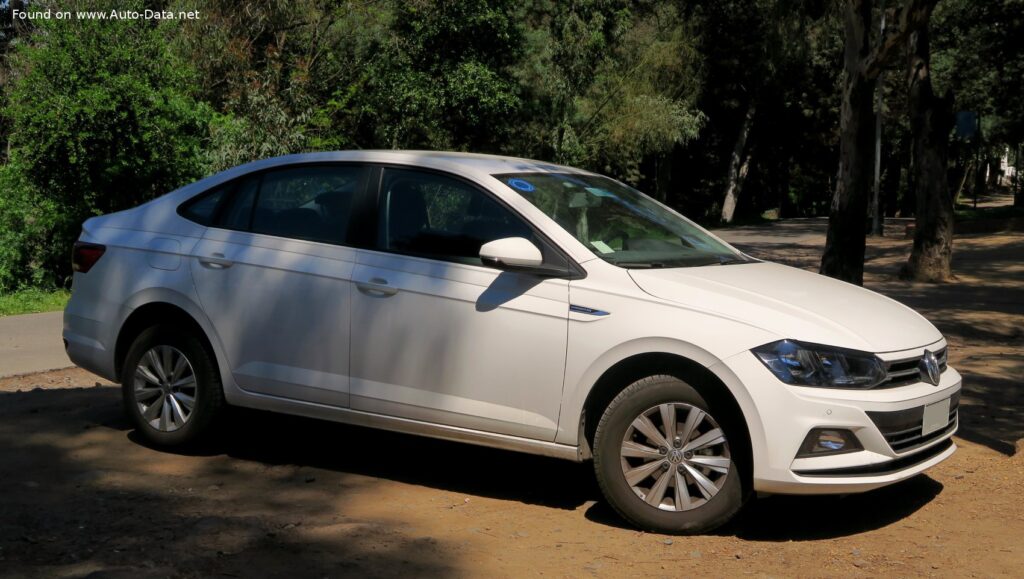
The Volkswagen Virtus (facelift, introduced in July 2023) represents a significant update to Volkswagen’s compact sedan offering, primarily targeted at markets like South America and India. This iteration builds upon the original Virtus, which itself was derived from the Polo platform (A05X generation). The 1.5 TSI EVO with ACT (150 Hp) DSG variant occupies a mid-range position within the facelifted Virtus lineup, offering a balance between performance, fuel efficiency, and technology. It slots above the base engine options and below potential higher-performance trims, appealing to buyers seeking a refined and modern driving experience.
The 1.5 TSI EVO with ACT: A Detailed Overview
The 2023 facelift brought cosmetic and technological updates to the Virtus, but the core mechanicals of the 1.5 TSI EVO engine remained largely consistent. This engine is a key component of Volkswagen’s strategy to offer modern, turbocharged gasoline engines across its global portfolio. The “EVO” designation signifies advancements in fuel efficiency and emissions reduction, while “ACT” stands for Active Cylinder Technology, a cylinder deactivation system designed to further improve economy during cruising conditions. The inclusion of the 7-speed DSG (Direct-Shift Gearbox) automatic transmission is central to the appeal of this variant, providing smooth and rapid gear changes.
Powertrain & Engine Architecture
At the heart of the Virtus 1.5 TSI EVO is the EA211 series engine, a 1.5-liter inline-four cylinder gasoline engine. This engine utilizes direct fuel injection, a technology that precisely meters fuel directly into the combustion chamber, optimizing combustion efficiency and power output. The engine’s cylinder head features four valves per cylinder (DOHC – Dual Overhead Camshafts), enhancing volumetric efficiency and contributing to improved performance. The turbocharger, coupled with an intercooler, forces more air into the engine, boosting power and torque. The engine produces 150 horsepower at 5000-6000 rpm and 250 Nm (184.39 lb-ft) of torque between 1600-3500 rpm. This broad torque curve provides strong acceleration in everyday driving situations.
The 7-speed DSG transmission is a dual-clutch transmission, offering exceptionally quick and seamless gear changes. It operates by pre-selecting the next gear, allowing for near-instantaneous shifts without the torque interruption associated with traditional automatic transmissions. The DSG also contributes to improved fuel economy compared to conventional automatics. The engine and transmission pairing is front-wheel drive, a standard configuration for this class of vehicle.
Driving Characteristics
The 150 hp and 184 lb-ft of torque delivered by the 1.5 TSI EVO engine provide a responsive and engaging driving experience. While not a performance-oriented variant, the Virtus 1.5 TSI EVO offers ample power for highway cruising, overtaking maneuvers, and navigating urban traffic. The DSG transmission plays a crucial role in maximizing the engine’s potential, providing quick downshifts for acceleration and smooth upshifts for efficient cruising. The Active Cylinder Technology (ACT) is largely imperceptible to the driver, seamlessly deactivating two cylinders under light load conditions to conserve fuel. The weight-to-power ratio of 8.3 kg/hp contributes to a feeling of adequate acceleration, while the weight-to-torque ratio of 5 kg/Nm ensures strong pulling power at lower engine speeds.
Compared to potential lower-powered engine options in the Virtus range, the 1.5 TSI EVO offers a noticeable performance upgrade. While a manual transmission might offer slightly improved fuel economy, the DSG provides a superior level of convenience and driving enjoyment. It doesn’t match the performance of a potential higher-output engine (if offered in some markets), but it represents a sweet spot for drivers prioritizing a balance of performance and efficiency.
Equipment & Trim Levels
The 1.5 TSI EVO with ACT and DSG trim typically includes a comprehensive suite of standard features. These generally include air conditioning, power windows, power door locks, a touchscreen infotainment system with smartphone integration (Apple CarPlay and Android Auto), and basic safety features like ABS (Anti-lock Braking System) and airbags. Higher trim levels within the 1.5 TSI EVO range often add features such as alloy wheels, a more advanced infotainment system with navigation, automatic climate control, rear parking sensors, and a rearview camera. Interior upholstery is typically cloth in the base trims, with leather options available on higher-spec models. The dashboard layout is modern and functional, with a focus on ergonomics and ease of use.
Chassis & Braking
The Virtus utilizes a McPherson strut independent suspension system at the front, providing a comfortable and controlled ride. The rear suspension employs a torsion beam setup, which is a cost-effective and space-efficient solution. The front brakes are disc brakes, offering superior stopping power compared to drum brakes. The rear brakes, however, are typically drum brakes in this configuration, a common cost-saving measure for this class of vehicle. Electric power steering provides light and precise steering feel. The vehicle rides on 205/55 R16 tires, mounted on 16-inch alloy wheels (depending on the trim level). The ride height (ground clearance) is 145 mm (5.71 inches).
Market Reception & Comparison
The Virtus, and specifically the 1.5 TSI EVO variant, has generally been well-received by automotive critics. Reviewers have praised the engine’s performance, the smoothness of the DSG transmission, and the overall refinement of the vehicle. Fuel economy is a strong point, with combined fuel consumption figures of 5.1 l/100 km (46.1 US mpg, 55.4 UK mpg, 19.6 km/l). Compared to competitors in the compact sedan segment, the Virtus offers a compelling combination of features, performance, and value. Reliability has been generally good, with the EA211 engine family proving to be durable and dependable. However, as with any turbocharged engine, regular maintenance and the use of high-quality oil are crucial for long-term reliability.
Technical Specifications
| Engine Model/Code | EA211 |
| Engine Displacement | 1498 cm3 (91.41 cu. in.) |
| Number of Cylinders | 4, Inline |
| Number of Valves per Cylinder | 4 |
| Fuel Injection System | Direct Injection |
| Engine Aspiration | Turbocharger, Intercooler |
| Maximum Power | 150 Hp @ 5000-6000 rpm |
| Maximum Torque | 250 Nm (184.39 lb.-ft.) @ 1600-3500 rpm |
| Engine Oil Capacity | 4.3 l (4.54 US qt | 3.78 UK qt) |
| Kerb Weight | 1249-1269 kg (2753.57 – 2797.67 lbs.) |
| Max. Weight | 1685 kg (3714.79 lbs.) |
| Trunk (boot) Space (minimum) | 521 l (18.4 cu. ft.) |
| Trunk (boot) Space (maximum) | 1050 l (37.08 cu. ft.) |
| Fuel Tank Capacity | 45 l (11.89 US gal | 9.9 UK gal) |
| Length | 4561 mm (179.57 in.) |
| Width | 1752 mm (68.98 in.) |
| Height | 1507 mm (59.33 in.) |
| Wheelbase | 2651 mm (104.37 in.) |
| Gearbox | 7-speed DSG (Dual Clutch Transmission) |
Legacy
The 1.5 TSI EVO engine, coupled with the DSG transmission, represents a significant step forward in terms of efficiency and refinement for the Volkswagen Virtus. While long-term reliability data is still accumulating, the EA211 engine family has a proven track record. In the used car market, the 1.5 TSI EVO variants are likely to command a premium due to their superior performance and fuel economy compared to lower-powered options. Regular maintenance, including timely oil changes and DSG transmission servicing, will be crucial for preserving the value and reliability of these vehicles.