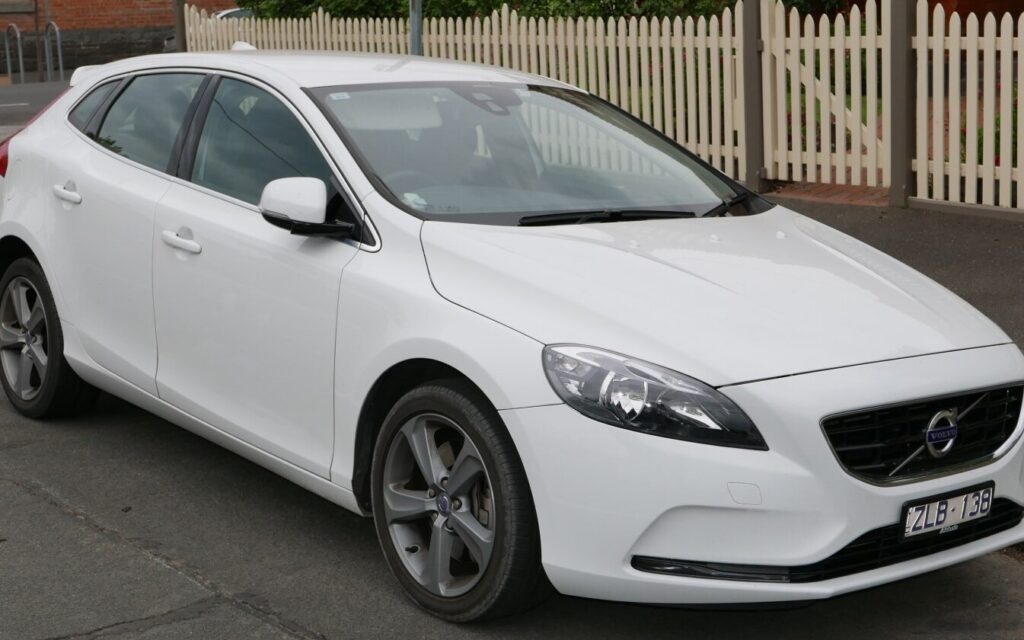
The Volvo V40 (facelift 2016): A Premium European Compact Hatchback
The Volvo V40, in its post-2016 facelift iteration, represents Volvo’s refined entry into the competitive premium compact hatchback segment. Produced from 2018 to 2020, this specific generation (V40, facelift 2016) continued to uphold Volvo’s reputation for safety, sophisticated design, and understated luxury, primarily targeting the discerning European market. While not widely available in the United States, the Volvo V40 (facelift 2016) served as a crucial model in Volvo’s global portfolio, embodying the brand’s contemporary design language and commitment to efficient powertrain solutions. This article focuses on the 2.0 D2 (120 Hp) Automatic variant, a diesel-powered option that highlighted the V40’s blend of performance, economy, and environmental responsibility under the stringent Euro 6d-Temp emission standards.
Engine and Performance: The Efficient D2 Powertrain
At the heart of this particular Volvo V40 lies a robust and efficient 2.0-liter (1969 cm3 or 120.16 cu. in.) inline four-cylinder diesel engine, designated with the model code D4204T13. This powerplant delivers a respectable 120 horsepower at 3750 rpm, providing a balanced blend of daily usability and highway cruising capability. More notably, the engine generates a substantial 206.52 lb.-ft. of torque, available across a broad rev range from 1200 to 2280 rpm. This low-end torque is characteristic of modern diesel engines, contributing to effortless acceleration and strong pulling power, particularly beneficial for urban driving and overtaking maneuvers.
The D2 engine features a state-of-the-art Diesel Commonrail fuel injection system, ensuring precise fuel delivery and optimal combustion efficiency. Further enhancing its performance and economy is a turbocharger coupled with an intercooler, which boosts air intake for increased power output. The valvetrain utilizes a Double Overhead Camshaft (DOHC) configuration with four valves per cylinder, optimizing airflow and engine breathing. With a compression ratio of 16:1, the engine is designed for the inherent efficiency of diesel combustion.
Power is delivered to the front wheels via a smooth-shifting 6-speed automatic transmission. This combination allows the V40 D2 to accelerate from 0 to 60 mph in a calculated 10 seconds, or 0 to 62 mph (100 km/h) in 10.5 seconds, before reaching a maximum speed of 118.06 mph (190 km/h). Despite its solid performance, fuel economy remains a strong suit, with a combined cycle rating of 50 to 52.3 US mpg (4.5-4.7 l/100 km). CO2 emissions are kept between 118-124 g/km, classifying it under the rigorous Euro 6d-Temp emission standard, aided by a standard particulate filter. This powertrain architecture underscores Volvo’s commitment to delivering efficient and environmentally conscious vehicles without compromising on the driving experience.
Design and Features: Scandinavian Elegance and Practicality
The Volvo V40 (facelift 2016) retains the sleek and sophisticated design language that defined its generation, further enhanced by the subtle yet impactful updates introduced with the 2016 refresh. As a 5-door hatchback with seating for five occupants, it strikes a balance between compact dimensions and interior space. The facelift brought Volvo’s signature “Thor’s Hammer” LED daytime running lights, a design element first seen on the larger XC90, giving the V40 a more contemporary and upscale appearance. The updated grille and new wheel designs further refined its exterior aesthetics.
Measuring 172.05 inches (4370 mm) in length, 70.2 inches (1783 mm) in width, and 56.65 inches (1439 mm) in height, the V40 is perfectly sized for navigating crowded European city streets while offering a stable and comfortable ride on highways, thanks to its 104.21-inch (2647 mm) wheelbase. The design boasts an impressive drag coefficient (Cd) ranging from 0.29 to 0.32, contributing to its fuel efficiency and reduced wind noise.
Inside, the V40 embodies Scandinavian minimalism and ergonomic design. High-quality materials, intuitive controls, and comfortable seating are hallmarks of Volvo interiors. While specific interior features aren’t detailed in the raw data, Volvo’s focus on occupant safety is paramount, with features like ABS (Anti-lock Braking System) as standard, complemented by a robust body structure and a suite of passive and active safety systems typical for a premium car of its era. The vehicle offers a practical trunk space of 8.33 cu. ft. (236 liters), expandable for larger cargo, making it suitable for both daily commutes and weekend getaways. The electric power steering, combined with independent McPherson front suspension and independent coil spring rear suspension, provides a refined and engaging driving experience.
Technical Specifications: Volvo V40 (facelift 2016) 2.0 D2 (120 Hp) Automatic
| Category | Specification | Metric Value | US/Imperial Value |
|---|---|---|---|
| General Information | |||
| Brand | Volvo | ||
| Model | V40 | ||
| Generation | V40 (facelift 2016) | ||
| Type (Engine) | 2.0 D2 (120 Hp) Automatic | ||
| Start of production | 2018 year | ||
| End of production | 2020 year | ||
| Powertrain Architecture | Internal Combustion engine | ||
| Body type | Hatchback | ||
| Seats | 5 | ||
| Doors | 5 | ||
| Performance Specifications | |||
| Fuel consumption (economy) – urban | 5.2-5.5 l/100 km | 45.2 – 42.8 US mpg | |
| Fuel consumption (economy) – extra urban | 4.0-4.3 l/100 km | 58.8 – 54.7 US mpg | |
| Fuel consumption (economy) – combined | 4.5-4.7 l/100 km | 52.3 – 50 US mpg | |
| CO2 emissions | 118-124 g/km | ||
| Fuel Type | Diesel | ||
| Acceleration 0 – 60 mph | 10 sec | ||
| Acceleration 0 – 100 km/h | 10.5 sec | ||
| Maximum speed | 190 km/h | 118.06 mph | |
| 100 km/h – 0 (Braking distance) | 37 m | 121.39 ft | |
| Emission standard | Euro 6d-Temp | ||
| Weight-to-power ratio | 13.1 kg/Hp | 76.1 Hp/tonne | |
| Weight-to-torque ratio | 5.6 kg/Nm | 177.6 Nm/tonne | |
| Engine Specifications | |||
| Power | 120 Hp @ 3750 rpm | ||
| Power per liter | 60.9 Hp/l | ||
| Torque | 280 Nm @ 1200-2280 rpm | 206.52 lb.-ft. @ 1200-2280 rpm | |
| Maximum engine speed | 4500 rpm | ||
| Engine layout | Front, Transverse | ||
| Engine Model/Code | D4204T13 | ||
| Engine displacement | 1969 cm3 | 120.16 cu. in. | |
| Number of cylinders | 4 | ||
| Engine configuration | Inline | ||
| Cylinder Bore | 82 mm | 3.23 in. | |
| Piston Stroke | 93.2 mm | 3.67 in. | |
| Compression ratio | 16:1 | ||
| Number of valves per cylinder | 4 | ||
| Fuel injection system | Diesel Commonrail | ||
| Engine aspiration | Turbocharger, Intercooler | ||
| Valvetrain | DOHC | ||
| Engine oil capacity | 5.2 l | 5.49 US qt | |
| Engine oil specification | Log in to see. | ||
| Coolant | 8 l | 8.45 US qt | |
| Engine systems | Particulate filter | ||
| Space, Volume and Weights | |||
| Kerb Weight | 1577 kg | 3476.69 lbs. | |
| Trunk (boot) space – minimum | 236 l | 8.33 cu. ft. | |
| Fuel tank capacity | 62 l | 16.38 US gal | |
| AdBlue tank | 16.5 l | 4.36 US gal | |
| Permitted trailer load with brakes (12%) | 1500 kg | 3306.93 lbs. | |
| Permitted trailer load without brakes | 700 kg | 1543.24 lbs. | |
| Dimensions | |||
| Length | 4370 mm | 172.05 in. | |
| Width | 1783 mm | 70.2 in. | |
| Width with mirrors folded | 1857 mm | 73.11 in. | |
| Width including mirrors | 2041 mm | 80.35 in. | |
| Height | 1439 mm | 56.65 in. | |
| Wheelbase | 2647 mm | 104.21 in. | |
| Front track | 1546-1559 mm | 60.87 – 61.38 in. | |
| Rear (Back) track | 1533-1546 mm | 60.35 – 60.87 in. | |
| Front overhang | 908 mm | 35.75 in. | |
| Rear overhang | 815 mm | 32.09 in. | |
| Drag coefficient (Cd) | 0.29-0.32 | ||
| Minimum turning circle (turning diameter) | 12 m | 39.37 ft. | |
| Drivetrain, Brakes and Suspension Specifications | |||
| Drivetrain Architecture | The Internal combustion engine (ICE) drives the front wheels of the vehicle. | ||
| Drive wheel | Front wheel drive | ||
| Number of gears and type of gearbox | 6 gears, automatic transmission | ||
| Front suspension | Independent, type McPherson with coil spring and anti-roll bar | ||
| Rear suspension | Independent coil spring, Transverse stabilizer | ||
| Front brakes | Disc | ||
| Rear brakes | Disc | 280 mm | |
| Assisting systems | ABS (Anti-lock braking system) | ||
| Steering type | Steering rack and pinion | ||
| Power steering | Electric Steering | ||
Legacy and Market Impact
The Volvo V40 (facelift 2016) occupied a significant niche in the European premium compact segment. It was a compelling alternative to established German rivals such as the Audi A3, BMW 1 Series, and Mercedes-Benz A-Class, as well as premium iterations of the Volkswagen Golf. While the V40 might not have matched the outright sporty driving dynamics of some competitors, it carved out its own identity through its unwavering focus on safety, distinctive Scandinavian design, and a comfortable, refined driving experience.
Its reputation was built on Volvo’s core values: robust build quality, advanced safety features (even beyond the listed ABS, Volvo’s reputation implies a comprehensive suite), and an understated premium feel. The D2 diesel engine variant, in particular, was strategically important, offering excellent fuel economy and lower emissions, appealing to a European market segment highly conscious of running costs and environmental regulations. The inclusion of an AdBlue tank (16.5 liters or 4.36 US gallons) underscores its compliance with modern diesel emission standards.
The V40 represented Volvo’s commitment to the traditional compact car market before the brand’s pivot towards a predominantly SUV and electrified lineup. As one of the last conventional hatchbacks from Volvo, it served as a bridge between the brand’s heritage and its future direction. Its production run from 2018 to 2020 marked the final years of this generation, making it a noteworthy model for enthusiasts and those appreciating a blend of practicality, efficiency, and timeless design in a compact package. The Volvo V40, especially in its facelifted form, remains a testament to Volvo’s ability to compete effectively in a highly competitive segment by staying true to its unique brand identity.