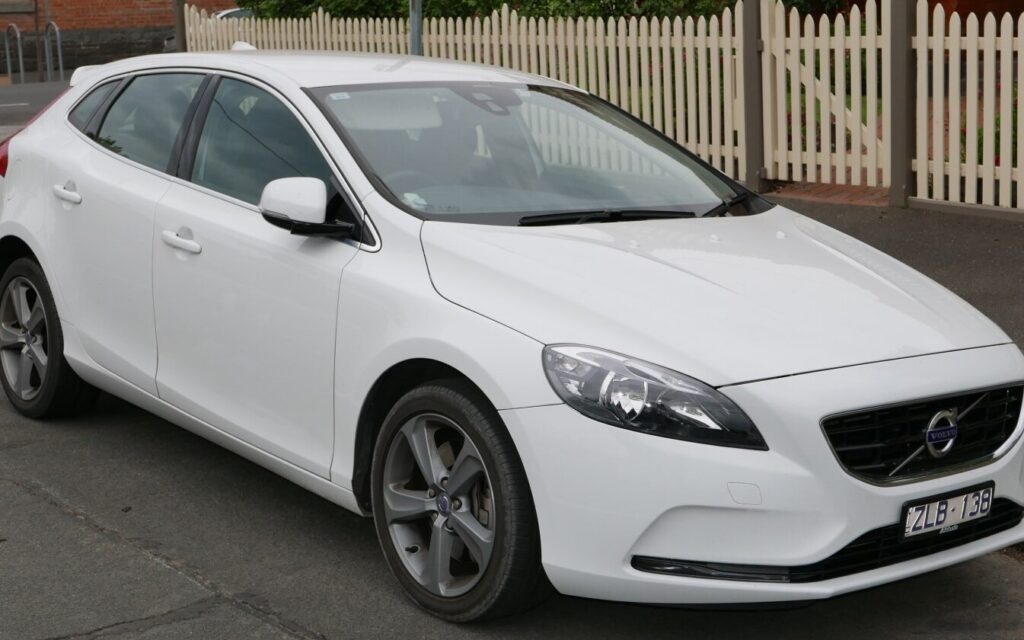
The Volvo V40 (facelift 2016): A Premium European Compact Hatchback
The Volvo V40 (facelift 2016) represents the refreshed iteration of Volvo’s second-generation premium compact hatchback, a model primarily targeted at the discerning European market. Introduced in 2016 and produced until 2018, this updated V40 continued Volvo’s tradition of combining sophisticated Scandinavian design with robust safety features and impressive efficiency. Positioned in the highly competitive C-segment, it aimed to challenge established German rivals with its unique blend of understated luxury, practical five-door hatchback utility, and a strong emphasis on environmental performance, particularly with its diesel powertrain options. While the V40 was a significant player in Europe, it was never officially sold in the United States, a strategic decision reflecting the American market’s preference for larger sedans and SUVs over compact hatchbacks, especially those with diesel engines.
The 2016 facelift brought a series of subtle yet impactful enhancements, most notably aligning its exterior styling with Volvo’s then-new design language, first seen on the larger XC90. This included the distinctive “Thor’s Hammer” LED daytime running lights, a refreshed grille, and new alloy wheel designs, all contributing to a more contemporary and premium aesthetic. Under the hood, the V40 continued to offer a range of efficient powertrains, including the 2.0 D2 diesel variant, which was engineered for optimal fuel economy and low emissions, making it a compelling choice for European buyers prioritizing efficiency and responsible motoring.
Engine and Performance of the Volvo V40 (facelift 2016)
The particular variant, the Volvo V40 (facelift 2016) 2.0 D2 (120 Hp) Restricted, was equipped with a highly efficient 2.0-liter, four-cylinder D4204T8 diesel engine. This powertrain was part of Volvo’s Drive-E family, known for its modular design and focus on both performance and environmental responsibility. The engine featured an inline configuration, common rail direct fuel injection, a turbocharger, and an intercooler, all working in concert to deliver a balanced driving experience.
Power output for this D2 variant was rated at 120 horsepower, achieved at 3750 revolutions per minute (rpm). More significantly for a diesel engine, it produced a robust 206.52 lb.-ft. (280 Nm) of torque, available across a broad range from 1500 to 2250 rpm. This ample torque at low engine speeds provided strong pulling power and excellent drivability in everyday conditions. Mated to a precise 6-speed manual transmission, the engine sent its power to the front wheels, a common and efficient drivetrain architecture for compact vehicles.
In terms of acceleration, the V40 2.0 D2 could sprint from 0 to 60 miles per hour in a respectable 10.2 seconds, with a top speed of 118.06 mph (190 km/h). While not a performance-oriented hot hatch, these figures were more than adequate for its class, offering confident highway merging and comfortable cruising. Where this powertrain truly shined was in its fuel economy. With a combined fuel consumption rating of 3.2 liters per 100 kilometers, translating to an impressive 73.5 US miles per gallon, it was a leader in its segment for efficiency. Its CO2 emissions of just 82 grams per kilometer ensured compliance with the strict Euro 6 emission standard, a crucial factor for European markets. The inclusion of a particulate filter further underscored Volvo’s commitment to clean diesel technology.
Design and Features
Exterior Design Enhancements
The 2016 facelift of the Volvo V40 brought subtle yet effective updates to its exterior, maintaining its sleek, coupé-like profile while integrating elements from Volvo’s newer, more upscale models. The most striking change was the adoption of the “Thor’s Hammer” LED daytime running lights, which gave the V40 a more assertive and modern front fascia. The grille was also updated with the new Volvo Iron Mark logo, set against a revised mesh pattern. New exterior color options, including Amazon Blue and Denim Blue, along with new wheel designs, allowed for greater personalization. The V40’s overall dimensions – 172.01 inches in length, 70.2 inches in width (80.35 inches including mirrors), and 56.65 inches in height – provided a compact footprint ideal for urban environments, while its 104.21-inch wheelbase ensured a stable ride.
Interior Comfort and Technology
Inside, the V40 maintained Volvo’s characteristic minimalist Scandinavian design, focusing on ergonomics and high-quality materials. The cabin offered comfortable seating for five occupants, with supportive seats that were a hallmark of Volvo design. The facelift introduced new upholstery options and interior trim accents, enhancing the premium feel. Technology-wise, the V40 featured Volvo’s Sensus Connect infotainment system, which included a digital instrument cluster, navigation, and connectivity features. While not as large or advanced as systems in later Volvo models, it provided a user-friendly interface for media, communication, and vehicle settings.
Safety Innovations
As expected from Volvo, safety was a paramount concern for the V40. While specific features are not detailed in the raw data, it’s well-established that the V40, even before the facelift, was a pioneer in compact car safety. It boasted advanced systems like City Safety, which could automatically brake to avoid or mitigate low-speed collisions with other vehicles, pedestrians, or cyclists. Other potential safety features, common for Volvo in this era, would have included pedestrian detection with full auto brake, lane keeping aid, blind spot information system (BLIS), cross traffic alert, and road sign information. Standard safety equipment included ABS (Anti-lock Braking System), multiple airbags, and a robust body structure, contributing to its strong crash test ratings in Europe.
Practicality and Utility
Despite its compact exterior, the V40 offered practical utility as a 5-door hatchback. The trunk space provided 11.83 cubic feet (335 liters) of cargo volume with the rear seats up, expanding to a generous 52.97 cubic feet (1500 liters) when the rear seats were folded down, making it versatile for daily errands or weekend trips. The vehicle also had a maximum roof load capacity of 165.35 lbs (75 kg) and a permitted trailer load with brakes of 3306.93 lbs (1500 kg), adding to its practicality.
Technical Specifications: Volvo V40 (facelift 2016) 2.0 D2 (120 Hp) Restricted
| Category | Specification |
|---|---|
| Brand | Volvo |
| Model | V40 (facelift 2016) |
| Type (Engine) | 2.0 D2 (120 Hp) Restricted |
| Production Years | 2016 – 2018 |
| Body Type | Hatchback |
| Seats | 5 |
| Doors | 5 |
| Performance | |
| Fuel Consumption (Urban) | 3.7 l/100 km (63.6 US mpg) |
| Fuel Consumption (Extra Urban) | 2.9 l/100 km (81.1 US mpg) |
| Fuel Consumption (Combined) | 3.2 l/100 km (73.5 US mpg) |
| CO2 Emissions | 82 g/km |
| Fuel Type | Diesel |
| Acceleration 0-60 mph | 10.2 sec |
| Maximum Speed | 118.06 mph (190 km/h) |
| Emission Standard | Euro 6 |
| Weight-to-Power Ratio | 12.1 kg/Hp |
| Engine Specifications | |
| Power | 120 Hp @ 3750 rpm |
| Power per Liter | 60.9 Hp/l |
| Torque | 206.52 lb.-ft. (280 Nm) @ 1500-2250 rpm |
| Engine Layout | Front, Transverse |
| Engine Model/Code | D4204T8 |
| Engine Displacement | 2.0 Liters (1969 cm3 / 120.16 cu. in.) |
| Number of Cylinders | 4, Inline |
| Cylinder Bore | 3.23 in. (82 mm) |
| Piston Stroke | 3.67 in. (93.2 mm) |
| Compression Ratio | 16:1 |
| Valves per Cylinder | 4 |
| Fuel Injection System | Diesel Commonrail |
| Engine Aspiration | Turbocharger, Intercooler |
| Engine Oil Capacity | 5.49 US qt (5.2 l) |
| Coolant Capacity | 8.45 US qt (8 l) |
| Engine Systems | Particulate filter |
| Dimensions, Volume, and Weights | |
| Kerb Weight | 3212.14 lbs. (1457 kg) |
| Max. Weight | 4232.88 lbs. (1920 kg) |
| Max Load | 1020.74 lbs. (463 kg) |
| Trunk (Boot) Space – Minimum | 11.83 cu. ft. (335 l) |
| Trunk (Boot) Space – Maximum | 52.97 cu. ft. (1500 l) |
| Fuel Tank Capacity | 10.57 US gal (40 l) |
| Max. Roof Load | 165.35 lbs. (75 kg) |
| Permitted Trailer Load with Brakes (12%) | 3306.93 lbs. (1500 kg) |
| Length | 172.01 in. (4369 mm) |
| Width | 70.2 in. (1783 mm) |
| Width Including Mirrors | 80.35 in. (2041 mm) |
| Height | 56.65 in. (1439 mm) |
| Wheelbase | 104.21 in. (2647 mm) |
| Front Track | 61.38 in. (1559 mm) |
| Rear Track | 60.87 in. (1546 mm) |
| Ride Height (Ground Clearance) | 5.24 – 5.67 in. (133-144 mm) |
| Drag Coefficient (Cd) | 0.32 |
| Minimum Turning Circle | 35.43 ft. (10.8 m) |
| Drivetrain, Brakes, and Suspension | |
| Drivetrain Architecture | Front-wheel drive, Internal Combustion Engine |
| Drive Wheel | Front-wheel drive |
| Gearbox Type | 6-speed manual transmission |
| Front Suspension | Independent, McPherson strut with coil spring and anti-roll bar |
| Rear Suspension | Independent coil spring |
| Front Brakes | Ventilated discs |
| Rear Brakes | Disc |
| Assisting Systems | ABS (Anti-lock Braking System) |
| Steering Type | Steering rack and pinion |
| Power Steering | Electric Steering |
Legacy and Market Impact
The Volvo V40, including its 2016 facelift, held a significant position in Volvo’s product lineup as its entry into the highly competitive premium compact hatchback segment. In its primary European market, the V40 carved out a niche by offering a distinct alternative to the established German luxury brands. Its reputation was built on Volvo’s core values: uncompromising safety, elegant and understated design, and a focus on environmental responsibility through efficient powertrains like the D2 diesel.
Competitors for the V40 in Europe included formidable rivals such as the Audi A3 Sportback, BMW 1 Series, Mercedes-Benz A-Class, and even higher-trim versions of the Volkswagen Golf. Against these, the V40 differentiated itself with its unique Scandinavian styling, a more relaxed and comfortable driving demeanor compared to the sportier German offerings, and a perceived edge in passive and active safety features. The D2 variant’s exceptional fuel economy and low CO2 emissions were particularly appealing in markets with strict environmental regulations and fuel price sensitivities.
Historically, the V40 represented Volvo’s continued commitment to expanding its market reach beyond traditional sedans and wagons. It was one of the models developed during Volvo’s transition under Geely ownership, showcasing the brand’s ability to maintain its distinct identity while leveraging new resources. While the V40 was a success in Europe, its absence from the North American market highlights a key difference in automotive preferences. American consumers, at the time, were increasingly moving away from compact hatchbacks, particularly diesel-powered ones, in favor of SUVs and crossovers. This trend ultimately led Volvo to focus its US lineup on larger vehicles and electrified powertrains.
The V40’s legacy is one of a well-executed premium compact car that stayed true to Volvo’s brand ethos. It demonstrated that Volvo could compete effectively in a segment dominated by other luxury manufacturers, offering a compelling package of design, safety, and efficiency. Although it concluded production in 2018 without a direct successor in the traditional hatchback form, many of its design cues, technological advancements, and safety philosophies influenced subsequent Volvo models, particularly in the compact and electrified segments, solidifying its place as an important chapter in Volvo’s modern history.