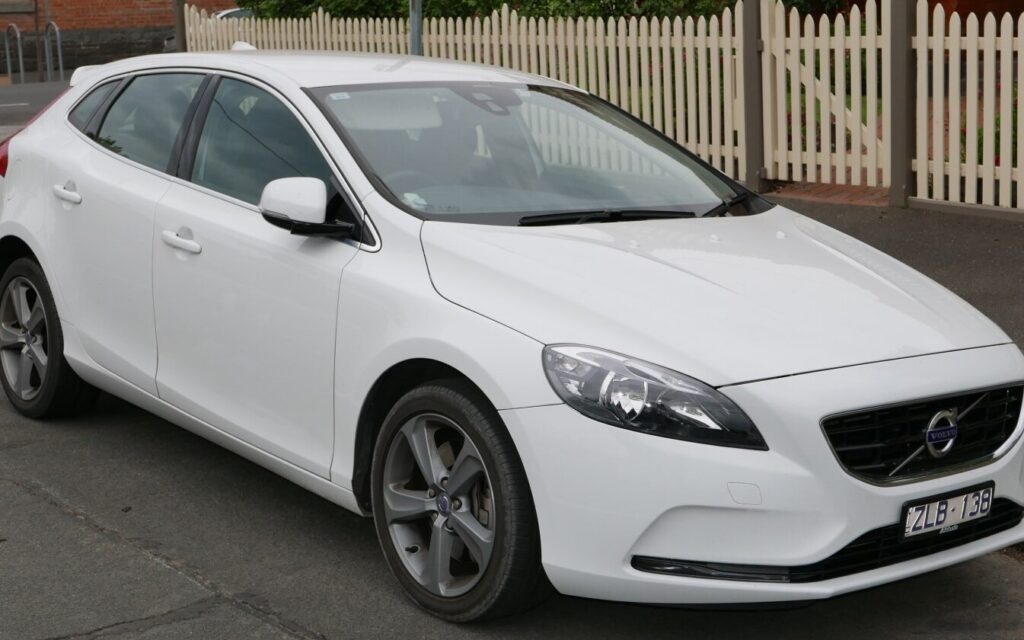
Introduction to the Volvo V40 (facelift 2016) 2.0 D3 (150 Hp)
The Volvo V40 (facelift 2016) 2.0 D3 (150 Hp) represents a refined iteration of Volvo’s premium compact hatchback, a model primarily targeted at the discerning European market. Introduced for the 2018 model year and produced through 2020, this generation of the V40 showcased Volvo’s commitment to sophisticated design, robust engineering, and class-leading safety within a compact footprint. As a facelifted version of the second-generation V40 (which debuted in 2012), the 2016 update brought a fresh aesthetic, particularly to the front fascia, aligning it with the brand’s newer, larger models like the S90 and XC90.
Positioned as a direct competitor to established German rivals such as the Audi A3, BMW 1 Series, and Mercedes-Benz A-Class, the V40 carved out a niche for itself with its distinct Scandinavian design philosophy, understated luxury, and an unwavering focus on occupant protection. While the V40 was a significant player in its segment across Europe and other international markets, it was never officially sold in the United States, making it a lesser-known but highly respected model among automotive enthusiasts familiar with global markets. The 2.0 D3 variant, with its 150 horsepower diesel engine, offered a compelling blend of performance, efficiency, and torque, making it a popular choice for drivers seeking a premium daily driver with excellent fuel economy.
The Volvo V40 (facelift 2016): A Premium European Hatchback
Engine & Performance
At the heart of the Volvo V40 (facelift 2016) 2.0 D3 (150 Hp) lies a potent and efficient 2.0-liter D4204T16 inline-four diesel engine. This powerplant, a testament to Volvo’s Drive-E powertrain philosophy, is transversely mounted at the front and drives the front wheels, providing a balanced and predictable driving experience. With a displacement of 1969 cm3 (120.16 cu. in.), the engine delivers a respectable 150 horsepower at 3750 rpm, translating to a power output of 76.2 horsepower per liter. More impressively, it produces a robust 236.02 lb.-ft. of torque across a broad rev range, from 1740 to 3000 rpm, ensuring strong acceleration and effortless cruising.
The engine’s modern architecture includes a sophisticated Diesel Commonrail fuel injection system, a turbocharger, and an intercooler, all contributing to its responsive character and high efficiency. A DOHC valvetrain with 4 valves per cylinder further optimizes combustion. Mated to a precise 6-speed manual transmission, the V40 2.0 D3 is capable of accelerating from 0 to 60 mph in a brisk 8.2 seconds (0-100 km/h in 8.6 seconds) and reaching a top speed of 127.38 mph (205 km/h).
Fuel economy is a standout feature for this diesel variant, reflecting its design for long-distance European driving. The combined fuel consumption is rated between 4.6-4.8 liters per 100 km, which translates to an impressive 51.1 – 49 US mpg. Urban consumption ranges from 41.3 – 39.9 US mpg, while extra-urban driving can achieve 58.8 – 57.4 US mpg. These figures, coupled with CO2 emissions of 121-125 g/km and compliance with the stringent Euro 6d-Temp emission standard, underscore Volvo’s commitment to environmental responsibility without sacrificing performance. The engine also features a particulate filter, reducing harmful emissions.
Design & Features
The 2016 facelift significantly enhanced the aesthetic appeal of the Volvo V40, bringing its design language closer to the brand’s larger, award-winning models. The most notable change was the introduction of “Thor’s Hammer” LED daytime running lights, which became a signature design element for Volvo. This, combined with a revised grille featuring the updated Volvo Iron Mark, gave the V40 a more assertive and contemporary presence. The V40 retains its distinctive compact hatchback silhouette, characterized by clean lines, a dynamic waistline, and a somewhat sloping roofline that gives it a sporty yet elegant stance.
As a 5-door, 5-seat hatchback, the V40 offers practical versatility for urban commuting and weekend getaways. Its dimensions—172.05 inches in length, 70.2 inches in width, and 56.65 inches in height—make it maneuverable in congested city environments while providing a surprisingly spacious interior. The wheelbase of 104.21 inches contributes to a stable ride. Inside, the V40 adheres to Volvo’s reputation for ergonomic design and high-quality materials. While specific luxury features vary by trim, the overall cabin ambiance is one of understated Scandinavian elegance, with intuitive controls and comfortable seating.
Safety, as always with Volvo, is paramount. The V40 was engineered with a comprehensive suite of active and passive safety systems. While the provided data specifically lists ABS (Anti-lock Braking System), Volvo’s standard offerings in this era typically included a robust chassis, multiple airbags, and advanced driver-assistance systems such as City Safety (autonomous emergency braking), pedestrian detection, and lane-keeping aid. The car’s drag coefficient of 0.29-0.32 indicates aerodynamic efficiency, contributing to both fuel economy and reduced wind noise. Practical considerations include a trunk space of 8.33 cu. ft. (236 liters) and a fuel tank capacity of 16.38 US gallons (62 liters), allowing for extended driving ranges.
Technical Specifications
| Category | Specification |
|---|---|
| General Information | |
| Brand | Volvo |
| Model | V40 (facelift 2016) |
| Type (Engine) | 2.0 D3 (150 Hp) |
| Production Start | 2018 year |
| Production End | 2020 year |
| Powertrain Architecture | Internal Combustion engine |
| Body type | Hatchback |
| Seats | 5 |
| Doors | 5 |
| Performance Specs | |
| Fuel Consumption (Urban) | 5.7-5.9 l/100 km (41.3 – 39.9 US mpg) |
| Fuel Consumption (Extra Urban) | 4.0-4.1 l/100 km (58.8 – 57.4 US mpg) |
| Fuel Consumption (Combined) | 4.6-4.8 l/100 km (51.1 – 49 US mpg) |
| CO2 Emissions | 121-125 g/km |
| Fuel Type | Diesel |
| Acceleration 0-60 mph | 8.2 seconds |
| Acceleration 0-100 km/h | 8.6 seconds |
| Maximum Speed | 127.38 mph (205 km/h) |
| Braking Distance 100 km/h – 0 | 37 m |
| Emission Standard | Euro 6d-Temp |
| Weight-to-Power Ratio | 10.5 kg/Hp (95.3 Hp/tonne) |
| Weight-to-Torque Ratio | 4.9 kg/Nm (203.3 Nm/tonne) |
| Engine Specs | |
| Power | 150 Hp @ 3750 rpm |
| Power per liter | 76.2 Hp/l |
| Torque | 236.02 lb.-ft. @ 1740-3000 rpm (320 Nm) |
| Maximum Engine Speed | 4500 rpm |
| Engine Layout | Front, Transverse |
| Engine Model/Code | D4204T16 |
| Engine Displacement | 120.16 cu. in. (1969 cm3) |
| Number of Cylinders | 4 |
| Engine Configuration | Inline |
| Cylinder Bore | 3.23 in. (82 mm) |
| Piston Stroke | 3.67 in. (93.2 mm) |
| Compression Ratio | 16:1 |
| Number of Valves per Cylinder | 4 |
| Fuel Injection System | Diesel Commonrail |
| Engine Aspiration | Turbocharger, Intercooler |
| Valvetrain | DOHC |
| Engine Oil Capacity | 5.49 US qt (5.2 l) |
| Coolant Capacity | 8.45 US qt (8 l) |
| Engine Systems | Particulate filter |
| Space, Volume and Weights | |
| Kerb Weight | 3470.08 lbs. (1574 kg) |
| Trunk (boot) Space – Minimum | 8.33 cu. ft. (236 l) |
| Fuel Tank Capacity | 16.38 US gal (62 l) |
| AdBlue Tank Capacity | 4.36 US gal (16.5 l) |
| Permitted Trailer Load (with brakes 12%) | 3306.93 lbs. (1500 kg) |
| Permitted Trailer Load (without brakes) | 1543.24 lbs. (700 kg) |
| Dimensions | |
| Length | 172.05 in. (4370 mm) |
| Width | 70.2 in. (1783 mm) |
| Width with Mirrors Folded | 73.11 in. (1857 mm) |
| Width Including Mirrors | 80.35 in. (2041 mm) |
| Height | 56.65 in. (1439 mm) |
| Wheelbase | 104.21 in. (2647 mm) |
| Front Overhang | 35.75 in. (908 mm) |
| Rear Overhang | 32.09 in. (815 mm) |
| Drag Coefficient (Cd) | 0.29-0.32 |
| Minimum Turning Circle | 39.37 ft. (12 m) |
| Drivetrain, Brakes and Suspension Specs | |
| Drivetrain Architecture | Front wheel drive, Internal Combustion engine |
| Drive Wheel | Front wheel drive |
| Number of Gears and Type of Gearbox | 6 gears, manual transmission |
| Front Suspension | Independent, McPherson with coil spring and anti-roll bar |
| Rear Suspension | Independent coil spring, Transverse stabilizer |
| Front Brakes | Disc |
| Rear Brakes | Disc, 280 mm |
| Assisting Systems | ABS (Anti-lock braking system) |
| Steering Type | Steering rack and pinion |
| Power Steering | Electric Steering |
Legacy & Market Impact
The Volvo V40, particularly its facelifted 2016 iteration and the 2.0 D3 variant, held a significant position in the European premium compact segment. Its primary competitors included the Audi A3 Sportback, BMW 1 Series, Mercedes-Benz A-Class, and even higher trims of the Volkswagen Golf. Against these formidable rivals, the V40 distinguished itself with a unique set of attributes. While it might not have offered the outright sporty dynamics of a BMW 1 Series or the ubiquitous brand appeal of an Audi A3, it excelled in areas where Volvo traditionally shines: safety, comfort, and a distinctive, understated Scandinavian aesthetic.
Drivers in Europe appreciated the V40 for its robust build quality, comfortable ride, and excellent long-distance cruising capability, especially with the torquey and fuel-efficient D3 diesel engine. Its reputation for safety, bolstered by Volvo’s pioneering safety innovations, was a major selling point, providing peace of mind that few competitors could match. The V40’s design, updated with the “Thor’s Hammer” headlights, helped it maintain a fresh and modern appearance throughout its production run, making it an attractive alternative to the more common German offerings.
Despite its strengths, the V40 eventually faced the challenge of a rapidly shifting automotive market, where consumer preference began to lean heavily towards SUVs and crossovers. As Volvo strategically moved to expand its SUV lineup, particularly with the highly successful XC40 compact crossover, the V40’s role as the brand’s entry-level compact car diminished. Production of the V40 ceased in 2020, without a direct hatchback successor in most markets. The XC40 effectively took its place, offering a similar footprint but with the higher ride height and rugged styling that customers increasingly desired.
Today, the Volvo V40 (facelift 2016) 2.0 D3 (150 Hp) remains a respected used vehicle in its primary markets. It is remembered as a well-engineered, safe, and stylish premium hatchback that offered a compelling alternative to its segment rivals. Its legacy is one of a car that perfectly embodied Volvo’s core values in a compact package, demonstrating that luxury, performance, and safety could coexist efficiently in a practical five-door form. For those seeking a reliable, comfortable, and economical premium compact car with a distinct personality, the V40 continues to be an appealing choice.